Some Thoughts On The Forum On Building Heights


[JK: If the images below seem out of order it is because WordPress, the software I use to write this blog can be teeth grindingly buggy.  It commonly drops images in the wrong place and will not allow you to move them.  The blank spot above this text is due to a bug in the software.  The least fun thing about writing this blog is dealing with WordPress]

The primary speaker was George Jacquemart.   He is a principal with the firm BJF Planning.  According to his company’s website:

 Georges Jacquemart is a founding prinicipal of BFJ Planning and directs the firm’s transportation practice.

In 2006 the city contracted with Mr. Jacquemart to look at building heights.

The forum included a panel with Sonny Bonacia, architect Mark Hurff, City Planner Kate Maynard, and Doug Kerr representing the Saratoga Springs Perservation Foundation.

Here is a link to the Saratogian article http://www.saratogian.com/article/ST/20180131/NEWS/180139960

There were some interesting and thought provoking ideas presented.

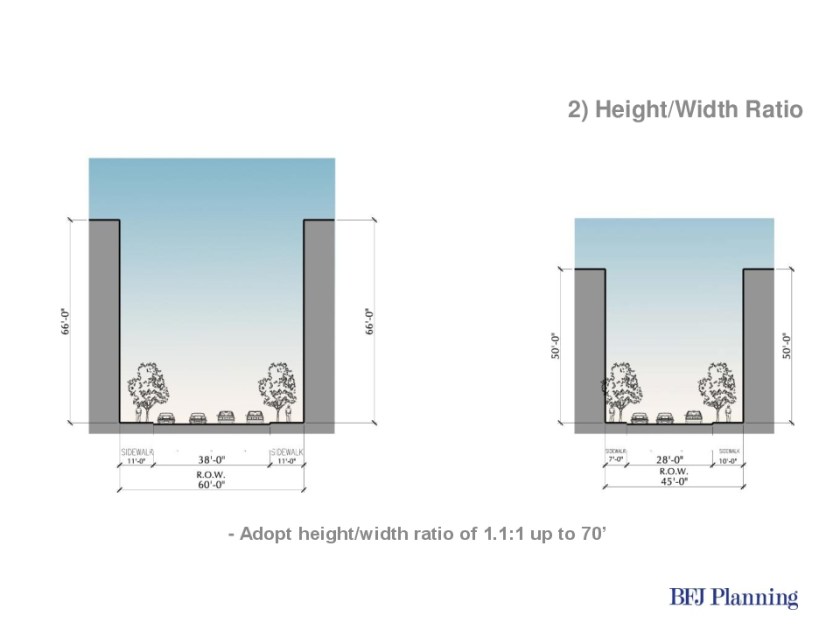
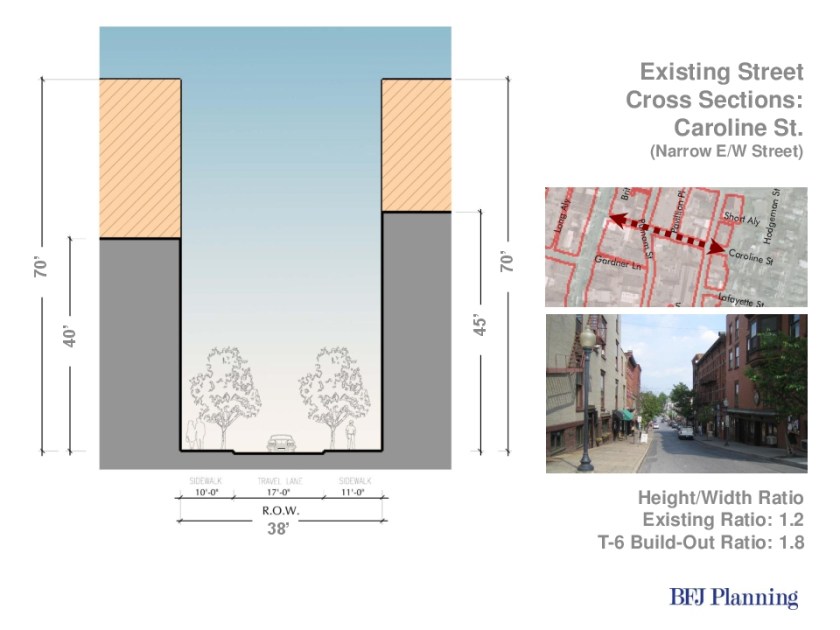
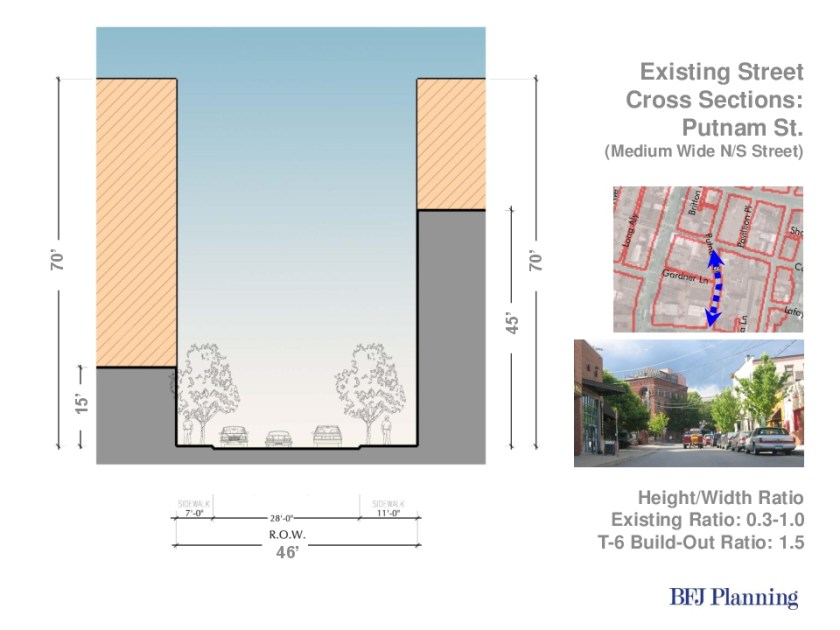
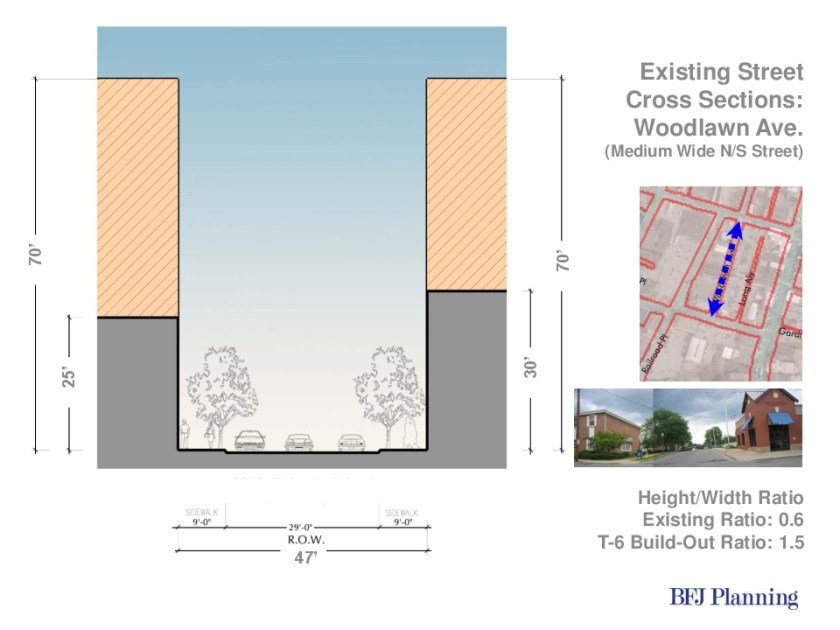
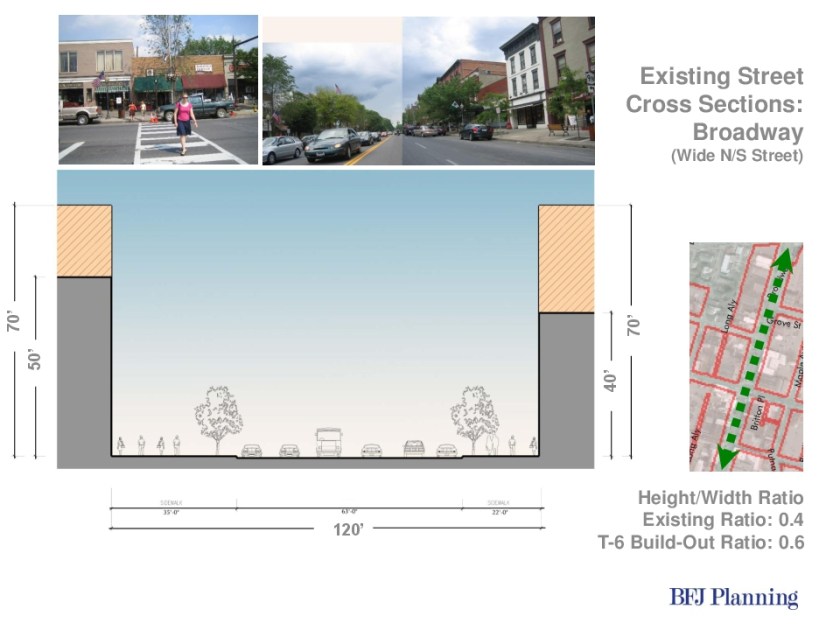
According to Mr. Jacquemart there is a proportion of the width of a street/sidewalk to the facing buildings which is commonly used for what are considered to be ideal streetscapes.  The ideal ratio according to Mr. Jacquemart is .8 to 1.1.  He discussed how the upper floors can be set back to maintain this ratio while going higher.  Basically we are talking about tiered, stepped floors that cannot be seen from the street.

He discussed the importance of density to buildings.  Basically, having a downtown that is densely developed creates the scale required for strong retail and public transportation.  Restaurants and shops along with some sort of effective public transport requires many people.  The principle is pretty straightforward.

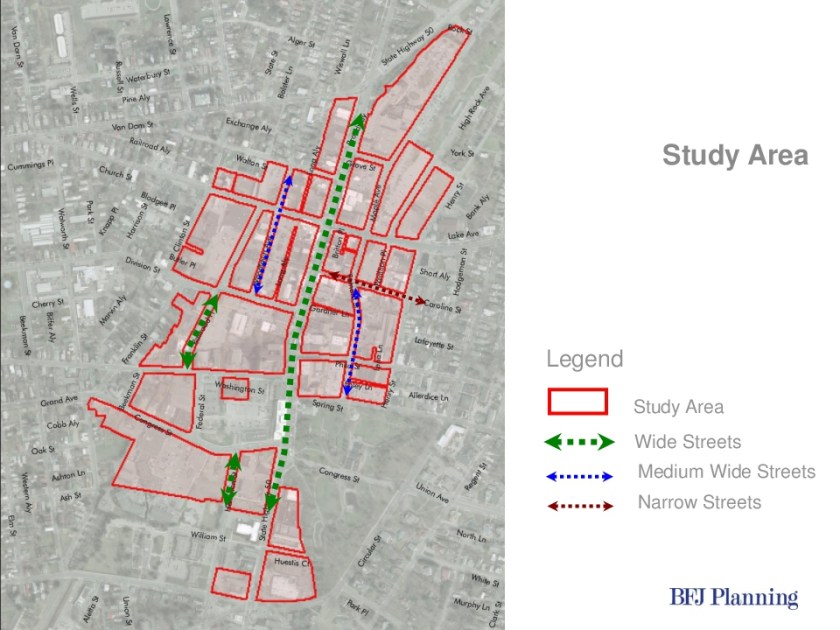
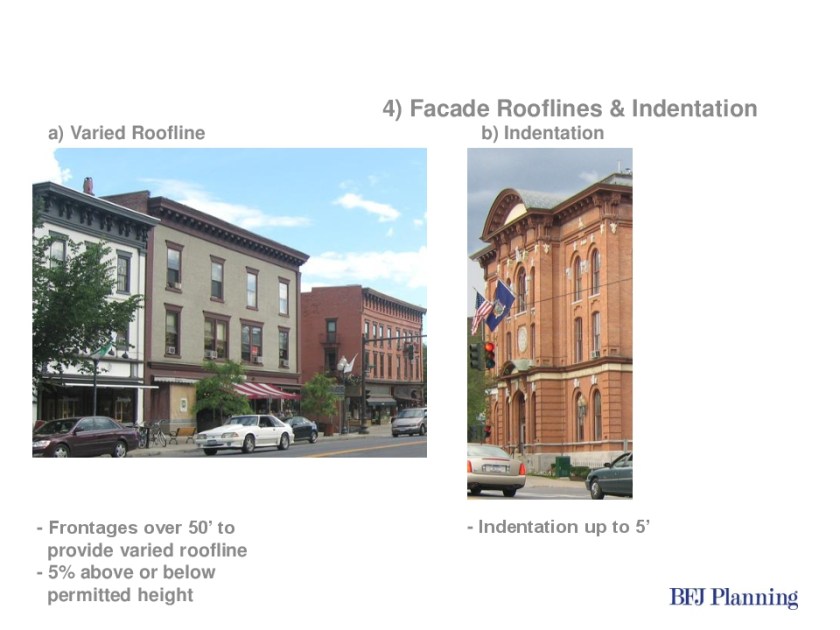
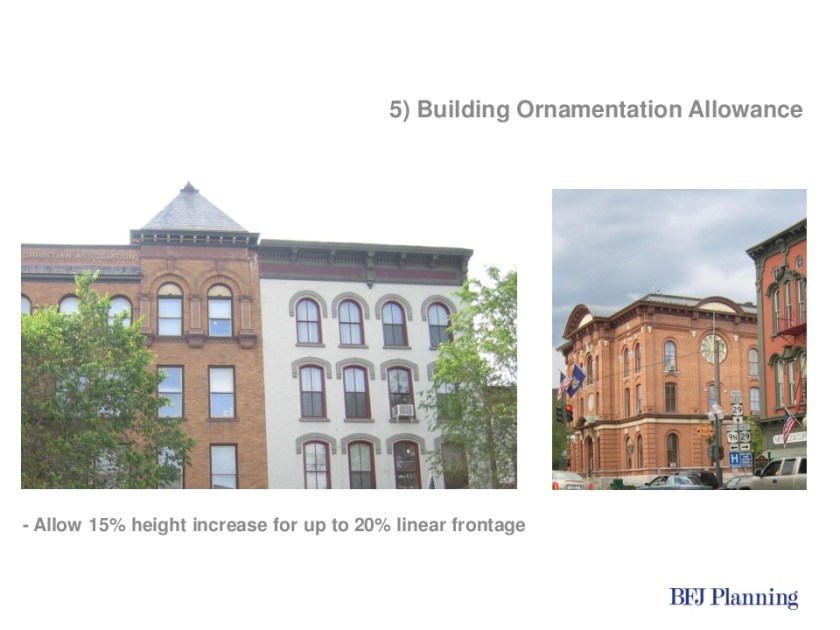
The original study from 2006 focused on the downtown core.  Here are some slides from his presentation that are meant to illustrate the principle of proportionality of street/sidewalk width to building height.

It is important to note that current city zoning allows for a maximum height of 70 feet for buildings downtown.
Woodlawn-26
Examples of Varied Roof Tops And Indentations
Woodlawn-27
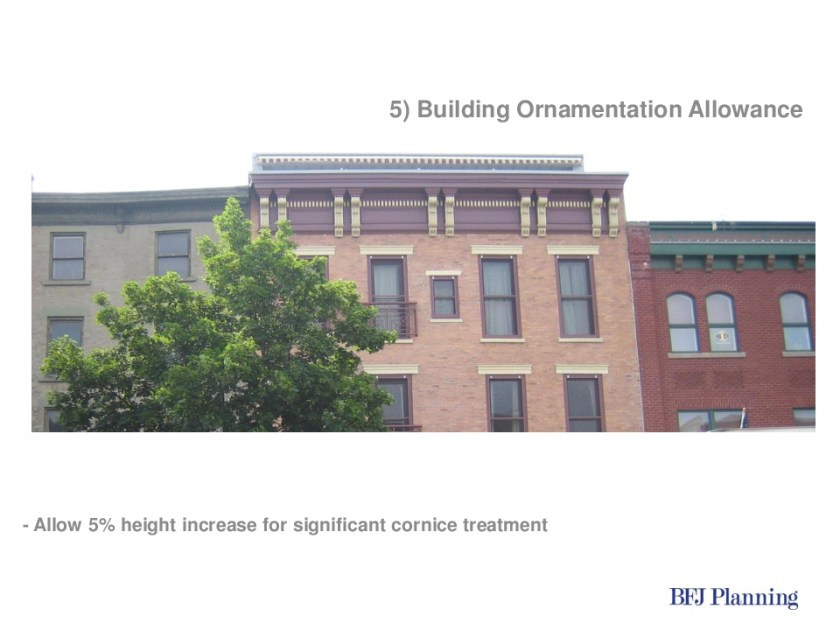
More Examples Of Ornamentation And Bonuses


Woodlawn-29
Illustration Showing How Corner Lots Can Be Taller Than Standard To Space Created By Intersection
Woodlawn-28
Rendering Of Example Of Ornamentation
Woodlawn-25
Examples of Set Backs


Woodlawn-24
Set Back Examples


Woodlawn-23
Examples of Height/Width Ratios


Woodlawn-22

Woodlawn-19


Woodlawn-13
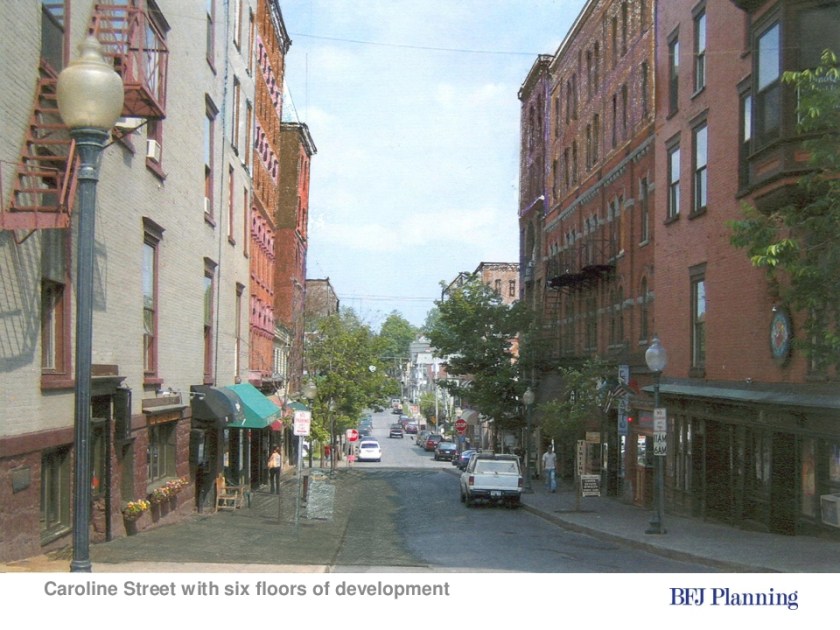
Rendering Of Caroline Street If The Buildings Went Up Six Stories
Woodlawn-12
As Caroline Street Is


Woodlawn-11


Woodlawn-10


Woodlawn-9

Woodlawn-8

Hamilton StreetWoodlawn-7


Woodlawn-4


Woodlawn-3
2006 Study Area


In addition he talked about the significance of ornamentation and design to create attractive buildings. 

Apparently his original study recommended height bonuses based on the ornamentation of the building and for social purposes like workforce housing.

The Devil Is In The Details

Matt Veitch who is currently the president of the board of the Preservation Foundation  acted as moderator.  He told the crowd that he had one rule for the evening which was that there be no criticism of specific buildings.

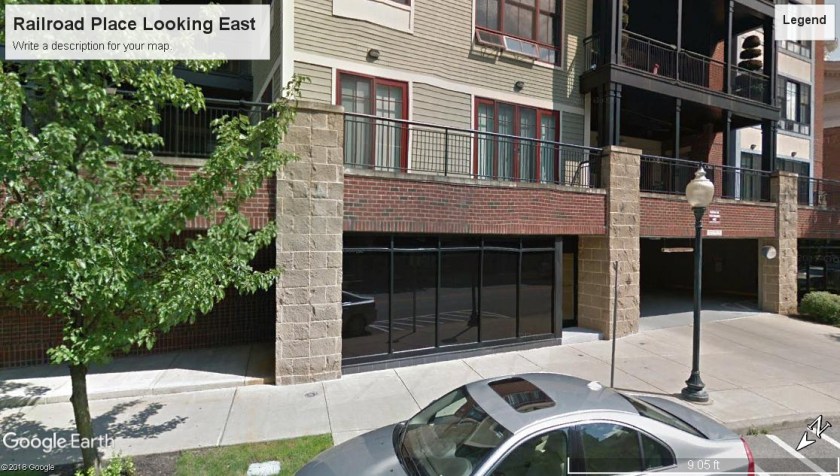
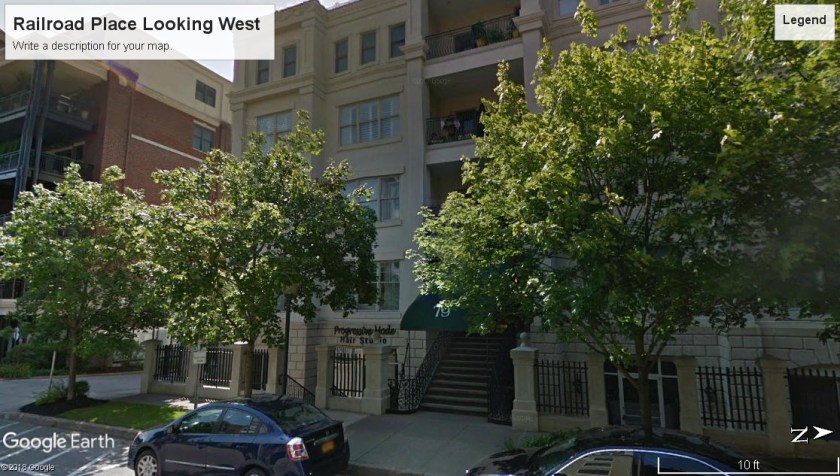
I noted that one of the streetscapes in the presentation was Railroad Place.  I personally find the southern part of the road beginning at Division Street not a very pleasant environment.  The height of the buildings are at the extreme limit of the “ideal” norm.  The ratio is 1.1.

I had always attributed my discomfort with the street to the canyon like feel with its tall buildings.  I called a friend who lectures on urban design and asked him about the street.  He told me that the problem was not the height of the buildings but their design.  There is no active retail on the street and he characterized the walls facing the street as basically unattractive.  If the buildings were more attractive and/or there were restaurants and shops with the attendant people, it would have an entirely different feel.

I know nothing about architecture.  The buildings look pleasant enough to me, but there is, however, something flat, cold, and lifeless about them.  I attributed this to the lack of first floor retail and the lack of people.  I did notice that on the east side there is quite a bit of blank wall behind which is parking.
RailroadPlaceWest


RailroadPlaceEast
Street Level Of Railroad Place East Side

I will defer to my friend’s educated assessment that it is possible to design buildings that will create a more welcoming environment.

As the readers of this blog are well aware, I am never afraid to make uninformed judgments.  It seems to me that the energy of having people around makes the environment more hospitable.  In addition, it is the presence of lots of foot traffic that makes commercial establishments like cafes and shops possible.  I presume that with greater density of people downtown, the demand for commercial first floor space could result in redesigning the first floor of this street.

The central question is then what kind of density and population would the city need to make this happen.  The related question is how these areas can attract people from outside the city?

Putting aside the issue of parking, there is a limit to downtown’s road infrastructure.  How can it handle the kind of traffic that would bring more people downtown?

As traffic design is Mr. Jacquemart’s specialty, I asked him about this.  I was quite disappointed.  I found his wandering answer unhelpful.  In his defense, the topic of the night was building height but still, with height comes density which he is an advocate for and with density comes traffic.

 Two other panelists responded. 

 Kate Maynard talked about the trolley provided by CDTA in the summer.  She noted that the ridership had been limited by a number of factors.  People didn’t know what it cost (it is free) and they didn’t know where it went and when.  Since this information was publicized ridership has been way up.  With better promotion, it could address some of the transportation issues. 

Of course the city center parking plan which could have a tremendous impact on city parking availability is still unresolved.

Doug Kerr took the opportunity to opine about how most cities would welcome a traffic problem.  This is not the first time I have heard this.  Welcome or not, it is a serious and growing problem.  During the summer the backup of traffic coming from the South on Route 9 is becoming an increasing problem.  People are not going to visit our city if they find themselves mired in traffic and unable to park.  

If you have been involved in development issues, you know that the developer brings in a traffic consultant who without exception limits the scope of the study to the immediate streets of the development and assures the boards that all will be well.  What is missing is the macro problem with traffic.  People come here for the quality of our downtown.  The aggregate of all of these new projects is going to contribute to gridlock.  We need to be thinking about this problem and as far as I can tell we are not.

Finally, in the end, while zoning is critically important,  you cannot micro manage development through a telephone book of ordinances.  In the end we are dependent on the good judgment of our land use boards to insist that the scale and design of what is built enhances our communities.  The truth is we have not always been well served by our boards.  For decades they were the handmaidens of the real estate industry.  Mayor Yepsen’s appointments were a mixed bag.  There were some better people appointed but she also appointed some of the usual suspects.  We can only hope the our new mayor, Meg Kelly, will see the importance of appointing people who take preserving the beauty of our city as a critical factor in their decisions. 


Neighbors Take City Back To Court On Code Blue

The decision by the Zoning Board of Appeals to approve the Code Blue facility on Walworth Street drew the expected legal action from the neighbors.  The neighbors had previously successfully appealed the decision by the ZBA denying their challenge claiming it was filed too late. After granting the neighbors a hearing the ZBA then reaffirmed their original decision to allow the shelter. In a prepared statement the neighbors announced that they wanted to work with Code Blue and other stakeholders in the community to find an alternative location for Code Blue.

Here is the story from the February 6, 2018 Saratogian.    http://www.saratogian.com/general-news/20180205/saratoga-springs-board-sued-over-shelter-decision


Encouraging Beginning For Meg Kelly As Mayor

Newly elected Mayor Meg Kelly changed the format for the state of the city event this year.  Rather than simply give a speech she shared the event with the other members of the Council and the Supervisors.  Of particular importance was the substance of the presentations.  Rather than the usual platitudes or listings of alleged accomplishments, the elected officials identified the projects they hoped to complete during the coming year.  It is worth reading the Saratogian story as it lays out the many things planned.

http://www.saratogian.com/government-and-politics/20180201/spa-city-officials-discuss-goals-for-the-future

I was also stunned in reading the minutes of the January 16 meeting.  The mayor gaveled it closed at 7:50!!!!!!  That is less than an hour.  These meetings under her predecessor would go on for many hours.  Such interminable meetings rather than adding to “transparency” were sufficiently boring as to discourage people from watching or attending  them. If you were interested in an item on the Public  Safety agenda, which is normally one of the last items, it was hard to expect anyone to keep paying attention as the hour grew late. The new Mayor has successfully expanded the consent agenda so that non-controversial items can be dealt with expeditiously and this has helped shorten the meetings dramatically.


Murphy Lane “Barn” Suit Settled. City Throws In Towel

The debacle of the barn “rehab” on Murphy Lane has ended.  The city has, for all intents and purposes, thrown in the towel.   The settlement requires the owner to make some minor changes.  RIP for the original barn.  The owner can now build a new three bedroom house on an alley.

Here is the original post.

https://saratogaspringspolitics.com/2016/02/06/can-they-call-that-thing-a-renovation/

Briefly, the project should never have been allowed.  A split Zoning Board of Appeals decision originally granted the variances sought by the owner, Jean D’Agostino.

To remind the readers of just a few of the issues:

  1. The lot was a mere 2500 square feet.  The minimum lot size for this zoning district is 6,600 feet.  So the owner was seeking a variance of a whopping 4100 feet or by percentage 62.1%.  There were six other major variances, most of them major.
  2. The lot faces a narrow lane.  Normally the primary houses are supposed to face the street on the other side of the lot and the back of the lot which faces the lane is to have secondary buildings like garages and sheds.  The lane is so narrow that it is impossible for two cars to even think of passing by each other.  This building will have three bedrooms.  One of the variances granted dropped the minimum on site parking spaces required from two to one.  What if the people living in this house own more than one car? And where will people visiting this house park?
  3. In her application Ms. D’Agostino promised to “rehab” the structure on the site.  The structure was called a barn but it was much smaller than the carriage houses that are often on alleys.
  4. In her application she offered that to take down the building would be harmful to the neighborhood.  In effect, she was promising the board that the existing structure would not be demolished.

The project was supposed to sit on its existing slab.  Once the owner got approval, without submitting new plans to the building inspector, the building was jacked up, the slab was removed, and the owner excavated a full basement.  The owner did this without bothering to submit revised plans to the building inspector’s office.  Contrary to her application and without again discussing it with the building inspector, the old structure was demolished and work began on a new house.  Due to the new basement it exceeded the height of the original structure.

It was only after the neighbors complained that the city issued a stop work order.  The order was based on the argument that it now required an additional variance because of the new height.  It is important to note that the stop work order was not because the owner, contrary to the application for the variance, had torn down the building.

This is just a taste of the problems of the site.  For those of you who are not familiar with this project earlier posts on this site are worth going back to.

Bait And Switch

Murphy Lane Bleeds On

Two For One

Jenny Grey On Murphy Lane

A Major Twist

Going back to the original approval of the seven variances, the board member opponents to the project were quite articulate in their arguments as to why it should not receive the variances.  The opponents pointed out how extreme the variances were.  They described them as “massive.”  One might legitimately have asked what the point of zoning is if something like this which is out of compliance to the extreme can be approved?

Consistent with the history of the ZBA, only one of the board members who voted for it offered even a word in response to the criticisms.  This was board chair William Moore who offered a sentence.  He described it as an example of in-filling.

The owner eventually sued the city to vacate the stop work order.

Some months later I had a meeting with Mayor Yepsen, her deputy, Meg Kelly, the two city attorneys, Chris Mathiesen, and a friend who is an attorney.  The attorneys were cautiously hopeful that the city would prevail in the suit.  They pointed out the central problem which was that the approval for the variances failed to include specific requirements that the promises made in the application had to be adhered to.  The attorneys were critical of the ZBA for their failure in this matter.  I agreed not to make a public issue of this at the time because I did not want to weaken the city’s case.

Chairman Moore is in the real estate business.    It was stunning when Mayor Yepsen reappointed Mr. Moore.  This man has been chair for close to a decade.  There are some variances that people of good will can disagree about.  This project was an egregious abuse of the power vested by the people of this city in Mr. Moore and the other men on the Board who voted with him.  It is, unfortunately, not an anomaly.

So the city settled.  I respect the city attorney, Vince DeLeonardis.  Apparently he felt that there was a good chance that due to the lack of compliance requirements in the variances, the owner was likely to prevail.  If they did the city would face the costs of the owner’s legal fees and the costs associated with remediating the weather damage to the partially built structure along with other potential liabilities.

The owner agreed to move the door from facing out on to the alley to the side where the parking space is.  The owner agreed to a specific type of siding and to cover the exposed basement area.

The Mayor has the authority to remove board members for cause.  In a more just world, the Mayor would use this authority, based on his gross ineptitude, to remove Mr. Moore.


Update: Downtown Real Estate and Saratoga Casino

Corner of Broadway and Washingto
Wrap Around Indigo
421 Broadway
421 Broadway – Building On Left, Two Doors Down From Putnam Market
Borders
Borders At Broadway and Washington
Simulation of Indigo Side Facing Washington
Rendering of Indigo, the side facing Washington

There has been quite a bit of activity in the downtown property world.  A huge amount of construction and renovation is planned for the corner of Broadway and Washington.

According to the Albany Business Review:

  1. Fingerpaint’s founder and head has signed an agreement to purchase their headquarters, the old Border’s Books building, and its 55 space parking lot from a real estate firm in Buffalo.  The price was not disclosed.  The ABR reports that the company has been paying about $500,000.00 a year in rental fees.  It is encouraging that Fingerpaint has made this commitment to downtown.
  2. A group from Brooklyn has purchased 421 Broadway for $3.3 million dollars from Mel Macy and Saratoga Inn LLC.  The building has three small retail shops on the first floor and seventeen apartments above them.  The same group bought the Roohan building where Putnam Market is housed.
  3. All of this is in addition to the ambitious plans by the developer of the Adelphi Hotel to build a separate hotel and spa on Washington Street.  The new facility will back up to the rear of the Adelphi.
  4. A developer has selected Bonacio Construction on what is described as a $50 million project involving the renovation of the Rip Van Dam and the construction of a related building around the corner on Washington Street.  The project will incorporate an Indigo Hotel with 96,000  square feet.  As best I understand it, the final building will wrap around the corner with the building housing Starbucks sandwiched in.


On the casino front Moody’s has issued an analysis of the explosive expansion of gaming venues.  The title does not encourage: “Cannibalization of Gaming Revenue Continues in Northeast.”  It reports that Saratoga Casino revenue has dropped 14% in the last twelve months going from $168 million to $144 million since the opening of the Rivers Casino in Schenectady.  This is before the 1.2 billion dollar Resorts World facility in the Catskills opens in February which the report predicts will also negatively impact Rivers.

Update on Charter Change

I got the following email from SUCCESS representative Richard Sellers:

“The Saratoga Springs Charter Referendum vote judicial review seems to be on hold waiting for the New York Appellate Court to rule on a relevant case from Essex County. We’ll have to wait and see how the appeal goes before our case moves forward. 

GUESSING: This could be another 6 weeks until we get back into Saratoga County.” 

In the meantime the Watertown, New York city council voted 4-1 not to renew city manager Sharon Addison’s contract when it expires in June.  The mayor of the city voted to support her.  The city has been in a protracted legal battle with the fire department which has left the department without a contract for three and a half years. Ms. Addison came to Saratoga Springs twice at the invitation of the Charter Review Commission to advocate for the city manager form of government.    Watertown has formed a charter review commission to consider whether it should continue to use the city manager form.  This is a link to a story from North Country Public Radio.


Saratoga County Sues Over Opioid Crisis

An article in the January 22nd edition of the Gazette Newspaper reported that the Saratoga County Board of Supervisors has engaged the law firm Napoli Shkolnik PLLC to represent them as part of a lawsuit regarding the opioid epidemic.  Apparently, as part of the legal strategy, the county passed a resolution declaring the epidemic to be a “public nuisance.”

The agreement with the law firm is on a contingency basis.  The County puts up no money but should the County prevail, the law firm will receive a share in the settlement.

A brief internet search indicated that this law firm which is located on Long Island has agreements with municipalities in other states.

In its September 12 edition, the Post Star reported that attorney Donald Boyagian of Saratoga , who the paper identified as being affiliated with a national law firm, had pitched a proposal to the Warren County Board of Supervisors for litigation against the manufacturers of opioids.  The national law firm is Simmons Hanly Conroy LLC.  They had already been engaged by fifteen counties including Fulton County.  Oddly, the article in the Post Star reported that Schenectady had signed on with Boyagian’s group while the Gazette reported that Schenectady had signed on with Napoli Shkonink.  It could be Schenectedy county vs the city of Schenectady.  http://poststar.com/news/local/local-counties-pitched-for-opioid-manufacturer-lawsuits/article_7f5d177a-c830-5df8-92d9-9ed8e28c7113.html

The Post Star reported that the “…law suits go after counties  for what Boyajian called ‘concerted, aggressive, fraudulent marketing schemes’ that resulted in thousands of addicts who turned to heroin when the pain killer pills become less effective for them over time.”

The Post Start subsequently reported in their November 15 edition that Warren County had selected  Napoli Shkolnik to represent them.  While there were reservations raised at the Warren County board meeting, they voted unanimously to approve the agreement.  http://poststar.com/news/local/with-some-apprehension-warren-county-opts-into-opioid-lawsuit/article_a3663a93-b6b9-5f9c-84e0-91bddf280a13.html

Given the disturbing history of cronyism in Saratoga County I was curious about the history of our county’s involvement in this process.  I contacted our new Supervisor, Tara Gaston, who responded promptly with the following.


John,

I appreciate you reaching out to me. As far as the background – the decision to sue, and the discussions behind that, were made before I took my position on the Board. I will say that the purpose is to be able to recoup some of the excessive costs the County has had to spend on fighting the opioid epidemic. The County chose to hire a well-known firm that has been handling this issue for other municipalities. I am currently in discussion with the County Attorney, and potentially with Napoli Shkolnik itself, to get more information on the strategy and costs, although it is currently my understanding that, it is a contingency-fee case with a similar strategy as tobacco litigation.

Again, while this isn’t a lot of information now, I am having on-going discussions regarding the litigation to make sure that the interests of the City (and County) are represented. I also urge anyone interested in this to attend the public hearing on the proposed local law. It will be at the Board (40 McMaster Street Ballston Spa) February 14, 2018, at 4:28PM. http://www.saratogacountyny.gov/event/public-hearing-428pm-2/

Additionally, comments can be made at the public comment period on February 27, 2018 (or any other Board meeting). Unfortunately,  24 hours’ notice is required in order to speak at the meetings, so please make sure to share that so that individuals who want to comment can. I am also happy to accept comments at my official email above, or on my Supervisor Facebook page, which I will make sure are considered as well.

– Supervisor Tara N. Gaston

Saratoga Brewing Company and Tap Room Suddenly Closes

Saratoga Brewing Company which started making beer in 1997 has suddenly closed. The company has been operating out of a property at 131  Excelsior Avenue owned by Stewarts Shops.   SBC has brewed beer for a number of companies here in New York.  This is the story from the Saratogian January 17 edition.  http://www.saratogian.com/article/ST/20180117/NEWS/180119835

The reason for the sudden closing in the story was confusing.  This story from the Press Democrat in Santa Rosa, California cast more light on the situation.

The local Saratoga brewery is part of a larger empire run by Vijay Mallya whose corporate headquarters are in London.  Mr. Mallya is fighting extradition to India over charges of fraud and money laundering.

http://www.pressdemocrat.com/business/7864684-181/mendocino-brewing-to-close-ukiah?sba=AAS


Saratoga Springs Preservation Foundation and Sustainable Saratoga Host Event Addressing Building Heights

[JK: I received an email from the Saratoga Springs Preservation Foundation and Sustainable Saratoga with information about a presentation regarding standards for building heights in downtown Saratoga Springs.

Modern urban planning acknowledges that the proportions between building height and the width of related streets and sidewalks are key to creating an environment that attracts people on foot.  The canyon effect of having large buildings sandwiching narrow streets creates a sunless dead zone.

This  presentation comes at a time when the city’s land use boards are reviewing two  proposals for six story buildings  in the city’s  core. It should be an interesting event.]

BuildingHeight1BuildingHeight2


A Closer Look at Building Heights

Retaining Saratoga Springs’ Character & Charm

Tuesday January 30, 2018 7:00PM ​Empire State College | 2 Union Avenue | Room 126

Come attend a presentation about building heights in downtown Saratoga Springs. Planner George Jacquemart of BFJ Planning will offer perspectives on how people react to building heights. Following the presentation, there will be a panel discussion with local developer Sonny Bonacio of Bonacio Construction Inc.; local architect Matt Hurff of Frost Hurff Architects; Doug Kerr, Chair of SSPF Advocacy Committee; and Kate Maynard, Principal Planner for the City of Saratoga Springs. Free and open to the public.​

BuildingHeight3BuildingHeight4