Disgraceful Condition Of Downtown Walkway

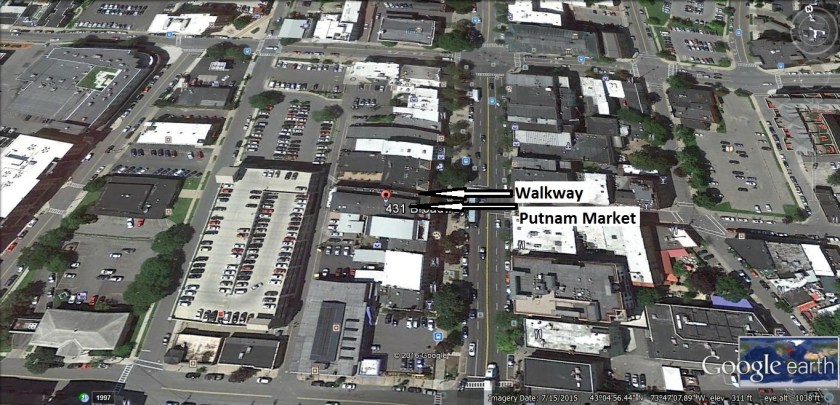
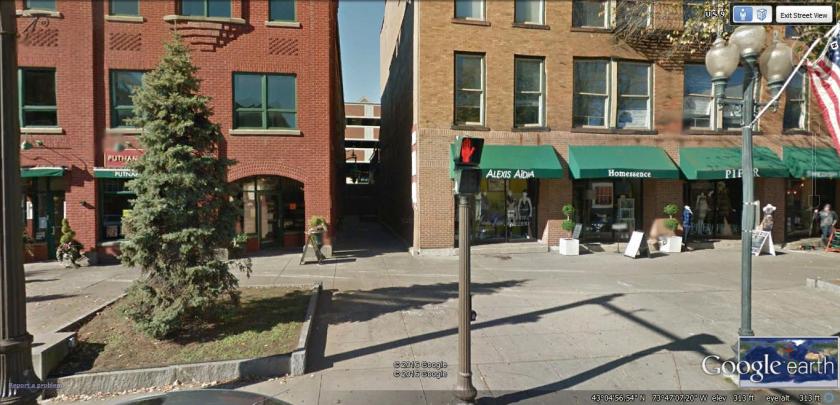
Readers have contacted me about the disgraceful condition of the walkway that runs west from Broadway to the parking lot beside Putnam Market.  This walkway does not belong to the city.  I have emailed Mayor Yepsen asking what can be done to address this situation (see below – it covers the issue in more depth).  I will post Mayor Yepsen’s response when I receive it.

Trash3


Trash2


Trash1

WalkwayAetrial

WalkwayGoogle

Barrier

Walkway4

From: John Kaufmann
Sent: Thursday, June 23, 2016 4:18 PM
To: ‘Joanne Yepsen’
Cc: ‘Christian Mathiesen’; ‘Skip Sciroco’; ‘Michele Madigan’; ‘John Franck’;
‘Vincent DeLeonardis’
Subject: Walkway

I have been contacted by people disturbed by the walkway that abuts Putnam Market.  For at least a month there have been sawhorses blocking part of the path there (see picture).  In addition, there does not appear to be any maintenance of the area.  The walkway is strategically located at one of the center points of the city but it has been allowed to become an unsightly embarrassment.  Trash has been allowed to accumulate there (see pictures).

I have been in touch with the Public Works Department and have learned that this area is privately owned and is not under the jurisdiction of Public Works.  I understand that the heating system that is supposed to keep the walkway free of snow needs to be
repaired.  I expect that this might be a major engineering project and can understand that this cannot be fixed overnight.  I have learned that the owner does not expect to begin work on this until after the racing season is over.  Whether this is a reasonable time frame, I do not know.  What I do know is that the walkway is dirty and unbecoming of our city.
Has the city taken any action on this matter?  If not, can the city take action to require the owner to keep the area clean and to expeditiously do whatever repairs are necessary to remove the sawhorses?

I know you take as much pride in our city as any citizen of this community and expect that you share people’s concerns that this problem be addressed.    Could you please keep me advised on this and I will share the progress with the people who read my blog.


Another Neighborhood Attempts To Protect Itself From The ZBA

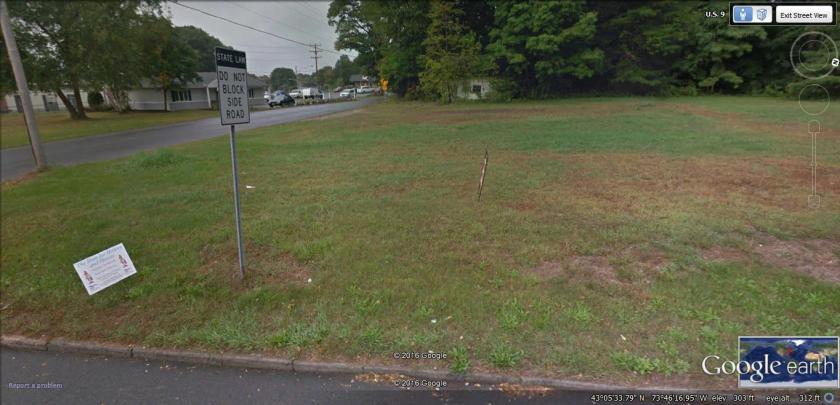
MarionAveAerial2

MarionAveStreet

Tracie Millis III is the president of the Maple Avenue, Marion Avenue, Maple Dell Neighborhood Association.

As a little background, Mr. Millis family goes back eight generations in our city.  Following his career in the U.S. military he worked at the Watervliet Arsenal as a contracting officer before retiring in 1995. He was more recently the executive director of the New York State Military Heritage Institute which is a support group for the Military Museum on Lake Avenue.

At the June 21st Zoning Board of Appeals meeting Mr. Millis spoke in opposition to an application to grant a use variance to allow a dentist office at  34 Marion Avenue which is in a residentially zoned neighborhood.

At the meeting Stephanie Feradino, who represented the owners, spoke from 8:20 to 9:20.  Mr. Millis spoke for eight and a half minutes and two neighbors spoke for four minutes each.  Keith Kaplan was chairing the ZBA meeting in the absence of Chairman William Moore.  Following the first neighbor’s brief comments, Mr. Kaplan admonished the public not to use their time repeating anything said previously.  Ms. Feradino is an articulate and talented attorney.  Brevity, however, is not her strength.  Mr. Kaplan made no attempt to expedite her very long presentation.   Given that Ms. Feradino had submitted her arguments to the ZBA in writing, to allow her unrestrained time to make her case and then admonish the neighbors who, in contrast, were the soul of brevity seemed unfair but sadly consistent with the ZBA’s attitude toward the public.

In the course of the ZBA questioning of Ms. Feradino it became painfully obvious that the ZBA was disposed to grant her client’s application.  Board members spent considerable time discussing with her how her client might buffer the property from the neighbors regarding lights and noise to the point that they discussed specific plants the applicant might use.

It is hard to believe but no one on that board even acknowledged that given the other commercial development in the area around Maple and Marion Avenues that granting this variance might accelerate the decline of this residential neighborhood.  This is simply another example of how low in its priorities defending existing zoning is for this board.  Mr. Millis presented a petition representing twenty-eight homeowners from the neighborhood trying to defend their community.  For those skeptics, I invite them to watch the video of the meeting which is up on the city’s web site.

Here is Mr. Millis’ statement:


Saratoga Springs Board of Appeals:                                                                                       20 JUN 2016

This is the THIRD (3rd) time we have appeared in front of this Board of Appeals speaking against a proposal to SPOT ZONE, 34 Marion Avenue, as Commercial.

In the instant case the required application cites addresses that are not correct, fails to prove an “unnecessary hardship”, cites an “OLD” appraised value (1994), and further attempts to confuse the “ORIGINAL” listing price to the appraised value (Then vs Now).

The “Unique Financial Hardship” stated is Not Accurate.  The owner has been attempting to sell this property since at LEAST 1983!  Whereas he has occasionally rented it – It has always been offered for sale by local realtors.

The “History of Marketing” is not reflective of the facts either.  Whereas they only cite the offered price since 2005, we have tracked it further.

The price for this residentially zoned property, that is 0.43 acre, has been offered for sale from $499,500 to the supposedly present (2014) $135,000.  For less than ½ acre?  For a vacant building lot?  Residentially Zoned!

This alleged Hardship is a 100% Self-Created Hardship! We state that undisputed fact EVERY time we appear here to discuss the “Infamous Healy Property!”  He is simply requesting too many dollars for a small Residential lot in Saratoga Springs.  Are you kidding us?

The zoning does not allow for this proposal.  We fought to get that exact zoning for over 30 years in the prior/current Master Plans since 1981.  We want to protect our homeownership investments, and obviously there can be NO Hardship claimed by the proponent.

I now present our Original Neighborhood Petitions signed by over twenty eight (28) Single Family Residential home Owners directly impacted by this proposed project.

We are ALL opposed to its approval!

Tracy Millis III

Neighborhood Association President

Further, and I probably should not admit this – I went “off script” and exclaimed to the Board that we have invested Many hours (and years) in the development of the “Master Plan” relative to how the Northern Gateway of Saratoga Springs should NOT resemble South Broadway!  For over 40 years Saratoga Springs has stated in their Master Plan that our “Northern Gateway” should not resemble South Broadway with the Honkey-Tonk businesses.  Marion Avenue extends from the Arterial to SOUTH of the Triangle Diner!  All the properties within that Codified distinction are, wait for it now – Single Family RESIDENTIAL!!  Hello!  The Triangle Diner is in Greenfield! All of the properties on the West side of Marion Avenue are Zoned as RESIDENTIAL!  Changing one, especially one at the end of OUR ZONING border, invites nothing less than catastrophe for the Residential owners that invested in their homes. The bottom line is this – An individual that purchased a RESIDENTIALLY zoned property in 1982, for 40K$, and thereafter offered it at 499K$ for RESIDENTIAL use, cannot thereafter claim A HARDSHIP because nobody bought the property!  Hello?  $499K for less than 1/2 acre? As Residential? DUH?


Murphy Lane Zombie Barn Stalks Zoning Board of Appeals

On Monday night Ms. Jean D’Agostino, owner of the late barn on Murphy Lane, appeared again before the ZBA with her attorney, James A. Fauci   Briefly, Mr. Fauci claimed that the variances to build a one family home on the site of what had been a barn, had no constraints.  He asserted that his client had a right to erect a home on the site as high as sixty feet as allowed by the zoning for that district.  He claimed that there was no basis to require an additional height variance.

Keith Kaplan, who was chairing the meeting in the absence of William Moore, said the stop order was not based simply on the height as had been stated in an email by building inspector Steven Shaw to Ms D’Agostino.  He referenced the inconsistency of what Ms. D’Agostino had done in contrast with her application that was approved by the ZBA.

What followed was a chaotic discussion in which Mr. Fauci insisted that his client be told clearly why Mr. Shaw had issued a stop work order.  At this point board member Adam McNeil interceded and proposed that a written explanation be drafted and sent to Mr. Fauci.  Attorney Mark Schachner, who is a consultant to the city on land use issues, intervened to support Mr. McNeil.  Mr. Fauci then asked why, since Mr. Shaw was sitting behind the ZBA table, the city building inspector could not simply explain why he had issued the stop work order.  At this point Mr. Kaplan interceded to cut off the discussion.

Dear reader, the neighbors of the late Murphy Lane barn have been asking, to some extent the exact same question for the last five months of this debacle.  They have repeatedly asked why the ZBA in light of the fact that Ms. D’Agostino in her application specifically stated that she would not tear down the barn because it would be a detriment to the neighborhood,then tore it down, did not void the variances she had received.   In its effort to accommodate Ms. D’Agostino, the ZBA has dodged this question for months.

The discussion on Monday night laid bare the poverty of the way the ZBA has handled this whole business.  I expect that Mr. Schachner and Tony Izzo will now sit down and try to prepare a document that will explain why the project was stopped that will withstand the potential lawsuit that may follow.


MONDAY, JUNE 20, 7:30 P.M., CITY HALL, LIKELY THE FINAL VOTE ON DOWNTON WALK!

[From The Neighbors of Jumel Place]

It has been a long fight, but we’ve got one more presentation to make; and a large show of support would make the ZBA think twice before rubber-stamping this.

Since the last meeting, we have appealed to the City Council — each commissioner and each deputy. We’ve asked them to do whatever they can to stop this. We heard some encouraging words. But we have no idea if anything has come of it. So, we’re headed into what is likely going to be the final battle on this.

Please come to the meeting! You can make all the difference, especially if you make a comment!

The agenda is here (as of now we are last in the order):

http://saratoga-springs.org/AgendaCenter/ViewFile/Agenda/06202016-1453?html=true

As usual, background info is below…

Thank You

Neighbors of Jumel

——–

OUR STANCE

-We do not oppose Mr. Witt per se, or that he should develop this property.

-We all agree that the existing building is an eyesore and should be replaced

-But, first and foremost, we contend that this multi-family proposal (he is asking to build 7 homes as “condominiums” on one non-divided lot) requires a USE variance, as multi-family is not allowed in our zoning district (UR-3)

-And, at the same time, we are opposed to the massive scale of the AREA variances he is requesting and of the project as currently designed.

-We feel that the current design and density of the proposal and the number and size of the proposed homes are out of character with this historic neighborhood.

-We want a revised more reasonable proposal MORE IN LINE WITH OUR ZONING LAWS.

A COUPLE OF IMPORTANT POINTS TO STRESS:

*In 2013, Mr. Witt was granted the same variances he is re-applying for now (the variances lapsed, so he has to re-apply). He and the board have leaned heavily into “well, we passed this before, so let’s do it again”. However, in 2013 we were dumbstruck when the board granted approval. We feel they made a bad decision. Today is a new day, a new application, and a chance for the board to look more closely at the massive variances Mr. Witt is asking for.

*We do not oppose Mr. Witt per se, or that he should build on this parcel. We are opposed to the mass and scale of the proposal and want our zoning laws to be enforced.

*We agree the old building should be replaced, but that is not reason to grant these massive variances and allow this project to depart radically from zoning. A reasonable project would still accomplish the goal of replacing the old building.

*We are NOT at odds with the few neighbors who have supported this project based on their desire to see the old building gone. We just want it to be replaced by something reasonable. The developer is counting on our fear of “getting nothing” if we don’t allow “everything”.

*Witt has stated that he will sell these homes for $700,000 to $1,500,000. He has also stated that in order to make a profit he has to build and sell seven. We believe that a reasonable proposal of five homes could certainly still be profitable for him.

*Our aim is to make the Zoning Board require Mr. Witt to come back with a more reasonable proposal, more in line with the zoning laws that were intended to protect us from projects like this.

THE 5 CRITERIA THE BOARD CONSIDERS (and some of our possible answers):

  1. WHETHER THE BENEFITS SOUGHT BY THE APPLICANT CAN BE ACHIEVED BY ANY OTHER MEANS.

The core benefit to the city and neighborhood is eliminating the current structure. This can be accomplished by building fewer homes and requiring minimal area variances. Whether or not this is as economically advantageous to Mr. Witt is not a zoning issue.

  1. WHETHER GRANTING THE VARIANCES WILL PRODUCE AN UNDESIRABLE CHANGE IN THE NEIGHBORHOOD OR A DETRIMENT TO NEARBY PROPERTIES.

These huge, tightly packed-in homes are out of character with this historic neighborhood. The square footage of the proposed homes is clearly greater than the existing surrounding homes, in some cases double and triple. Rather than creating privacy as claimed, this proposal produces a walled environment, which separates the new homes from less expensive housing next door.

  1. WHETHER THE VARIANCE IS SUBSTANTIAL.

It is blatantly inaccurate to describe this project as minimal. All the variances being requested (variances listed below) by the applicant are very substantial.

  1. WHETHER THE VARIANCE WILL HAVE ADVERSE PHYSICAL OR ENVIRONMENTAL EFFECTS ON NEIGHBORHOOD OR DISTRICT.
  2. WHETHER THE ALLEGED DIFFICULTY WAS SELF-CREATED.

The difficulty was self-created by the developer by asking for too much.

OVERVIEW – IN A NUTSHELL

-One home is allowed on this lot, or five, if the property is subdivided. But space would be needed to accommodate an access road, so four homes seem more likely if the proper route, in line with zoning, were taken.

-Witt is asking to NOT subdivide yet be allowed seven buildings instead of one (a massive departure from zoning).

-He is calling them “individual condominiums”. He needs the land to be commonly owned, since, if not subdivided, who would own the property?

-Each home will be selling for between $700,000 and $1.5 million

-Our zoning allows 30% of the parcel to be covered by buildings. He wants to be allowed to cover 46% (a 52% increase from what is allowed).

-By not being required to subdivide and calling these “condominiums” he relieves himself of the setback and maximum coverage requirements of our zoning laws and can arrange the seven buildings any way he wants, tightly packing them in.

-On the north side of the parcel he is required by zoning to leave 25 feet between the backs of his buildings and the adjoining properties. He wants to be allowed to reduce that requirement to only six feet. The backs of these 32 foot high buildings would be virtually on, and towering over, the property line, with no room for buffer or trees. All existing trees would be cut down.

-These buildings will be large (see below), and out of character with the neighborhood.

-As of yet, Mr. Witt has not made any concessions or compromises to his plans. He has stated that if he is not allowed the full extent of what he is asking, this project would not be profitable enough for him. We feel this is a false claim – that he could certainly make a profit with a more reasonable project, more in line with zoning.

SIZE OF THE PROPOSED HOMES

So far there are no actual measurements per unit, only Witt’s very generalized predictions.

The (rounded) square footage (reflecting all living space – not just footprint) of some of the existing houses on Jumel are: 1400, 900, 1200, 1300, 1500, 1200, 1500, 1900, 1600, 2000.

Witt’s footprints (footprint=first floor only) are: 2,449, 1357, 1472, 2099, 2739, 2340, 2070. A guess-timate of second stories would lead us to predict Witt’s proposed homes to be clearly larger — and possibly double or more — than most of the other existing houses on the street. Even his footprints alone are larger than the full square footage of a good number of the surrounding homes. From his rendering of the facades it looks as if the homes will also have a third story (see attached pdf).

“AREA” VARIANCES WITT IS REQUESTING

1) The maximum building coverage allowed on this lot is 30%. The applicant is asking to be allowed to cover 46%, or 52% more than what is allowed. Granting this request would be a massive increase from what is allowed by zoning.

2) The applicant is asking for maximum principal buildings on one lot to be increased from one to seven, a 600% increase. Only five single-family units are allowed by law on this property — BUT ONLY after the property is subdivided. Why is this property not being subdivided? To go from one to seven houses is a massive increase.

3) The rear yard setback required for each unit is 25 feet. The applicant is asking that this requirement be eliminated by 100% for five units, going from the 25 feet required to zero (0) feet. For the remaining two units he is asking for a 76% reduction in the rear yard setback from 25 feet to 6 feet.

4) The front yard setback required for the two front units is 10 feet. The applicant is asking for only a one (1) foot setback, a 90% reduction in the front yard. The applicant claims that this is so “our (2) front porches [can] be placed on the unit.” However, his drawings show that he is not proposing porches, only overhangs.

5) The fence height allowed in this UR-3 residential area is six feet. The applicant is asking for an eight-foot fence, a 33% increase in height over what is allowed. Why is this necessary only for this development? Is the applicant trying to exclude the rest of the neighborhood? A fence this high would create an exclusive walled enclave shutting out the existing neighborhood.

Update on Charter Review Commission

According to the  Times Union the Mayor’s Charter Review  Commission  met last Tuesday, took their oaths of office, and set a regular meeting schedule.  Apparently the Mayor has added two more members to the Commission  for a total of 14.  The newest appointments  are:

Minita Sanghvi:   Ms. Sanghvi is an assistant professor of marketing management and business at Skidmore College with a specialty in “Political Marketing.”

Ann Bullock: Ms. Bullock is a local attorney.  She was appointed by Mayor Yepsen to the Saratoga Springs Housing Authority,

The Commission decided at this meeting to meet regularly at 7PM every second and fourth Tuesday of the month in the City Hall Chambers. Their next meeting will be June 28th.

Although a time and place for future meetings has now been publicly announced I did not recall seeing any notice of this first meeting of the Commission.  I emailed the Mayor and inquired as to when notice of this meeting was given.

The Mayor replied indicating that she had “referred to the meeting” at the last City Council meeting. Unfortunately a review of the video and minutes of that Council meeting indicate that there was no announcement of when and where this first organizing meeting  of the Charter Commission would occur.   Even if the Mayor had indeed made such an announcement, it would not have fulfilled the requirements of the Open Meeting law. While the Commission has thus gotten off to a bit of a rocky start the Mayor has indicated that the live stream and minutes of this meeting will be on the city’s website and all meetings of the Commission will be open to the public and live streamed [Note: As of this morning, Saturday June 18 this archive was not on the city’s web site].

An update on the Charter Review Commission is on the Mayor’s agenda for Tuesday night’s City Council meeting.

Extremely Well Presented Analysis Of Threat To Saratoga Race Course

[From Thoroughbred Racing Commentary]

The distribution of the proceeds from Aqueduct’s VLT casino to NYRA

Charles Hayward  |  June 15, 2016

Aquaduct

The casino at Aqueduct Race Track. Revenue streams from VLTs there are used by NYRA for capital improvements, operating expenses, purses and breeder awards

Disclosure: I was fired as President and CEO, along with our general counsel, from the New York Racing Association on May 4, 2012, by the NYRA board after NYRA was alleged by the State Racing and Wagering Board to have knowingly overcharged our betting customers 1 percent on all exotic wagers. At the time and to this day, I have continued to assert my innocence regarding this allegation.

Shortly after my termination from NYRA, Governor Andrew M. Cuomo took control of NYRA, announcing that he was creating a new board. As reported by Joe Drape in the New York Times on May 22, 2012: “Racing in New York will now be overseen by a board dominated by appointees of the governor and senior state legislators. But Mr. Cuomo stressed that the state takeover was designed to be short-lived, and last no longer than three years. ‘We know that the long term this is not a venture for government to run,’ Mr. Cuomo said.”

It has now been over four years since that announcement, but last Wednesday (June 8), according to an article written by Tom Precious in The Blood-Horse: “The New York Racing Association would be returned to private hands, though with a tiny leash from the state government that has controlled its operation over the past four years, according to legislation proposed June 8 by Gov. Andrew Cuomo.”

Deeply saddened

The article went on to say: “The bill’s introduction also comes a day after Saratoga Springs’ John Hendrickson resigned as Cuomo’s special adviser to the NYRA board; Hendrickson said Cuomo did not take his advice, did not listen to him and was poised to take measures – including the VLT payment reduction in the new bill – that are hurting the state’s Thoroughbred racing industry.”

Anyone at all familiar with racing in New York had to be deeply saddened by this development.

It is not my intention here to write about the past, present or future of the NYRA franchise. However, I think that it is very important to review the public records regarding the NYRA 25-year franchise renewal. It is important to note that all the information contained in this article came from documents available to the general public.

NYRA went through a protracted process in securing a new 25-year franchise to run Aqueduct Race Track, Belmont Park and Saratoga Race Course and to receive contractual payments from Aqueduct video lottery terminals (VLTs) for the term of the franchise.

Installation of the VLT facility

During this period, on November 2, 2006, NYRA filed for Chapter 11 bankruptcy protection to stabilize and protect its business pending the completion and implementation of the VLT facility. The debtor, NYRA,  continued to manage its properties and operate as a debtor in possession, in accordance with sections 1107 and 1108 of the Federal Bankruptcy Code.

On September 4, 2007, a Memorandum Of Understanding (MOU) was signed by Governor Eliot Spitzer, representing the State of New York, awarding NYRA a 30-year franchise (later reduced to 25 years in the legislation) to run Thoroughbred racing at its three tracks, and for NYRA to receive Aqueduct VLT revenues for capital expenses, operating expenses, purses and breeder awards, and other financial considerations, in exchange for NYRA’s agreement to relinquish any present or future rights with respect to ownership of the three racetracks.

This MOU was contingent upon legislative approval.

The Senate Majority Leader at that time was Joseph Bruno, and he was critical of the Spitzer MOU and announced three State Senate public hearings to be held in September and October 2007 to review a number of aspects of the plan.

The hearings and discussions went forward, and on February 13, 2008, the New York legislature approved legislation awarding NYRA a new 25-year franchise to operate its three tracks, allowing installation of a VLT facility at Aqueduct and conveying ownership of the three racetracks to New York State.

Agreements to be negotiated

The payments to NYRA and the racing industry were set as a percentage of the net win of the Aqueduct gaming facility. Under the legislation, NYRA was to receive 4 percent for capital expenses, 3 percent for operating expenses, 6½ percent, increasing to 7½ percent in the third year, for NYRA purses and 1 percent, increasing to 1½ percent in the third year, for breeder awards. No caps or limits were set on these payments. A Federal Bankruptcy Court hearing to seek approval of the NYRA reorganization plan was set for that March.

On April 28, 2008, the U.S. Bankruptcy Court approved the NYRA reorganization plan. Here is a link to that publicly available NYRA confirmation plan.

The final approval by the Bankruptcy Court of the NYRA reorganization plan was contingent upon NYRA negotiating a series of agreements with the State. These agreements included:

  1. A settlement agreement with the State regarding the transfer of the NYRA land to the State and other outstanding disputes;
  2. A franchise agreement that would contractually bind NYRA and the State to the terms in the franchise legislation;
  3. Individual lease agreements for each track regarding financial terms and approved uses of the properties. Each of these agreements that was subsequently negotiated includes the specific percentages that NYRA would receive from the Aqueduct VLT operation for capital expenses, operating expenses, purses and breeder awards, as noted in the legislation for the term of the franchise.

It was essential that NYRA secure the terms of the legislation with contractual obligations on behalf of the State of New York both to conform to the bankruptcy reorganization plan and to have secure legal protection for the Aqueduct VLT payments.

Bankruptcy reorganization plan

It is important to note that NYRA’s legal team negotiated directly with legal staff from all major state government entities. The bankruptcy court had requested that these negotiated agreements with the State be finalized by June 30, but the complexity of the issues and the number of negotiating parties resulted in the negotiations continuing throughout the summer.

On September 12, 2008, NYRA emerged from Chapter 11 bankruptcy under a plan of reorganization reliant upon a new 25-year state franchise and secure revenue streams from VLTs at Aqueduct for capital improvements, operating expenses, purses and breeder awards.

Under the franchise agreement and the related contracts negotiated between NYRA and the State, NYRA deeded the three racetracks to the State in consideration for the operating expenses, capital expenditure, purses and breeder awards and other financial considerations.

Fast forward to where we are today.

In recent weeks, two Saratoga organizations, Concerned Citizens of Saratoga and the Saratoga Race Course Local Advisory Board, which was created by the 2008 franchise agreement to act as a liaison between NYRA and the Saratoga community, spoke out about their concerns about the State’s privatization plan for NYRA and its impact on New York racing and the Saratoga community.

Serious threat to racing and breeding

However, what concerned me most in the June 8 Tom Precious Blood-Horse article mentioned above was the suggestion from some unidentified “sources” that some reduction in payments to NYRA from Aqueduct VLTs for capital and operating expenses would be instituted. Further, NYRA would be required to seek an annual state appropriation approved by the legislature for capital expenses.

This is a far cry from the contract negotiated with the State and approved in the bankruptcy reorganization plan. This is a very serious threat to the future of Thoroughbred racing and breeding in New York.

There were some brilliant legal minds working on the NYRA bankruptcy to make certain that the contracts and obligations of the State for Aqueduct VLT monies would be unencumbered and not reduced for the term of the 25-year franchise. While the State took control of the NYRA board in May 2012, there currently are six NYRA board members, including the former chairman and two former vice chairmen, that were serving on the previous NYRA board. They most certainly are well informed regarding the existing contracts for Aqueduct VLT payments to NYRA, and equally well informed of their fiduciary responsibilities as NYRA board members.

Reporting on performance standards

One further point about the use of VLT distributions paid to NYRA: under the NYRA franchise contract, there are numerous performance standards that NYRA reports on annually to the Franchise Oversight Board (FOB), and the FOB is required to formally review the compliance with these performance standards every four years.

The standards include conditions relating to racing dates, NY state-bred races, stalls, jockey and equine safety, CAFO (Concentrated Animal Feeding Operation) requirements, backstretch environment, Saratoga training, handle and attendance, purse accountability, expenses and community interaction.

As a careful observer of racing jurisdictions, the issue that is consistently discussed by NY State administration officials and regulators is that “NYRA needs to be profitable before accounting for VLT distributions”. Nowhere in the NYRA performance standards is there any reference to NYRA’s use of VLT distributions, nor is there any mention anywhere else in the franchise or settlement agreements regarding this point.

The NY State legislature is scheduled to adjourn its spring-summer session tomorrow (June 16). Whatever happens this week regarding the NYRA franchise, the issue of ongoing and full payments to NYRA, horsemen and breeders from the Aqueduct VLTs needs to be properly and legally resolved.


New Threat To Our Local Forests

ash borer


Forester Jeff Wiegert, of the New York State Department of Environmental Conservation, removes emerald ash borer larvae from an ash tree at Esopus Bend Nature Preserve in Saugerties, N.Y. in this 2011 photo. ap file photo

By Paul Post, The Saratogian

Posted: 06/13/16, 2:07 PM EDT | Updated: 2 days ago

SARATOGA SPRINGS >> An invasive insect that devastates certain hardwood trees and threatens the upstate New York economy has been detected in Saratoga County.

The emerald ash borer has been identified in Waterford and Ballston Lake, the state Department of Environmental Conservation says.

The small green beetle feasts on ash trees that are used to make handles for many wooden tools, and major league baseball bats manufactured by Rawlings in Dolgeville, Herkimer County.

Since late 2014, the number of New York state counties with infestations has grown from 22 to 34.

“DEC continues to survey for emerald ash borer within the state to notify municipalities and private landowners of new detections or expansions of existing infestations,” said Basil Seggos, acting DEC commissioner.

The insect was verified in Waterford after a landowner contacted officials to report its discovery.

In Ballston Lake, the pest was confirmed through ongoing monitoring efforts.

The green-colored beetle originated in Asia, but has devastated many neighborhoods in addition to woodlands since arriving in the U.S. It has previously been detected in Troy, Watervliet, Albany and Colonie.

In January 2015, the Capital District Emerald Ash Borer Task Force held its first-ever meeting in an attempt to tackle the problem.

Urban and suburban communities are particularly at risk because ash is a common street and park tree. Green ash, in particular, has been widely planted as an ornamental tree in yards. Locating infested sites early can significantly delay the loss of ash trees and decrease the subsequent costs for their removal and replacement.

Damage is caused by the larvae that feed just below the ash tree’s bark. The tunnels they create disrupt water and nutrient transport, causing branches and eventually the entire tree to die.

Dead ash trees deteriorate quickly and fall unpredictably, creating significant liability issues with pedestrians.

Adult beetles leave distinctive D-shaped exit holes in the outer bark of the branches and the trunk. Other signs of infestation include tree canopy dieback, splits in the bark and extensive sprouting from the roots and trunk. Infested trees may also exhibit woodpecker damage from larvae extraction.

Moving firewood is one of the main ways the insect spreads. The DEC prohibits the movement of firewood more than 50 miles from its source.

Quarantine regulations also prohibit the movement of ash wood out of “restrictive zones” in order to delay the emerald ash borer’s spread to uninfested areas.

Updated quarantine maps are available on DEC’s website at http://www.dec.ny.gov/animals/47761.html.

When infestations are found outside of restrictive zones, DEC recommends that infested wood be kept local or destroyed to avoid spreading the beetle to new areas.

DEC urges residents and municipalities to inspect ash trees for signs of infestation. Homeowners and municipalities can contact the nearest DEC forestry office for technical assistance and management recommendations.

Management options include treating healthy trees with insecticide and removing stressed trees that may attract the insect.

Forest landowners can request a DEC forester visit their woodlot and develop a free Forest Stewardship Plan. This plan would address the landowner’s objectives and discuss how the arrival or proximity of the emerald ash borer could impact the owner’s forest resources. Forest owners can schedule a site visit by contacting their local DEC Forestry office (http://www.dec.ny.gov/about/27790.html).

To learn more about the insect as well as efforts to reduce its negative impact and save trees, visit DEC’s website at http://www.dec.ny.gov/animals/7253.html.

For more information about the Capital District Emerald Ash Borer Task Force call (518) 402-9420.


Angelo Mazzone Opens New Restaurant In Saratoga Springs Downtown

Newkirk and Mazzone

Angelo Mazzone and Tom Newkirk: Partners At Saratoga National Golf Course

[Note: As Angelo Mazzone opens yet another venue a former employee of his restaurant Prime at Saratoga National Golf Course is suing him saying Mazzone illegally withheld tips and failed to pay overtime wages.  Lawyers are seeking class action status saying there are at least 50 others who were treated similarly.  See this blog’s May 4 posting of a Gazette article on this issue.]

New seafood restaurant to open in Saratoga Springs

TheRestaurant

1/20

By Lauren Halligan, lhalligan@digitalfirstmedia.com,, @LaurenTheRecord on Twitter

Posted: 06/13/16, 4:02 PM EDT | Updated: 2 days ago

Lake Ave. in downtown Saratoga Springs. LAUREN HALLIGAN – LHALLIGAN@DIGITALFIRSTMEDIA.COM

SARATOGA SPRINGS >> Seafood is coming to the Spa City, with the upcoming opening of new restaurant Fish at 30 Lake.

The eighth Capital Region restaurant owned and operated by Mazzone Hospitality, Fish at 30 Lake is expected to open to the public on Saturday, June 18 at its 30 Lake Avenue location in downtown Saratoga Springs, inside the Grand Pavilion Hotel building at the corner of Lake Avenue and Pavilion Place.

The restaurant held a special event on Monday in advance of its grand opening. Instead of a ribbon cutting, this celebration included an inaugural oyster shucking in honor of the new restaurant’s raw bar.

Additionally, Fish at 30 Lake will offer seafood, hardwood grilled fish and pizza, and plates to share.

All menu items will feature an emphasis on locality and freshness, promising fish caught no earlier than the day before it is served. One of the restaurant’s mottos is “Ocean to Plate,” as displayed on the dining room wall. “Fish at 30 Lake will bring seafood into this area, and we’re only going to be serving seafood that was caught yesterday,” explained Angelo Mazzone, owner of Mazzone Hospitality, at the event.

Fish at 30 Lake will also include a mixologist led bar program with hand-crafted cocktails, local spirits and an approachable wine list.

The restaurant’s newly renovated interior features natural touches of reclaimed wood and industrial influences, including a hand-crafted wine cabinet and a large mural painted by a local artist.

“When we began designing plans for this space it was our main goal to create a comfortable atmosphere with the same quality we are known for at Mazzone hospitality. We also wanted this concept to be different from our existing restaurants, and unlike anything in Saratoga Springs,” Mazzone said at Monday’s event. “I look around at this space today, I can certainly say that that we’ve accomplished that goal,” he continued, noting that it’s one of his company’s nicest restaurants.

Mazzone Hospitality chief operating officer and Partner Mark Delos and corporate executive chef William Brown will oversee the new venture, along with Saratoga Springs restaurateur Ron Farber, who recently joined the Mazzone Hospitality team as a restaurant specialist.

In addition to the food and decor, Mazzone mentioned that the timing of the restaurant opening is great, too. “We could not think of a better time to open a restaurant here in downtown Saratoga Springs, just as summer tourist starts to heat up,” Mazzone said.

YepsenShucks

Saratoga Springs Mayor Joanne Yepsen said, “Angelo has a special talent of filling a niche that is missing, and we have been missing good seafood and fresh seafood in Saratoga Springs for a long time.”

“We have come to feel like saratoga Springs has something very special, and I talk about building community, but I also talk about the plethora of assets that make our community so great. And this is going to add to that group of restaurants and dining experiences and tourism attractions like no other,” the mayor continued, calling Fish at 30 Lake, “bound to be a huge success.”

PolsShuck

[From Left to Right beginning with Assembly Woman Carrie Woerner (in Lime), Mayor Joanne Yepsen, and Senator Kathy Marchione.

Senator Kathleen Marchione also attended Monday’s event to congratulate Mazzone and his team on their new venture with a certificate of recognition from the Senate. Speaking of Mazzone’s reputation at his several other area restaurants, Marchione said, “The food is amazing, the service is terrific, and it’s just the place you want to be when you get a special night out.”

New York State Assemblywoman Carrie Woerner agreed.

“Your standards for hospitality, for cuisine are just really top notch and exactly what we need in Saratoga Springs. And this concept of fish out of the ocean yesterday, on the plate today is tremendous,” she said wishing Mazzone the best of luck. “I know that you will add to our city as we start the summer season, and I suspect your doors will be mobbed.”

Mazzone and the local officials joined after their remarks for a ceremonial oyster shucking, which comically proved to be a difficult task for some.

Fish at 30 Lake will officially open to the public on Saturday, June 18. The restaurant will open at 2 p.m. daily for light fare and cocktails, with dinner service beginning at 5:30 p.m. Dinner service will begin at 3 p.m. on Sundays.

Reservations will be accepted beginning Monday, June 20. Fish at 30 Lake will have 80 indoor seats and 40 outdoor seats.

Fish at 30 Lake is expected to complement the numerous Mazzone Hospitality properties in the greater Capital Region, including Prime at Saratoga National, an upscale steakhouse located on the grounds of Saratoga National Golf Club. Mazzone Hospitality also oversees catering operations at the Hall of Springs in the Saratoga Spa State Park and Fasig-Tipton Sales Pavilion on East Avenue, amongst other venues in the immediate area.


Sustainable Saratoga Puts On Workshop on Solar Energy

Solar 101 Workshop

Clean, Safe, Renewable


Curious about solar for your home or business? Want solar but stymied by wrong roof, too much shade, historic district, etc.?


Two highly qualified solar experts will answer basic questions to help you consider your solar options like whether buying or leasing a system is best for you, how to select an installer, and what the risks and rewards of a solar array are. In addition, if onsite solar isn’t an option for a home or business owner, hear about a local community solar project that would enable residents to generate solar energy in a community “solar garden” and on future plans for Saratoga Springs to provide solar options to city residents.


WHAT: Solar 101 Informational Workshop WHEN: Monday, June 27, 2016, 6:30 PM – 8:00 PM WHERE: H. Dutcher Community Room, Saratoga Springs Public Library, 49 Henry Street, Saratoga Springs, NY Who: City of Saratoga Springs Climate Smart Task Force and Sustainable Saratoga


The Mayor will be offering welcoming remarks. Guest speakers include Olya Prevo-White and Dennis Phayre. Both are exceptionally experienced in solar energy installation and project development. Olya is a NABCEP Certified PV Installation Professional and a solar project manager with CT Male. In 2009, Olya assisted Saratoga Springs residents Carol and Otis Maxwell install the first solar installation on a Victorian home in the heart of the historic district. Dennis is a solar energy specialist and project manager for EnterSolar and is currently working on the construction of the first Shared Renewables community solar project in New York State. In addition, Commissioner Michele Madigan will discuss Community Solar in Saratoga Springs. For more information about the event, please feel free to contact Tina Carton at 518-587-3550, ext. 2534 or Tina.Carton@saratoga-springs.org. No registration required.


Long Time President of Saratoga Springs Library Board Steps Down

Bollerud

A very generous and very well deserved article on Ken Bollerud as he retires from his long held position as chairman of the board of the Saratoga Springs Public Library.

The city had a very modest library in the building that now serves as the city’s arts center.   There were many players involved in expanding our library into what it is today.  That was because Mr. Bollerud and the late librarian, Harry Dutcher did an extraordinary job in mobilizing the community to make the project happen.  The soft spoken Mr. Bollerud was an essential part of that endeavor.  Since then he has tirelessly worked to improve and strengthen our wonderful library.

Saratoga Springs library board president bids farewell

Kenneth Bollerud is shown inside the Saratoga Springs Public Library. Travis Clark — tclark@digitalfirstmedia.com

By Travis Clark, tclark@digitalfirstmedia.com, @travclark2 on Twitter

Posted: 06/13/16, 4:30 PM EDT | Updated: 1 day ago

SARATOGA SPRINGS >> Kenneth Bollerud is often described as modest by his friends and colleagues, and they might be right. In fact, when Bollerud was asked about himself, the topic would always circle back to a story detailing the history of the Saratoga Springs Public Library.

It’s a testament to just how passionate Bollerud is about the building and its community. Serving on the library’s board for more than 35 years, he is set to step down from his position as the board’s president on June 30. Those within the library and the Saratoga Springs community say they are sad to see him go.

“It’s like we’re losing our father figure,” said library account clerk Marjorie Johnson.

Bollerud is a respected and loved member of the Saratoga Springs community, and while it may seem like he’s always been a part of a lot of people’s lives, he isn’t originally from Saratoga. Born and raised in Wisconsin, Bollerud joined the Peace Corps upon graduating from college and taught for three years in the Phillipines.

When he returned, Bollerud attended a job fair in New York City where he was interviewed for a job teaching near Utica. Here, he met his now wife and they decided to attend the University at Albany to acquire Master’s degrees. Bollerud would go on to teach at Shenendehowa High School where he stayed until he retired in 2004.

Bollerud was passionate about matters of the library even before he was on the board. One day, he wrote a letter to the editor concerning the library’s funding and received a call asking him to run for the library board as there was an opening.

Bollerud recalls being told that the position “wouldn’t require much.” On the contrary, he’s “too busy to talk about himself,” and for the last 35 years, he has been a significant addition to the library’s family. It has been a major part of his own life.

“He comes to all of the important events at the library, there’s always a presence and I think everyone feels like he’s one of us,” said Leslie Novver, retired children’s librarian.

Bollerud is a recipient of several awards, including being named the Southern Adirondack Library System’s Trustee of the Year, the Saratoga Springs Rotary’s Senior Citizen’s Award and last year’s Friends of the Saratoga Springs Library H. Dunham Hunt Award.

Bollerud said that it is his time to step down and for someone else to come in. However, he doesn’t believe in term limits: as long as the person is doing a good job, he said they should stay as long as they want.

It is evident that the community and library staff believes Bollerud has done a fantastic job, even though he’s too modest (or busy) to admit it himself.