Picketers And Saratoga Springs Police Show What The Word “Class” Means

jk-momentive-strikers
Blogger And Picketers

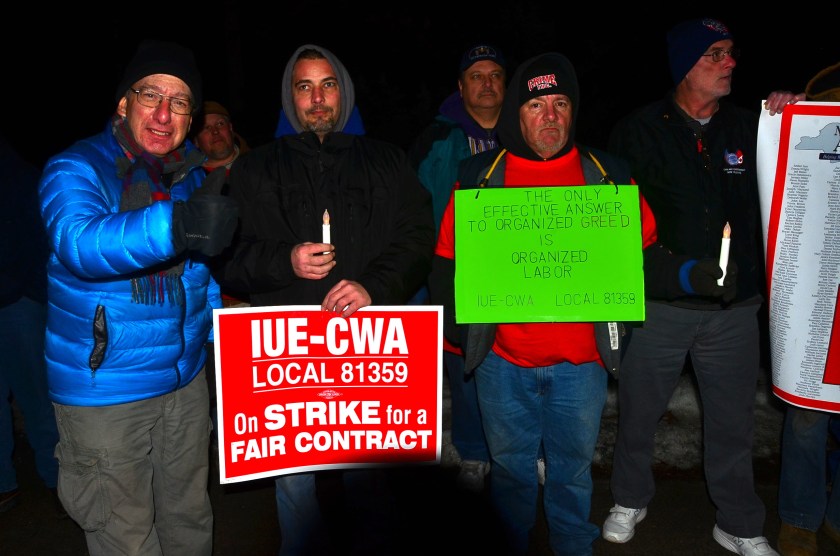
Members of the International United Electrical Workers and the Communications Workers of America have been on strike in Waterford now for eighty-two days against Momentive.  I have discussed the details of this job action in another blog.  The company was bought from General Electric by Apollo Global Management which is run by Leon Black and Steven Schwartzman.  These are two of the wealthiest men on Wall Street which makes them two of the wealthiest men on earth.

After successfully cutting wages and benefits in a previous contract with the unions they now want to cut health benefits for both current employees and retired employees as well as cut retirement benefits among other give backs.

This evening (Monday, January 23, 2017) the employees set up a picket line at Jack G. Boss’s home off Meadowbrook Road.  Mr. Boss, who is the CEO of Momentive, had a compensation package of $5,418,611.00 in 2015.  Picture of Mr. Boss.

Joe Levy and I went out to see what was going on.

Everything was rather quiet in the cold night until a man driving an Audi with his children in the car stopped in front of the union members holding a banner.  Much of this incident was caught on video by channel 13. One of the strikers approached the car and this elegantly dressed gentleman got rather ugly.  To my amazement, in spite of the fact that there were approximately fifty men from the unions there, he got out of his car appearing to be interested in a fight.  If you find this hard to believe, watch the video.

joe10
The Guy In The Audi and his son

What was most impressive was the restraint of the union members and the excellent job done by the two city police officers who were present.  The police officers got this gentleman  back in his car and patiently urged him to leave.  This was another time I was very proud to be living in Saratoga as I watched our city’s officers work to defuse the situation.  The man continued to be belligerent with the police.   I couldn’t hear it all but I did hear him ask the police officer, “Do you know who my wife is?”  “I’d like your name.”  “How long have you been a policeman?” (seventeen years he was told). 

The police officer pointed out that the man had children in the car and suggested he should  take them home.  None of this seemed to do much good.  I cannot recall exactly how the police officer put it but in a very dignified and firm voice he sent the message to the man that if he did not leave action would be taken.  The man finally left. 

The man’s  license plate was “Joe 14”.   If anyone recognizes this man I would very much like to know who he is and who his wife is who apparently is someone “important.”

Other than that, the event was all very peacefulWe left around 6:30.  The event was to end at 7:00.


Charter Commission Makes Budget Data Available ($82,700.00)

I contacted Bob Turner, chair of the Charter Commission.  Mr. Turner has always been very responsive.

I asked him when legally they must complete their charter draft.  He responded that it must be done sixty days prior to the public vote.  In light of their plan to have the vote on May 30, they would need to complete their work by March 31.

I asked him what their target date is for completing the charter.  He responded that they are aiming for mid February.

I asked him what their budget was for this year.   He said they were projecting $46,000.00 for support for their deliberations.  He broke it down as follows.

They are projecting $20,000.00 for legal work.  This would include $10,000.00 for the on-going assistance of assistant city attorney Tony Izzo and $10,000.00 for Robert Batson, Government Lawyer in Residence at the Government Law Center of Albany, to serve as the commission’s drafting attorney.  Batson has considerable experience in drafting charters, having assisted the following cities in charter review efforts: Albany, Amsterdam, Cohoes, Glen Cove, Oneonta and Troy, NY, a mix of city manager, strong mayor and hybrid forms of government.  From 1978 to 1995 he served as liaison between New York State and the governments of various Indian nations, and represented the State in negotiations on many issues, including land claims and gaming compacts.

They are projecting $20,000.00 for outreach and education.  I am assuming this will mean some sort of mailing to the voters.

They are projecting $6,000.00 for the stenographer who records their meetings.

In addition, they project the cost for the special election in May to be $36,700.00

The total cost then would be $82,700.00.


JK:As has been covered in previous posts, there has been some controversy over whether the City Council is required to provide funding for the May 30 referendum.  Mr. Turner forwarded me a number of documents on this issue.  Commissioner Franck, who has adamantly opposed spending $37,000.00 on the May 30 referendum appears to agree with Mr. Turner’s legal analysis.  The one grey area has to do with what is considered a “reasonable” expenditure.  Lawyers might argue that the cost of a special election is not reasonable because it could piggy back on the November election.  What the merits are to this argument and whether any members of the city council want to invest the political capital in such a fight remains to be seen.


To: Mayor Joanne Yepsen

Comm. Michele Madigan

Comm. Skip Scirocco

Comm. Christian Mathiesen

Comm John Franck

Cc: Members of the Charter Review Commission

From: Anthony J. Izzo

Re: Charter Review Commision – Expenses – Municipal Home Rule Law

Date: January 11, 2017

At the last council meeting questions arose over the authority of a charter review commission to determine that a proposed new charter should be submitted to the voters at a special election rather than at a general election.

Wade Baltramo, general counsel to the New York Conference of Mayors, has been consulted and has cited a 1987 Attorney General’s Office informal opinion clearly establishing that, unless the certificate creating the charter review commission specifies a general election only (and no certificate I have seen for any charter commission in this city has ever been so specific), the charter commission determines whether the proposal is submitted at a general or special election. A copy of this opinion is attached.

I am unable to cite any specific authority as to whether the expenses of a special election must be a charge against the city under subsection 36 (6)(c) of the Municipal Home Rule Law. This subsection provides that “appropriate city officials” have power, upon the request of the commission, to “appropriate to such commission such sum or sums as may be necessary to defray its expenses”. If those city officials do not provide the requested sum or sums within 45 days, the mayor of the city may file a certificate authorizing the commission to incur such expenses, and at that point those expenses “shall be a charge against the city and…audited and paid by the appropriate officials of the city”. I can find no authority definitely establishing whether the expenses of a special election are deemed “necessary” within the meaning of subsection 36 (6)(c). However, I believe that, given the premise that a commission has authority to cause a special election, a court would give substantial weight to a request for special election expenses, especially if it could be shown that the proposed special election would cost about as much as any other special election, and that its scheduling was reasonable.

I again recommend discussion and cooperation between council members and members of the charter review commission in resolving issues such as these. Please let me know if I can be of assistance.


Hi John,

To understand the budget discussion, you also need to understand NY Home Rule law 36.

At present, the Charter Review Commission has asked the Mayor to submit a budget transfer request to pay for our general administrative expenses ($46,000) and the special election ($37,000).  The Mayor has submitted a budget transfer request to the Finance Commissioner.  It may or may not be voted on in a special session of the city council.

State law is very clear that the Charter Review commission has the authority to call a special election and that the City Council does not have the authority to vote a budget up or down.  The specific language from NY Home Rule law 36 is:

(c) In addition to action under any other power to make appropriations for the support of a charter commission, the appropriate officials of the city shall have power, on request of the commission, to appropriate to such commission such sum or sums as shall be necessary to defray its expenses and, in the event the appropriating body or bodies do not take affirmative action to provide such sum or sums within forty-five days of the commission’s request, the mayor of the city shall have power to authorize, by certificate filed with the fiscal officer or officers of the city, the commission to incur liabilities and expenses as specified by him, but within the sum or sums so requested, which shall be a charge against the city and which shall be audited and paid by the appropriate officials of the city.

NY Municipal Home Rule Law 36 is very clear in trying to ensure that charter review commissions are independent from political interference.  The legislature recognized that charter commissions might want to change forms of government in ways that threatened the political status quo and ensured that it was independent from those political processes.

NY Municipal Home Rule Law 36 established the procedures for how the city charter review process is governed.  At its core is the principal that the commission should be independent from political interference, hence the commission’s authority to decide when the referendum is heard and ability to be reimbursed for special elections.  The law and case law establish very clearly that the Charter Review Commission has the authority to call a special election (see Wade’s email and the advisory memo).  NY Municipal Home Rule Law 36 states:   Any election has to be run by the normal established election rules and ..

the city must award the commission such sum or sums as shall be necessary to defray its expenses

Below is:

  1. The legal opinion from Wade Beltramo, general counsel for NYCOMM
  2. The NY Attorney General opinion that charter commissions have the right to call a general or special election
  3. a legal memo from Tony Izzo, assistant city attorney, about the law (memo council charter expenses)
  4. The Shamon case which establishes the precedent that charter commission can incur expenses and the City must pay them.

If you were looking for an outside legal opinion, I would try Wade Beltramo, the general counsel for NYCOM-  518-463-1185, wade@nycom.org

Bob [Turner]


115 A.D.2d 326

Supreme Court, Appellate Division, Fourth Department, New York.

George J. SHAMON, Edward L. Lauckern, Donald J. Poole, Michael J. Cuddy, Individually and as members of the Auburn City Council, Respondents,

v.

Paul W. LATTIMORE, Individually, and as Mayor of the City of Auburn, Virginia Govern, Individually and as Chairman of the Auburn Charter Commission, Auburn City Charter Commission, Leo G. McGee, City Comptroller, Frederick W. McDonald, Acting Chairman of the Auburn City Charter Commission, Respondents, and George W. Cregg, Sr., Appellant.

Nov. 15, 1985.

Petition was filed to annul acts of city charter commission and mayor in incurring and authorizing payment of the commission’s legal fees. The Supreme Court, Cayuga County, Provenzano, J., granted the petition, and defendants appealed. The Supreme Court, Appellate Division, held that charter commission and mayor properly incurred and authorized payment of the commission’s legal fees.

Reversed.

West Headnotes (3)

[1]


Municipal Corporations

Counsel

Public Employment

Election or appointment


  A municipal body, in retaining counsel and incurring legal fees, acts ultra vires absent specific statutory authorization or appropriate resolution and appropriation by the governing body.

1 Cases that cite this headnote


[2]


Municipal Corporations

Municipal debt, securities, and funds


  City charter commission’s power to incur legal expenses [McKinney’s Municipal Home Rule Law § 36, subd. 6(a, b)] necessarily implies power to direct that those expenses be paid.

1 Cases that cite this headnote


[3]


Municipal Corporations

Making and requisites


  City charter commission’s legal expenses were properly appropriated where mayor filed certificate of authorization with city comptroller 45 days after city council’s rejection of the commission’s appropriations request and where the commission subsequently reconfirmed the contract. McKinney’s Municipal Home Rule Law § 36, subd. 6(c).

Cases that cite this headnote


**189 Before *327 DILLON, P.J. and DOERR, DENMAN and BOOMER, PINE, JJ.

Opinion

*326 MEMORANDUM:

[1] [2] It was error for the court to grant the petition to annul the acts of the Charter Commission and the Mayor in incurring and authorizing the payment of the Commission’s legal fees. A municipal body in retaining counsel and incurring legal fees acts ultra vires absent specific statutory **190 authorization or appropriate resolution and appropriation by the governing body (Cahn v. Town of Huntington, 29 N.Y.2d 451, 454–455, 328 N.Y.S.2d 672, 278 N.E.2d 908; Seif v. City of Long Beach, 286 N.Y. 382, 385–386, 36 N.E.2d 630). Here, however, there was express statutory authorization for the Charter Commission to retain counsel and incur legal fees (cf. Port Jervis Water Works Co. v. Village of Port Jervis, 151 N.Y. 111, 116, 45 N.E. 388). Municipal Home Rule Law § 36(6)(a) provides that members of the Commission “shall be reimbursed for the actual and necessary expenses incurred by them in the performance of their duties.” Municipal Home Rule Law § 36(6)(b) provides that the “Commission shall appoint * * * consultants as it shall require and fix their compensation * * * ” The power to incur legal expenses necessarily implies the power to direct that those expenses be paid (see Glendon v. City of New York, 276 N.Y. 329, 332–335, 12 N.E.2d 428).

[3] Moreover, the Commission’s legal expenses were authorized by the Mayor. Municipal Home Rule Law § 36(6)(c) provides:

[T]he appropriate officials of the city shall have the power, on request of the commission, to appropriate to such commission such sum or sums as shall be necessary to defray its expenses and, in the event the appropriating body or bodies do not take affirmative action to provide such sum or sums within forty-five days of the commission’s request, the mayor of the city shall have power to authorize, by certificate filed with the fiscal officer or officers of the city, the commission to incur liabilities and expenses as specified by him, * * * which shall be a charge against the city and which shall be audited and paid by the appropriate officials of the city.

The record establishes that the Mayor appropriated the Commission’s legal expenses by filing a certificate of authorization with the City Comptroller 45 days after the City Council’s rejection of the Commission’s appropriations request. The Commission subsequently reconfirmed the contract. Thus, the Commission’s legal expenses were properly appropriated.

Judgment unanimously reversed on the law with costs, and petition dismissed.

All Citations

115 A.D.2d 326, 496 N.Y.S.2d 189

End of Document


© 2017 Thomson Reuters. No claim to original U.S. Government Works.


From WADE Beltramo

  1. Per our conversation, the relevant provision regarding the scheduling of the election is Municipal Home Rule Law § 36(5)(b), which provides in relevant part:

(b) Such new charter or amendments shall be completed and filed in the office of the city clerk in time for submission to the electors not later than the second general election after the charter commission is created and organized. The local law or certificate establishing the commission or, in the absence of such provision therein, the charter commission shall provide for such publication or other publicity in respect to the provisions of the proposed charter or amendments as it may deem proper, and for submission thereof to the electors of the city at a general or special election held not earlier than sixty days after the filing thereof in the office of the city clerk and not later than the next general election which does not occur within the said sixty days, provided, however, that if such general election occurs within ninety days after the said filing, the proposed charter or amendments shall be submitted at such general election. [emphasis mine]

Attached is an opinion from the Office of the Attorney General which concludes

We conclude that the local law or certificate establishing a charter commission may determine whether a proposed charter or amendments to an existing charter are to be submitted at a general or special election. In the absence of such a determination, the charter commission may determine the election at which the proposals are submitted to the voters for approval.  [emphasis mine]

Consequently, assuming the City of Saratoga Springs did not place any restriction on the charter commission when it was formed, pursuant to MHRL § 36, it is the charter commission which determines whether to put the charter amendment to a vote at a general or special election.

I hope that this is helpful.  If you have any questions or would like to discuss this matter further, do not hesitate to drop me an email or give me a call.

Wade Beltramo

General Counsel

New York Conference of Mayors

119 Washington Ave., 2nd Floor

Albany, N.Y.  12210

518-463-1185

518-463-1190 (Fax)

wade@nycom.org


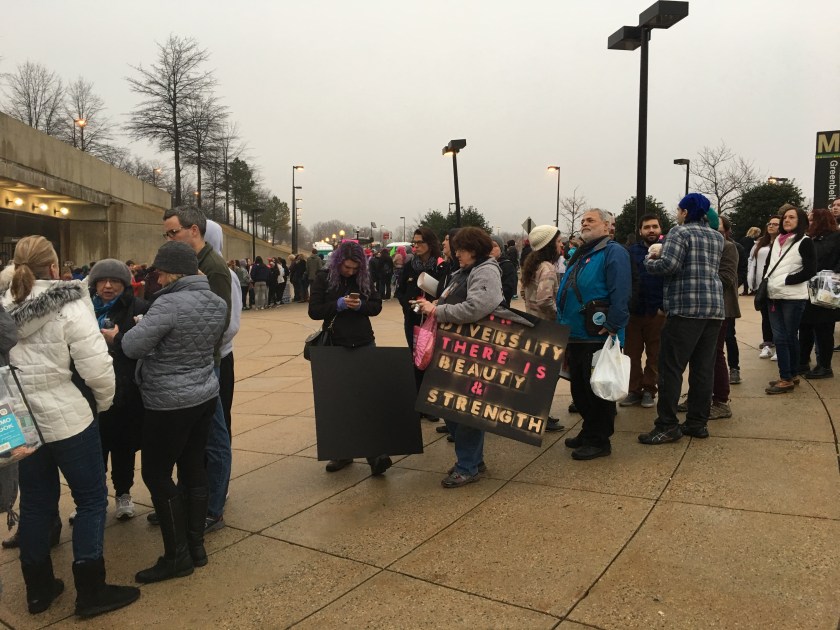
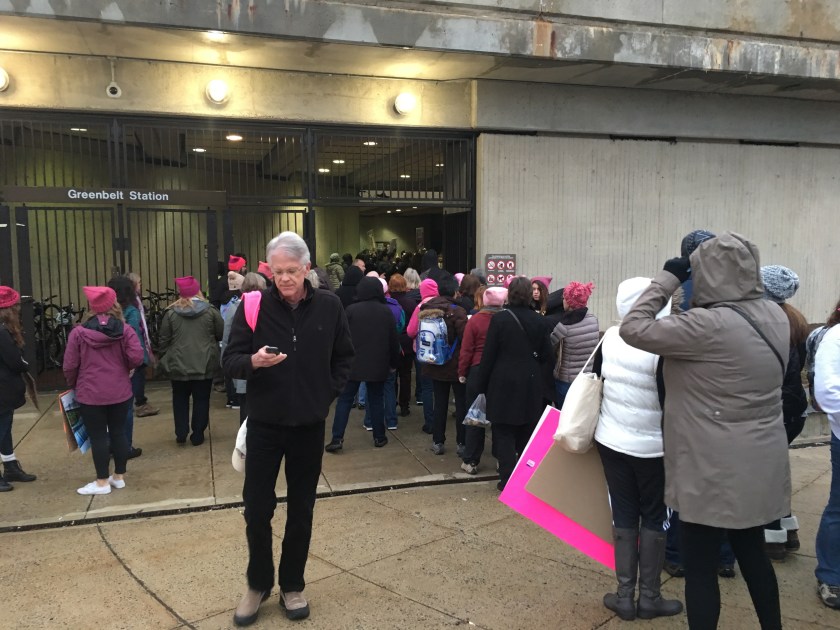
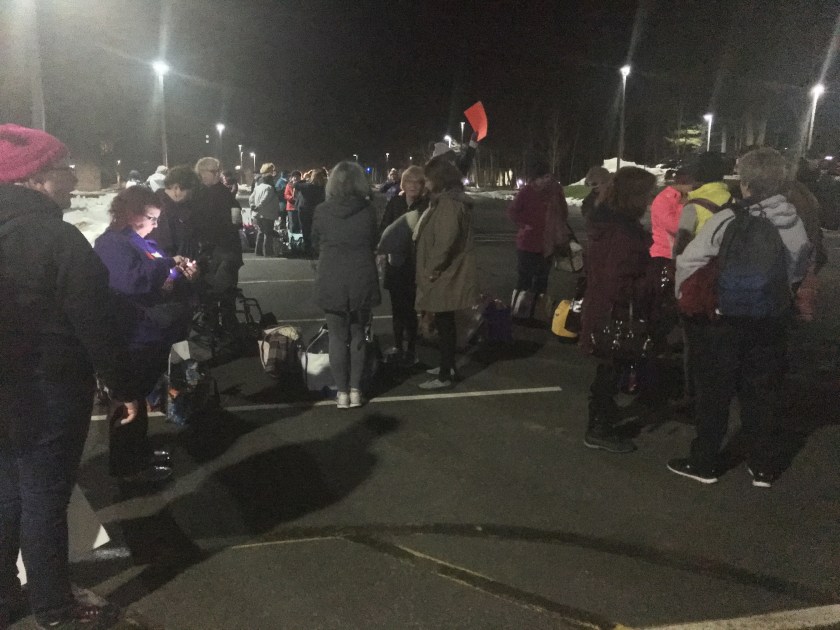
Michele Madigan On Why She Marched

[JK: I received this from Michele Madigan]

Why I marched at the Women’s March in Washington with family, friends, and women from around the world.

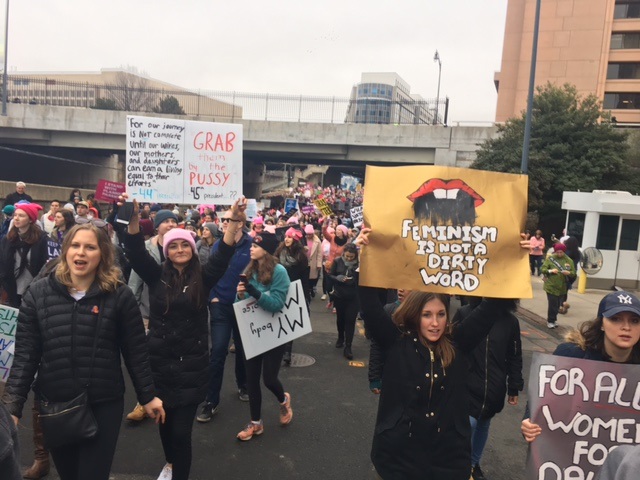
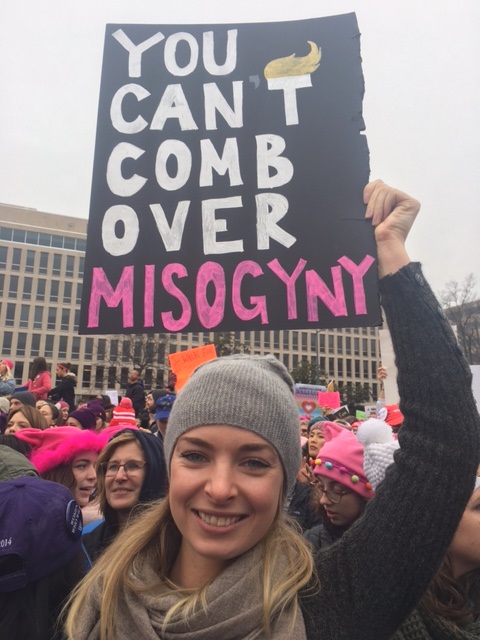
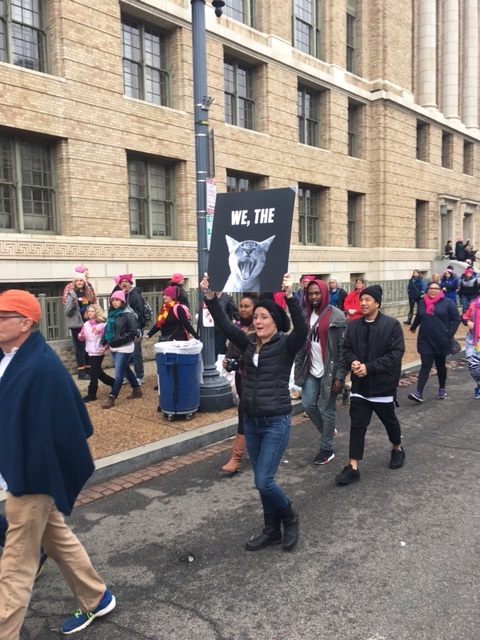
I was proud on January 21, 2017 to stand among millions of women, men, and even some children from around the world in peaceful demonstrations to support issues of equality, healthcare, a free press, science, environmental protections, our public schools, facts, social progress and so much more.  There wasn’t any one particular issue that I marched for, but for our great country and for democratic civic engagement.  I should point out that this wasn’t my first march in DC.  I could be found supporting many of these same issues in 1992 on my first bus trip to Washington DC with one of the very same women I traveled with in 2017, my cousin and close friend Susan Kirby-LeMon.  I’ve always been a woman of action and this is what prompted me to run for local office here in Saratoga Springs.  I’ll never apologize for dissenting, organizing and protesting peacefully for issues I feel strongly about.

There are many reasons why people from all over the world felt the need to march and protest yesterday.  For me it wasn’t an anti-Trump rally; however, his harmful rhetoric and proposals on the campaign trail certainly give me grave concern and contributed to my feeling such a strong need to march again in DC.

At the end of the Women’s March, I was overwhelmed with a feeling of community and solidarity with my fellow Americans, New Yorkers, my local community, my new bus friends, and my Congressman, Paul Tonko who marched yesterday. We all just felt really good about the day and our accomplishment in being there in unity with one another.  It was a peaceful and beautiful day to March.

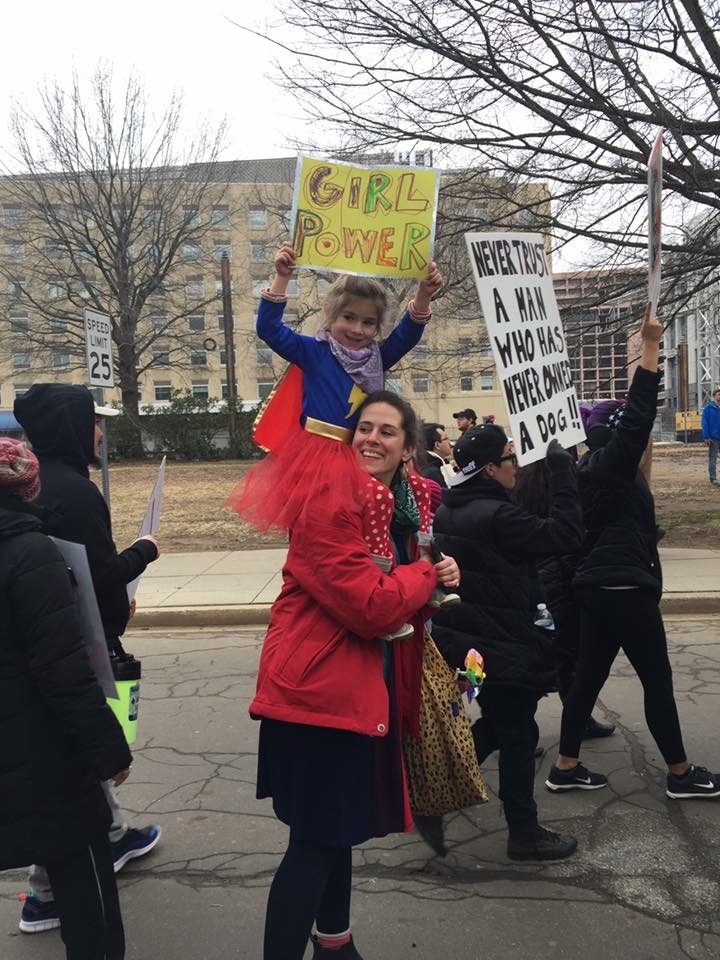
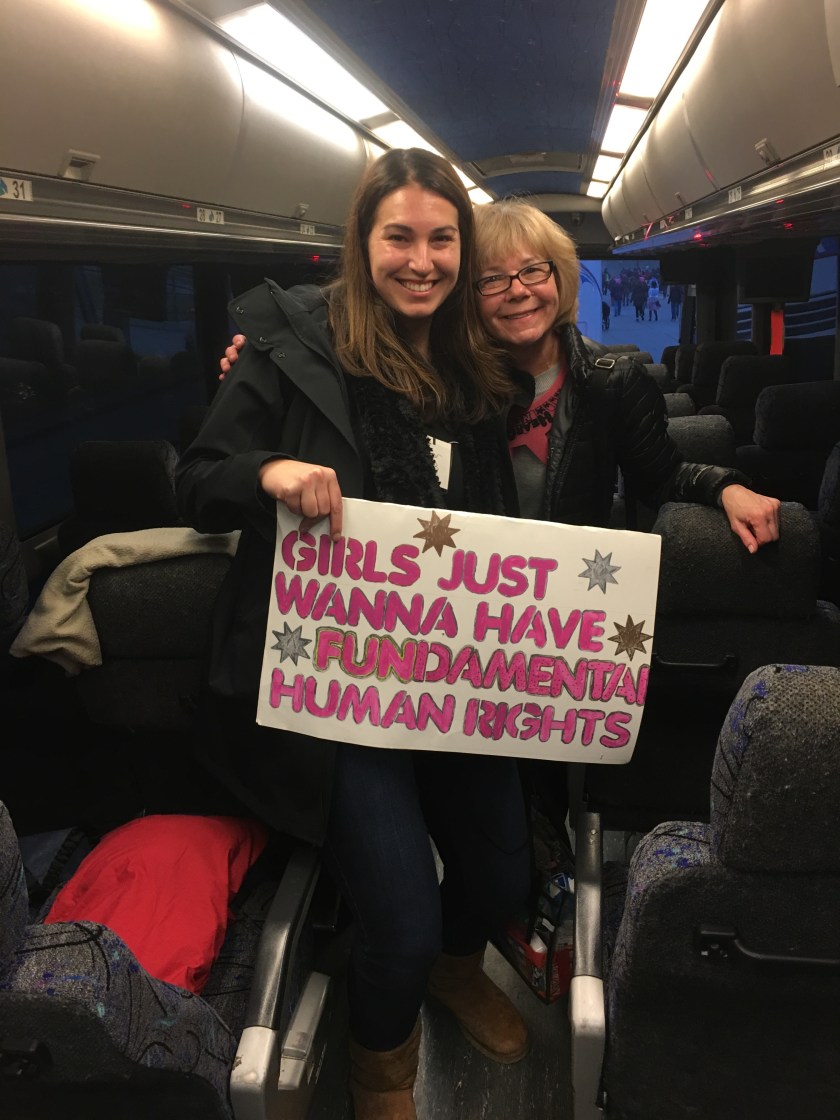
Many thanks to John Kaufmann for the offer to document the day with pictures and now my thoughts.  A final picture that I have been saving sums up why I went and it is my very favorite picture of the day – that’s right “Never Trust a Man Who has Never Owned a Dog” (I kid) – it’s all about the GIRL POWER:

girlpower

Charter Commission: Protecting Politicians From The Mob?

It has been clear from the beginning that the Charter Commission (CC) was going to recommend that the “Commission” form of government that currently exists in Saratoga Springs should be replaced.  Of the fifteen members of the commission, eleven were appointed by Mayor Yepsen and, as was her prerogative, she selected people who shared her antipathy to the Commission form. 

 While her appointments shared her desire for change, they have taken their mission very seriously and each has shown that they come at their job with gravity, respect, and independence. While I very much disagree with some of their decisions  that should not be interpreted as challenging their character. 

One of my differences with them was their decision at their January 12th meeting to construct a city council with four year staggered terms.  Here is a link to the video.  It is very much worth watching at least a little of this video to get a feeling for the members of this commission.  Mr. Turner shows patience and good humor in running a very fair meeting.  I think the readers of this blog will be impressed with the thoughtfulness of their deliberations.

 Respecting the CC is not the same as agreeing with it, however. 

At this meeting the members of the CC reached a consensus that the terms for the members of the City Council should be extended from two years to four years.  They also agreed that the terms should be staggered.

The commission members  argued that extending and staggering the terms would allow for greater continuity. They noted that running every two years was onerous.  They cited the time required to campaign and particularly noted the demands of raising money. 

I am dubious about the concern over the need for greater continuity .  Having observed our Council for decades there seems to have been relatively little dramatic turnover. The one exception that I can think of was when four Republican officeholders were defeated by  Democrats in 2005.

I  understand their argument about the burden of running for office every two years.  To me, though, this concern has to be balanced against  what I think is the more important  problem of the damage that could be inflicted on the city if an irresponsible officeholder could continue in office for four years instead of just two. Staggered terms would also mean that if a council majority was problematic voters would  have to wade through two election cycles before being able to shift the majority to officeholders who better reflected the public’s will.

Insulating Those In Power From The Public

There is another underlying factor about the commission’s configuration of a new council which I find troubling.

There is a strong tradition in American politics of trying wherever possible to insulate elected officials from the public at large.  This desire to limit public participation is often related to a skeptical view of the ability of voters to make rational choices.

In a recent post on this blog Rick Fenton wrote the following in support of the commission’s plan to design a council with four year staggered terms::

“They [staggered terms] reduce the power of voting blocs, special interest groups or political action committees to stage a takeover of city government at a single election

This is a rather odd concern.  How have orderly elections in a democracy morphed into Mr. Fenton’s fear of coups?  While I have been disheartened by the results of many of our two year cycle elections, I have never attributed the results to some sort of cabal by a small group of people in the city who were able to hoodwink a majority of voters into putting them into power.  It always seemed instead  that the majority of my fellow voters  sometimes did not share my priorities.

Mr. Fenton also  worries that the “mob”, aroused over a single issue, would foolishly cause a “drastic shift in city leadership. He writes:

“And they [staggered terms] reduce the possibility that voter wrath over a single controversial issue will cause a drastic shift in city leadership.

First it is important to note that in four years a sitting majority can pass a lot more than one bad piece of legislation but whether the public was outraged by one or fifty council actions voters would still have to wait at least four years instead of two under the charter commission’s proposal to change the makeup of a Council they felt was not reflecting their wishes. For me, even one bad vote could be enough to merit replacing a council.  Had the City Council voted to support a full scale casino, for instance, I would have felt the public fully justified in voting out that council.

Charter Commission chair Robert Turner turned to the Federalist Papers in support of inhibiting the ability of voters to easily alter the majority of a council by instituting four year staggered terms.  In the spirit of Thomas Hobbes, he quoted the Papers on the need to “…guard against the confusion of a multitude.” 

Alexander Hamilton, one of the Federalist Papers’ three authors, was famously no friend of the “mob” or the common people. In his view “The people are turbulent and changing; they seldom determine right” and he looked to “the few…..the rich and the well born…to check the unsteadiness of the [mass of the people].”

In 1824 Thomas Jefferson observed  that “Men…are naturally divided into two parties.  Those who fear and distrust the people….and those who identify themselves with the people, have confidence in them…and consider them the most honest and safe depository of the public interest”. Unlike Hamilton, Jefferson believed that “Whenever the people are well-informed, they can be trusted with their own government, whenever things get so far wrong as to attract their notice, they may be relied on to set them to rights.”  I fully share this sentiment when I think about the people of our city.

While I do not believe in the infallibility of the voters, my confidence in the people they elect is equally jaundiced. Insulated from  the “mob” for four years, the judgment of officeholders is vulnerable to a lobbying industry whose money, influence, and social status works continually to subvert the public good, even in our little city.  In fact I think there is a direct correlation between the length of time between elections and the influence of special interests.  Politicians seem far more interested in the public’s concerns the closer they are to an election thus the appeal for me of two year rather than four year terms.

As valuable as stability is, for me responsiveness to the voters should be the priority.


League Of Women Voters Invites Public To Meeting On Possible NY Constitutional Convention

conventionShould NY have a Constitutional Convention?
 

Monday, Jan. 23, 2017 6:15 pm. New York’s current constitution requires that the question “Shall there be a convention to revise the constitution and amend the same?” be put to the voters of this state every 20 years. 2017 is the year that that question will appear on the general election ballot. Should LWVNY take a position for or against? Why? On January 23 our League will meet to hear the pros and cons of a “Con Con.” Laura Ladd Bierman, Executive Director of LWVNYS and Jennifer Wilson, Program and Policy Director of LWVNYS, will be our speakers. Light refreshments will be served. MEETING PLACE:  Community Room of the Adirondack Trust Office Building. 35 Church Street, Saratoga Springs.  BUT you have to enter from the top floor of the City parking garage that is located on the corner of Woodlawn and Walton.  (The entry to the upper deck is from Walton).   In other words:  Enter the building from the top level of the parking garage across from the Criterion Bowtie Movie Theater on Church Street. Map

 Board Meetings are open to all MEMBERS: Held 1st Wednesday of the month at 7:00-9:00 pm; United Methodist Church, Henning Road,Saratoga Springs, NY

MEMBERS can receive our quarterly Bulletin electronically (it arrives in your inbox as a link in one of the Mail Chimp messages). Be sure to let us know if you change email addresses. You will also receive our Newsletter via US Mail unless you opt

MM Adventure Continues

untitled
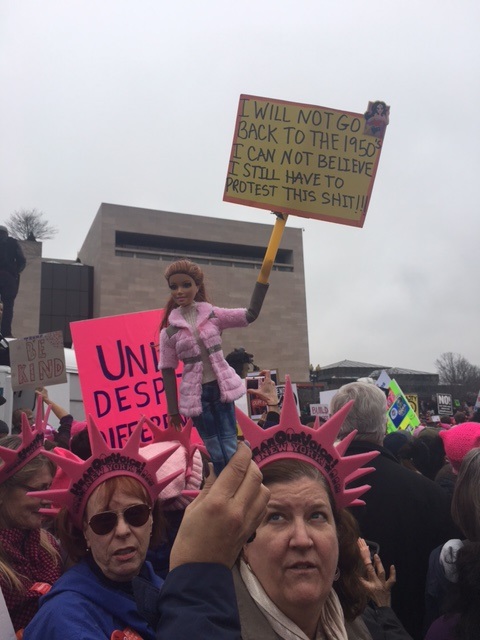
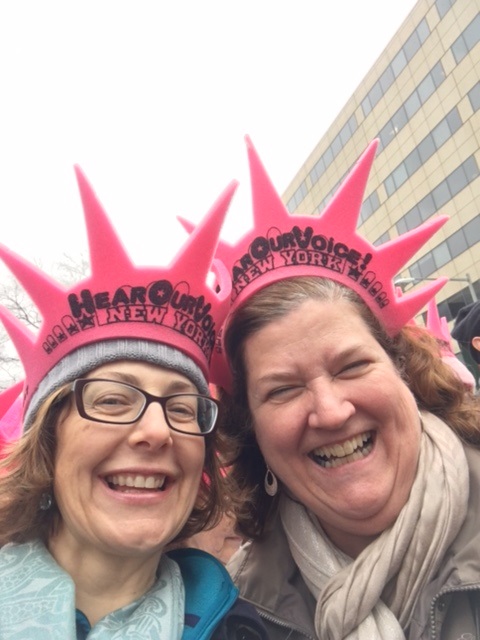
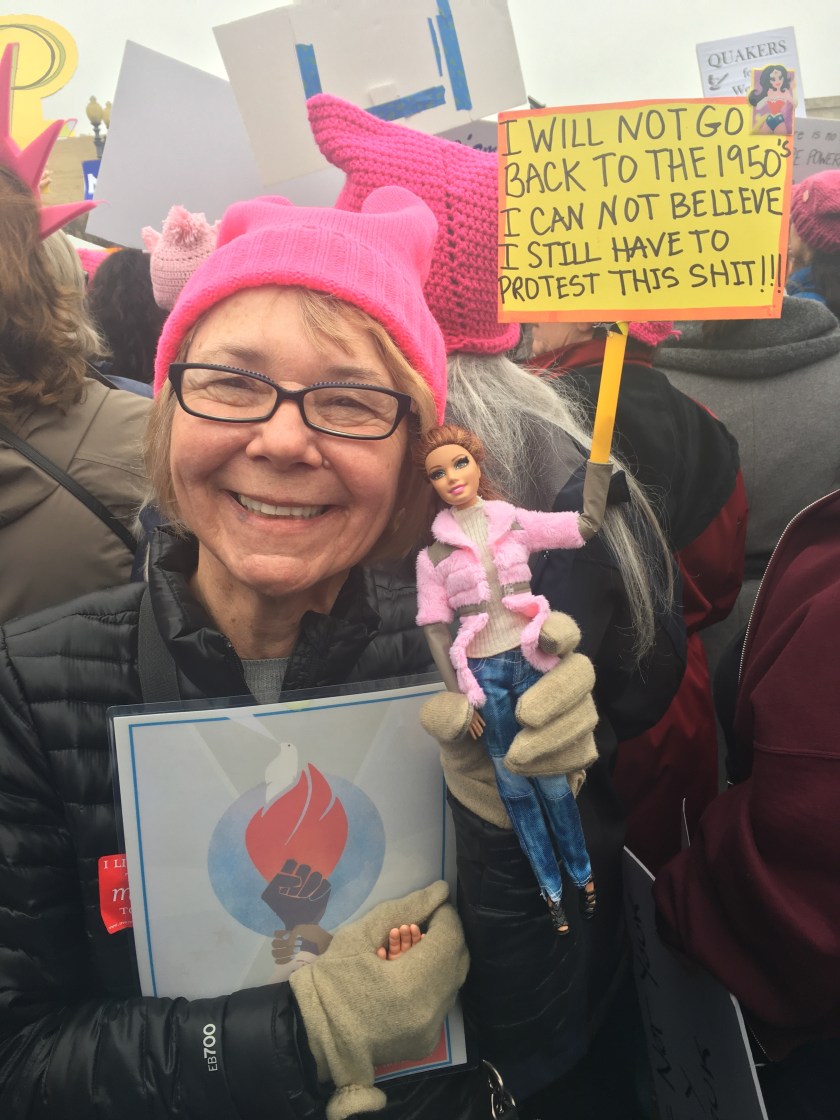
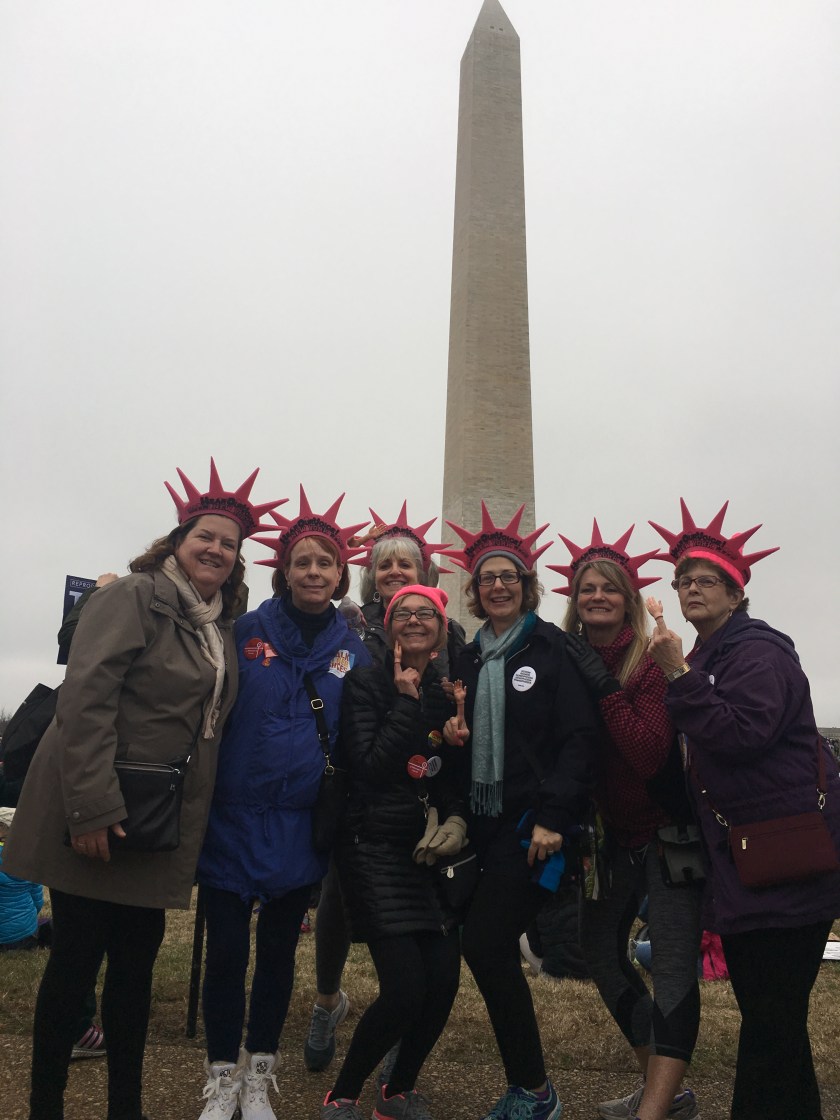
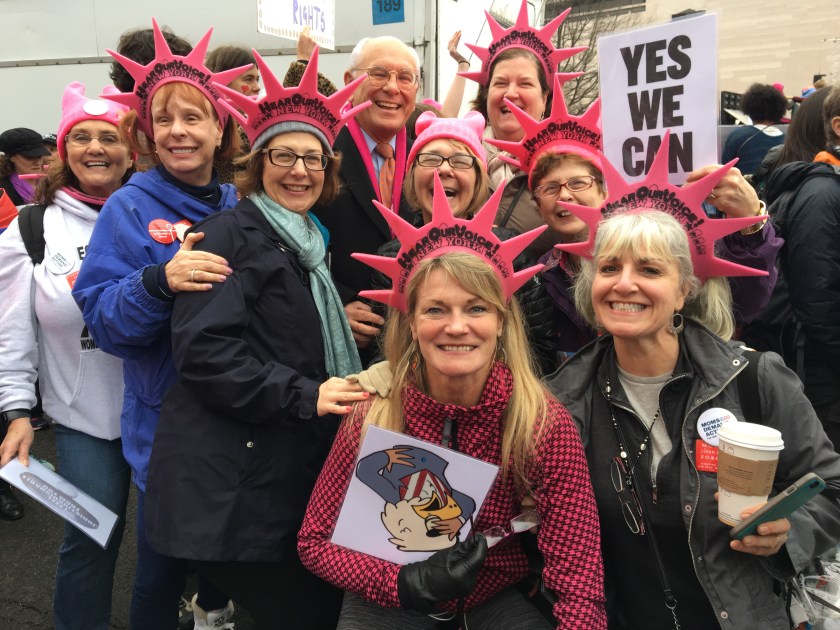
All pumped up. Wearing my grey pussy hat and our pink Statue of Liberty NY hats. Michele Madigan, Fran Mathiesen, Eileen Finneran, Susan Kirby-LeMon (my cousin), Vicki Clark (my mom), Linda Gibeault, Gayle LaSalle, Cheri Monaco.
uiveraslright
And More Fun! (Fran Mathiesen On Right)


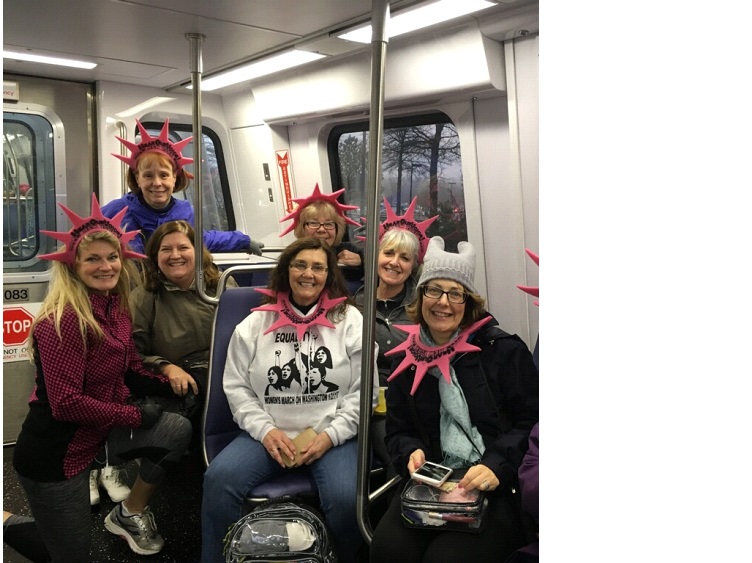
img_9777img_9809onsubway

withmom
The commish and her mom

pussygatherguywaits

Michele Madigan’s Great Adventure: Women’s March

img_9775
Waiting For The Bus
img_9767
Michele on left. Eileen Fineran on right next to Fran Mathiesen

[JK: I asked Michele Madigan to post me pictures and stories regarding the Women’s March in D.C.]

They left at 11:45 this evening on a bus to D.C.  She is traveling with her mother.