City To Have Forum On Panhandling

[Story from April 5 Gazette by Stephen WIlliams On Panhandling Forum]

Saratoga Springs plans forum on aggressive panhandling

By Stephen Williams May 4, 2016

SARATOGA SPRINGS — A problem with panhandling in downtown Saratoga Springs is growing, city officials said, and a Public Safety Department forum later this month will be devoted to the issue.

The forum is being scheduled as a public petition circulates calling for the city to do something about aggressive panhandling, and a week after a dozen homeless people were arrested on trespassing charges, based on complaints from private property owners.

The number of complaints the city has received about people aggressively asking passersby for money on or near Broadway’s busy sidewalks is increasing. There’s a debate about whether those begging are local homeless, or hustlers coming from elsewhere.

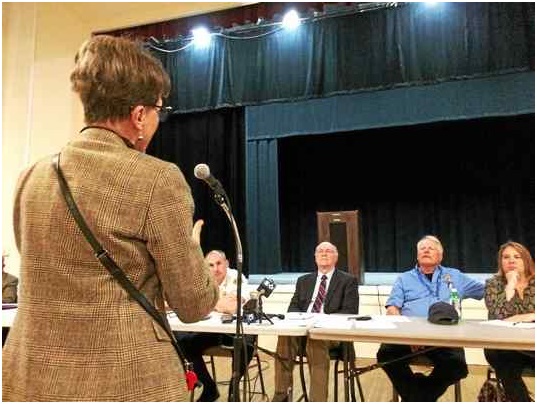
Public Safety Commissioner Chris Mathiesen has scheduled a public forum for 7 p.m. Thursday, May 19, at City Hall, which will be devoted to the issue and its nuances.

“There are no simple, straightforward solutions at all,” Mathiesen said at Tuesday’s City Council meeting.

In a post on its Facebook page following the arrests, the Saratoga Springs Police Department said homelessness isn’t a crime, but those who break laws will continue to be arrested.

Simply asking other people for money is considered constitutionally protected free speech, though doing so in an aggressive manner can become a crime.

“There’s been a rapidly growing number of complaints,” said Mayor Joanne Yepsen. “I’m getting complaints and emails about panhandling.”

Yepsen, who helped start the Code Blue homeless shelter in 2013 and has worked on homelessness issues since becoming mayor, believes many of the problems are being caused by people who aren’t local, and come into the city to beg because panhandling is more profitable in the city, where downtown sidewalks are commonly crowded with people.

“The aggressive panhandlers we are seeing that are really causing trouble are not homeless,” Yepsen asserted.

Yepsen said the public needs to stop giving panhandlers money. The Downtown Business Association is planning to install drop-boxes in the next few weeks where people can leave money that will be used to help the homeless, as an alternative to giving money directly to those who ask.

“Begging is not illegal, but aggressive, touching behavior is,” Yepsen said. “Blocking somebody’s path is illegal.”

The Shelters of Saratoga homeless shelter operates the overnight cold weather Code Blue and a once-a-week daytime drop-in program, but those staying at the shelter must refrain from substance abuse and agree to counseling — something some homeless won’t do.

“A majority of these people are suffering from mental illness. They’re not getting their medication, so what is happening? They self-medicate,” said Michael Finnochi, executive director of Shelters of Saratoga.

Yepsen said her office is working on the idea of a permanent daytime drop-in shelter for the homeless, but lacks a spot for it and is without major private financial assistance.

Finance Commissioner Michele Madigan said she’d be willing to spend the money to put more police patrols on the street, though there’s not yet a cost estimate for that. “I think that’s an expense the city is willing to bear,” she said.

Accounts Commissioner John Franck, who owns a building on Broadway, said he has regular encounters with disruptive people and has witnessed public urination.

“I don’t know what the solution is. I do know there’s a problem,” Franck said.

The May 19 forum is expected to include representatives of the Police Department, the city attorney’s office, Shelters of Saratoga and Wellspring, which offers emergency and shelter services and domestic violence and assault victims.


One Of The Owners Of Saratoga National Golf Course Sued for Skimming Tips and Not Paying Overtime

PrimeSign
Sign At Entrance To Saratoga National Golf Course

Ex-Mazzone employee files suit over withheld tips

[From Gazette Newspaper of May 4, 2016]

By John Cropley May 3, 2016

ALBANY — A former employee of Prime at Saratoga National is suing Mazzone Management, saying the catering and restaurant giant illegally withheld tips and failed to pay overtime wages.

Attorneys for Julio A. Olvera of Saratoga Springs — who worked for Mazzone as a server and bartender from 2009 to 2010 and 2013 to 2015 — are seeking class-action status in the lawsuit filed Friday in U.S. District Court for the Northern District of New York, saying there are at least 50 other people who were treated similarly.

The lawsuit centers on three alleged practices by Mazzone Management in its catering operation and at its numerous restaurants across the Capital Region:

  • Withholding 1 percent of tips paid by restaurant customers who had ordered a glass of wine and 3 percent of tips on purchase of a bottle of wine.
  • Adding a 20 percent “service charge” to catering bills that customers might reasonably assume was a gratuity for service workers paid hourly wages, but which was not then passed along to the workers.
  • Failing to pay 1.5 times the hourly wage to employees who worked more than 40 hours per week.

These actions, the lawsuit charges, violate both New York Labor Law and the U.S. Fair Labor Standards Act.

In a statement, Mazzone Hospitality declined to comment on the allegations because they are an ongoing legal matter. “For more than 30 years, Mazzone Hospitality has operated its restaurants and catering divisions with the highest level of integrity,” the statement said. “We take these allegations very seriously and will continue to comply with all federal and state regulations.”

Named as defendants are Mazzone Management Group Ltd. and Mazzone Management Inc.; four Mazzone restaurants, Tala Bistro, 677 Prime, Prime at Saratoga National and Aperitivo Bistro; and two leaders of the operation, father and son Angelo and Matthew Mazzone, the owner and chief operating officer, respectively.

Fleischman Law Firm of Manhattan, representing Olvera, said the amount of money in question, counting the other potential plaintiffs if class-action status is granted, is in excess of $5 million. The lawsuit seeks the unpaid compensation; doubled damages as provided for under state and federal statute; interest; and attorney fees and costs.

The firm did not return a call seeking comment today. But the lawsuit offers some details of the allegations:

  • When Olvera questioned the 1 percent and 3 percent tip withholding, he was told to speak with Sheila Burke, Mazzone Hospitality’s vice president of restaurants. She told him it was required to maintain Mazzone’s wine program.
  • Olvera worked at events catered by Mazzone, at which employees of other restaurants operated by the company told him tips on wine were partially withheld there as well.
  • Customer gratuities for employees earning less than minimum wage must be passed entirely along to the employees.

In its statement, Mazzone did not address the allegations directly, but said its employees are crucial to the company.

“Mazzone Hospitality truly values the contributions our employees have made towards our success, as well as their hard work and dedication to the company,” it said. “We maintain a steadfast commitment to our staff and will continue to provide our guests with the outstanding service and experience synonymous with Mazzone Hospitality.”


City Council Scrums Over Mayor’s Ethics

Commissioner Mathiesen had on his agenda Tuesday night a discussion of the alleged violation of the city’s ethics code by Mayor Yepsen.  After reading his statement that appeared in the Saratogian and was reprinted here, a lively discussion took place.

It is interesting to note that Michele Madigan and Skip Scirocco complained that it had been months since they submitted their original inquiries to the city’s ethics board without a reply.

Having had a similar experience I publish below the response by Justin Hogan, chair of the Ethics Committee on the issue of the board responding.  Basically, there is no limit.

Tony Izzo, who serves as attorney for the Ethics Board responded to a question by Skip Scirocco, that the Ethics Board can only issue advisory opinions and has no disciplinary authority.

The discussion was quite spirited and is very much worth watching.  Mayor Yepsen responded to the peppering of criticisms and questions by the other members of the Council by noting that she preferred to allow the Ethics Committee process to complete its work before commenting further.

This is a link to the video of the council meeting. Double click on the Public Safety agenda item.  Move the timer to 19:22.  It runs to 40:47.


From:    Justin Hogan [justahogan@yahoo.com]

Sent:     Tuesday, March 15, 2016 6:35 AM

To:          John Kaufmann

Cc:          Tony Izzo; Trish Bush

Subject:               Re: Ethics Complaint

Mr. Kaufman,

Please see the procedures for the Board of Ethics regarding inquiries; section 7, specifically section 7.4.  The board is required to notify the person(s) alleged to have violated the code within twenty business days after we receive the inquiry, not the person who submitted the inquiry. We are going through the appropriate process, met again last week (Thursday) and have followed the code and procedures regarding all correspondence. Following the boards review and due diligence you will be notified within 10 days of our findings.

Please let me know if you have any further questions or would like myself or Tony Izzo to clarify the code and/or procedures for you.

Thanks,

Justin


New Comment Policey

In order to deal with “trolls” there is a new policy for publishing comments.   In future, only persons who register with a valid email address will be able to have their comments posted.

Tom McTygue And Saratoga Horsepersons Association Speak Out On Casino

I spoke to Tom McTygue who is president of the Saratoga Horsepersons Association about the recent decision by what had been  Saratoga Gaming And Raceway to rename itself Saratoga Casino Hotel.

A little history: A major part of convincing the citizens of New York state in general and the Saratoga Springs community in particular to allow slot machine/gambling emporiums was the promise to protect and incorporate the horse racing industry into the gaming operations.   The network that supports horse racing in our area is substantive.  In addition to the obvious professions of drivers and trainers, there are blacksmiths, veterinarians, and the farming industry that provides the feed along with the many hands that maintain the horses and their facilities.  The legislation that established these new gambling facilities included requirements that they contribute to the purses for races and guarantee a minimum number of racing days.  The gambling industry was fully aware that they were mobilizing a very large constituency to support them when they accepted these requirements.

Little did our community realize that these gambling facilities would be exempt from local land use laws when the final version of the law was passed.

Times have changed.  In Florida the gambling industry there is pressing to eliminate the dog and horse racing requirements.  Churchill Downs, which is owned by the same company as Saratoga  Casino Hotel, has already been cutting back on its support of the horse racing side of their business.

According to Mr. McTygue, Joe Gerrity, Jr. who was the original principle owner of the local gambling emporium had been an enthusiastic member of the horse racing industry.  He owned a large farm in Columbia County where he raised and trained horses.  Unfortunately, Mr. Gerrity died some years ago and apparently his son does not share his passion.

Mr. McTygue told me that for years the Horsepersons Association had enjoyed a cooperative relationship with Saratoga Gaming and Raceway.  Apparently, this is no longer quite the same.  He was notified two days before the public announcement of the decision to drop “Racing” from the name in the new “branding” campaign.

Mr. McTygue is concerned on several levels.  First, by dropping “Racing” people will no longer know through their name that horse racing is going on.  He notes that the signage by Jefferson Avenue no longer announces the sport.  Second, he is deeply concerned about the future of racing here in Saratoga given this obvious change in priorities.

Mr. McTygue noted that the handle this year is up from the previous year but for Saratoga Casino Hotel, this still means the expense of paying into the purses.

It is little wonder that the horse racing industry here is very worried about the future.


Jenny Grey’s Story From The April 27 Saratogian

The Racino renamed: Saratoga Casino and Hotel

By Jennie Grey, The Saratogian

Posted: 04/27/16, 6:29 PM EDT | Updated: 3 days ago

The newly named Saratoga Casino Hotel sign graces the harness-track facilities. Jennie Grey – jgrey@digitalfirstmedia.com

SARATOGA SPRINGS >> Saratoga’s harness track has been renamed and rebranded by management determined to compete with gaming around the region, as well as with other entertainment options. Set to open in July, the newly named Saratoga Casino Hotel on Crescent Avenue plans to be a destination location for visitors. The rebranding is intended to reflect the casino’s transformation into a comprehensive, modern place offering something for everyone.

“The addition of the hotel and its amenities, including Morton’s The Steakhouse, which seats 130, creates an entertainment experience unmatched in the area,” said Saratoga Casino Hotel Senior Vice President of Marketing Rita Cox. “Our new brand is a product of this transformation, highlighting that we are a complete entertainment locale within the already world-famous tourist destination that is Saratoga Springs. First-time and repeat guests alike will find new reasons to visit — and to keep coming back for all we have to offer.”

However, the Saratoga Harness Horsepersons Association wants to ensure that visitors know there’s still a harness track at the venue, as well as a new hotel. Thomas McTygue, president of the association, wrote in a press release of the group’s concern.

“The decision to change the name of Saratoga Casino and Raceway to Saratoga Casino Hotel is inconsistent with our city’s history and the long tradition of honoring our oldest form of horse racing in Saratoga Springs,” he wrote.

Saratoga Springs’ harness track, first called simply Saratoga Raceway, opened in 1941. Management changed the name to Saratoga Equine Sports Center in the 1990s, to reflect plans to bring in more horse-related activities. The name then became Saratoga Gaming and Raceway in 2004. In 2011, the facility changed names once more to Saratoga Casino and Raceway, connected to plans to introduce electronic table games and increase the diversity of gaming options at the Racino, as the venue has been popularly called since 2011.

Now the $40 million, 123,000-square-foot hotel expansion features more than 1,700 slot machines, electronic table games, the Vapor nightclub, two full-service restaurants with buffets, a casual-dining restaurant, three full-service bars, a deli, and a variety of guest services including valet parking and coat check. Guests will also be able to watch and wager on live harness racing from every room in the hotel.

Despite that racing-focused amenity, McTygue wrote, “By dropping the name reference to the raceway and harness track, it is clear the new management team in charge of running the harness track and racino is more interested in casino gambling and the video lottery terminals than in the sport of harness horse racing.”

Saratoga Casino Hotel is just steps away from the harness track and the casino floor. The hotel features 117 luxury rooms and suites, each with a Saratoga Springs mural on one wall. The premium rooms and suites are named after the raceway’s founders and longtime president Roland Harriman, Dunbar Bostwick and Ernest Morris. Suites feature large bay windows, and many overlook the harness track. The most luxurious space, the 900-square-foot Presidential Suite, will be $700 a night during the summer season.

The hotel’s amenities comprise a lobby bar, Perks Café, an indoor resort pool with a spa whirlpool, a fitness center, an outdoor terrace and a subdividable 3,000-square-foot ballroom for private events.

“We view the hotel as a natural next step for this property,” Cox said. “Racing began here 75 years ago, and we haven’t stopped growing and evolving since then. Our new brand reflects our commitment to providing new amenities and entertainment opportunities for our guests, with racing always at the core of who we are.”

McTygue wrote, “The Saratoga Harness Horsepersons’ Association Board of Directors, representing more than 1,200 members, is strongly opposed to this move to diminish the importance of horse racing at Saratoga Harness. From all indications, this name change is an obvious and deliberate maneuver to turn away from the harness horse racing industry that is economically important to this region, in exchange for the fast money offered by electronic gaming.”

Cox called the new hotel part of the harness track and the casino as an important economic driver in the area. Some 600 employees work at the venue now.

“We take our responsibility to those workers very seriously,” she said. “Because of that, we must continually evolve.”

She said the building of the hotel and the rebranding had to be done to compete with the Schenectady casino.

“We want to offer our amenities to existing and to new customers,” she said. “We want to introduce more people to the venue. Being in Saratoga Springs, with all it has to offer, also helps set us apart. We have racing, entertainment, music and dining here.”

A full-fledged rebranding campaign for the casino is now underway, including a newly designed website that will be live next week. Revamped television spots, radio ads and billboards for Saratoga Casino Hotel will begin showing up in the coming weeks.

As the hotel expansion will create more than 100 new jobs, a job fair will be held May 16 inside the Vapor nightclub from 2 p.m. to 6 p.m. Openings will include banquet staff, cooks and wait staff at Morton’s The Steakhouse; hotel front-desk staff; and room attendants. Information on the newly created positions will be provided, and prospective candidates will be offered on-the-spot interviews.

See http://www.saratogacasino.com.

About the Author

Jennie Grey covers local schools, business and more. Reach the author at jgrey@digitalfirstmedia.com or follow Jennie on Twitter: @JGSaratogian.

  •  


Commissioner Mathiesen Reader’s View On Yepsen And Hospital

[From May 1, 2016 Saratogian]

To the editor,

After reading an open letter to the community from Mayor Yepsen regarding her recusal from the Saratoga Hospital’s Morgan Street project zoning application, there are a number of points raised that I feel should be addressed.

Much to the credit of Mayor Yepsen and the other four members of the City Council and as she stated in her letter, the Council did amend the Ethics Code (Local Law No. 2,2015). And yes, the mayor does appoint members to the Ethics Committee. The Ethics code states in paragraph 13-3 I ‘Officers and/or employees (of the City)shall not engage in, solicit, negotiate for or promise to accept work for an outside employer or business who does business with the City which creates an implied conflict with or impairs the proper discharge of his (or her) official duties or results in personal gain’.

In March of this year and much to my surprise, I was presented with information which showed that Mayor Yepsen had been soliciting, negotiating for and promising to accept work for the Saratoga Hospital Foundation during the time that Saratoga Hospital was seeking zoning changes for a new project. Plans for the Hospital’s professional building on Morgan Street had been actively presented to the City at least since last August. Mayor Yepsen began negotiating for a contract as a private consultant for the Hospital Foundation beginning in October. Since October, the Mayor and the Foundation had a number of discussions about her private contract until Thursday, January 14 when the Foundation declared that they were no longer interested in pursuing that relationship.

In my opinion, Mayor Yepsen has violated Ethics Code paragraph 13-3 I. The Mayor should have understood the explicit guidance provided by the recently passed Ethics Code update She should have refrained from seeking a private contract from a business entity that was actively engaged with the City for an action that she knew would ultimately require her vote. At the very least, she should have publicly declared her potential business relationship when the Hospital presented their proposal to the Council and when public hearings and discussions occurred on December 1, December 15, and January 5. It was not until the January 19 Council meeting, five days after the Hospital Foundation informed the Mayor that THEY would not continue to negotiate with the Mayor because doing so could be seen as a conflict of interest, that the Mayor (and Commissioner Franck) announced the recusal.

The Mayor decided to recuse only after the reason for doing so no longer existed. This brings up the possible allegation that the last minute recusal could have been in retribution for the Hospital Foundation’s refusal to grant her private contract. The two recusals have brought the Hospital’s zoning application to a screeching halt. Had she been up-front about her Hospital Foundation negotiations, all of this could have been avoided. This is truly a lesson in the importance of transparency when in public office. Hopefully this will serve as a valuable learning experience for all involved.

Chris Mathiesen  Saratoga Springs Commissioner of Public Safety

Saratogian Article On Sustainable Tree Planting

Tree Toga: Volunteers plant 50 new trees throughout city

TreePlanting1

Volunteer forestry specialist Rick Fenton gives workers tips on how to plant trees correctly during Saturday’s “Tree Toga” program, which is part of Sustainable Saratoga’s Urban Forestry Project. Paul Post – ppost@digitalfirstmedia.com

By Paul Post, The Saratogian

Posted: 05/01/16, 1:00 AM EDT |

TreePlanting2

A crowd of more than 125 people helped plant trees as part of Saturday’s “Tree Toga” program. Paul Post – ppost@digitalfirstmedia.com

SARATOGA SPRINGS >> The Spa City’s future is greener and healthier thanks to the 125 volunteers who turned out Saturday for “Tree Toga,” an Arbor Day tree planting initiative effort.

Workers planted 50 trees at 29 locations throughout the city after gathering at High Rock Park for a briefing and instructions.

Tree Toga, in its third year, is part of the non-profit Sustainable Saratoga’s Urban Forestry Project.

“This year we planted pin oaks, basswood, hackberry and Kentucky yellowwood,” said Thomas Denny, project chairman. “They’re all large shade trees. We’re trying to get more diversity in the forest. At one time there were only two main types of trees here, mostly elms. When the elm blight hit, there were almost no trees left.”

People could join the effort by helping plant, or by “hosting” a tree along the sidewalk in front of their home and agreeing to water and nurture it for two years.

First-year participants Jim Sculli and George and Patti Tobler planted a tree on Walnut Street with Brad Birge, the city’s Planning and Economic Development administrator, who enlisted their help.

“It’s a fun thing to do,” Sculli said.

“It’s a great opportunity to reestablish trees within the city,” Birge said.

Several years ago, the Urban Forestry Project conducted an inventory of the roughly 5,600 trees throughout Saratoga Springs. They were identified for type of species and their overall health and condition.

Tree Toga resulted in 25 new trees planted in each of the program’s first two years, paid for by money in the city Department of Public Works budget.

This year, that number was doubled to 50 trees thanks to $3,000 worth of private donations to Sustainable Saratoga’s Urban Forestry Project.

Volunteer forestry specialist Rick Fenton gave workers tips on how to plant trees correctly. They were all bare-root stock, making them easier to handle than large heavy root balls encased in burlap.

Workers were instructed to remove sod in a four-foot circumference and dig holes roughly a foot deep. Mulch will be placed around trees in the near future.

City work crews will pick up excess sod left behind at each site.

Denny said trees planted each of the past two years are doing quite well.

“They’ve actually had a pretty good survival rate,” he said.

For information go to: http://www.sustainablesaratoga.org.


The Shabby History Of the Saratoga County Termination Of The Visiting Nurse Program

Last year this blog documented the grim story of the hiring of the Saratoga County Director of Mental Health, Michael Prezioso.  Saratoga County openly violated the hiring requirements for the director.  The County, particularly the County Administrator, was repeatedly caught misstating what had occurred.  The New York State Division For Mental Health ignored the violations.

Now Lew Benton, who worked for the Saratoga County Planning Department early in his career, has done yeoman work researching the County’s termination of the Visiting Nurse Association.  The similarities with the Mental Health debacle are striking.  The indifference to law and transparency are flagrant.  Based on history, one can assume that our Supervisors Matt Veitch and Peter Martin will be as silent on these violations as they were in the earlier case. 

Lew Benton On The Visiting Nurse Program Termination

You will recall Steve Williams’ story which appeared in the March 18 edition of the “Daily Gazette” under the headliner Saratoga County Home-care Nursing Services Termination Explained.

Steve’s story reported – after the fact – on the County’s “decision” to terminate its long established NYS Health Department Certified Home Health Care program administered by the County Public Health Nursing Service.  The story noted that the program – which provided temporary health services to some patients recently discharged from acute care facilities, hospice patients, and other predominately elderly residents – was ended following completion of a study by the “health care accounting specialists” McCarthy & Colon of Glens Falls.

The study was never made public but, according to Steve’s story, concluded that the service “lost” money and went on to note that “The decision to continue as a certified home health agency  service provider is a philosophical and fiscal decision that must be made by the County Board of Supervisors (my emphasis).” Of course, if we apply the basic criterion that all non-mandated County services which “lost” money should be terminated, several County agencies, boards and departments would cease to exist along with the need to levy a County real property tax.

Subsequent to Steve’s story some additional background has been made available.  It is now known from information provided by the state that County staff submitted a program closure plan to the NYS Department of Health on January 16, 2016, that the closure plan was approved by DOH on February 1, that the last program patients were discharged on March 31 and that 18 employees of the County Public Health Nursing Service were terminated.  And, we now know all of this was done without any public disclosure, without benefit of discussion and debate by the Board of Supervisors, without authorization of the Board of Supervisors and, apparently, even without the knowledge of most members of the Board of Supervisors.

Logically, many in the community have asked why and how a service established and governed by the Board of Supervisors and licensed by the NYS Department of Health  could be terminated without any public disclosure, discussion, debate or legislative action.  The simple answer is that it can’t.

I had read Steve’s March 18 story with some interest because many years ago I prepared – at the direction of the Board of Supervisors –  the original Certificate of Need and application to DOH that led to the program establishment. Then the Board of Supervisors was concerned about the high public costs, lack of oversight and regulation associated with private providers of such services and their corresponding impacts on patient care and the county budget.

What particularly caught my attention was the simple fact that the chair of the Board of Supervisors told Steve that last year’s “decision” to seek DOH approval to terminate the program was made in executive session.  I though that was an extraordinary foolish thing to say even if true.

Such “decisions” can not be made in executive session.  Surely only the full Board of supervisors in open public session and by resolution cold move to terminate. As it turns out, no committee of the Board and certainly not the full Board ever acted.

Saratoga County has no charter and no elected executive apart from the Board of Supervisors.  The county administrator is just that, an administrator who serves at the pleasure of the Board, and whose title and duties are defined in a local law.

Further, while terminating the program may result in savings, we are left to accept that simply based on the chair’s statement that the action was a “no brainer.”  Since audit report commissioned by the County prior to the “decision” was never made public we will never know with certainty the relative budget impact of the action.  Then there are several other potential impacts that were never addressed by the Board because its members never took of the question in the first instance.

Since Steve’s story was published there has been an opportunity to review available County records, examine current applicable NYS Public Health Law (PHL) and regulations, and consult with the licensing agency in an attempt to piece this all together.  The NYSDOH Deputy Commissioner for Primary Care and Health Systems Management was particularly helpful and forthcoming.

He advised me that the matter would be referred to DOH counsel’s office.  It will be interesting to learn what, if any, comes from that.

Law, Rules and Regs Governing CHHC Programs

First, the application process and requirements for a Home Care Licensure, including the establishment or deletion of services is outlined in Article 36 of the PHL and the New York Code of Rules and Regulations (NYCRR) at Title 10, Section 762.2.

The state code includes the following language (NYCRR Title 10, Sec. 762.2 (c):  “Any proposal for any of the following purposes shall constitute and shall be the subject of an application submitted for review pursuant to the requirements of this part and  Article 36 of the PHL, including a review by the State Hospital Review and Planning Council:

(1) the addition or deletion of a certified home health agency service, regardless of cost.”

The original application to DOH for licensure was, of course, submitted by then Board of Supervisors as the program “sponsor” and as the Public Health Nursing Service’s “governing authority.”  No staff person has the unilateral authority to apply to seek program certification or to terminate a program established by the Board and no County agency can seek to undertake or establish a program requiring state licensure without formal resolution of the Board of Supervisors.

This is also recognized by the DOH and spelled out in regulations.

Title 10, Section 760.1 – Definitions  Section 760.1 Definitions. For purposes of this Part, unless the context indicates otherwise, thefollowing terms shall have the following meanings.

(a) Sponsor means:

(1) any governmental subdivision … that is requesting or has received approval to operate a certified home health agency;

Neither the Board of Supervisors nor the County Public Health Committee Ever Acted to Terminate or Authorize Staff to Terminate the  CHHC Program

Yet, for whatever reasons, County staff applied to DOH to terminate the program without the authorization of the “sponsor” and “governing board,” the Board of Supervisors.

The March 18, 2016 “Daily Gazette” story noted that the current chair of the Board of Supervisors said unnamed ‘county officials didn’t want to say anything until they knew that DOH would approve the termination.’  Presumably these “county officials” did not want the public and those whose jobs were in jeopardy to be aware of program termination until after the fact.

To shelter the “decision” from public view and scrutiny the proposal was discussed, according to the current chair of the Board of Supervisors, by the 2015 County Public Health Committee meeting in “executive session.”

The now chair of the Board of told the “Daily Gazette” that the elimination of the service was discussed last year (2015) by the Public Health Committee, during meetings that were held in executive session because of the potential impact on personnel.  However, such a discussion, if it took place in executive session, would be in violation of the Open Meetings Law.  The termination of an existing service or the “decision” to terminate such service are NOT legitimate topics for executive session (see appended Open Meetings Law Section 105, Conduct of executive sessions).

All of this begs another question: How does a committee of the Board of Supervisors, with the county attorney and administrator present, not know the tenants of the Open Meetings Law, or simply ignores them in order to avoid press and public scrutiny.

Further, the DOH deputy commissioner for Primary Care and Health Systems was informed  that DOH staff spoke with the director of the County Public Health Nursing Service who indicated that the Saratoga County Board of Supervisors met in two separate executive sessions, July 13, 2015 and July 15, 2015,  at which time the decision to close the CHHA was made.  There was no associated Board resolution.  The director also advised DOH s that the County Administrator and attorneys were present at the executive sessions.

So two county officials, the current chair of the Board of Supervisors, and the head of the County Public Health Nursing Service have told the press and DOH that the “decision” to terminate the CHHC program was made in executives sessions at the July 13, 2015 Public Health Committee meeting and a July 15, 2015 meeting.  However, the minutes of the July 13 Public Health Committee – while referencing an executive session – make no reference of the subject of the closed meeting, as required, and specifically note that “no action was taken” on whatever matter may have been discussed.

The minutes of the referenced July 13, 2015 Public Health Committee meeting do, in fact, reference an executive session but the motion to go into executive session does not identify “ … the general area or areas of the subject or subjects to be considered …” (as required by the Open Meetings Law) was made.

The published minutes of that meeting are presented below.  I have highlighted the executive session language.

Public Health Committee Minutes, July 13, 2105, 4:00 p.m.

Present:    Chairman  Tollisen;  Supervisors  Kinowski,  Martin,  Collyer,  Richardson,  Wood,  and Lucia;  Spencer  Hellwig,  County  Administrator;  Steve  Dorsey,  County  Attorney;  Diane  Brown, Deputy Personnel  Director;  Cathy  Duncan,  Michele  Brown,  Public  Health;  Michael  Prezioso, Mental Health; Press.

Chairman Tollisen called the meeting to order and welcomed all in attendance. On a motion made by Mr. Kinowski, seconded by Mr. Collyer the minutes of the June 8, 2015 meeting were approved unanimously.

Mr.  Dorsey said  the  Town  and  Village  of  Galway  have  both  submitted  resolutions  requesting that their Vital Statistic Registration Districts be consolidated into one registration district which would be in the Town of Galway.  He said this change will require the approval of the Board of Supervisors. A  motion  was  made  by  Mr.  Collyer,  seconded  by  Mr.  Wood  to  approve  the  consolidation  of Vital Statistic Registration Districts in the Town and Village of Galway to the Town of Galway.  Unanimous.

Mrs. Duncan said Saratoga County Public Health participated in a full scale Biological Emergency Response  Team  Drill  (BERT)  in  April  of  2015.    She  said  the  drill  was  conducted  at  Saratoga Hospital and was a volunteer core group of people who are EMT’s pretending to be picking up an  Ebola  patient.    The  individual  was  taken  the  Saratoga  Hospital,  which  is  not  a  primary hospital for accepting Ebola patients.  Mrs. Duncan said Saratoga County was the first county to conduct such a drill in the United States.

Mrs.  Duncan  said Public  Health  has  worked  very  closely  with  Global  Foundries  to  hold  TB education for employees through presentations and working closely with nurses and employee health.

On  a  motion  made  by  Mr.  Richardson,  seconded  by  Mr.  Martin  the  meeting  moved  into Executive Session.

On  a  motion  made  by Mr.  Martin,  seconded  by  Mr.  Collyer  the  meeting  returned  to  Regular Session.

No action was taken.

On  a  motion  made  by  Mr.  Wood,  seconded  by  Mr.  Lucia  the  meeting  was  adjourned unanimously.

Respectfully submitted, Chris Sansom

Further, the DOH was told, according to the deputy commissioner for Primary Care and Health Systems Management, by county staff that the Board of Supervisors met in two separate executive sessions, July 13, 2015 and July 15, 2015, at which time the decision to close the CHHA was made.  However, the Board of Supervisors did not meet on July 13 or July 15.  The Board held an “Agenda Session” on the 15th and the Board’s Law and Finance Committee met earlier the same day.  Neither meeting adjourned to executive session and the termination of the CHHC program was not discussed or acted on.

Bottom Line

It appears that ONLY the Board of Supervisors could apply to DOH to terminate the CHHC Program.

According to their own records he Board of Supervisors never took up the question and never acted  on it.

The Public Health Committee MAY have discussed the matter in a July 13, 2015 executive session. The minutes do not include a reason for the closed session  but do indicate that “no action” was taken on whatever topic was discussed.  But even if the PHC had recommended that the program be terminated, that recommendation would have to be accepted and ratified by resolution of the full Board.

Recent representations by county officials to the press and DOH about actions by the Board of Supervisors to terminate the program were, apparently, untrue.  

We are left to speculate on why all of this was done in secrecy and what other public policy decisions may be kept from the press and public and for what reasons. 

That July 13, 2015 Public Health Committee executive session undoubtedly violated the Open Meetings Law and suggests the a need to reacquaint senior staff and the Board with the requirements of the statute.  As noted previously, executive session can, by law, only take place following motion identifying the general area or areas of the subject or subjects to be considered (see “Conduct of executive session” below).

Further, the subject matter does not meet the criteria necessary to move into a closed session. It seems inconceivable that no member of the Public Health Committee or staff had the moxie to call to question the validity of the executive session and object to it.

The public had a right to know in advance that the program was proposed to be terminated and unknown County staff denied that right.

We do not know who directed the County Public Health Nursing Service to file the closure plan with DOH, but whoever did was without the authority to do so absent Board of Supervisors resolution.

The DOH deputy commissioner for Primary Care and Health Systems Management has advised that he has or will refer the matter to council’s office for review.

Appendices

  • 105. Conduct of executive sessions. 1. Upon a majority vote of its total membership, taken in an open meeting pursuant to a motion identifying the general area or areas of the subject or subjects to be considered, a public body may conduct an executive session for the below enumerated purposes only, provided, however, that no action by formal vote shall be taken to appropriate public moneys: a. matters which will imperil the public safety if disclosed; b. any matter which may disclose the identity of a law enforcement agent or informer; c. information relating to current or future investigation or prosecution of a criminal offense which would imperil effective law enforcement if disclosed; d. discussions regarding proposed, pending or current litigation; e. collective negotiations pursuant to article fourteen of the civil service law; f. the medical, financial, credit or employment history of a particular person or corporation, or matters leading to the appointment, employment, promotion, demotion, discipline, suspension, dismissal or removal of a particular person or corporation; g. the preparation, grading or administration of examinations; and h. the proposed acquisition, sale or lease of real property or the proposed acquisition of securities, or sale or exchange of securities held by such public body, but only when publicity would substantially affect the value thereof. 2. Attendance at an executive session shall be permitted to any member of the public body and any other persons authorized by the public body.


Saratoga Springs Ethics: The Good Stuff Is Hard To Find

Some weeks ago the city put on an ethics workshop for its land use boards.  Mark Schachner, who routinely consults for the city on land use law, was the instructor.  Mr. Schachner is, by all accounts, one of the top attorneys in this field.  His workshop was both entertaining and informative.  At the end of this post is a long article by Jenny Grey describing the workshop.  For me, it was great fun since it reconfirmed most of my criticisms of the land use boards.

The Planning Board and Zoning Board of Appeals members were well represented.  Oddly, no one from the Design Review Commission attended.

Mr. Schachner began by discussing ex parte.  Basically, the land use boards, particularly the ZBA, are to avoid any discussion regarding their respective boards’ activities outside of the regular meetings.  Any information should be presented and discussed before the full bodies.  Mr. Schachner was quite stern about this.  He noted that it is difficult to avoid situations outside of the meetings at which parties might attempt discussion with the members of the boards.  He advised them to diplomatically cut off the conversations and to urge the person to either attend a meeting or submit their questions/comments in writing.  In the event it was impossible to avoid an interaction, he advised that at the earliest time, they share the information with the rest of their board members either in writing or at the next meeting.

Members of the public (other than elected officials and Ms. Grey, I was the only one who fell under this category) were not allowed to speak during the training but at the end they were allowed to ask questions.  I asked two questions.

#1. I asked whether discussions about issues other than the merits of an application were ex parte.  In particular I gave the example of an applicant calling the members of a board to determine whether they would be attending an upcoming meeting.  Given the varying views of different members of these boards, not to mention the alternates who may be sitting on the Board on any particular night , who attends a particular meeting can very much affect a decision.  Mr. Schachner could not have been clearer: ex parte extends beyond the “merits” of a particular application and it would be inappropriate to poll a member of a board regarding their attendance.

#2. I asked Mr. Schachner to define “conflict of interest” as it applied to land use board members. Mr. Schachner included in his definition of “conflict of interest” a contractual relationship between an applicant and a member of a land use board.  A board member involved in a contract with an applicant must recuse themselves.  He also explained that  this conflict was considered to exist for twenty four months beyond the life of the contract.

The Ethics Board’s Decision on Ex Parte

As the readers of this blog know, I made a complaint to the Ethics Board over what appeared to have been an ex parte conversation between John Witt and ZBA Board member Keith Kaplan.

Subsequent to this complaint, Mr. Kaplan assured me that he had had no conversation with Mr. Witt outside of the meeting and I have accepted him at his word.

The handling of this complaint, however, by the Ethics Board was very troubling.

First of all, in an email to its chair, Justin Hogan, I asked to address the Ethics Board regarding my complaint.  I was denied this opportunity by Mr. Hogan in an email that would have impressed the Soviet Politburo.  I have included his email at the bottom of this post.  In his email reply, rather than offering me a yes or no,  he simply responded that the Ethics Board would follow its procedures.  Since he did not advise me at which meeting they would take up my complaint (they call it an inquiry) I took his response as a no.

I eventually received the Ethics Board’s decision.

EthicsOp1

One of the most interesting things about this decision is that the standard used for ex parte comes from one used by the Federal Reserve.  I showed this to a friend who was an attorney for a New York State Agency for many years and to another friend who was a planner for many years and who served on land use boards in our city.  They both wondered the same thing.  Why would the Ethics Board go so far afield for this definition?   In fact, the New York State Department of State has a division on local government that is tasked with doing training for land use boards and has copious materials on their website on the issue of ex parte.  In fact they have user friendly materials specifically on ethics for land use boards that include cartoons!

According to the decision by the Ethics Board “First, an ex parte conversation must be relevant to the merits [this is the Ethics Board’s emphasis] of the proceeding.  Second, communications regarding the status of a proceeding are not ex parte.”   Mr. Schachner, however, could not have been clearer  at the training session for board members  that this definition of ex parte is  not consistent with New York State standards.

I regret that my friend, Tony Izzo, appeared to be the source for this definition from the Federal Reserve.  When, subsequent to this decision I pointed out to him that he had ignored New York State’s standards he expressed surprise and asked me to send him information on this.  I emailed him a link to the pertinent documents on the NYS Department of State website and subsequently sent the following email to Mr. Hogan.

From:    John Kaufmann [john.kaufmann21@gmail.com]

Sent:      Tuesday, April 05, 2016 10:48 PM

To:          ‘Justin Hogan’

Cc:          ‘Joanne Yepsen’; Christian Mathiesen; ‘Skip Sciroco’; ‘Michele Madigan’;

Vincent DeLeonardis; tony izzo

Subject:                Ex Parte

I have reviewed the decision of the Ethics Board regarding Keith Kaplan and ex parte.

I am struck by the fact that the decision is based on an interpretation of ex parte drawn from the Federal Reserve.  This seems particularly odd since this is a very remote source.  There is easily accessible information on this issue as it relates directly to New York State Law.  The New York State Department of State which is charged with training zoning boards has extensive resources on its website.  This includes training videos as well as on line pamphlets and links to the actual legal basis of ex parte.

You state in your decision that “First, an ex parte conversation must be relevant to the merits of the proceeding.  Second, communications regarding the status of a proceeding are not ex parte communications.”

Last week the city did training for the land use boards on the issue of ethics.  Mark Schachner, who provides specialized legal advice on land use issues for the city, did the training.  Mr. Schachner focused much of his presentation on the meaning of ex parte.  He made it very clear that ex parte was not limited to the merits of applications.

I have had an email exchange with Keith Kaplan in which Mr. Kaplan assured me that he had no conversations with John Witt regarding his application outside the meetings of the ZBA.  I will take him at his word. 

The issue then is not about a particular conversation Mr. Kaplan had with an applicant.  The issue that remains and that is very troubling is that, based on the materials from the Department of State and Mr. Schachner’s training, the standard put forward in the Ethics Board’s decision leaves our city vulnerable to damaging lawsuits.

In this context I am suggesting the following:

  1. The board consider viewing the video made by Tony Izzo of Mr. Schachner’s training session.
  2. The board solicits Mr. Schachner’s counsel regarding the meaning of ex parte.
  3. The board redrafts the city’s Code of Ethics to lay out clearly the issue of ex parte and provide

the new language to the City Council for adoption.

It would be in the best interest of the city to have a standard of ex parte that more accurately reflects New York State standards.

Please share copies of this email with the rest of your board.

 I never heard anything from Mr. Hogan, Mr. Izzo, or the board.  As made very clear by the NYSDOS, ex parte is not some obscure, anachronistic issue.  It is central to maintaining the integrity of the decisions of the land use boards.  Regrettably, the city’s Ethics Board does not seem to share a sense of urgency about this issue.

I also received a decision regarding my complaint (inquiry) regarding Sonny Bonacio going before Tom Lewis (Planning Board) and William Moore (ZBA) having built or being in the process of building their homes.

In their opinion the Ethic Board notes that neither Mr. Moore nor Mr. Lewis had violated the city’s ethics code.  The code, they note, only covers a board member hearing an application in which they have a direct financial interest.   They do note that under New York State Municipal Law there are certain circumstances “in which the officer/board member is deemed to have an interest in the application sufficient to require disclosure,” but then go on to say “The list does not include situations where the officer/board member is the applicant’s customer.”  So having excluded Mr. Moore and Mr. Lewis from falling under any definition of conflict of interest they then add that “The responsibility to disclose in all the situations listed falls on the applicant, not the officer/board member”  and ”Disclosure, not recusal is required.”  So for some reason they felt the need to document that by precedent, there is no issue in the case of Lewis and Moore.

Finally, they admit that “it is appropriate to avoid the appearance of impropriety whenever possible.”  They conclude that in cases where board members “know they have made a substantial purchase of goods and/or services from the applicant before them, they should disclose that fact on the record.”  So having documented that there is no requirement under municipal law nor provision in the city’s ethics code, they decide that the board member should disclose their financial connection to the applicant.  Why simply disclosing the relationship is sufficient rather than recusal is never really addressed.

They also restate the city’s ethics code honor system.  If a board member feels they cannot be impartial, they should recuse themselves.  This is the standard used most famously by Mayor Yepsen in the case Saratoga Hospital’s expansion.  I find this standard especially amusing.  It, in effect, does not require recusal in cases where, by common sense, someone should be required to recuse themselves but provides for anyone to recuse themselves when it is expedient for them to do so.  So if I were in partnership with John Smith to build a ten million dollar office building and he came before me on a land uses board regarding a different project of which I was not a partner I could recuse myself if I wanted to or I could vote on his/her project if I wanted to.

In effect, our city operates largely on an honor code for land use board members.  At worst, they must disclose a financial connection and still vote.   If they know in their heart that they are untainted by whatever favors an applicant may have or is planning on bestowing on them, they may hear the case and vote on it.  The fact that Sonny Bonacio was building Tom Lewis’s home or had recently built William Moore’s home would not preclude a member from hearing the case according to the Ethics Board.  I guess it is helpful to know that a board member is in a compromising position when they vote for an applicant.

But What About Schachner’s Training?

Mr. Schachner, in his training, made clear he did not view conflict of interest as restrictively as the Ethics Board.

As noted above, at Mr. Schachner’s training I had specifically cited a hypothetical case in which a board member was having a house built for them by an applicant coming before them.  Mr. Schachner was clear that they should recuse themselves.  In addition he had included a twenty-four month waiting period subsequent to the end of the contract associated with such a project.

Elated by Mr. Schachner’s advice, I sought its legal basis.  I could find nothing in the City’s Code of Ethics that seemed to say this and using my own meager knowledge of the law, I attempted to find the basis for this standard with no luck.

I reviewed the video and confirmed that this is what Mr. Schachner had said.  In fact, Jenny Grey’s story included this.

Since I do not work for the city, I could not ask Mr. Schachner for the legal source of his opinion so I emailed Tony Izzo asking if he would contact Mr. Schachner on this. Tony had attended the training and he is the attorney that supports both the ZBA and the Planning Board.  An innocent would expect that Tony would be as interested in finding this out as I was since, if true, Mr. Lewis and Mr. Moore would compromise any deliberations regarding Mr. Bonacio’s applications.  Several emails to Tony produced no response.  I subsequently ran into him at City Hall.  He was apologetic about not getting back to me and said he was not clear on what it was that I was seeking.  He offered to call me, which he subsequently did.  We talked about it.  He said that Mr. Schachner was having some sort of oral surgery so there might be some delay.  I subsequently emailed Tony two additional times but to date (three weeks) I have heard nothing.

All of this is to say that the state of the city’s Ethics Board is deeply troubling.  It is symptomatic of the problem that Mr. Hogan, its chair, works for a firm that specializes in lobbying and public relations.  I leave it to the readers as to the significance and meaning of the fact that he was originally appointed chair by Republican City Mayor Scott Johnson and reappointed by Democratic Mayor Joanne Yepsen.


Email Exchange With Justin Hogan, Ethics Board Chair


On Mar 15, 2016, at 6:11 PM, John Kaufmann <john.kaufmann21@gmail.com> wrote:

I would like to address the board.


From: Justin Hogan [mailto:justahogan@yahoo.com]

Sent: Tuesday, March 15, 2016 7:09 PM

To: John Kaufmann

Cc: Brendan Chudy; Courtneydeleonardis@yahoo.com; John Ellis; Marilyn Rivers; Tony Izzo; Trish Bush

Subject: Re: Formal Complaint

Mr. Kaufmann,

Thank you for reaching out. As previously stated the board will review your submitted inquiry and notify you of any action taken, pursuant to the Procedures of the Board of Ethics.

If you have any further questions regarding provisions of the Code and or Procedures myself or Tony Izzo would be happy to speak with you.

Thanks again,

Justin


From:   John Kaufmann [john.kaufmann21@gmail.com]

Sent:    Wednesday, March 16, 2016 5:23 AM

To:       ‘Justin Hogan’

Subject:           RE: Formal Complaint

I cannot find anything in the by-laws your board that requires you to allow me to address the board.

Do I take your response as a “no” that I may not attend a meeting to address the board?

JK


Mr. Hogan did not respond to this last email


Jenny Grey Article

Land-use boards meet for ethics training

By Jennie Grey, The Saratogian

Posted: 04/05/16, 5:34 PM EDT |

SARATOGA SPRINGS >> Members of the city’s planning board, zoning board of appeals and design review commission (DRC) met with attorney Mark Schachner March 31 to discuss guidelines for ethical and proper land-use decision-making, a tricky process in a small community where many people know one another. Many people know the boards as well.

“Board members here have been diligent, objective and responsible,” Schachner said.

The Saratoga Springs Planning Board is a seven-member citizen board appointed by the mayor to seven-year staggered terms. The city council gives the planning board independent authority to review the following development activities within city boundaries: subdivision review, soil erosion and sediment control, floodplain variances, site plan review and special use permits.

The Saratoga Springs Zoning Board of Appeals is a quasi-judicial seven-member citizen board also appointed by the mayor to seven-year staggered terms. State regulations require communities to have a zoning board of appeals to review the following types of requests for waivers from any of the regulations in the zoning ordinance: area variances, use variances and interpretations.

The Saratoga Springs Design Review Commission is a seven-member citizen board appointed by the mayor to five-year staggered terms. The city council gives the DRC independent authority to review the following development activities within city boundaries: historic review and architectural review.

Alongside the board members, Mayor Joanne Yepsen, Public Safety Commissioner Christian Mathiesen and most of the planning staff attended the session. So did Saratoga Springs Politics blogger John Kaufmann, who often writes about land-use controversies.

Schachner, the senior principal attorney at Miller, Mannix, Schachner and Hafner of Glens Falls, is Saratoga Springs’ planning/zoning counsel.

“Members of the land-use boards here have the city’s ethics code to follow, as well as the more user-friendly ethics guide,” Schachner said. “Some rules are hard and fast; black or white — and some rules are soft and gray.”

He presented the general principles members should follow: All information must be presented and reviewed at open public meetings. Officials should be objective and unbiased. Decisions should be made on the merits of the application, regardless of who were applicants, proponents or opponents.

“You need to review the same way whether the applicant is Mother Theresa or Jack the Ripper,” he said.

Maintain integrity, he added. Avoid conflicts of interest and appearances of impropriety. Seek more than just minimal compliance. Know what is permissible as well.

“Four board members are allowed to go out to eat together if they don’t do the budget while they’re in the restaurant,” Schachner said.

When in doubt, board members should err toward disclosure and recusal, the act of removing one’s self from review of a compromising application. In Saratoga Springs, the recused member physically leaves the council room as well as the conference table, and waits outside the door to be called in on the next application.

Automatic recusals come when financial incentives or involvements are at stake. If a board member has been in a contractual relationship with an applicant — say the applicant is the board member’s roofer; or the board member is the applicant’s stock broker — in the past 24 months, the member must recuse himself. If an applicant is a board member’s boss, the member should recuse himself.

If an applicant is a board member’s brother-in-law, the board member should likewise recuse himself from the review.

Schachner said, “I once heard a board member in a rural community say, ‘This is my sister’s application. I can’t stand her. I’m going to be completely objective.”

Being too much against an applicant is obviously just as bad as being too much for him.

If the applicant is a coworker, the board member should probably recuse himself from the review. They might work in different departments and never interact; possibly the board member could be objective.

If the applicant went to nursery school with a board member, but the two haven’t seen one another since, the board member can probably participate with the review.

Schachner emphasized that if a board member is in doubt over what best to do, that points to the decision of recusal.

“Disclosing the relationship with the applicant is healthy, open and aboveboard for the member,” he said.

Other shady areas include ex-parte communications, from a Latin phrase meaning “by one party.” A board member should not meet or communicate by telephone, text or email alone with applicants, agents, proponents, opponents or fellow members about matters to be considered by the board. Such matters must be discussed in open meetings with all the board present.

Another issue Saratoga Springs has recently tackled is alternate board members. Yepsen has appointed enough alternates so that the boards can carry on if members are absent or in recusal.

Schachner said, “I’ve seen some boards paralyzed by members being absent. I believe using alternates is a very good idea.”

“We are working out rules for all three boards’ alternate members, to be consistent,” said Bradley Birge, the city’s administrator of planning and economic development.

The mayor said she would like the city council to approve these rules and then write them into city law.