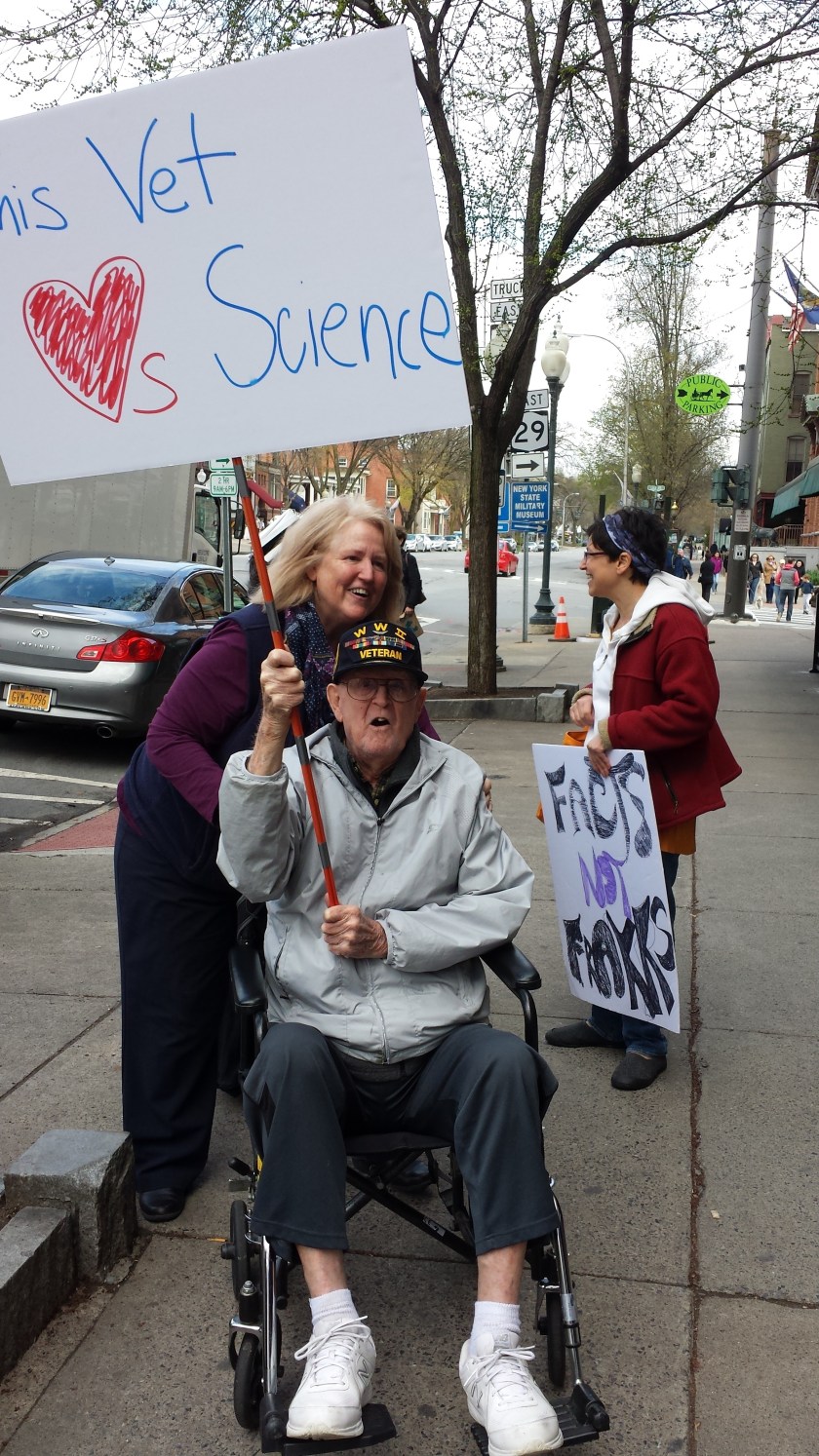
A Sad Story About A Very Good Man

It’s complicated…  Such are the twists and turns one experiences in life.

In my previous life when I ran the anti-poverty agency EOC I had the good fortune of occasionally intersecting with Father Peter Young.   At the time (a long time ago) Father Young, who is now 86, had a ministry working with primarily alcoholics in the South End of Albany.   I always thought of Father Young as the kind archetypal, good priest.  His energy and compassion were boundless.  Working with the pernicious disease of alcoholism is no easy endeavor.

In 1990 I left EOC and have been out of touch with that world.

A friend sent me a link to an article by Brendan Lyons of the Times Union on what appears to be New York State’s effort to shut down Father Young’s network of facilities that reach from the Bronx to Syracuse. 

I find this all stunning because Father Young was able to create a network of many powerful people in the private sector as well as in politics.

The story includes a chronology of embezzlement at a number of facilities that resulted in convictions.  According to the story, Father Young reported to the state that he uncovered criminal activities that led to the indictments and convictions.

Given what is in this article and drawing from my experience in running a non-profit social service agency I will risk a little speculation.  In expanding his organization from Albany to one that stretched from the Bronx to Syracuse the operational challenges probably grew exponentially. 

Having worked now in the private sector, I can assure the readers of this blog that the stress and complexity of a non-profit are much greater.    Cash flow is always a struggle.  The state notoriously pays late and erratically.  In addition, the salaries one can afford to pay staff are problematic.  I cannot imagine myself administering something like Father Young’s operation at 86.

So reading the article it does not surprise me that he got into difficulty with his main funding source which would be the Office of Alcohol and Substance Abuse Services.  If the story published in the TU is accurate, what is disturbing is the way that OASAS dealt with Father Young.  The story portrays an attorney for the state agency behaving appallingly at a meeting with Father Young and representatives from the business community who are supportive of Father Young.

Unfortunately, I find this credible as well.  While I dealt with some very fine and dedicated people who worked for our state, I also dealt with some careerists who neither understood nor cared about the problems of actually running these programs.  More central to this story is that of all agencies, OASAS should be the most respectful of Father Young’s fifty years serving alcohol and drug abusers.  I am not questioning one way or the other about the substance of the decision as I am utterly ignorant of the details, but I am questioning the manner by which it was apparently carried out.

Here is a link to the story:

One of the aspects of this story that I think is important is that Tom Newkirk (one of the principals of Saratoga National Golf Course) has been a major supporter both financially and organizationally of Father Young for some three decades.  Whatever my differences with Mr. Newkirk over his proposed expansion of his golf course, I think that his efforts to support Peter Young are something that all of us should respect enormously.

A further aspect to this story has to do with John Sweeney.  Mr. Sweeney represented Saratoga Springs in Congress until his problems with alcoholism involved the police and his defeat.

Apparently, Father Young not only aided him in dealing with this alcoholism but gave him a job (Link).  In a wonderful twist, he hired him as the compliance officer.  Some of you may remember that Sweeney built a national reputation as the most pugnacious player on behalf of the National Republican Party in the famous chad war in Florida in Bush versus Gore.

Now Sweeney is described in a recent Times Union article as a major player in President Donald Trump’s transition team.  He ran Trump’s New York State presidential campaign.

The readers of this blog may not be aware of the important role that the Affordable Care Act has played in supporting alcohol and drug abuse programs.  Not only does the ACA fund services for these programs but it provides critical health insurance to its clients through the expanded Medicaid option.  The proposed Trump replacement for the ACA will cut Medicaid by $880 billion dollars in the next ten years (Link To Story). 

One has to wonder how someone like John Sweeney, who has seen the ravages of alcoholism and also how important the work of organizations like Father Young’s are, must feel championing a man whose policies will devastate the communities attempting to serve alcoholics and drug addicts.


Blogger Follows Ethics Board Through The Looking Glass

Every once in a while I have an experience with a public institution that is so bizarre that it challenges the sensibilities.  This usually involves an institution that is so sufficiently insulated that it feels no need for even the veneer of concern for public input.  It usually involves a display of arrogance that for some people who serve on these boards provides a perverse sense of power no matter how tiny the stage they may be playing on.

Such was my experience with the “ethics board.”  I put its name in quotes because it should not be confused with any sense of actual ethics.

I was drawn to the meeting by its published agenda.

ethics agenda
Ethics Board Agenda

As the readers of this blog know,  Jerry Luhn, Geoff Bornemann and myself working with Commissioner of Public Safety Chris Mathiesen developed an extensive set of revisions to the existing city ethics code.  The revisions were sent to the city’s Ethics Board for their comments. At a previous meeting, the board took up the document.  As is all too typical of their behavior, they did not even acknowledge that members of the public were present let alone engage the authors of the revisions who were in the audience then.  Instead they amused each other by poking fun at the document in a way that sadly exposed their resentment that anyone should have the temerity to usurp their authority.

It is worth noting that after months of failing to adhere to the Open Meetings Law’s requirements to properly notice their meetings on the city’s website, they now have not bothered to post the minutes of their meetings since December.

I arrived a few minutes late for this recent meeting. Since they were discussing what ex parte meant, an issue we dealt with in our document, I assumed they were continuing to discuss the proposed revisions we had submitted.  After all, the agenda item posted stated “Continue discussion of proposed Code of Ethics revisions regarding Land Use Boards and review legal research.”  Eventually it became clear that they were not discussing what we had submitted but instead were talking about revisions to the code offered by Assistant City Attorney Tony Izzo.

This seemed very strange since at the previous meeting there was no public discussion of anything but our proposal. The next February meeting was canceled.  So where did the request for Tony Izzo’s draft come from? (a rhetorical question).

Ex Parte is a legal term for inappropriate discussions between parties.   Tony offered them basically the same language that he had used during an earlier controversy over ZBA board member Kieth Kaplan’s apparent violation of ex parte.  Mr. Izzo used an obscure definition from the Federal Security and Exchange Commission.  The definition he used was severely limited in that improper conversations were limited to discussions “material” to an application that is, related to the specifics of that specific application.

But there are other definitions of ex parte. The New York State Department of State is charged with training land use boards about ethics in general and ex parte in particular.  It makes it very clear that members of land use boards should stop any discussion regarding an application outside of public meetings.   Why, one might ask, would attorney Izzo not use these materials in crafting his revision?

Here is a link to their pamphlet on the issue titled “Ethical Standards for Planning and Zoning Boards:  Link To Department Of State Pamphlet On Land Use Ethics

The city actually paid attorney Mark Schachner to do a workshop for land use boards last year on ethics.  Schachner could not have been clearer on the importance of board members avoiding improper discussions.  At that meeting I asked a simple question.  If an applicant to a land use board called a board member up to check whether they would be attending a meeting, would that be considered ex parte.  Schachner unequivocally stated that it would.  Such a conversation would not fall under a “material” discussion of the application but would still be considered unethical.   Attorney Izzo was at that meeting and was videotaping it.  The city has a copy of the video.  Strangely, Izzo conceded that he remembered Schachner on this but his acknowledgement bizarrely had no impact on the deliberations.

I courteously asked chair Justin Hogan if I could get clarification about “material” and was told that I would have to wait until the end of the meeting.

I then sat through the most absurd discussion of ex parte.  One board member wondered whether they should be considering what kind of penalty there should be for breaching the code.  The readers of this blog should understand that the Ethics Board has no disciplinary authority.  They simply issue opinions.  One would have thought that either Justin Hogan, who makes his living as a lobbyist specializing in government, or Tony Izzo who has thirty years experience in this would have advised her that the question was not germane.  Instead, the conversation about penalties meandered for quite some time.

Another member who is a lawyer, worried at length about the vulnerable position ex parte put board members in.  How were they to protect themselves from people coming up to them in a restaurant and launching into their opinion on an application?  Again this line of thought went on interminably while attorney Izzo failed to share with them Schachner’s explanation about how to handle situations like this.

Finally, the members of this board finished, and Justin Hogan offered to let me speak.  First I expressed concern about the vagueness of the agenda.  I told them I had come because I thought they might be continuing their discussion of Commissioner Mathiesen’s proposal.    Mr. Hogan oddly told me that the proposal had not come from Commissioner Mathiesen.  Technically he is probably correct although the document referenced Mathiesen as one of its four authors. I then tried to point out that at the last meeting they had discussed a proposal to extensively revise the existing ethics code and that the item on the agenda was written so vaguely that it was impossible to know whether they were continuing the discussion of it as the description suggested.  Mr. Hogan found this concern amusing and rejected the idea that there was any problem.

I regret that I got a little snarky and I responded that I thought that the average citizen reading this agenda would have sympathy for my confusion and I found it odd that a professional who made his living working with local governments as a consultant should find it hard to understand that there was a problem.

I then pointed out that it was troubling that the revisions that the board would be considering as drafted by attorney Izzo were not posted on the site as a supporting document.  This would have not only avoided any confusion but it would be consistent with the other boards who regularly post documents on the city website related to their agenda.  Mr. Izzo then offered that he was not sure about whether they were required to post such a document.  I asked why, if they were considering these changes, there was any compelling reason that the public should not have access to them in order to decide both whether to attend  and whether they had any thoughts they might want to share with the ethics board.

Mr. Hogan found this suggestion amusing.  No one felt the need to address the concern.

I then asked Attorney Izzo whether in crafting the language on ex parte he had reviewed the New York State Department of State’s training materials for land use boards on this issue.  He said he had not.  I pointed out to him that months ago, at his request, I had sent him a link to these materials.

I asked him also why he did not draw from the training by Mark Schachner in preparing his draft since he had attended the workshop.  I pointed out to him that Schachner had explicitly addressed the fact that the “material” argument was too restrictive.  At that point Justin Hogan intervened and told me that the Department of State materials and the Schachner training were not germane to their deliberations.  He praised attorney Izzo as doing a superb job and asked if I had anything else I wanted to address.

I must confess dear readers that I rather lost it.  I told the ethics board that their self enforced ignorance was simply appalling.

I am very sorry that unlike most of the other city’s boards, there is not a video of the meeting because I do not do it justice in this post.


Bob Turner, Chair of Charter Commission on “Education” versus “Advocacy”

Bob Turner, chair of the Charter Review Commission, has forwarded to me his group’s assessment of what is proper in terms of “educating” the public as compared to “advocating” on behalf of the charter.  He also included a number of legal cases meant to further clarify the issue.

I am encouraged that it now appears  there is little daylight between Assistant Attorney Tony Izzo’s opinion and Bob’s thoughtful analysis.


From Bob Turner

New York State Laws and Guidelines on Public Outreach Activities for the Saratoga Springs Charter Review Commission

New York Municipal Home Rule Law § 36, Provisions for adoption of new or revised city charter proposed by a charter commission, establishes the state guidelines for how charter commissions operate. The state law is designed to make Charter Review Commission as independent as possible from the incumbent Mayor or City Council.   The law states: “the charter commission shall provide for such publication or other publicity in respect to the provisions of the proposed charter or amendments as it may deem proper.”

The NY Division of Local Government Services report, Revising City Charters In New York State, spells out what they consider an effective public outreach strategy. Below are verbatim excerpts from the report:

Opponents might adopt a critical stance with respect to a commission’s efforts to educate the public about the revised charter, and particularly, with any effort it might make to advocate passage of the proposal.

Regardless of how it conceives its role, it is essential that the charter commission conduct a public education program. The earlier it is started, the greater the chances for generating and sustaining widespread interest in the community.

Designated members, or in some cases, all members, can make themselves available for interviews and public appearances to explain the functions of the charter commission and create a positive image from the outset.

The traditional public information techniques such as brochures with brief questions and answers, open letters with endorsements published in newspapers, interviews on news programs, and public service announcements on the media are equally applicable to charter revision efforts. One approach thought to be particularly beneficial is for charter commission members to explain the new charter in speaking engagements throughout the community.

Yet another option to be considered in implementing the public education program is publishing in a pamphlet either the draft proposed charter or a narrative final report of findings, or both. Many charter commissions have found that the narrative is most effective. It is a statement to the voters in language understandable by lay citizens. It can spell out the main features and merits of the new charter and explain why each provision was proposed. It can help to ensure that the impressions and interpretations made, especially by the press, are correct and as favorable as possible.

What I take away from this is it is expected that members of the Charter Review Commission conduct a public education program that is informative and favorable to the proposed charter.  The public education program should include writing editorials and letters, social media outreach, as well as conducting public events and meeting with citizen groups.  There are no legal limits on what members of the Commission may say.  Members of the Saratoga Springs Charter Review retain their first amendment rights as private citizens to advocate for or against the proposed charter.

However, when it comes to using public funding for a mailing to inform the Saratoga Springs public, there are pretty clear guidelines based on NY case law about what constitutes information and advocacy (see attached cases).  Those cases define advocacy by the use of the certain specific phrases:  “vote for,” “support”, or “cast your ballot for”.  Clearly, there is a very fine line between inform/educate and advocate that we are going to be very mindful of when using public funding for material.

When it comes to creating a publication to inform the Saratoga Springs public, we are leaning toward writing a narrative report that illustrates the differences between the old and new charter.   I believe it would be more informative than mailing a copy of the new 21 page charter and the old 52 page charter.


Follow-up Email From Bob

Hi John,

Here are the legal cases that Wade Beltramo shared with us on the definition of advocacy versus inform.  None were cited in Tony’s memo to the City Council.

Bob


Stern v. Kramarsky, 84 Misc.2d 447, 375 N.Y.S.2d 235 N.Y.Sup. 1975.84 Misc.2d 447375 N.Y.S.2d 235, 10 Empl. Prac. Dec. P 10,538

Annette Stern, as a Taxpayer of Harrison and as President of Operation Wake Up, et al., Plaintiffs,

v.

Werner Kramarsky, as Commissioner of the Division of Human Rights of the State of New York, et al., Defendants

Supreme Court, Special Term, New York County

October 22, 1975

CITE TITLE AS: Stern v Kramarsky

HEADNOTES

Injunctions–injunction against State agency’s campaigning for proposed constitutional amendment–defendants, State Division of Human Rights and its commissioner, are preliminarily enjoined from engaging in any activities to achieve approval of proposed Equal Rights Amendment to State Constitution; State agencies, supported by public funds, cannot advocate their favored position on issues, but must maintain position of neutrality and impartiality– while *448 Executive Law gives broad authority to protect human rights, neither it nor statutory scheme of our jurisprudence contemplates administrative agencies engaging in promotional activities in order to secure passage of proposed constitutional amendment–individual plaintiff, taxpayer and president of organization campaigning against Equal Rights Amendment, has standing.

(1) Plaintiff, as a taxpayer and as president of Operation Wake Up, an organization of women’s groups united to defeat what was known as the Equal Rights Amendment, and other plaintiffs, sought a preliminary injunction restraining defendants from engaging in any activities to achieve approval of the proposed Equal Rights Amendment to the State Constitution. Defendant Division of Human Rights was allegedly part of a coalition of organizations united to achieve approval of the amendment, made available at its offices pamphlets urging passage of the law, and promoted it through a series of radio and television broadcasts. The preliminary injunction is granted. Plaintiffs are not attempting to improperly abridge defendants’ rights of freedom of speech and association, since they do not suggest that either the commissioner or personnel of the division may be precluded personally from supporting the amendment, but contend that defendants have no authority to lend support in their official capacity. State agencies, supported by public funds, cannot advocate their favored position on the issue, but must maintain a position of neutrality and impartiality. Accordingly, defendant division may induce the public to vote, and educate them on facts and issues, but may not advocate either a positive or negative vote. Further, neither the commissioner nor the personnel of the division are prohibited from supporting or opposing the amendment in their capacities as private citizens.

(2) While sections 290, 294, 295 and 300 of the Executive Law vest the Division of Human Rights with broad authority to protect human rights, that authority must be construed in the context of the State and Federal Constitutions. Neither the language of the statutory authorities nor the statutory scheme of our jurisprudence contemplates administrative agencies engaging in promotional activities in order to secure the passage of proposed constitutional amendments.

(3) As a taxpayer and as president of an organization campaigning against the Equal Rights Amendment, the individual plaintiff has the requisite standing to maintain this action.

APPEARANCES OF COUNSEL

Louis J. Lefkowitz, Attorney-General, for defendants. Dorothy Frooks and Everett Frooks for plaintiffs.

OPINION OF THE COURT

Samuel A. Spiegel, J.

Plaintiffs, Annette Stern, as a taxpayer of Harrison, Westchester County, New York, and as president of Operation Wake Up — an organization of women’s groups united to defeat what is commonly referred to as the Equal Rights Amendment — and others, seek a preliminary injunction restraining the defendants, Werner Kramarsky, as Commissioner of the Division of Human Rights of the State of New York, and the Division of Human Rights itself from engaging in any activities to achieve approval of the proposed Equal Rights Amendment to the Constitution of the State of New York. The proposed amendment to the State Constitution, which is to be submitted to the voters of the State of New York on November 4, 1975, would add a “Section 13” to *449 article I of the State Constitution, stating: “Equality of rights under the law shall not be denied or abridged by the State of New York or any subdivision thereof on account of sex”.

Plaintiffs contend that the defendants are engaging in a campaign in support of the specified amendment, and as evidence of that campaign submit a copy of an August 25, 1975 inter-office memorandum of the Division of Human Rights addressed to certain of its staff members, which states, inter alia: “The Division of Human Rights is a member of the New York coalition for Equal Rights, a coalition of more than 70 organizations united in a statewide effort to achieve approval of the Equal Rights Amendment by the voters in November. The Division is asking you, our Advisory Council members, to help us educate the public about the Equal Rights Amendment.”

Plaintiffs have also submitted copies of various flyers and pamphlets prepared by supporters of the Equal Rights Amendment, such as the New York Coalition for Equal Rights and the League of Women Voters, which are made available to the public at the defendants’offices. Such a flyer prepared by the New York Coalition for Equal Rights in support of the Equal Rights Amendment states in part: “Its really quite simple. Either you believe that all people are created equal or you don’t. If you do … Vote Yes on Nov. 4th”. [Emphasis in the original.] It is further alleged by the plaintiff that the defendants are promoting the Equal Rights Amendment through a series of radio and televised broadcasts.

Defendants cross-move to dismiss the complaint upon the grounds that: (1) the plaintiffs’ application seeks to abridge their rights of freedom of speech and association; (2) the defendants, pursuant to article 15 of the Executive Law, have the requisite statutory authority to engage in activities in support of the Equal Rights Amendment; and (3) the plaintiffs’ lack of standing to maintain this action.

Regarding defendants’ initial argument, it does not appear that the plaintiffs are attempting to improperly abridge defendants’ rights of freedom of speech and association. Plaintiffs essentially argue that the defendants have no authority to support the Equal Rights Amendment in their official capacity. They do not suggest that either the commissioner or the personnel of the Division of Human Rights may be precluded from personally supporting the Equal Rights Amendment. Thus the issue raised by the instant application is not *450 one concerning freedom of speech or association, but whether it is a proper function of a State agency to actively support a proposed amendment to the State Constitution which is about to be presented to the electorate in a State-wide referendum. It should be noted that by lending their support to the campaign underway for the passage of the Equal Rights Amendment, defendants not only provide certain promotional and advertising assistance, but they endow that campaign with all of the prestige and influence naturally arising from any endorsement of a governmental authority.

The defendants argue that they “have the statutory authority to engage in activities in support of the Equal Rights Amendment”, specifically sections 290, 294, 295 and 300 of the Executive Law. These sections admittedly vest the Division of Human Rights with broad authority to promote and protect human rights; however, that authority must be construed in the context of the State and Federal Constitutions. Neither the language of the statutory authority relied on by the defendants nor the statutory scheme of our jurisprudence contemplates administrative agencies engaging in promotional activities in order to secure the passage of proposed constitutional amendments.

The court has found no reported cases directly in point, and notwithstanding the comprehensive and considered briefs submitted by the plaintiff and the Attorney-General, they have apparently been similarly unsuccessful in finding reported authority directly in point. The defendants cite, inter alia, Abrams v Rockefeller (NY County Clerk’s Index No. 18881), in support of their cross motion to dismiss the plaintiffs’ action. In Abrams v Rockefeller (supra), plaintiffs sought to enjoin certain public officials from spending public funds in connection with the promotion of Proposition No. 1 (The 1973 Transportation Bond Issue) on the November 6, 1973 ballot. The court granted defendants’ cross motion to dismiss the complaint upon the grounds, inter alia, that the application was untimely, and that the plaintiffs lacked standing to maintain the action. Since Abrams v Rockefeller (supra) was dismissed on essentially procedural grounds, inapplicable to the action presently before the court, it does not constitute authority warranting dismissal of the plaintiffs’ action.

In Matter of Olivieri (Ronan) (NY County Clerk’s Index No. 23334), petitioner — relying on section 8 of article VII and section 1 of article VIII of the New York State Constitution — *451 sought a preliminary injunction restraining the respondents William J. Ronan, Metropolitan Transportation Authority and New York Transit Authority from promoting “Proposition #1” (The 1971 Transportation Bond Issue) on the November 2, 1971 ballot. Specifically the petitioner sought to restrain the Metropolitan Transportation Authority and the New York Transit Authority from permitting their employees to put up placards and posters for the private organization known as “Yes For Transportation In N. Y. State, Inc.” during the hours when these employees are employed in their regular duties, and permitting the use of the public transit conveyances and facilities space for the display of the placards and posters of “Yes For Transportation In N. Y. State, Inc.” promoting an affirmative vote on Proposition No. 1. Respondents Ronan et al. cross-moved to dismiss the petition upon the grounds the petitioner lacked standing and the respondents had acted lawfully in authorizing the use of space on transit facilities under their jurisdiction, for the placement of posters and signs informing the public of the importance of a favorable vote on Proposition No. 1. By order dated November 1, 1971 the court granted petitioner Olivieri’s application for a preliminary injunction and denied respondents’ cross motion to dismiss the petition.

The court is aware that the State Charter Revision Commission for New York City has recently solicited the opinion of the New York State Comptroller regarding the proper scope of publicity for the proposed charter revision which is to appear on the ballot in New York City on November 4, 1975. By correspondence dated June 24, 1975 (a copy of which the court sua sponte makes part of the file herein, together with copies of revised guidelines establish for publicizing the proposed charter revision for New York City) the State Comptroller wrote to the State Charter Revision Commission:

“This is in reply to your letter of June 2, 1975, requesting the opinions of the Comptroller and the Attorney General as to whether funds of the Commission may be expended for publicity relative to the proposed charter and the extent to which and manner in which such funds may be used. Proposals include such expenditures as media advertising, direct mailing to voters, speakers, bureaus telephoning of voters, and a field organization to educate voters as to charter revision. …

“As a general rule, state funds have not been used for the *452 public promotion of propositions or proposed constitutional amendments. I have, on many occasions, advised State and Local government officials that public moneys may be used for the purpose of adequately informing the Public concerning a proposed State bond issue; but not to urge a ‘yes’ or ‘no’ vote.”

The logic of the court’s determination in Matter of Olivieri (Ronan) (supra), and the opinion of the State Comptroller quoted above is inescapable. The spectacle of State agencies campaigning for or against propositions or proposed constitutional amendments to be voted on by the public, albeit perhaps well-motivated, can only demean the democratic process. As a State agency supported by public funds they cannot advocate their favored position on any issue or for any candidates, as such. So long as they are an arm of the State Government they must maintain a position of neutrality and impartiality.

It would be establishing a dangerous and untenable precedent to permit the government or any agency thereof, to use public funds to disseminate propaganda in favor of or against any issue or candidate. This may be done by totalitarian, dictatorial or autocratic governments but cannot be tolerated, directly or indirectly, in these democratic United States of America. This is true even if the position advocated is believed to be in the best interests of our country.

To educate, to inform, to advocate or to promote voting on any issue may be undertaken, provided it is not to persuade nor to convey favoritism, partisanship, partiality, approval or disapproval by a State agency of any issue, worthy as it may be.

Public funds are trust funds and as such are sacred and are to be used only for the operation of government. For government agencies to attempt to influence public opinion on such matters inhibits the democratic process through the misuse of government funds and prestige. Improper expenditure of funds, whether directly through promotional and advertising activities or indirectly through the use of government employees or facilities cannot be countenanced. (NY Const, art VII, §8; art VIII, § 1.) People of all shades of opinion and belief contribute these funds from one source or another. No agency may misuse any such funds for promoting its own opinions, whims or beliefs, irrespective of the high ideals or worthy cause it espouses, promotes or promulgates. The merits of the Equal Rights Amendment are not involved herein *453 and the court is not asked to pass upon it, but rather the right of a State agency to advocate its passage.

Moreover, as a taxpayer and as president of an organization campaigning against the Human Rights Amendment the plaintiff Annette Stern has requisite standing to maintain this action (Boryszenwski v Byrdges, 37 NY2d 361;State Finance Law, art 7-A).

Accordingly, the plaintiffs’ application for a preliminary injunction is granted to the extent of restraining the defendants from supporting, promoting, campaigning or otherwise acting to achieve passage of the proposed Equal Rights Amendment to the New York State Constitution at the election on November 4, 1975.

Nothing in this decision however shall be construed as prohibiting the Division of Human Rights from engaging in activities to induce the public to vote on the proposed Equal Rights Amendment, or to inform the public of the facts contained in the proposed amendment, and to otherwise educate the public concerning the proposed amendment, without advocating either a positive or negative vote upon the amendment. Further, nothing herein shall be construed as prohibiting the Commissioner of Human Rights or the personnel of that agency from supporting or opposing the Equal Rights Amendment in their individual capacities as private citizens.

Copr. (c) 2010, Secretary of State, State of New York

N.Y.Sup. 1975.

STERN v KRAMARSKY

84 Misc.2d 447

END OF DOCUMENT


Opns St Comp, 1980 No. 80-762, 1980 WL 8118 (N.Y.St.Cptr.)

New York State Comptroller

NYCPTR Opn No. 80-762

December 11, 1980

TO: MISS GLORIA M. ROSENBLUM

TOWN OF ISLIP

State Constitution, Article VIII, § 1

Town Law, § 116(13)

$hVillage Law, §§ 2-206, 2-20

  1. TOWNS—POWERS AND DUTIES—CHALLENGING PROPOSED INCORPORATIONS OF VILLAGE

A town may not use town funds or town employees to prepare a proposed budget or other document for the purpose of showing residents of a proposed village the cost of incorporating or operating a village since a town has no legal standing to oppose the creation of a village and its intrusion into the incorporation process would be a partisan political act rather than an exercise of its proper governmental powers.

This is in reply to your letter concerning the proposed Village of Islandia. You stated in your letter that the town officials of the Town of Islip, in which Islandia would be located, are opposed to the incorporation and have directed Town employees to prepare a proposed budget and other documents to show the residents of the proposed village the cost of incorporating and operating a village. You ask the following questions with regard to this situation:

(1) May the Town incur any expenses in preparing a proposed budget and/or any other documents which would bear on the question of the wisdom of voting for the proposed village?

(2) May the Town pay for mail and/or otherwise distribute literature or information to the residents within the proposed village on the issue of incorporation of the village?

(3) If the answer to question 2 is yes, is the town restricted in the type and contents of information it may disseminate to the public and can it express any viewpoint, directly or indirectly, concerning the proposed village?

Municipal corporations are creatures of the State and have only such powers and authority as is conferred upon them by the Legislature and powers reasonably incident thereto (Whittaker v Village of Franklinville, 256 NY 11, 191 NE 716 [1934]; Hansell v City of Long Beach, 61 AD2d 84, 401 NYS2d 271 [2nd Dept, 1978]; Torsoe Bros. v Bd of Trustees, 49 AD2d 461, 375 NYS2d 612 [2nd Dept, 1975]). We can find no statutory authority for the expenditure of town funds for the purpose of advising residents on the incorporation of a village. It is true that section 116(13) of the Town Law allows a town to incur expenses for the publication and distribution of reports relative to its fiscal affairs, but this would not include financial reports of a proposed village since the finances of a village are not directly related to the fiscal affairs of a town.

Under the Village Law, the supervisor of the town encompassing the proposed village is required to hold a public hearing on the petition for incorporation to determine its legal sufficiency (Village Law, §§ 2-202, 2-208). Aside from this hearing and determination, there is no other role which the town or its officers may play in the incorporation of a village. There is no authority for them to hold hearings on the advisability of incorporation or to take any action which would otherwise affect such incorporation.

*2 Because the town has no legal standing to oppose the incorporation of a village, the activities being carried on by the town are political in nature rather than governmental. The courts have recognized that public funds should not be used for political activity. In Stern v Kramarsky, 84 Misc2d 447, 375 NYS2d 235 [1975], where a State agency was using public funds to encourage voters to approve a proposed constitutional amendment, the court said:

“The spectacle of State agencies campaigning for or against propositions or proposed constitutional amendments to be voted on by the public, albeit perhaps well-motivated, can only demean the democratic process. As a State agency supported by public funds they cannot advocate their favored position on any issue or for any candidates, as such. So long as they are an arm of the State Government they must maintain a position of neutrality and impartiality.

It would be establishing a dangerous and untenable precedent to permit the government or any agency thereof, to use public funds to disseminate propaganda in favor of or against any issue or candidate. This may be done by totalitarian, dictatorial, or autocratic governments but cannot be tolerated, directly or indirectly, in these democratic United States of America. This is true even if the position advocated is believed to be in the best interest of our country. To educate, to inform, to advocate or to promote voting on any issue may be undertaken, provided it is not to persuade nor to convey favoritism, partisanship, partiality, approval or disapproval by a State agency of any issue, worthy as it may be.

Public funds are trust funds and as such are sacred and are to be used only for the operation of government. For government agencies to attempt to influence public opinion on such matters inhibits the democratic process through the misuse of government funds and prestige. Improper expenditure of funds, whether directly through promotional and advertising activities or indirectly through the use of government employees or facilities cannot be countenanced (NY Const, art VII, § 8, art VIII, § 1). People of all shades of opinion and belief contribute these funds from one source or another. No agency may misuse any such funds for promoting its own opinions, whims or beliefs, irrespective of the high ideals or worthy causes it espouses, promotes or promulgates.”

Although the Stern case dealth with a State agency and a proposed constitutional amendment, the principles stated therein are equally applicable to any level of government which engages in political activity.

Opns St Comp, 1980 No. 80-762, 1980 WL 8118 (N.Y.St.Cptr.)

END OF DOCUMENT


Opns St Comp, 1980 No. 80-411, 1980 WL 8061 (N.Y.St.Cptr.)

New York State Comptroller

NYCPTR Opn No. 80-411

November 13, 1980

TO: CORNELIUS F. HEALY

DEPUTY STATE COMPTROLLER

State Constitution, Article Viii, § 1

Education Law, §§ 1709, 1815

  1. SCHOOL DISTRICTS—BUDGETS—EXPENDITURES OF MONEYS TO PROMOTE PASSAGE OF

Although a school district may use district money to educate and inform the public on a proposed school budget, it may not use district money to convey favoritism, partisanship, partiality, approval or disapproval of such budget.

This is in reply to an inquiry as to whether a school district may use public funds to urge district residents to vote “yes” on a proposed school budget.

This Department has consistently held that a school district may not expend school district money to urge residents in the district to vote for or against particular propositions that will appear on the ballot (24 Opns St Comp, 1968, p 30; 11 Opns St Comp, 1955, p 357; 5 Opns St Comp, 1948, p 478). The rationale for that position was that sections 1709 and 1805 of the Education Law contain no authority for such expenditures.

A more compelling argument may be found in the case of Stern v. Kramarsky, 84 Misc 2d 447, 375 NYS2d 235 (1975) where the court held that a State agency could not use public funds to encourage voters to approve a proposed constitutional amendment. The court said:

“The spectacle of State agencies campaigning for or against propositions or proposed constitutional amendments to be voted on by the public, albeit perhaps well-motivated, can only demean the democratic process. As a State agency supported by public funds they cannot advocate their favored position on any issue or for any candidates, as such. So long as they are an arm of the State Government they must maintain a position of neutrality and impartiality.

It would be establishing a dangerous and untenable precedent to permit the government or any agency thereof, to use public funds to disseminate propaganda in favor of or against any issue or candidate. This may be done by totalitarian, dictatorial or autocratic governments but cannot be tolerated, directly or indirectly, in these democratic United States of America. This is true even if the position advocated is believed to be in the best interests of our country.

To educate, to inform, to advocate or to promote voting on any issue may be undertaken, provided it is not to persuade nor to convey favoritism, partisanship, partiality, approval or disapproval by a State agency of any issue, worthy as it may be.

Public funds are trust funds and as such are sacred and are to be used only for the operation of government. For government agencies to attempt to influence public opinion on such matters inhibits the democratic process through the misuse of government funds and prestige. Improper expenditure of funds, whether directly through promotional and advertising activities or indirectly through the use of government employees or facilities cannot be countenanced (NY Const, art VII, § 8; art VIII, § 1). People of all shades of opinion and belief contribute these funds from one source or another. No agency may misuse any such funds for promoting its own opinions, whims or beliefs, irrespective of the high ideals or worthy causes it espouses, promotes or promulgates.”

*2 Although the Stern case dealt with a State agency and a proposed constitutional amendment the principles stated therein are equally applicable to all levels of government.


Therefore, it is the opinion of this Department that although a school district may use district funds to educate and inform the public on a proposed school budget, it may not use such funds to convey favoritism, partisanship, partiality, approval, or disapproval of such a budget.

Opns St Comp, 1980 No. 80-411, 1980 WL 8061 (N.Y.St.Cptr.)

END OF DOCUMENT

Opns St Comp, 1981 No. 81-26, 1981 WL 16599 (N.Y.St.Cptr.)

New York State Comptroller

NYCPTR Opn No. 81-26

February 9, 1981

TO: WILLIAM R. BENNETT, ESQ.,

TOWN

ATTORNEY,

TOWN

OF ISLIP

State Constitution, Art VIII, § 1

Town Law, § 116(3)

Village Law, § 2-206, 2-208

  1. TOWNS—POWERS AND DUTIES—CHALLENGING PROPOSED INCORPORATION OF VILLAGE

We reaffirm the views expressed in Opinion No. 80-762 and it remains our position that a town may not use town funds or town employees to prepare a proposed budget or other documents for the purpose of showing residents of a proposed village the cost of incorporating and operating a village.

This is in reply to your letter in which you ask us to reconsider the views expressed in Opinion No. 80-762. In that opinion, we concluded that a town could not use town funds or town employees to prepare a proposed budget or other documents for the purpose of showing residents of a proposed village the cost of incorporating or operating a village since a town has no legal standing to oppose the creation of a village and its intrusion into the incorporation process would be a partisan political act rather than an exercise of its proper governmental powers.

In your letter, you took issue with our position that a town does not have legal standing to oppose the creation of a village and with our interpretation of the Stern v Kramarsky (84 Misc2d 447, 375 NYS2d 235 [1975]) case.

With respect to legal standing, you cited the case of Levitt v Rockefeller, 69 Misc2d 337, 329 NYS2d 976 [1972], to support your contention that a town does have standing to challenge the creation of a village. The Levitt case dealt with a court challenge by the State Comptroller to an appropriations bill submitted to the Legislature by the Governor. On an objection to the legal standing of the Comptroller, the court held that the Comptroller’s constitutional and statutory duties were sufficient to confer upon him the right to maintain the suit. We fail to see how this reasoning could be applicable to your situation. The powers and duties of the Comptroller, upon which his legal standing was based, are not the same as the powers vested in a town board and the issue in that case, the validity of an appropriations bill, is not even remotely similar to the incorporation of a village.

We agree with the opinion of the court in Marcus v Baron, (10)-Misc2d% Y(10)-, 431 NYS2d 627 [1980] which stated that, under Article 2 of the Village Law, the supervisor of a town, within which it is proposed to incorporate a village, merely performs the ministerial function of determining whether the petition for incorporation complies with the statute and is legally sufficient, and is confined in the performance of that function to a consideration of the objections directed thereto. Furthermore, under the statute, the supervisor’s decision may not take into account the overall public interest of the residents of the proposed village or of the other residents of the town or towns. In fact, a bill was introduced in the 1977-1978 Regular Session of the Legislature (S-3944-A; A-5225-A) wherein it was proposed to amend the Village Law to allow the supervisor to consider the public interest of the residents of the proposed village and of the other residents of the town. This bill failed to pass and its rejection must be considered as an expression of the intention of the Legislature that the overall public interest of the town was not to be taken into account when a village was being incorporated (Marcus v Baron, supra).

*2 While you state that your town is currently challenging the constitutionality of Article 2 of the Village Law, the right to challenge the constitutionality of this statute does not necessarily imply a right to challenge the actual incorporation of a village. If in fact the law is constitutional, as it is presumed to be, there is nothing in the statute itself, aside from the petition for incorporation, which gives the town or any town officer a basis for challenging incorporation. Based on this fact and on the ground stated above, that the public interest of the town is not to be considered, we are lead to the conclusion that the town does not have standing to challenge incorporation or to otherwise use its powers or offices to take part in the incorporation process after the supervisor rules on the legal sufficiency of the petition to incorporate.

In regard to the Stern case, supra, we believe that the views expressed in Opinion No. 80-762 are correct. The court in that case stated that an agency may educate, inform, advocate or promote voting on any issue “PROVIDED IT IS NOT TO PERSUADE NOR TO CONVEY FAVORITISM, PARTISANSHIP, PARTIALITY, APPROVAL OR DISAPPROVAL . . . OF ANY ISSUE WORTHY AS IT MAY BE” [emphasis added]. The court also stated that the public may be informed of the facts of a proposition or may otherwise be educated as long as a positive or negative vote is not advocated. It is our opinion that the preparation of a model budget does more than merely inform the public as to the facts of incorporation, since a model budget does not contain facts. The actual cost of running a particular village can not be ascertained until the village is actually formed and operating and the statements and budget items contained in any model budget are only predictions of what the actual costs will be and these predictions can be shaded to reflect the views of the drafters and to influence the vote on any proposition to incorporate. We think that the Stern case clearly prohibits not only those kinds of actions which are obviously meant to influence the public but also those which would affect the public in a subtle way and thereby influence their vote on a particular issue.

Therefore, this Department reaffirms the views expressed in Opinion No. 80-762 and it remains our position that a town may not use town funds or town employees to prepare a proposed budget or other documents for the purpose of showing the residents of a proposed village the cost of incorporating or operating a village.

Opns St Comp, 1981 No. 81-26, 1981 WL 16599 (N.Y.St.Cptr.)

END OF DOCUMENT


Charter Commission Responds To Madigan Request For Legal Opinion: Advocacy Versus Education

On February 22nd Commissioner of Finance Michele Madigan sent the following email to Assistant City Attorney Tony Izzo  thus focusing attention on one of the perennial controversies that surround charter commissions. Her email reads:

Hello Tony,

I am trying to determine what types of educational or advocacy activities a Charter Commission is permitted to engage in. I have heard anecdotal evidence that they are not allowed to use public funds to advocate for the passage of their proposed revisions or new Charter. Could you draft an opinion on this that I could share with the Council and the Charter Commission?

Thank you and please contact me if you have any questions.

Commissioner Madigan


This is not the first time the issue of what kind of activities a charter commission can engage in to communicate to the public about the charter change they are proposing has arisen.

The problem is the law on this kind of thing is frustratingly confusing. As Tony Izzo’s opinion confirms charter commissions are supposed to educate the public about their proposed charter change but they are not to use public money to “advocate.” Distinguishing the line between education and advocacy seems like a thankless process for which attorneys could devote a great deal of time.  If the charter commission recommends an end to the commission form of government and the adoption of a city manager  form would  an explanation as to why there is a problem with one and a solution in the other be “advocacy” or “education”?

The distinction between the two terms became the focus of the controversy  with  the “Voter Guide” sent out by the 2006 charter commission. Among other statements it included the following in a highlighted box on its cover page:

2006Mailing

“If the proposal passes we will have—at long last—a government with true checks and balances.”

I think a reasonable person could argue that this assertion crossed the line from education to advocacy. This was certainly the opinion of Commissioner of Accounts John Franck who announced at a Council meeting the night of the vote that he would refuse to pay for the mailing which had already gone out.  Then Commissioner  of Finance Matt McCabe also stated he would refuse to transfer the money to pay for the mailing if requested. Other questions about the mailing done by that charter commission included who had already paid for the mailing, its timing, and whether it had adhered to the city’s bidding requirements.  While the Council approved payments for other expenses encumbered by the charter commission there was no action taken to pay the bill for the mailing.

Commissioner Franck referred the matter of the mailing to then Comptroller Alan Hevisi claiming “without question…the ‘voter guide’ advocated for a ‘Yes’ vote on the proposition against a ’No’ vote “. Hevisi acknowledged the receipt of the letter but never responded to the substance of Franck’s complaint.  The issue became mute when the charter commission found private funds to cover the cost of the mailing and took no legal action regarding the city’s refusal to pay.

advocacy2Advocacy1

So here is Tony Izzo’s response to Commissioner Madigan’s request this year for  clarification as to the types of activities this charter commission is permitted to engage in:

To: Members of the City Council,  Members of the Charter Review Commission

From: Anthony J. Izzo

Re: Public education by Charter Commission – issues

Date: February 28, 2017

This is in response to Commissioner Madigan’s inquiry about public comments from charter commission members that might be critical of the present charter. The issue is essentially whether commission members, in their efforts to educate the public, may appropriately make critical remarks or express opinions that go beyond mere factual comparisons between the current charter and the one they propose.

To begin with, a 1978 Comptroller’s opinion makes it clear that a charter commission may not spend public funds for the purpose of advocating for the adoption of the proposed charter. Such publicity expenditures should be solely for the purpose of educating the public as to the content of the new charter, Opinions of State Comptroller 78-682. I have requested the full text of this opinion from the Comptroller’s Office and I will forward it to you as soon as I receive it.

With respect to commission members engaging in advocacy that does not involve any spending of public funds, the analysis is less clear. Section 36 of the Municipal Home Rule Law provides only that a commission “…shall conduct public hearings at such times and at such places within the city as it shall deem necessary.” and that it “…shall make a report to the public…in which it shall refer specifically to the unchanged part and explain its decision to leave such part unchanged.” Sections 36(6)(f) and 36(5)(a). The law, as far as I can determine, makes no mention of a charter commission’s ability to advocate for its proposed charter in instances where no public funds are spent.

The NY State Division of Local Government’s publication “Reviewing City Charters in New York State” contains a lengthy section on public education. That section contains one paragraph that suggests it is appropriate for a commission to support the approval of its charter:

    “In addition to its concerns with keeping the public informed, the charter commission     will want to keep in mind that yet another dimension of its purpose is to gain approval     of its charter. Regardless of the thoroughness of the public education program, it will     not be possible to reach and inform every voter who can be expected to vote in the     referendum. As noted earlier, many votes are certain to be determined on the basis of comments expressed and positions taken by opinion leaders in the community.

It is therefore advisable to take three more steps: to seek help and support from influential citizen groups, to solicit editorial support of the local newspapers, and to obtain the endorsement of municipal officials and, if possible, political party  leaders. Experience has indicated that any one or all of these may be especially significant in influencing the outcome at the polls.”

The remainder of the section discusses only public education, polls, publication of pamphlets, etc.

The NYCOM Charter Guide, however, makes no reference to any other manner of activity by a commission other than educating the public. Clearly the majority of commentary describes a commission’s role as one of education and information rather than persuasion.

I am aware that some commission members have made public statements in which they have compared their proposed changes favorably as against the current form. I understand that these statements have been made in interviews and opinion letters at no cost to the public. I would caution, however, now that publicity funds have been specifically authorized by the city council and will likely be spent in various ways, that it might become more difficult to separate instances where a commission member’s public statement is not in any way supported or made possible by public funding. It will of course be difficult, after so many hours of hard work, for commission members to avoid speaking enthusiastically about their proposal, but I believe that they would do well to recall that their purpose, as reflected by most of the available authority, is to educate and inform.

Please call if you have questions.


Commissioner Madigan’s request and Tony’s response became the first item of discussion at the current charter commission’s meeting on March 2.  There was a strong reaction at least from some members of the commission particularly Jeff Altamari,  Chairman Bob Turner, and Gordon Boyd.

I will summarize here what were for me the highlights of this discussion but I would strongly urge my readers to review the video for themselves.  Here is an excerpt from the meeting representing the discussion.  It is about fifteen minutes long.

Jeff Altamari’s first reaction was to ask Tony Izzo “did the Commissioner ask you to be a conduit to this commission?”  He then asks “Why is the Commissioner concerned about us talking about what we believe to be the best thing for our citizens?” He told Tony that we need to know  that “going down the stretch you are right down the middle of the fairway [JK: This mixed metaphor is not representative of Mr. Altamari’s skills as a speaker].   My antennas are up.”  Tony noted that the Mayor had asked him to serve as counsel to the commission but that if they were not satisfied with him he would step aside and “ wish them well.” Altamari said he was not asking for Tony’s resignation.

Chairman Turner next tells Tony that the appropriate answer to the Commissioner’s inquiry would have been “Article I of the Constitution: Congress should make no law abridging the freedom of speech.” [JK:I think Chairman Turner actually meant the 1st Amendment to the Constitution since Article I establishes the legislative branch of the federal government.]

Gordon Boyd asked if the Commissioner’s email to Tony contained “any legal reference to the basis for the constraint of speech for commission members.” He went on to argue that there are basically no restraints on the commission even if they are using public funds citing the Supreme Court Citizens United decision . As treasurer he said he was “personally committed that this committee not spend any public money on creating material that people should vote one way or the other on what ends up on the ballot but that is a personal preference.” He insisted that it was impossible to have a standard and “even using taxpayer money would probably be approved by the courts. “

Pat Kane’s reaction was simpler and more succinct. “Harassment” he said and did not elaborate.

It was left to Matt Jones to return to the central question. He asked Tony “What are your thoughts about our ability to speak our minds about any aspect of the Charter. “  Specifically he asked if there were any legal impediments .

Tony replied “the only legal impediment is spending public funds to advocate for the adoption of the charter.”


An Ugly Incident On White Street

66-white
Garage At 66 White Street

I had a very disturbing experience today.

I was advised that the garage being built at 66 White Street now had windows on the second floor.  I would refer you back to my earlier blog on this.  Basically, the owner of this property received a variance to build a garage that was not supposed to be habitable.  The plans showed no utilities to the garage.  In fact, a representative of the contractor told the Zoning Board of Appeals, in answer to neighborhood concerns, that they had no plans for plumbing in the project.  In spite of this, following the approval  by the ZBA, the contractor dug a ditch to run water and sewage to the property.  A neighbor reported this to the building inspector.  Aside from the fact that the plans submitted to the ZBA had not included utilities, the work required a plumbing permit that the contractor had not bothered to secure.  A stop work order was issued.  The builder got  the permit and continued work on the garage. 

At the ZBA meeting at which the approval was granted (see earlier post),  a member of that board asked whether the ZBA needed to stipulate that no bathroom or other amenity be allowed on the second floor. Chair William Moore dismissed the question by saying that it would be illegal to do so.  I was told that when subsequently the building inspector questioned the contractor about the purpose of the ditch for plumbing  he was told they planned to put a bathroom in but declined to tell the inspector where it would be put. 

The important thing to understand is that this structure is not supposed to be habitable.  So I decided to go and photograph the new windows to let the readers decide whether this suggested a possible change in the approved use of this building.  I also wanted to see whether there would be room to put the bathroom on the ground floor.

 I do not know how clear it is in the picture, but there does not appear to be much space on the ground floor if there are cars in both bays and a stairway in the back.

As I was taking the pictures from the sidewalk, one of the men on site approached me and asked what I was doing.  I told him I was taking a picture with my phone for a blog I write.  In a very threatening tone he asked me for my name, address, and phone number.  I told him that he had no authority to require me to give him this information.  I then began walking home.  This person  followed me down the street.  I decided to take a picture of him as he was quite large and his manner  rather menacingIt all had a bit of a film noir quality. I was shocked when he grabbed my cell phone out of my hand.  I asked him to give the phone back.  He refused and told me that I was not going to take his picture.  I asked him repeatedly to return my phone, but he refused.  I then told him that if he did not return my phone I would call the police.  He still stood in a rather intimidating pose and held the phone above his head.  I then turned to go home to call the police.  At that point he put the phone on the ground.  I retrieved my phone and took a picture of his back as he walked away.  I could have followed him and waited to take a picture of his face but decided that this could very well lead to a further escalation which would do no one any good.  I have also decided that it would serve no purpose to include in this blog any picture of him.

It is really rather discouraging that in addition to the troubling handling of this project by the building inspector and the Zoning Board of Appeals, we should have this kind of behavior in what is really a very lovely, friendly neighborhood. 


Charter Commission Moves Referendum Vote To November Election

I received the press release below from the Charter Commission tonight.  One odd thing was that the email time stamp on the release was 7:35.  The website for the Charter Commission has the following agenda:

7pm                  Public Comment

7:15-7:20          Introductory comments by Commission Chair, and approval the minutes.

7:30-9:00          Discussion, fine-tuning of the language of proposed charter

9:00                   Adjourn

So the release appears to have been sent out five minutes after the business part of the meeting began.

For immediate release

February 28, 2017


CHARTER COMMISSION SETS REFERENDUM 

FOR NOVEMBER GENERAL ELECTION

The Saratoga Springs Charter Review Commission voted 15-0 on Tuesday night to hold the Charter Referendum on the general election on November 7, 2017 instead of holding a special election on May 30th.

“We have listened to the general public and elected officials, and they have told us they believe public participation and interest in the Charter Referendum will be highest in November during the city election,” said Bob Turner, Chair of the Charter Review Commission. “The Charter Review Commission has worked very hard to review the Charter the right way.  Whether or not our recommendations are approved, our goal is to make the process as open, transparent, inclusive, rigorous and thorough as possible.”

“We plan on using the additional five months to reach out to as many voters, neighborhoods, and groups as possible,” said Beth Wurtmann, Outreach Committee Chair. “We will do our best to ensure that citizens have all the information they need to make an informed decision when they go to the polls on November 7th.”

“We want voter participation to be as robust as possible and for our community to make its decision based on the merits,” said Laura Chodos, Commission member.  “People are interested in what we are doing. This election could have a record turnout that would make us all very proud.”

Commission Vice Chair Pat Kane said, “Our members heard clearly the views of elected officials, the general public and others, that the Special Election option would create undue controversy that would obscure the merits of our proposal.”

The Charter Review Commission is an independent commission consisting of 15 volunteers. Under the current City Charter, the Charter must be reviewed at least every 10 years.  The last review was in 2006. Under NY Municipal law, a proposed charter must be approved by voters in a referendum.

Madigan Takes On Charter Commission

Speaking Out Piece By Michele Madiga:

I have been hearing and reading a lot lately about our City’s Commission form of government, and I can honestly say that after serving you for 5 years as one of the Commissioners in that government I do not recognize this phantom menace that Chairman Bob Turner and other members of the Charter Review Committee keep describing. While I have no great attachment to the current way we govern ourselves, it is important that the public debate surrounding the upcoming ballot question regarding our Charter is based on facts, not fantasies or straw-men. So, let’s look at some of those facts.

A common criticism one hears about our government, both now and in years past, is that each Commissioner focuses only on their own “silo”, and has no incentive to cooperate or collaborate with other Commissioners. This is simply not true, and not even possible. Three of the five Commissioners run Departments that are administrative in nature, with duties that spread across the entire City (Accounts, Finance, and the Mayor), so they don’t even have “silos”. Secondly, all five of us are legislators that must work together to get anything done at the Council table – it takes at least 3 votes to accomplish anything; every contract, every project, every budget transfer or capital budget amendment, everything we do is discussed and put to a vote at City Council meetings. How could anything ever get done if we were each solely concerned with our “silos”? And then there is the City’s obvious successes, which certainly could not have been achieved if we were all focused only on our own sandboxes, with no concern for other Departments.

An argument has recently been put forward that new fiscal realities and looming financial challenges facing local governments place us in dire jeopardy unless we adopt a city manager approach. Say what you will about our Commission form, an inability to see and plan for these realities and challenges is certainly not a valid criticism. This has been one of my central priorities since I took office 5 years ago, and I am pleased to say that the Council has worked well together as I continue to budget for the present while planning for the future. Since I have taken office the City has achieved stellar municipal bond ratings from both Moody’s and S&P (both of which were affirmed within the last year), had a stable tax rate, and realized improved Fiscal Stress Monitoring reports from the NYS Comptroller – culminating in a perfect score in October 2016 (the only city out of 61 in the entire state to receive a perfect score). Furthermore, we are moving forward with much needed public safety improvements, building improvements, infrastructure investments, equipment needs, recreation programs, and transportation/trail projects. We are in excellent fiscal health, are adequately planning for the future, and are working together as a Council to get things done. We have long recognized these new fiscal realities and looming financial challenges, and we are doing something about them. Far from resting on our laurels and assuming our success will continue, we remain vigilant and are continuously seeking new ways to promote further and enhanced economic activity, generate new sources of City revenue, and control City expenses (for example, we decided not to use taxpayer funds for an unnecessary special election in May or June for a new form of government that has not yet been determined), all while protecting our quality of life. One great example of this is my Smart City initiative, wherein we are working to make Saratoga Springs an upstate technology hub with high-speed broadband Internet infrastructure and high tech entrepreneurs and business start-ups.

Another odd argument I’ve recently seen from a Charter Committee member is that “the existing form of government incentivizes conflict”. That’s a funny thing about democratic governance. There are many forms of government that do not incentivize conflict, and in all their many forms they share one unacceptable characteristic: authoritarianism. I prefer democracy, wherein people are encouraged to vigorously express their opinions and protect their interests, respecting that others may differ, and then honoring the governing bodies’ decisions once they’ve been made. That is what we have here in Saratoga Springs. Conflict is part of the bargain; it is a feature, not a bug.

Professor Turner, chair of the Charter Review Committee, began one of his previous opinion pieces with a quote from Thomas Jefferson stating that the US Constitution should be rewritten every 19 years. Somehow we’ve managed to muddle along for 228 years by just amending it 17 times since it (and the Bill of Rights) was adopted in 1798. For some inexplicable reason we haven’t formed a committee to scrap the Constitution and start over with a clean sheet of paper. Saratoga Springs has used the Commission form of government for only 102 years. We’ve revised our Charter a few times along the way and we seem to be doing pretty well, despite the protestations of those who clearly know better than our voters and taxpayers. Our Charter is not perfect; I and many others provided the Charter Review Committee with suggested revisions to improve it. The Committee, however, according to Professor Turner, chose to design “a charter for Saratoga Springs for the 21st century” instead of first reviewing the existing charter and determining how it could be made to work even better. That’s a shame.

It will be up to our voters, hopefully in November, to decide what they think is best for the future of Saratoga Springs. Do we stick with the existing form of government, even though it is in need of improvements that the Charter Review Committee had the opportunity to identify and propose to resolve but chose not to? Or do we adopt a new form of government? I hope that whatever decision is made will be based on fact and not on specious arguments and needless vilification and misrepresentation of all we have accomplished as a City since 1915.


Saratoga Go! Smart Apps Competition to Begin in April

I thought some readers might be interested in entering this competition to create smart apps for the city. Commissioner Madigan provided the information below.

************************************************************************

The Saratoga Go! Community Innovation Competition launches in April 2017. To learn more, including how to participate, go tohttps://www.saratogago.com/ and watch this video https://vimeo.com/205437984

ABOUT

Saratoga Go! is a community partnership led by IgniteU NY (which is “powered by NYSTEC” – the City’s consultant partner on the 2016 Smart City Roadmap 1.0), Empire State College and the City of Saratoga Springs under Commissioner of Finance Michele Madigan’s  Smart City Initiatives.

Saratoga Go! is a Smart City technology competition challenging individuals, small businesses, or software companies to create community innovations that will improve the quality of life for residents, businesses and institutions, or visitors in a city. Participants can submit any solution aimed at developing Smart Cities in the following categories as outlined by the City of Saratoga Springs Smart City Roadmap 1.0: Connected Community, Public Services, Environmental Innovation, Education and Training, Intelligent Infrastructure and a general Open category.

Throughout the three-month competition (April 2017- June 2017), participants will have the opportunity to attend workshops designed to provide valuable information and resources to aid them in their development of the applications.

Workshops will offer training in various topics such as data, pitching, marketing and customer discovery.

At the end of June, participants will have the chance to pitch their solutions at an event. The Saratoga Go! winners will receive marketing and promotion, cash awards, and other exciting opportunities to promote their apps.


Times Union Editorializes Against Special Election For Charter

In its February 23 editorial titled “Don’t Rush Spa City Vote” the Times Union came out against holding a special election for the vote on a new city charter.  This follows an editorial some weeks ago from the Gazette Newspaper opposing the special election as well.


Mark Baker Runs For Mayor

I received this story from Art Gonick.  Quite the scoop Art!

Seeking Republican Endorsement

By Arthur Gonick SARATOGA SPRINGS – Sources within the Saratoga Springs City Republican Committee, as well as other reliable sources, have confirmed that Mark Baker, longtime President of the Saratoga Springs City Center, has met with the committee on Wednesday evening to ask for their endorsement for Saratoga Springs’ Mayor.

If he runs, Mr. Baker would presumably face 2-term incumbent Democratic Mayor Joanne Yepsen.

Also seeking support at the meeting was Don Braim, a former SSPD member seeking the office of Commissioner of Public Safety.

Committee sources estimate that official party endorsements are about a month away, to allow candidates to be vetted properly.

Mr. Baker was called twice for comment, but did not immediately return phone calls.

A Mark Baker candidacy would be formidable. As City Center President, he oversaw the economic engine of the city, leading it through a heralded expansion, and helped secure passage by the City Council of provisions that will build a multilevel parking structure adjacent to the City Center.

Mr. Baker continues to keep an office at the City Center, to work on effectuating the garage’s construction. He now may help cut the ribbon on the garage as the City’s leader.