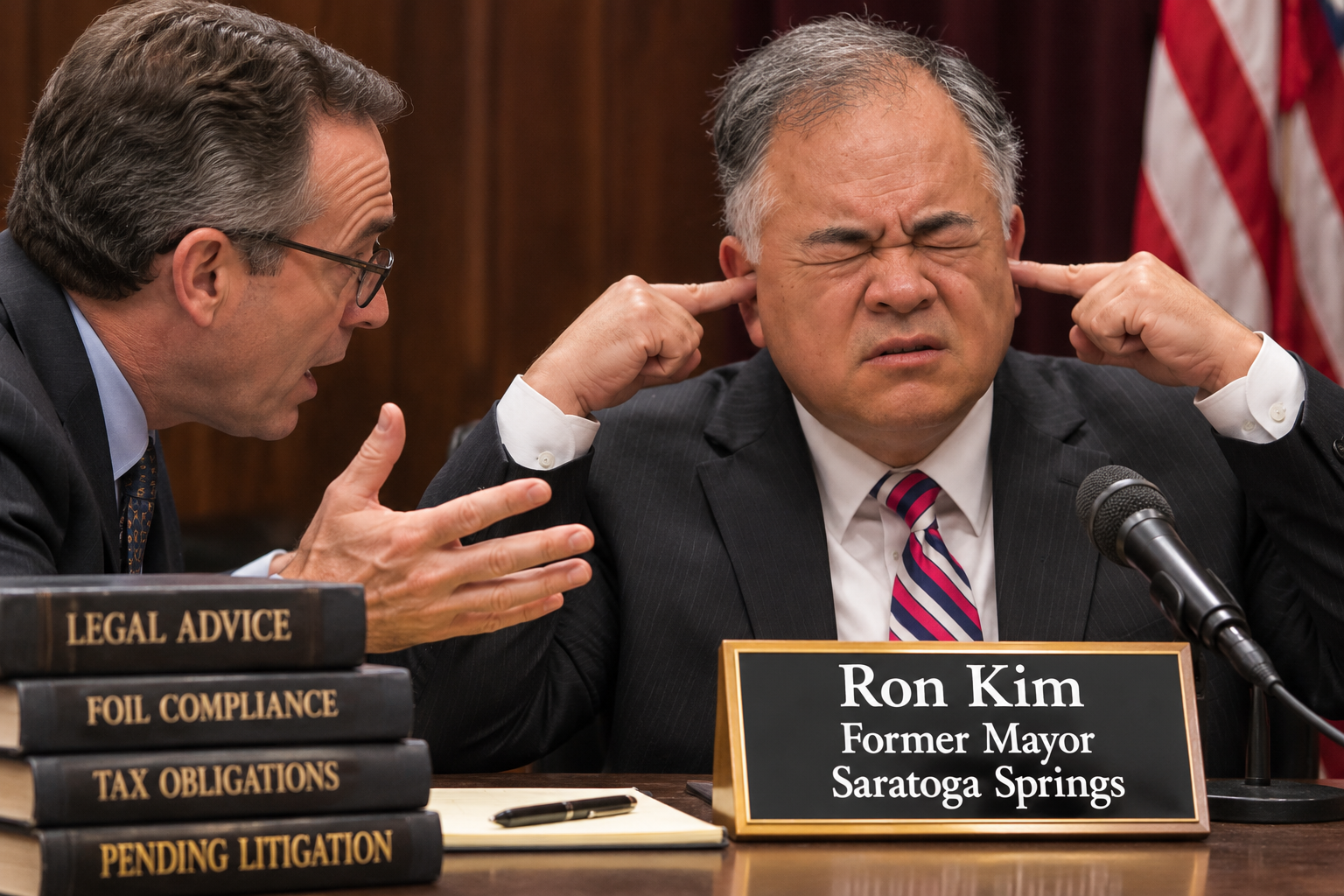
The current dispute between Saratoga Springs and its firefighters’ union traces back to yet another debacle created by former Mayor Ron Kim.
In Saratoga Springs, the Mayor oversees negotiations with the city’s unions. The firefighters’ contract and accompanying memoranda of understanding negotiated under Kim in 2023 contained three key provisions:
- The minimum number of firefighters on each shift was increased to seventeen.
- The agreement formally required that each fire engine be staffed by four firefighters.
- The order in which firefighters are offered overtime is based on seniority.
When presenting the agreement to his City Council colleagues, Kim acknowledged that the attorney representing the city in the negotiations had warned him that increasing the minimum staffing requirements would create serious problems for the city. The attorney advised Kim that if he insisted on agreeing to these provisions, he should at least include a sunset clause.
A sunset clause would have allowed these provisions to expire on a specified date, requiring renegotiation. The attorney clearly understood the substantial fiscal risks associated with these commitments.
The firefighters’ union contracts in Albany, Troy, Schenectady, and New York City do not include the same financially onerous staffing requirements Saratoga Springs has adopted.
Dismissing the attorney’s warning, Kim misinformed his colleagues on the Council, claiming a subsequent mayor could simply reverse these policies.
For those who regularly follow this blog, this was yet another example of what I consider Kim’s legacy of negligent legal judgment.
An observant reader might reasonably ask why the city’s attorney would recommend a sunset clause if a subsequent mayor could simply reverse these contractual provisions at their discretion.
The Chickens Come Home to Roost
A firefighter’s pension is based on the average of the final three years’ earnings, as defined by the applicable retirement plan. Consequently, substantial overtime earnings in the years leading up to retirement can significantly increase pension benefits where those earnings qualify for inclusion.
This contract effectively builds in a gold mine of overtime. Requiring seventeen firefighters on every shift virtually guarantees that overtime will regularly be necessary to cover absences resulting from illness, military reserve obligations, specialized training, and other circumstances.
The agreement is particularly advantageous for senior firefighters approaching retirement. Their seniority gives them priority in accepting overtime assignments, creating opportunities to substantially increase their earnings and potentially their retirement benefits.
In 2025, one Saratoga Springs firefighter earned $198,213, including $86,407 in overtime.
The city’s financial consequences do not necessarily end when a firefighter retires. Pensionable overtime can also increase the city’s long-term pension costs through its required contributions to the New York State retirement system.
Don’t Blame the Union
The union’s responsibility is to be the strongest possible advocate for its membership. Naturally, the union will seek to secure the most favorable wages, benefits, and working conditions for its members.
The city’s negotiators, however, have a very different responsibility. They must weigh the union’s demands against the city’s operational needs, its ability to absorb the associated costs, and the long-term financial consequences for its taxpayers.
In this case, Kim abdicated his responsibility by disregarding the explicit warning of the very attorney retained to protect the city’s interests.
Regular readers of this blog will recognize this as one in a long series of ill-advised legal decisions Kim made during his short but destructive tenure as mayor.
The responsibility for protecting the city’s financial interests rested not with the firefighters’ union but with the city’s leadership. Kim received sound legal advice and chose to disregard it.
As Commissioner of Finance and the official entrusted with safeguarding the city’s finances, Minita Sanghvi should have warned her Council colleagues about the fiscal implications of the proposed contract.
In fact, she has admitted she failed in this responsibility. In one of her Facebook posts and in the Saratogian, she stated clearly, “I should have asked the Mayor to wait on that agreement and should have provided the city a financial impact statement as they do at the county (But this is something I have learned from my time as County Supervisor).”
It is stunning that this never occurred to Sanghvi, a member of the Skidmore business department. Instead of advising caution, she voted for the ill-conceived agreement.
The city must now contend with the consequences of their actions.
A Failure of Equity
The financial impact of the commitments made to the firefighters extends well beyond the fire department.
The substantial costs of firefighters’ overtime and related pension obligations leave little flexibility in the proposed budget to meet the future needs of the city’s other employees.
Where will the money come from to provide reasonable salaries and benefits for employees in other departments? The proposed budget is already skeletal.
Let me be clear: I am a strong supporter of unions. Employees need effective advocates to represent their interests. Labor negotiations are complex and require skilled professionals to represent both sides at the bargaining table.
We have an outstanding fire department staffed by highly motivated and dedicated people. They deserve fair compensation for the risks they take to protect our community.
But the city also has an obligation to its other employees and to its taxpayers. Responsible collective bargaining requires balancing these competing interests.
Cheap Shots and Short-Sighted Promises
In opinion columns, letters to the editor, and Facebook posts, Kim and Sanghvi have run a media campaign that shows either an astonishing lack of understanding of the city’s financial situation or a deliberate attempt to misrepresent the magnitude of the budget challenges the city is now facing.
In a recent letter to the editor, Minita Sanghvi appealed to the sympathies people naturally feel toward our firefighters while ignoring the harsh realities of the city’s finances. She accused Finance Commissioner JoAnne Kiernan of having “manufactured” a fiscal crisis to raise taxes.
Think about it. Why would Kiernan voluntarily subject herself to the public anger and criticism that inevitably accompany tax increases and staff layoffs?
Sanghvi’s stunning accusation defies logic and, in my view, further demonstrates Sanghvi’s incompetence and political opportunism. This kind of irresponsible behavior contributed to the deficits the city now faces.
In contrast to Sanghvi, Kiernan has demonstrated both the ability to analyze the city’s finances and the courage to take politically unpopular but fiscally necessary actions.
Rather than acknowledging their own roles in creating the fiscal crisis, Kim and Sanghvi are attacking the person now charged with fixing the mess.
Their attacks on Kiernan add insult to injury.

