Planning Board Considers Request By City Center For A Subdivision

Mattt Jones represented the City Center at the planning board meeting. The purpose of his presentation was to get their approval to subdivide the Highrock lot.

I am not a city planner or attorney and while I think I understood the presentation, I invite any readers out there to correct me should I get any of this wrong.

According to Jones, a structure like the garage under our zoning must be positioned on the most active street that abuts the property. It must be placed fairly close to the street. I was lost by the numbers and do not know what the specific distance must be. Because the garage will be placed on the north side of the lot, it will not abut Lake Avenue which is the most active street and runs along the Southern most line.

In order to meet the zoning requirement the city center requested that the lot be subdivided into two parcels. The first parcel will abut Lake Avenue. The second parcel where the garage will be located will abut the first parcel. This makes mute the problem of the garage not being located on Lake Avenue since the parcel it will be on does not abut Lake Avenue.

The city would lease to the City Center each parcel individually. The length of the two leases will be different in order to allow the city greater latitude as to how to use the front lot in the future.

There followed a discussion about the fact that the City Center is pursuing their applications through the land use boards at the same time that an RFP has been issued that includes the same land.

Chairman Torpey had sent a query to the city council seeking some sort of assurance that it was ok to proceed with the City Center garage application in this light. He said he had no response. It was noted by a number of people at the planning board meeting that the City Council, when they issued the RFP had agreed that the City Center should continue with their land use applications.

An attorney representing the owners of the Mouzon House Restaurant challenged the Planning Board’s decision to entertain the subdivision application. He noted that it was being done for the sole purpose of getting around a zoning provision. He argued that the proper way to proceed was to seek a zoning variance. He asserted that this was a classic example of spot zoning. He also argued that the comprehensive plan called for a full study of the parking needs of the city and the development of a parking plan to address the needs of the city. He asserted that to go forward on this project prior to the completion of that plan was not in keeping with the comprehensive plan so that to grant a subdivision at this point would violate the comprehensive plan and be further proof of spot zoning.

At this point, Jennifer Leidig got up and addressed the Planning Board. She attacked the Planning Board for taking up this issue in August when people were on holiday or otherwise absorbed by other summer activities. To say that she implied that this was being done to force the project through would be something of an understatement. Ms. Leidig does not do nuance or subtlety. This occurred at approximate 10:15 at night after over three hours and with plenty left on the agenda. Board member Janet Casey was not pleased. She agreed with Leidig that it was August and then reminded Ms. Leidig that the members of the planning board were volunteering their time doing some very difficult work. She noted that some of the items before them were time sensitive due to the legal requirements and she made it crystal clear that at this late hour she did not welcome being lectured to.

Members of the Pedinotti family that own the Mouzon House Restaurant spoke to the Planning Board arguing that to go forward on the City Center application would serve to discourage developers who might be considering responding to the RFP for a mixed use project on the same site.

Sarah Burger (who was silent during the discussion on Saratoga National and who sat behind Mr. Newkirk, one of the owners of Saratoga National patting his back) spoke in opposition to the subdivision. She agreed with the Pedinotti attorney and with the statements of the Pedinotti family.

Matt Jones told the Planning Board that the decision to subdivide the lot came out of discussions with Steve Shaw, the city building inspector and that the approach had the building inspector’s support.

Mark Schachner told the board that they were required to entertain the application but that they were not required to make a decision that night.

The board again split. Mark Torpey told the members that he believed that the decision to subdivide should be combined with the site plan review and therefore put off. Janet Casey agreed with him.

It was apparent that the Johnson appointees wanted to approve it that night.

Mark Schachner then advised the committee that if they were going to pass it that night than they had to include in the resolution the criteria as set out in the zoning law as part of the resolution.

Kate Maynard was sent to get the appropriate supporting documents. By the time she returned it was after 11:30. Chairman Torpey recommended that they adjourn and have the staff work on the wording for the next meeting.
A Troubling Leaflet Attacking The City Center

A group calling itself Citizens For High Rock distributed a leaflet at the Farmer’s Market on Saturday.  The Leaflet is titled “Saratoga Deserves Better!”  It is a full throated attack on the proposed City Center structure.  While I disagree with many of its arguments, I am always for stimulating community discussion about important issues.  What I find very troubling was the following statement on the pamphlet:

“Doesn’t generate property tax of (sic) sales tax revenue-leased to City Center For $1.

The current proposal from the City Center provides half the parking revenue to the city, the sales tax generated by the parking, and an annual lease payment of $70,000.00.  I find it very disturbing that this group would distribute something with such glaring inaccuracies.

The group has a web site and I have posted on it a request that they correct the leaflet before distributing any more.

The City Center’s Proposed Structure: Less Hysteria And More Thought

Large Overview

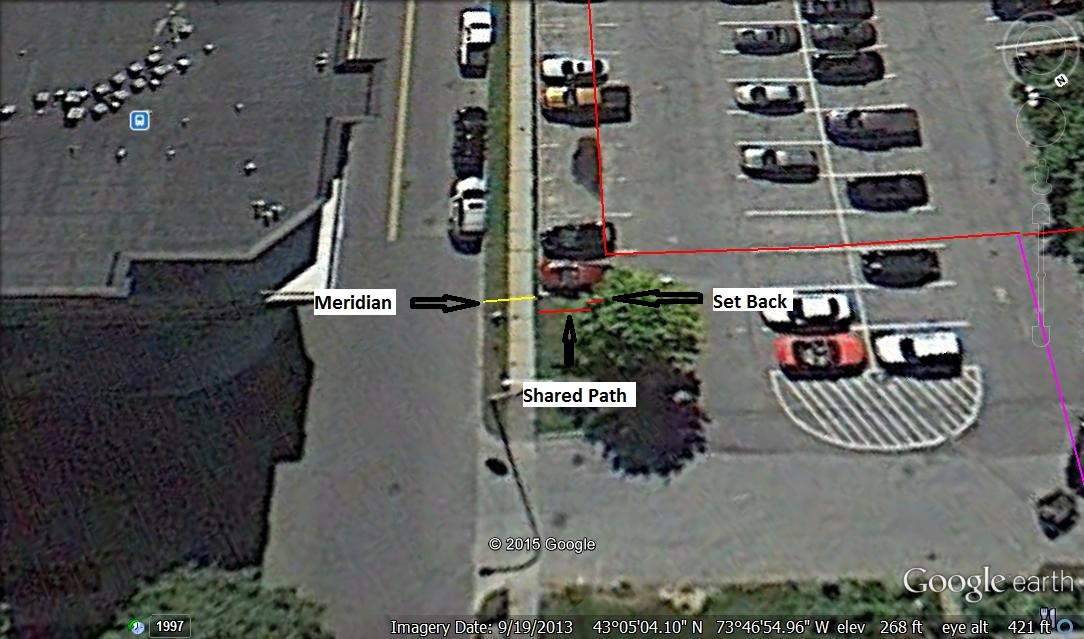
Median - Shared Path - Buffer

Structure And Mouzon House

To properly view these photos double click on them individually

I have great sympathy for the owners of the Mouzon House.  The restaurant business is extremely challenging.  They have worked very hard to build an excellent restaurant whose reputation for the quality of its food and the courtesy of its staff is well deserved.  I can speak from experience.

It is clear that they feel profoundly threatened by the structure being proposed by the City Center and they have campaigned hard to block its development.

In the course of doing so, they have played on many of the common prejudices.  To begin with, the image of a parking garage for many of us, conjures images of cracking walls, dark smelly stairways, ominous and huge towers blocking out the light and huge, threatening edifices.

There is also the image of a large, well funded, government agency ruthlessly crushing its critics and opponents.

None of this is true regarding the City Center and its proposed structure.

The first thing to understand is that because the City Center is a public entity they were not required to go through the normal zoning requirements.  In spite of this, the City Center is pursuing the required approvals by the city’s land use boards as though they were a private developer.

SolarPanels

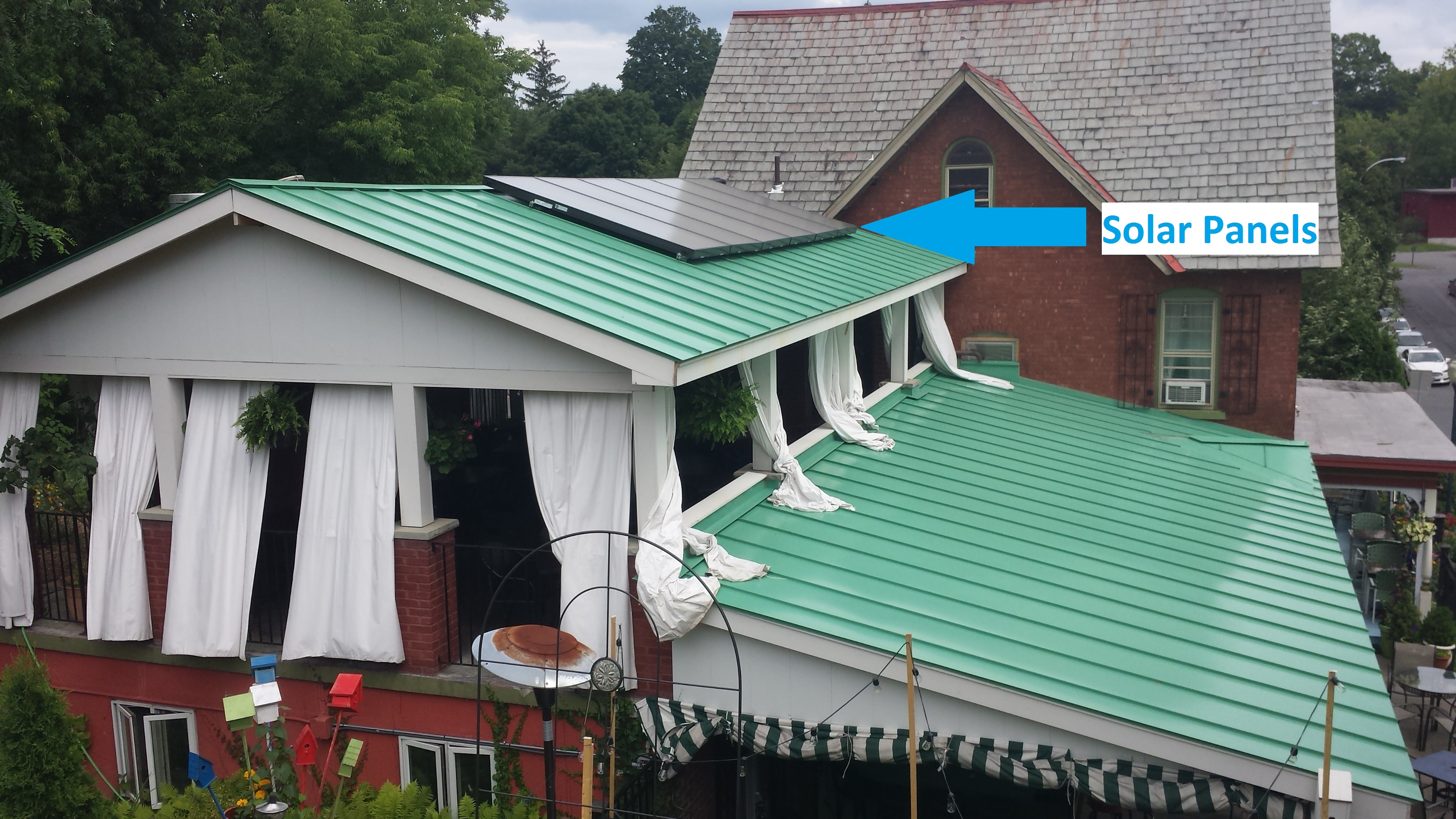
Then there is the issue of the solar panels on the Mouzon House.  The panels are not photo voltaic.  They are passive thermal panels meant to heat hot water.  The Mouzon House installed these without the required building permits or the approval of Design Review.  A reasonable person in looking at the timing of their construction and their circumvention of the required steps could conclude that they may have been installed as a strategy to throw a legal impediment in the path of the City Center.

The fact that the ordinance regarding solar panels that the Mouzon House used has now been changed does not mean that the decision was retroactive as many of the City Center critics have maintained.  In fact the City Center is still required to go through the Land Use boards for approval.  This is not to say that the change did not greatly benefit the City Center and that their chances of success have not been improved.  I have argued in a separate blog that this change has an important and beneficial impact for all downtown development.  The fact is that the Mouzon House exposed the very serious problems with the existing ordinance.  It is instructive that no landowner in the city core that would be affected by the change spoke against it other than the owners of the Mouzon House.  If the change had been solely to benefit the City Center one would have expected that other landowners who felt they would be adversely affected by it would have come forward.

Some have suggested that the City Center should have offered to put the panels on the Center’s proposed structure but because the panels are thermal and are meant to heat water, this was simply not a feasible solution.  The City Center, in its negotiations with the Mouzon House, continues to discuss options that may help mitigate the impact of the structure to their business.

It is important to put the project in perspective of the needs of the city as a whole.  One of the principals of the Northshire Bookstore made an impassioned plea regarding the need for customer parking. This is the need most commonly expressed by downtown business owners. It is also critical to understand the importance of the City Center in sustaining the downtown.  Most of us do not appreciate how difficult it is for merchants to get through the winter months.  The conventions attracted to the City Center place thousands of people right in our city’s “center.”  The recent expansion of the City Center means more attendees which means more people in town to shop and eat downtown. The planned parking structure is important not only to accommodate the increased volume at the City Center but will relieve the parking crunch for other downtown venues (including the Farmer’s Market) as well.

A Serious Look At the Proposed Structure

So let’s look at what is really being proposed.  Below are a number of photos meant to give people a better sense of the project.  These are meant to expand on photos in an earlier blog that showed renderings of the actual buildings.

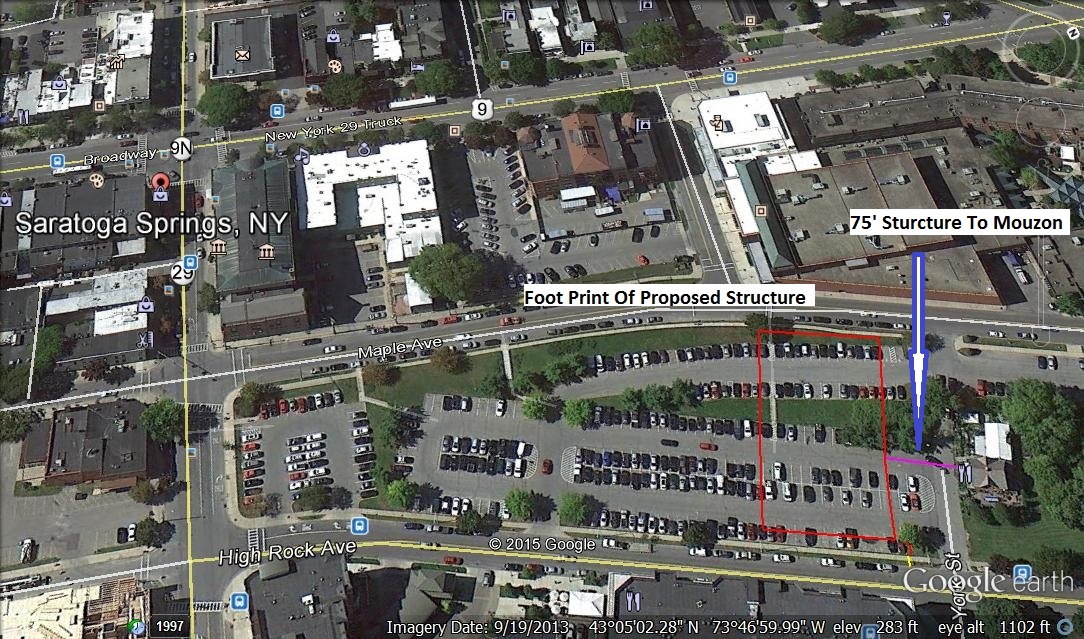
We all come at this kind of thing with our own eye, but the footprint of this building shows that while it is a large structure, it is not as large as many people think

The City Center has an excellent record of maintaining its facilities.  It would be a mistake to dismiss the possibility that the proposed building would be allowed to deteriorate but it seems unlikely.

As the photos show, the Mouzon House will not be cheek by jowl with the proposed structure.

The proposal includes a significant buffer to the street in order to plant trees as planned by the City Center.  There is a ten foot grass median from the curb.  There is another ten foot shared biking/walking path and then there is an additional three foot buffer between the path and the structure.  There will not be an imposing prison like wall running along High Rock Avenue.

It is important to remember that this parking structure will be built at no cost to the city with the City Center Authority paying for all operating and maintenance expenses as well. In addition the City Center will be paying an annual lease payment (currently proposed to be $70,000.00) to the city and the city will be receiving a share of the parking revenues (currently proposed to be half) as well as sales tax.

Multi Use Building

This is not to dismiss the current plan to issue an RFP for a multi-use structure.  If the structure can accommodate the parking in the current proposal along with whatever additional parking that the new uses will require, this would be outstanding.  I have expressed my skepticism about all of this coming together but time will tell.

A Civil And Thoughtful Assessment

It is wonderful that people care so much about our city that this project has generated such interest and at times passion.   I have been enormously impressed by the people I know from Sustainable Saratoga.  The city is extremely fortunate that we have a group of such quality working on behalf of our city.  I have also had many interactions with Mark Baker in the recent past.  I have found him to be not only accessible and open but extremely well informed.  I think that the city is fortunate to have him running our City Center.  The point of this post is simply to argue that the proposed project has significant merits that should be considered in our discussions.

Hot Times For The City Solar Amendment

I am in favor of the solar amendment passed by the City Council on Tuesday night.

For those of you not familiar with the original ordinance:

6.4.8 SOLAR ACCESS

Except as otherwise provided by this Chapter, no property owner may erect a structure or allow a tree or other flora to cast a shadow upon a solar collector greater than the shadow cast by a hypothetical wall six feet high located along the property line between 8:00 a.m. and 4:00 p.m. Eastern Standard Time from September 21 to March 21.

This seems rather complicated because the shadow is literally a moving virtual shadow depending upon what date and what time you choose.  There is, however, software designed to figure this out. (Shadow Calculator) This is a link to a pretty neat web site that lets you hone in on your actual property using Google Maps and create a virtual structure on your property and then check out its shadow on different days and times.

Basically the ordinance cited above is meant to insure that nothing, including trees, on one property  adversely affects solar panels on any neighboring property.

The amendment to the ordinance which was adopted excluded the downtown from this requirement.

In brief, given the wide variety in heights of downtown buildings along with the goal as set out in our Comprehensive Plan to concentrate growth in the core, the original language creates significant potential conflicts between property owners.  Had the Cantina on Broadway, for instance, erected a solar panel on its roof, the building housing Northshire Books could not have been built under this ordinance. The scope of these problems is clearly very different from areas outside the core where building height and the close proximity of other structures are very different.

Northampton, Massachusetts is a city similar to ours in many ways and has won an award for being a highly rated sustainable community (Northhampton Link).  It considered adopting a solar panel ordinance  a number of years ago but determined that in light of their goal of concentrating development downtown such an ordinance would be a significant hindrance.

I think it is also important to keep the scope of what is contemplated here in perspective.  The downtown area affected is quite modest in size.

I share my Sustainable Saratoga friends’ desire to vigorously press  for green energy in light of the grave danger of global warming.  We differ about the significance of the impact of this ordinance change, however.  How seriously does excluding the downtown threaten our commitment as a community to reducing greenhouse gases?  To what extent does insisting that the city core must have an ordinance on solar panels make sense?  Is this an issue of symbolism or an issue of critical substance deserving the heat that this debate has generated?  Are there existing and emerging sustainable technologies that will better suit the downtown now and in the future?

A major concern is that for many of the players in this conflict, the question of solar panels is a stalking horse for opposition to the proposed City Center Garage.  While changing the ordinance removes an obstacle for the City Center to build its garage, mixing the two issues does a disservice to both.

What remains to be examined and what may have a broader impact is the potential conflict between solar panels and not only buildings but trees in the remaining areas of the city still covered by this solar ordinance. Sustainable Saratoga has launched an important tree planting initiative along with their support for solarizing Saratoga, and the danger is that these two worthy goals may come into conflict with one another as solar panels are installed throughout the city and trees are planted and grow.  What happens, for instance, if a panel placed on a house is shaded by a neighbor’s tree? Under the ordinance as written the tree must come down. Clearly the way ahead for a sustainable Saratoga must involve a holistic look at all aspects of what makes for a sustainable city. For an interesting discussion of this and the issue of solar panels and historic preservation as well I refer you to the article cited in an earlier post.

Which brings us to the question of why not wait and review the ordinance as a whole as it affects the entire city.  To my mind, the process for developing an ordinance for the entire city is going to be arduous.  Aside from the problem of the ordinance itself, the city would be imposing new standards for all its property owners.  This is the kind of process that will require patience, diplomacy, and commitment.  Anyone who has watched our City Council will know just how monumental a task this could end up being.  I know that many of the readers of this blog will differ with me, but waving the solar ordinance requirement for downtown, as argued earlier, was both simple and needed.

A Timetable For The Mixed Use “Garage?”

On June 14th, a group named “Citizens For High Rock” held a forum on the proposed City Center Garage.  At the meeting the group was highly critical of the City Center’s plan and argued that a mixed use facility should be built instead.  The group talked about incorporating retail space and affordable housing units in the facility.  Adding these new uses would require  even more parking in addition to accommodating the needs already identified for the City Center and downtown.  On its face, their suggestions sound like they would involve a very large facility.

I am extremely skeptical that these ideas can attract the kind of private money required for such an ambitious project.  Having said that, I would be among the happiest people should I be proven wrong.

Commissioner John Franck announced at a June City Council meeting that he would be preparing an RFP for mixed use development plan.  I just learned that Mayor Joanne Yepsen has taken over responsibility for drafting this RFP.  I emailed John Franck last night asking why he had passed this on to the Mayor.  When I get a response from Commissioner Franck, I will post it on this site.

Given my skepticism regarding such a project, I am concerned that this is simply going to lead to further delays.  In that spirit, I emailed the following to Mayor Yepsen:

I understand that your office has taken over responsibility from John Franck for drafting the RFP related to the land currently under consideration for the City Center Parking Structure.  I would be grateful if you could answer the following five questions.

  • What comprises the physical footprint of the property that the RFP would address?  I am not quite sure what the geographic scope of the land in question is.
  • In your planning, what is the timeline for issuing a  draft of the RFP?
  • In your planning, when would you anticipate issuing the final RFP to solicit proposals?
  • In your planning, when would you anticipate the date would be for when responses to the RFPs would be due?
  • In your planning, when would you expect to either accept a proposal that met the RFP requirements or, in the event that no such proposal was received, to end the process?

Thank you in advance, for answering my questions.

I was careful to use the phrase “in your planning” because I understand that factors often arise that make rigid commitments problematic.  Still, it seems eminently reasonable that in taking on this responsibility, the Mayor would have some targets as to when all of this would take place.  Mayor Yepsen stressed in her last campaign for Mayor the accessibility of her office and the high standards for transparency her office would maintain.  I would expect to get a response from her office fairly soon and will post it on this site when I receive it.

A Strange And Unpleasant Chapter In The Debate On The Solar Ordnance

On Tuesday night the city council had to deal with the State Environment Quality Review for the proposed solar amendment.  The SEQR format is a document with a list of yes and no questions.  Commissioner Madigan read each of the questions along with the proposed answers.  None of the members of the council expressed any problems with any of the answers so it was bizarre that at the end, when the council voted, Mayor Yepsen and Commissioner Frank voted against the resolution affirming that there would be no negative impact (neg dec).  When Mayor Yepsen and Commissioner Frank were asked why, in light of the fact that they had no objection to any of the answers on the form, that they opposed the resolution, they declined to answer.  Mayor Yepsen said that her reasoning would become clear later on in the meeting.  Commissioner Frank simply repeated several times “I voted no and No is no” as though that meant something.  Commissioner Matheisen then pointed out that this made no sense.  He noted that the question of whether the change in the ordinance would have an adverse environmental impact was separate from whether one opposed the actual change in the ordinance.  He asked Commissioner Frank and Mayor Yepsen if they could indicate which answers to the questions, if any that they disagreed with.  Neither Commissioner Frank nor Mayor Yepsen would address his question.  Yepsen simply repeated that it would become clearer later in the meeting and Frank repeated that no is no.

If you would like to review the video of what happened you can go to this link:

Video Of Council Meeting

On the right, select “Finance Department (Part 1 of 2) – 4. Discussion and Vote: Determination of SEQR.   The first eleven minutes, Commissioner Madigan goes through all the questions individually with the proposed answers.  At 11 minutes and twenty-four seconds she makes the motion for the negative declaration and the discussion begins.

This indicates how difficult it is in the current political environment to have a reasoned and thoughtful discussion on some very difficult but important issues.

Latest Graphic Of The Footprint of the City Center Proposed Garage

Mark Baker sent me a graphic showing how the proposed garage will sit on the lot

Foot Print Of City Center Garage

Images of the Proposed City Center Parking Structure

I plan to write extensively about both the solar ordinance and the parking structure proposed by the City Center.  I have received helpful materials from Harry Moran, Geof Bourneman, and Mark Baker.

In the meantime, Mark Baker has been kind enough to send me some images of what the structure will look like.  The amazing thing is that I did not have to FOIL for them.  That is a lame attempt at humor.  It seems that asking for the most basic information these days entails a FOIL request and a month’s wait.  Any way, these are the most up to date images of what the structure would look like if it were approved.

Maple Ave View Across Street - 112614 Picture1 (2)#5 Photoshopped