Sweeney and Trump: A Match Made In…

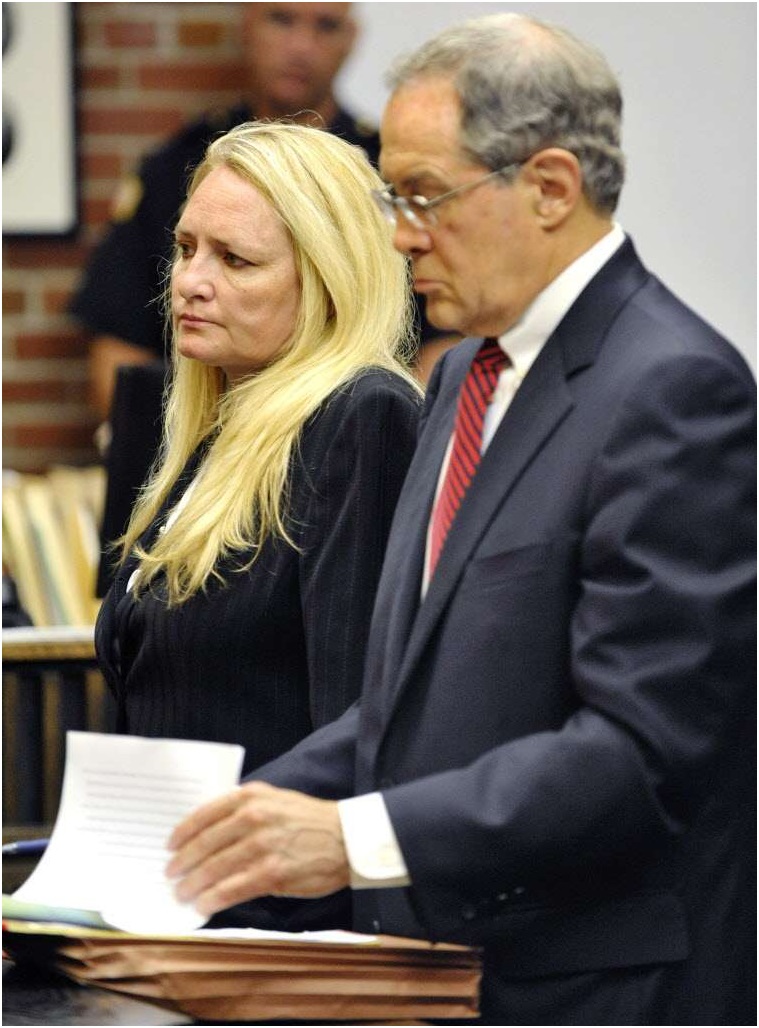
In a front page story in the December 16 edition of the Saratogian, it was reported our ex-Congressman John Sweeney has been appointed as one of nine new members of the Trump “transition executive team.”

Conspicuously absent from the article were several events that contributed to his defeat (Kirstin Gillibrand was the winner) and which, in fact, should help him fit in with the Trump team.

Here are some excerpts from the entry for Mr. Sweeney in the Wikipedia page devoted to him.


In September 2006, the Citizens for Responsibility and Ethics in Washington (CREW) released its second annual report on members of Congress with ethics issues, titled “Beyond DeLay: The 20 Most Corrupt Members of Congress (and five to watch)”. Sweeney was one of the 20. The organization said “His ethics issues stem from a ski trip to New York, the exchange of legislative assistance for campaign contributions and the hiring of his wife as a campaign fundraiser.”[21]

Wife as fundraiser

On April 11, 2003, Sweeney began paying a company called Creative Consulting for fund-raising. The company had been founded a day earlier by Gaia “Gayle” Ford. Between April 2003 and December 2003, Sweeney’s campaign paid $42,570 to the firm. Sweeney proposed to Ford in September 2003[27] and married her in 2004.

Sweeney spokeswoman Melissa Carlson said the congressman considers his wife “his best representative in the district when he’s fund-raising.” She said Ford, who had no previous fund-raising experience, receives a 10 percent commission on whatever she raises. Between January 2005 and April 2006, Ford was paid $30,879. Sweeney also has had a fundraising consultant on monthly retainer since June 2004, who is paid $8,583 a month.

Ford also works for Powers & Company, the lobbying firm of former [New York] state GOP Chairman William Powers, Sweeney’s longtime political ally and onetime boss.[28]


Ski Trips

The Winter Challenge was started in 1998 by Sweeney’s House predecessor, Gerald Solomon, with the declared purpose of showcasing the Olympic facilities at Lake Placid, New York to congressmen and their staffers in hopes of getting federal funds; Sweeney has hosted the annual event since 1999.

In January 2006, Sweeney, his wife, and about 60 other people spent a four-day weekend at the facilities, competing against each other in skating, downhill skiing and bobsledding events. The group included Representative Pete Sessions (R-TX), a close friend of Sweeney[29] and his wife; and aides to U.S. Senator Hillary Clinton (D-NY), Senator Harry Reid (D-NV), Representative Randy Kuhl (R-NY), and Representative Bart Stupak (D-MI).[30][31] The weekend cost the Olympic Regional Development Authority (ORDA) $27,500, plus in-kind services it provided and the costs of operating the Olympic venues for the competition (exact figures for the latter two were unavailable).[32] ORDA is a part of the New York State government.[33]

In the fall of 2005, the House ethics panel told Sweeney in a letter that he should be careful to let the Olympics groups invite guests to avoid the appearance of an endorsement by the House.[30] “Once the ORDA and the U.S. Olympic Committee — without your involvement — have issued an initial invitation to House members and staff to take part in the trip, you may send a follow-up to that invitation”, the ethics panel, known formally as the Committee on Standards of Official Conduct, wrote to Sweeney.[33]

Invitations to the event officially come from ORDA and the U.S. Olympic Committee, a nonprofit group chartered by Congress. ORDA says the impetus for the event comes from the U.S. Olympic Committee. The U.S. Olympic Committee said it’s really Sweeney’s event.[30] Three committees of the NY State Assembly have launched investigations of the Challenge, focusing on whether public money was put to good use. ORDA President Ted Blazer, speaking at one such hearing, said Sweeney’s office helped assemble lists of possible invitees to the event.[33]

Documents show that at least eight members of Congress, all Republicans, were also invited to attend the 2006 event but declined.[33]

The official invitation for the event read: “While this trip has proven itself to be an enjoyable one for delegation members in the past, it is, nevertheless, an official trip authorized by the House and Senate Ethics Committees . . . intended to provide an opportunity for Members of Congress and Congressional staff to inspect and evaluate the manner in which federal funds have been used to strengthen the area’s tourism industry.”[30]

Despite the House ethics rule requiring all travel paid by others to relate to members’ official duties, and the ethic panel’s letter that said that recreational activities must be “merely incidental to the trip”, Sweeney has said that the panel said “it’s perfectly appropriate for me to promote the event.”[33]

The group attending the event included at least 15 registered lobbyists, including Pete Card, a former staffer of Sweeney’s and the brother of former White House Chief of Staff Andrew Card, and Lisi Kaufman, a lobbyist for United Technologies Corporation, the sister of Andrew and Pete.[30][31][34] In his request to the House ethics committee, Sweeney did not ask about lobbyists.[35] A spokesman for ORDA said he does not know why the lobbyists were invited.[31]

Seven of the lobbyists had contributed a total of $12,400 to Sweeney’s campaign in 2005.[36]

Disputed domestic violence report

On October 31, 2006, the Albany Times Union reported that it had obtained a document stating that “[t]he wife of U.S. Rep. John Sweeney called police last December to complain her husband was allegedly ‘knocking her around’ during a late-night argument at the couple’s home.” The responding officers filed a domestic incident report. The report states that Sweeney allegedly grabbed his wife “by the neck” and pushed her around the house.[37]

On November 2, 2006, the Albany Times Union reported that on October 31, John and Gaia Sweeney said they would give the New York State Police permission to release a report about the incident. They said that the report was inaccurate but have not disputed its contents.[38] On November 17, 2006, the Times Union reported that there were two versions of the domestic violence report that had been prepared by the State Police, one that was sent to them, doctored and lacking details, and the original report.[39]

On July 22, 2007, the Albany Times Union reported that Gaia Sweeney, who was contesting a divorce action by her husband, said that he was often verbally abusive and at times physically abused her during their marriage. She also said that a statement she made on the eve of last fall’s election, denying marital abuse, was “coerced“. Sweeney denied that he had been abusive; he had recently obtained a judicial order of protection against his wife.[40]

According to the Times-Union (July 22, 2007):

“Sweeney’s first wife, Betty Sweeney, of Schaghticoke, stood up for her former husband in a telephone interview …

“‘I’ve known (John) all these years and I never observed any kind of behavior like that towards me or anybody else,’ said Betty Sweeney, who had three children with him.” [41]

The State Police captain who wrongfully leaked the disputed Sweeney domestic violence report was demoted weeks after the November 2006 election. [42]

November 2007 DWI

Sweeney was charged with aggravated DWI (driving while under the influence of alcohol or other drugs) when he was arrested by New York State Police at 1:19 a.m. on November 11, 2007. The arrest occurred on the Adirondack Northway, a stretch of Interstate 87 that runs between Albany and Lacolle, Quebec, Canada. A law enforcement source said Sweeney’s car had been swerving and that a 24-year-old woman was seated partially on his lap when spotted by a state trooper.[43] The police reported “he had a woman on his lap when he was pulled over.”[2][44] Sweeney’s blood alcohol content registered at .18 percent, more than double the legal limit.[44] Sweeney issued a statement later that day stating: “I regret the occurrence. I deeply apologize to my family and friends. I take full responsibility and I am hoping to work for a fair resolution.”[43]

On November 14, 2007, Sweeney pleaded guilty to drunk driving after his attorney vocally and publicly denied he had even been drinking that evening. Sweeny paid a US$1,000 fine, but did not have to spend any time in jail. His license was suspended for six months and had to attend a victim impact panel for drunken drivers.[45]

April 2009 DWI

Early on the morning of April 5, 2009, Sweeney was pulled over by state police for speeding.[2] He refused a breathalyzer test ordered by the officer, and according to a newspaper report, “Sweeney allegedly told the officers he would not pass the sobriety test, adding he was in ‘big trouble.'”[2] He was charged with felony DWI, since Sweeney has had a prior DWI conviction within the past 10 years.[2] On August 14, 2009 a grand jury indicted Sweeney on felony charges and he was sentenced on April 23 to 30 days of jail time.

As part of his punishment, Sweeney had to wear a device 24 hours a day, 7 days a week that detects alcohol. He performed 300 hours of community service in the form of pro bono legal work and pay a $1,000 fine, said Franklin County District Attorney Derek Champagne, who handled the case as a special prosecutor

Ties to Allen Stanford

Sweeney was part of a group of lawmakers known as the Caribbean Caucus, sponsored by disgraced financier Allen Stanford. The group, formed to promote relations with Caribbean nations, took 11 trips to places like St. Croix, Montego Bay and Key Biscayne. The meetings, which included receptions with lobster, caviar and wine, were paid for by the Inter-American Economic Council, a non-profit funded by Stanford and totaled $311,307 in costs. Other members of the Caucus included convicted influence peddler Rep. Bob Ney and close Sweeney friend Rep. Pete Sessions. In 2004, Stanford hosted a wedding reception for Sweeney and wife at the Pavilion Restaurant, owned by Stanford. At the time, Sweeney told the Antigua Sun “If it wasn’t for Allen, I certainly would not be here today.”[47]


Charter Commission Attempts To Climb Mountain

members-deliberate
From right to left are Laura Chodos, B.K. Keramati, and Jeff Altamari
boyd-proposes-resolution
Gordon Boyd proposes resolution

An Ambitious Schedule

The Charter Commission unanimously approved a resolution introduced by member Gordon Boyd at their December 13 meeting.  The motion set an ambitious schedule for completing their work.

Currently, a subcommittee chaired by attorney Matt Jones is working on cleaning up the existing charter.  It aims at eliminating duplications and other technical problems.  More ambitiously, Mr. Jones’ committee will consider removing items from the charter that are seen as too rigid and restrictive and which should be decided on an on-going basis by elected officials rather than codified in a charter.   

For example the following item is in the charter.  It probably can be addressed by action by the Council:

§ 225-56 Vacation of vehicles during public emergency; removal.

No vehicle shall be parked, left unattended or abandoned on any street within the City of Saratoga Springs during a snowstorm, snow-removal operations, flood, fire or other public emergency in such a manner that it creates a hazard or obstruction to traffic. If any vehicle is so found, it may be removed by the City Police Department.

Mr. Boyd’s resolution calls for the subcommittee to submit its final report to the full commission by February 1.

According to Assistant City Attorney Tony Izzo, there are many areas in the charter that do not require  approval by the city’s voters in a referendum.  In general, items that do not limit the authority of elected offices can be amended by a vote of the City Council. 

The resolution also committed the group to adopt and publish their “Findings.”   I assume this report will set out what they learned from the many meetings they have had with current and past elected officials from our city, city employees, and officials from other communities whose experiences helped them understand the different types of government organization. 

The resolution commits the Commission to holding a public  referendum in the spring of 2017 should they decide to rewrite the charter to end the existing commission form of government and replace it with a new form like a strong mayor or a city manager.

At the meeting, Mr. Boyd explained that if a new form of government were adopted, it would not take effect until January of 2020.  It would, however, mean that candidates in the next election cycle would know that were they to win they could only be in office for one term. They would also be involved while in office with orchestrating the city’s  transition to the new form of government.

Mr. Boyd noted that if there were a referendum to adopt a new charter and it were defeated, the work of Mr. Jones committee to refine the existing charter would still be available for adoption.

An End To The Commission Form  of Government?

Following the approval of Mr. Boyd’s resolution, Matt Jones suggested that it would be helpful to know what the commitment might be for changing the form of government.  Bob Turner, chair, then polled the members.  Of the fifteen members, eleven voiced their support for adopting a new form, one opposed the change, and three indicated they were undecided.  Interestingly, the eleven in support were all appointed by Mayor Yepsen.  None of the eleven who were opposed to keeping the commission form indicated what form they would support instead.

The dissenter was Elio DelSette who was appointed by Michele Madigan.   B. K. Keramati who was appointed by Chris Mathiesen abstained.  Commissioner Mathiesen has been quite public in his call for changing our form of government.  Rob Kuczynski  who was appointed by John Franck abstained.  Mr. Kuczynski is the son of Hank Kuczynski who was the Deputy Mayor under Ken Klotz.  Matt Jones  who also abstained was appointed by Skip Scirocco.

Some Thoughts

I am impressed by the quality of the people who are serving on this commission and by the civility of their meetings.

 I continue to be skeptical about the ability of a committee of this size, and without an attorney serving solely them, to craft a new charter.  The lengthy discussion just to adopt Mr. Boyd’s resolution at the last meeting is instructive of how difficult this job will be.  Most of the discussion was thoughtful with many appropriate issues raised.  Nevertheless, it took a great deal of time to resolve the issues and vote.  The mountain of a new charter will be quite a climb.  Bear in mind that they have not even decided what form of government they think the city should adopt and this is after many months of meetings (they began back in June).  All of this is greatly exacerbated by their target of completing this work this spring.  As I recall, the last successful charter that was adopted in 2001 simply refined the existing charter, and it took that commission almost two years to complete the work.

The challenge is made greater by commission member Jeff Altamari’s requirement that whatever they come up with must be revenue neutral.  I remember the tortured efforts made by past commissions to project the costs of their proposed new government formsThe vagueness of their numbers I believe contributed to  defeating those attempts.  I think that projecting the costs of both making the transition and of the ongoing costs of the new government will be needed as the public will want to know what all this is going to cost.  Requiring that it be revenue neutral only adds to the difficulty.

 It is worth noting that the cost of having a special election for the city to vote on a change in government is estimated to be around $25,000.00.


Assemblywoman Carrie Woerner Goes Out In The Cold To Support the Momentive Strikers

What had been the GE silicone plant in Waterford was bought by the hedge fund Apollo Global Management.  Its president, Leon Black, made celebrity status when he paid $120,000,000.00 for the Edvard Munch painting, “The Scream.” 

The purchase of the plant from GE was a classic Wall Street maneuver.  The hedge fund paid $3,800,000,000.00 by leveraging debt and leaving the newly created company with huge debt.  If this story goes the way many of these do, Black’s hedge fund will have received millions of dollars in fees for their new creation no matter what happens to it.  If the plant fails, Apollo will walk away with its fees leaving Momentive unable to pay its creditors.

That debt led Momentive to file for a bankruptcy that, according to Forbes Magazine, was eventually worth $300 million to the company. “Apollo has been the hottest private equity player in recent years,” the magazine said in an admiring profile.  It’s possible they received fees for managing the bankruptcy of their own company.

The employees of Momentive endured a wage cut in 2010 and a pension freeze for 400 of its members in 2013.  In November IUE CWA Local 81359  rejected the latest contract which included more draconian cuts to employees’ benefits for health, vacation, and retirement.

For some reason, Americans seem often to lack empathy for people on strike.  In this case, the men and women of this local have been out for forty-two days.  Given the stress of lost income for such a long period life is very hard.

On Tuesday night in bitter cold weather there was a rally and march to support the strikers.  It was there I ran into our Assemblywoman, Carrie Woerner.  I think it speaks extremely well of her, especially given how conservative this district is, that she would turn out for the event.

woerner-selfie
Assemblywoman Woerner and Blogger

The Times Union home page has a large banner in which Momentive solicits new employees.  I never recall any similar solicitation on their home page.  It is particularly of note that they are asking for “replacement” positions.  It is interesting because it doesn’t include anything about the type of work.  Momentive is a chemical plant.  Working with chemicals requires great care due to the hazardous nature of the process.  Replacing employees with the skills to perform the work is not easy.  I have been told that the non-union employees that have been hired (referred to as scabs by the world of unions) have been mainly for maintenance purposes and little in the way of production has been happening.   I speculate that this “advertising” has more to do with unnerving the people on strike than it does to actually finding employees.

tuscabadd


Ethics Board Takes up Proposed Amendments to City’s Ethics Code…Kind of

By Joseph Levy

[This blogger was unable to attend this Ethics Board meeting.  Joseph Levy was kind enough to attend and this is his report regarding the proceedings.]

On Thursday, December 8th the Ethics Board met.  Present were:

Justin Hogan, Chairman – Mr. Hogan is in charge of “Government Relations” with the law firm and lobbying organization Featherstonehaugh, Wiley, and Clyne.  Mr. Featherstonehaugh is one of the principle owners of Saratoga Gaming and Hotel (previously the Racino).

Brendan Chudy – Director of the Legal Department at Global Foundries

Marilyn Rivers –  Director of Risk and Safety in the city’s Accounts Department

John Ellis – He currently works for the Civil Service Employees Association (CSEA).  He has served on the Saratoga Springs Board of Education and worked for the Ballston Spa School System for twenty-one years.

Also present were Tony Izzo, the assistant City Attorney, and Micelle Groce who serves as executive assistant to Vince DeLeonardis, the City Attorney.

Three members of the public attended the meeting including Jerry Luhn, one of the authors of the proposed revisions to the Ethics Code.  Mr. Luhn recently retired from the State of New York.  [JK: I first met Jerry when he was the director of Legal Aid for Saratoga County.] In addition, Joseph Levy, most recently a candidate for the New York State Senate on the Green Party Line attended as well as  Commissioner Mathiesen (whose arrival at 5:30 coincided with the erroneous posting of the meeting start time on the city website.)

While the public was entitled to sit in under the New York State Open Meetings Law (and did, as just noted), this Board took no note of the public’s attendance, nor did they introduce themselves prior to commencing discussion.

Mr. Hogan complained that the Ethics Board’s website links weren’t working properly, that the 2015 Annual Report had yet to be posted, and that there were tardy replies to email communications.  In particular, Mr. Hogan complained about a several-weeks’ delay in his receipt of the ethics reform proposal before the Board that evening, noting that such failures make them look bad.  Mr. Izzo assumed responsibility for the lapse and promised to remedy the web-related problems.

Conspicuously missing from Mr. Hogan’s complaints was the fact that the time of the meeting was inaccurately posted on the city website.  He had been advised of the error but apparently took no action to correct it.

The Board immediately turned to the sole public issue before it: a proposal to strengthen the City’s Ethics Code, sponsored by Commissioner Mathiesen in consultation with former City Planner Geoff Bornemann, attorney Jerry Luhn, and John Kaufmann.

Mr. Izzo distributed copies of the proposal, as well as notes that he had written about it, to Board members. He informed the Board that the draft proposal applied specifically to the three land use boards:  zoning, planning, and design review.  (Note: there are a number of City boards in addition to those focusing on land use issues.)  Referencing the draft proposal [see previous post] Mr. Izzo summarized what he viewed as the principal points to be considered, including a novel (and unverified) concern:  contrasting the ethical responsibilities and/or potential liabilities of paid City employees with those — if any — of unpaid citizen volunteers serving City agencies.

Mr. Izzo capped his briefing on this point with two related assessments:  (a) in its present form, the municipal Code of Ethics applies generally to all City boards; and (b) the Ethics Board has discretion to narrowly recommend measures to the Commissioners, such as limiting certain ethics rules exclusively to land use boards.

Questions seemed to abound regarding the what-ifs of an enhanced Code of Ethics — a more muscular one, if you will — which the Board was plainly not prepared to address at its December 8 meeting:

*  Mr. Hogan asked: Are other municipalities pursuing ethics code reforms?  (The answer is unknown, so Mr. Izzo committed himself to find out.)

*  Where is the line separating affirmative obligations of board members to simply disclose a potential conflict of interest, without recusal, versus circumstances which compel recusal?  [JK: An excellent question which Mr. Hogan might have asked when he assumed the chair of this committee some years ago.]

*  What is the remedy for material violations of the Code revealed after a given project begins — e.g., after the concrete footings are poured or the building is razed? [JK: Another excellent queston]

*  How should the City address ethical questions presented when an officer of a financial institution having a potential stake in a project proposal also sits on a relevant municipal board? Per Ms. Rivers, “it’s not academic” — it is a real and recurrent issue.

Other questions persisted, some plainly hostile to the very idea of reform.  For example, Mr. Chudy appeared to suggest that drafting rules to cure past ills or abuses “is a bottomless pit” —  a logic that would preclude nearly all forms of remedial legislation and rulemaking; that the proposed ex parte communication rules might include “see ya tomorrow!” and thus ensnare the unwary; and that creating a “checklist” approach to proscribed activity would just create “more problems that we did not anticipate”, such as by exempting from enforcement all actions not itemized.  Unfortunately, the initial responses of some Board members appeared to ignore  a verity of reform rule making:  you have to start somewhere, and build on experience.  If the City were that cautious with issuance of its permits, we’d still have the great hotels.  [JK:There is a certain irony that someone who is the director of the legal department at Global Foundries would find these issues vexing].

Addressing the proposed ex parte communication rule, Ms. Rivers simply noted the need to define what is being proposed, given that, in her estimation, “all kinds of people all over town talk about projects.”  Mr Izzo took that into account and appeared to endorse clarification of the proposal.  [JK: The Department of State that trains land use boards has extensive materials on ex parte and both Mr. Hogan and Mr. Izzo received emails with links to these months ago].

Working toward a wrap of the meeting, Mr. Izzo posed the broad question:  “is there anything in this proposal worth considering?” The responses were mixed, with Mr. Hogan appearing to commence answering in the negative and Ms. Rivers answering in the affirmative.  Mr. Chudy complained that he does not favor “an academic exercise” if “we can’t affirmatively make people behave in certain ways”, a task that, he declared, would be difficult and “disruptive”.  He was joined by the Chair who mocked a particular [100-foot] provision pertaining to recusals, asking rhetorically, “why not 103 feet?”  (In fairness, many regulatory guidelines have elements of arbitrariness — as do posted speed limits, DWI laws, and ages for marriage and voting.)

In the end, it was decided that Mr. Izzo would research the ethics policies and initiatives of other cities, and that the Ethics Board members would read and consider the reform proposal over the next few weeks.  It was agreed to invite public comments — and likely debate among Board members and others present — at the next meeting, which is scheduled for Thursday, January 12th, at 5:30PM.

Commissioner Mathiesen, Jerry Luhn and I were then asked to adjourn to the hall while the board met in executive session. After five minutes, we were invited back in and the meeting was formally adjourned without further discussion at 6:20PM.

President of Skidmore Criticized By Skidmore News


I was amused to read this story in the Skidmore News regarding comments made by Skidmore President Glotzbach at the December faculty meeting.   He told the faculty that “I am glad Skidmore is not located in that red region…that voted very differently. [Saratoga County went for Trump]”

While this was not as incendiary as the president of Hampshire College taking down the American flag for a week, it was not the kind of statement that students and faculty who may have supported Donald Trump would have experienced as “inclusive.”

The article went on to raise the variety of violations in protocol in his statement.

While I consider his comment as hardly revelatory coming from an official from a college like Skidmore, it serves to show how even the most off the cuff remark can generate heat in our country’s volatile environment.


Another form of government for Saratoga Springs?

The Saratoga Springs Charter Review Commission is expected to vote Tuesday on whether to draft a new charter with an alternative form of government for the city. If the Commission decides to propose a complete change in the city’s form of government it will be the third time such a proposal has been made in the past ten years. All recommendations made by the Commission including a proposal for a new form of government for Saratoga Springs would have to be approved by voters. The last two proposals to change to a strong mayor form and then a city manager form were voted down. The meeting begins at 7PM in City Hall. It will be webcast live at www.saratoga-springs.org/AgendaCenter

To Posterity By Bertolt Brecht

1.

Indeed I live in the dark ages!
A guileless word is an absurdity. A smooth forehead betokens
A hard heart. He who laughs
Has not yet heard
The terrible tidings.

Ah, what an age it is
When to speak of trees is almost a crime
For it is a kind of silence about injustice!
And he who walks calmly across the street,
Is he not out of reach of his friends
In trouble?

It is true: I earn my living
But, believe me, it is only an accident.
Nothing that I do entitles me to eat my fill.
By chance I was spared. (If my luck leaves me
I am lost.)

They tell me: eat and drink. Be glad you have it!
But how can I eat and drink
When my food is snatched from the hungry
And my glass of water belongs to the thirsty?
And yet I eat and drink.

I would gladly be wise.
The old books tell us what wisdom is:
Avoid the strife of the world
Live out your little time
Fearing no one
Using no violence
Returning good for evil —
Not fulfillment of desire but forgetfulness
Passes for wisdom.
I can do none of this:
Indeed I live in the dark ages!

2.

I came to the cities in a time of disorder
When hunger ruled.
I came among men in a time of uprising
And I revolted with them.
So the time passed away
Which on earth was given me.

I ate my food between massacres.
The shadow of murder lay upon my sleep.
And when I loved, I loved with indifference.
I looked upon nature with impatience.
So the time passed away
Which on earth was given me.

In my time streets led to the quicksand.
Speech betrayed me to the slaughterer.
There was little I could do. But without me
The rulers would have been more secure. This was my hope.
So the time passed away
Which on earth was given me.

3.

You, who shall emerge from the flood
In which we are sinking,
Think —
When you speak of our weaknesses,
Also of the dark time
That brought them forth.

For we went,changing our country more often than our shoes.
In the class war, despairing
When there was only injustice and no resistance.

For we knew only too well:
Even the hatred of squalor
Makes the brow grow stern.
Even anger against injustice
Makes the voice grow harsh. Alas, we
Who wished to lay the foundations of kindness
Could not ourselves be kind.

But you, when at last it comes to pass
That man can help his fellow man,
Do not judge us
Too harshly.

translated by H. R. Hays

Preservation Foundation Expresses Disappointment Over City’s Demolition Of 26 Caroline Street

foundation-heading

Unfortunate Loss of 26 Caroline Street

The Saratoga Springs Preservation Foundation is disappointed that the City of Saratoga Springs did not disclose at the City Council meeting that the front façade of 26 Caroline Street could be preserved.  Yesterday the Foundation received a copy of the City’s final structural engineer report from Ryan Biggs |Clark Davis Engineering & Surveying.  The report noted the following:

Observations:  “The front masonry façade does not appear to have been damaged or displaced by the fire; however, there are some pre-existing conditions of minor displacements and bulges in the masonry. However, further collapse of the building framing could compromise this wall.”  Please note that the pre-existing conditions appear in a 1982 photograph.

Conclusions: “The front masonry façade appears to be stable with no signs of major structural distress; however, with potential additional collapse of the floor and roof framing, this could cause damage and/or movements of the façade with possible collapse of the wall.  With regard to saving the front façade, in my opinion this is structurally feasible (emphasis added).  However, design of a shoring and lateral stabilization system would need to be completed and implemented immediately.”

“The concern with attempting to retain the front façade is time the building would be left in an unstable condition during the design and construction of the stabilization, and the potential high cost to implement the stabilization. In addition, access to the building for demolition or major construction activities can only be made from the front (north side) and the safe demolition of the remaining portions for the building would be more difficult and costly if the façade is to remain.”

“Therefore, costs of the stabilization and shoring of the façade along with increased demolition costs appear to be disproportionally high to the benefit to save the front wall that has current problems.”

“It appears the complete demolition of the building may need to occur to form a safe condition if a stabilization system cannot be installed immediately.”  Note: no cost for preserving the façade was provided by Ryan-Biggs.

“If the City decides to proceed with demolition of the building, it is recommended that each adjacent property owner have their buildings reviewed by their own engineer in advance of demolition to determine if there are any other concerns with the structural stability of their buildings if 26 Caroline Street is demolished.”

“Demolition will most likely need to proceed slowly to access the existing conditions where 26 Caroline Street abuts the adjacent properties to make sure no unstable conditions are formed in the adjacent properties.”  In the interest of full-disclosure, please   click here to view the final report provided by Ryan Biggs | Clark Davis Engineering & Surveying and click here to view the letter from the owner’s structural engineer addressing the preservation of the façade.  The observations and conclusions made by Mike Miller of Ryan Biggs | Clark Davis Engineering & Surveying regarding the preservation of the façade and potential damage to the adjacent structures echo the structural engineer report that the Foundation hired Don Friedman of Old Structures Engineering to prepare.  Click here to view the Old Structures Engineering report.

The Foundation is further disappointed that the City of Saratoga Springs chose not to seek a cost benefit analysis regarding the potential to preserve the façade prior to moving forward with approving full demolition and that the Design Review Commission was not given any opportunity to provide an advisory opinion or that several of its members were not informed of its imminent demolition. The Foundation did its best to fulfill our mission and advocate for the preservation of this structure or, at least, its façade with available resources.   We are saddened by the loss of 26 Caroline Street and will be actively involved in the review of the redevelopment of the site.   Again, thank you to our members for their continued support of our mission and to those who have expressed support and gratitude for our efforts!

For Those Wondering If Justin Hogan Corrected The Information On The City Web Site For Tonight’s Ethics Board Meeting…

No

City To Demolish Historic Building; Preservation Foundation Expresses Concern

26-caroline-street-view
26 Caroline (Middle Building
aerial-of-26-caroline
26 Caroline (Aerial View)

From The Saratogian Newspaper:

Saratoga Springs plans to demolish Caroline Street building

By Joseph Phelan, jphelan@digitalfirstmedia.com,, @jphelan13 on Twitter

Posted: 12/07/16, 6:48 PM EST | Updated: 18 hrs ago

SARATOGA SPRINGS >> Despite efforts to preserve 26 Caroline St., the city, based on recommendations from two structural engineers, plans to demolish it Thursday morning.

At the City Council’s pre-agenda meeting Monday, two differing reports were presented, prompting the city to seek a third opinion.

Mike Miller, of Ryan Biggs, inspected the building — which was damaged in a Thanksgiving Day fire — Tuesday morning.

In an e-mail read aloud by city attorney Vincent DeLeonardis at Tuesday’s council meeting, Miller wrote: “The extent of damage has compromised the structural integrity of the building at 26 Caroline Street and forms an unsafe condition. This forms a risk to the public in front of the building, as well as to the adjacent properties. Further collapsing of the building could occur at any time with added loads from snow on the roof that can occur at this time of year. Based on the extent of damage that has occurred, in my opinion, the building should be demolished to reduce the chance of further collapse and a risk to the public.”

DeLeonardis joined Miller at the inspection and he described his experience.

“I walked through the building myself and it’s a devastating site,” DeLeonardis said. “From my own perspective, in a non-engineering way, the building was destroyed.”

City engineer Tim Wales described the possibility of the building collapsing before demolition.

“[Miller] felt it is possible for the roof to collapse [because of] those two big air conditioners sitting there on top, and he felt if we get wind load, snow load or get 6 inches of heavy snow that entire roof could come down … if that would occur, it could destabilize the structure enough to knock that front facade right down, out into the street as early as possible,” Wales said.

Mayor Joanne Yepsen described the situation as one where time is of the essence, which explains the urgency of demolishing the building Thursday.

Wales, however, detailed the construction of the four buildings impacted by last month’s fire and how 26 Caroline St. could cause obstacles for the adjacent buildings.

“These row type structures may not necessarily be keyed into each other, but they all function as one group and if you take out this middle piece it weakens both the sides,” said Wales. “… [Miller] recommended the engineer from [Sperry’s, and Hamlet and Ghost] also pay attention and evaluate the structure for whatever happens to protect their own individual structures. It all kind of ties together, you can’t just come in and rip things down, especially the wall bordering Sperry’s is something that can be very precarious.”

Both establishments complied with Miller’s recommendation.

Trinity, the project’s contractor, as of early Wednesday afternoon was waiting for final approval from the Department of Labor.


From The Saratoga Preservation Foundations Web Site

« Older posts

26 Caroline Street Demolition

By saratogapreservation | Published: December 7, 2016

preservation-release-re-demolition-pic

26 Caroline Street

The Foundation is pleased that the City of Saratoga Springs took action to declare 26 Caroline Street an emergency to hire an independent structural engineer to evaluate the building to assess its future, especially in light of the differences in the previous structural assessments.  Like the City, the Foundation does not want to jeopardize the public’s safety.  The decision to demolish any historic building in our city that is listed on the National Register of Historic Places should be given full consideration since the preservation of our architectural and cultural heritage contributes to the overall success of our community.  That is why the Foundation hired Don Friedman of Old Structures Engineering to provide an assessment last week despite being denied access by the owner and why the Foundation is willing to contribute up to $2,000 towards the City hiring an independent assessment.

The Foundation was not only concerned with the future of 26 Caroline Street, but also concerned with the immediately adjacent historic structures should partial or complete demolition of 26 Caroline Street be necessary.  We do not want to see any additional damage to those buildings as a result of the removal.

The Foundation is very disappointed to share that at last night’s City Council meeting it was announced that the preliminary report by Mike Miller of Ryan-Biggs indicates that the building posed a public safety risk and needs to be demolished immediately.  The City also said that they plan to move forward with demolition under section 118 (9) (7) of the code.

The Foundation does not know why steps cannot be taken to preserve the façade since we have yet to receive a copy of the owner’s structural report dated November 30 that specifically addresses that topic or a copy of the Ryan-Biggs preliminary report.

Marilyn Rivers, City of Saratoga Springs Director of Risk and Safety, stated at the meeting that as a result of the City’s independent inspection all of the building owners were now in communication and that they each had been encouraged to hire their own structural engineers to protect their buildings as demolition takes place.  While 26 Caroline Street will not be preserved, the inspection did result in increased communication among the owners and increased awareness about the potential impacts demolition may have on the historic adjacent structures.

We believe that the Foundation fulfilled our mission and did all we could to stay involved and advocate for the preservation of this structure or, at least, its façade.  Our Executive Committee met almost daily to develop strategy and make decisions as to our course of action and was kept abreast of developments by the Executive Director.  The full board was kept informed by regular communications from the Executive Director.

The Foundation looks to the future of this site and working with the property owner and the Design Review Commission to ensure that replacement infill is appropriate in scale and design.  The Foundation thanks all those who expressed support of our efforts and to our membership.  Without your continued interest and support we would not have been able to accomplish as much as we did, even if the result is not what we hoped.