On September 13, 2021, Dillon Moran, the Democratic candidate running for Commissioner of Accounts in Saratoga Springs, accused his Republican opponent, Samantha Guerra, of voter fraud. I did some digging into Mr. Moran’s claims, and while I find his accusations of fraud against Ms. Guerra quite dubious, I was reminded of Mr. Moran’s own involvement in creating fraudulent documents used in his 2019 race for Commissioner of Public Works against Skip Scirocco.
In putting together this hit on Ms. Guerra, Mr. Moran and his campaign manager Libby Post have shrewdly exploited the media whose timelines and lack of investigative resources make them, and thus us, easy victims.
The Reveal
On Monday, September 13, 2021, I received a text inviting me to Dillon Moran’s “Town Hall” where, the message informed me, he would discuss “voter fraud challenges this November in Saratoga Springs.”
The text provided a link to attend what appeared to be a virtual event.
I emailed Mr. Moran asking if he could share his information on voter fraud. I also clicked on the invitation text link. The link took me to a website where I answered a series of questions that provided his campaign with my name, email address, telephone number, and home address.
Consistent with my previous experiences with Mr. Moran, I received no acknowledgement of my email request let alone a substantive answer. In addition, in spite of providing him with all my personal information, I was never allowed to participate in his town hall meeting.
What follows is based on press reports along with a Powerpoint presentation he did as part of a press conference he organized.
The Allegation
The Republican candidates circulated petitions to get an additional line on the November ballot. The name of their second line is United Saratoga.
Mr. Moran, who is running for Commissioner of Accounts, alleges that his Republican opponent, Samantha Guerra, forged twenty-five signatures on the United Saratoga petitions.
In support of his allegations he included a number of images comparing some of the signatures on the petitions with the registration signatures maintained at the Saratoga County Board of Elections.

He also included the image from one of the petitions showing a number of entries that appear to be written by the same hand.

According to a story in the Times Union, their reporter interviewed a person named Trudy Gilbert who asserted that the signatures attributed to her and her son were not theirs.
According to the power point presentation, three local citizens (Suzannne Kwasniewski, Al Ormsby, and Mark Pingel) somehow became aware of these problematic documents and submitted a letter on June 10 to Saratoga County District Attorney Karen Hagen alleging that fraud had been committed. The letter, judging from its language, was clearly drafted by the law firm Greenberg Taurig. The letter directs Ms. Hagen to contact two attorneys at the firm should she have any questions. A copy of the letter appears at the end of this post.
The letter requests that not only should the particular twenty-five signatures out of 630 plus be ruled as invalid but that all the petitions, including those circulated by other persons, should be disqualified and all the candidates be denied the United Saratoga ballot line.
A Mistake Is Not Fraud
I spoke to Terry Briscoe whose signature was among those that were alleged to be fraudulent.
Terry explained to me that Samantha Guerra had come to his door asking him to sign her petition. Terry had injured his hand in a bicycle accident. He told me that due to his injury he had difficulty writing on the petition and ended up using block letters. He told me that his wife was in the kitchen, and he asked her if she wanted to sign in support of Ms. Guerra. She said yes, and Terry took it upon himself to write in his wife’s name as well.
Terry told me that sometime in June he was contacted by Dillon Moran regarding the signatures. He explained to Mr. Moran what had transpired.
In spite of this, Terry’s name remained on the list of alleged forgeries in the objection submitted by Mr. Moran’s attorneys.
Here are the two relevant documents. The first page is from Mr. Moran’s attorney’s objection. The second page contains Terry and his wife’s signatures.


As Terry’s wife did not personally sign the petition, her signature could legitimately be subject to disqualification.
While Samantha Guerra was remiss in not catching this error, she would not be the first person to have made mistakes while circulating petitions. No reasonable person would have construed this as a criminal act.
This should have been a wake up call to Mr. Moran that entries like Terry’s and his wife’s are not necessarily “forgeries.”
Readers should take note that the second column heading reads “Name Of The Signer” rather than “Signature of the Signer.” It seems more than possible that people given the petition to sign might have interpreted this as simply requiring them to write their name in a legible manner (block lettering). In fact signatures on petitions are not required to be in cursive.
A Squandered Opportunity To Get At The Truth
New York State election law provides a powerful vehicle for complainants like Mr. Moran and others challenging the legitimacy of petition signatures.
The complainants could have had a hearing in state supreme court way back in June with the right to subpoena witnesses and to question them under oath.
The reader should understand that the courts recognize the critical importance of expeditiously resolving such claims due to the pressing timetables of elections. These cases are not allowed to drag on, and Mr. Moran’s case would have been ruled on in a timely manner.
If Mr. Moran had been in earnest about actually disqualifying the petitions he would have taken this route.
The reader should understand that the District Attorney to whom he submitted his complaint had no authority to disqualify the petitions, but the state supreme court could have.
Why The Inaction For Four Months?
Mr. Moran is not shy. One has to wonder why he waited until now (September 15) to publicly raise this issue. More critically, why did he fail to pursue his allegations which allegedly involve serious criminal behavior for four months?
According to the Foothills Business Daily:
Moran said he did not act over the summer given how much was on the DA’s plate: the city saw a particularly violent time that included many fights and a homocide (SIC).
“I’m allowing her [DA Heggen] the benefit of the doubt,” Moran said, but also said he turned to the press when “The Republican district attorney has sat on it. That’s a problem.”
Foothills Business Daily September 15, 2021
The District Attorney?
Moran said he acted at the behest of counsel who told him to follow the criminal route that involved first sending the letter to the district attorney’s office.
Foothills Business Review September 15
So according to Moran, his attorneys directed him to write to the District Attorney rather than go to the state supreme court. This begs credulity. Greenburg Taurig is a prestigious international law firm. It is difficult to understand why they would advise their client to squander an opportunity to resolve the issue in an expeditious hearing before the state supreme court in June. They would (should?) have known that the DA would not have the authority to disqualify the petitions.
In addition it is unusual for the DA to initiate an investigation based on a citizen inquiry. While the DA does have some investigative resources, normally actions by her office are triggered by law enforcement organizations or by judges.
Why would Mr. Moran hold a press conference before trying to determine why the DA had taken no action? Why did he not explore other options for pursuing his allegations over all these months such as the Saratoga Springs Police Department or the New York State Police?
The Messy Business Of Circulating Petitions
Anyone who has been associated with the process of collecting petition signatures knows how challenging the process is.
There is a reason that there is a rule of thumb among political operatives regarding how many signatures to gather. That rule is “gather twice as many as the minimum because you need a wide margin due to probable errors.”
It is hard to get signatures. People are not home. They don’t answer their doors. If you solicit signatures on the street you have people who sign who may have a Saratoga Springs address but don’t actually live in the city.
You are not required to see an ID for someone you are soliciting. If you go to a house you don’t always know for sure that the person who is signing is the actual person who is registered there.
There are the basic common disqualifying errors like people who sign more than one petition or who think they are registered in the party they are signing a petition for when they are not.
Mr. Moran in his Town Hall asserted that signatures must be done in a cursive manner rather than with block letters. This is not true.
The Times Union article made a point that the signature for Ms. Gilbert used her nickname whereas her signature on file at the Board of Elections used her formal name. This stuff happens all the time. Some people vary the way they sign their names. Sometimes they use their middle initial and sometimes they don’t.
And of course we have the example of Terry Briscoe signing for his wife.
People make mistakes.
Proof of Point?
Out of over 630 signatures, Mr. Moran claims that twenty-five were “forged.” The Times Union was able to contact one household that asserted the signatures on one petition were not theirs. The Republicans have produced thirteen affidavits of persons who signatures were allegedly forged who reaffirmed that they signed the petition.
Throwing Around The Term Fraud
I am not a handwriting specialist, but it does appear that a number of signatures on some pages of the petition were written by the same hand.
I have no idea what the origins of these signatures are. We know in the case of Terry Briscoe he signed for his wife. Regrettably, Mr. Moran did not pursue his legal option in June to properly call witnesses under oath to find out just what happened.
At the risk of being snarky, the signatures that are alleged to be “forgeries” are not only similar but as they appear consecutively on the petitions the possible problems with them are even more obvious. It is hard to believe that these signatures were the product of some nefarious plot. Surely even the most inept person would make some attempt to make each look different if the intent was to be deceitful and fraudulently enter signatures on the petition.
More likely, some people in good faith erroneously signed the petition for themselves and other family members who agreed to be signatories as well as in the Briscoe case. As noted earlier the petition itself reads only “Name of Signer”.
There is also the obvious fact that the number of undisputed signatures is so great as to make any serious challenge of the petitions pointless. Why would someone resort to forgery when they had many more than the number of signatures they needed anyway?
I do not know and Mr. Moran has not explained this.
I do know that the forgery statute referred to in the letter to the DA specifically requires that a successful prosecution show proof of criminal intent to be successful. Such intent has not been remotely established and the opportunity to establish intent was squandered when Mr. Moran oddly chose not to pursue his investigation in court.
The Bigger Picture
As my lawyer friends often tell me, one never knows how a judge may rule.
In this case we have some forty-one pages of petitions with over six hundred names. The Moran people have identified twenty-five they purport to be forged. In the case of thirteen of those, the signatories have submitted affidavits affirming that they did sign the petitions. Even if we ignore the affidavits, that still leaves over six hundred signatures. The minimum required to get the ballot line is three hundred and thirteen.
Is a judge going to throw out all the petitions and deny the candidates their line on the ballot over these twenty-five signatures?
More importantly, as the issue of the twenty-five challenged signatures seems so marginal as regards the basic validity of the petitions, will a law enforcement organization want to devote their resources to investigate this? As there are explanations like the Terry Briscoe example and no harm was done in the sense that the problematic signatures would have no material impact on other six hundred signatures which far exceed what was required by statute, would this merit an investigation?
An Unflattering Assessment
I offer the following unflattering speculation regarding this business.
Mr. Moran had no real interest to get to the bottom of the problematic signatures. He knew that his opponent had an overwhelming number of signatures so it was not reasonably possible to disqualify enough to invalidate the petitions.
Had he actually gone to court, there was the real possibility that the court would have rejected his claim of “fraud.” Such an outcome would be disastrous to Mr. Moran given the bravura nature of his allegations.
Consistent with this, he did nothing to pursue the alleged crimes for almost four months because he believed the publicity of his sensational accusations would have most impact if he made them just before the election. Waiting would have the added benefit that if in fact the police were to pursue the case, any determination would occur after the election.
Dillon Moran Has His Own Unfortunate History
If you believe I am being too harsh on Mr. Moran, consider his history.
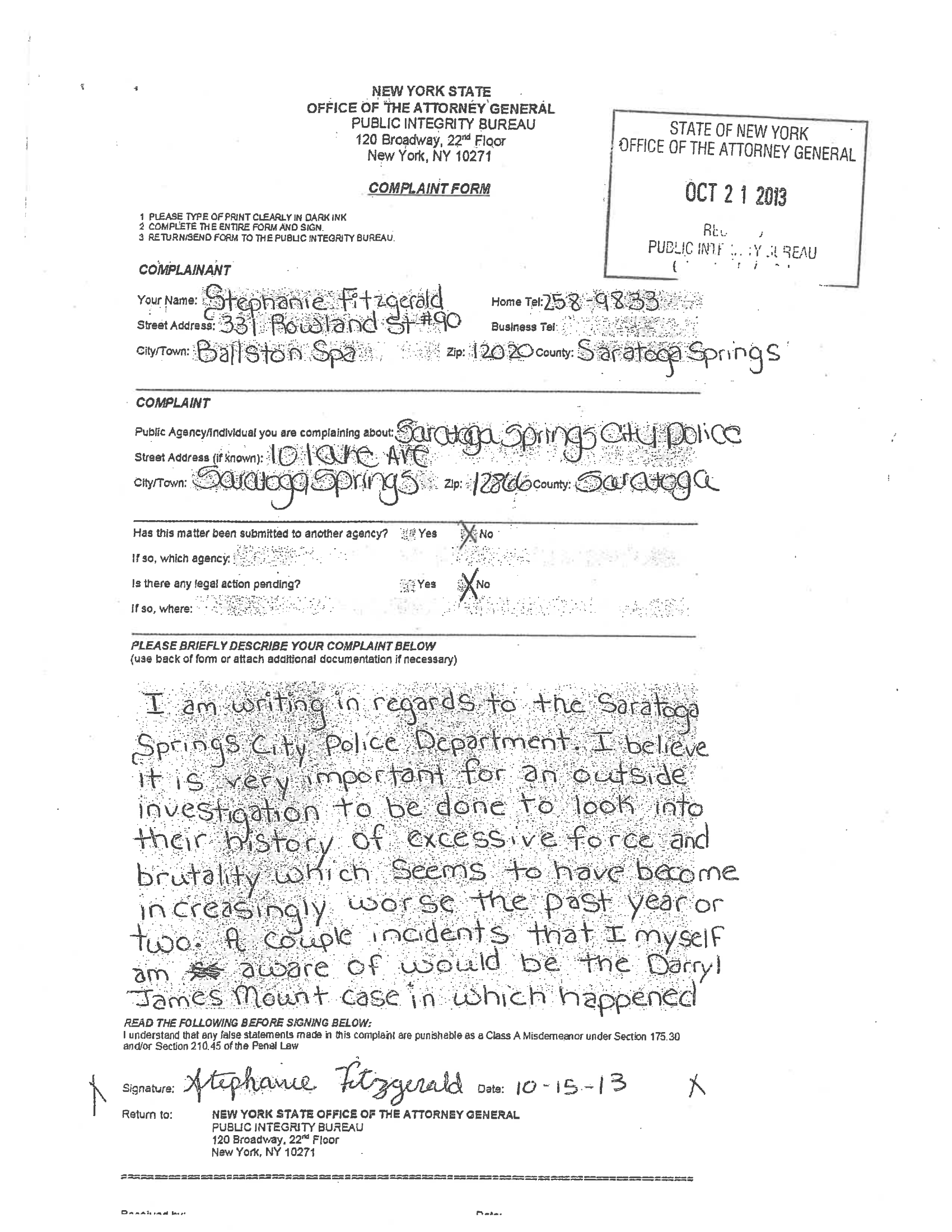
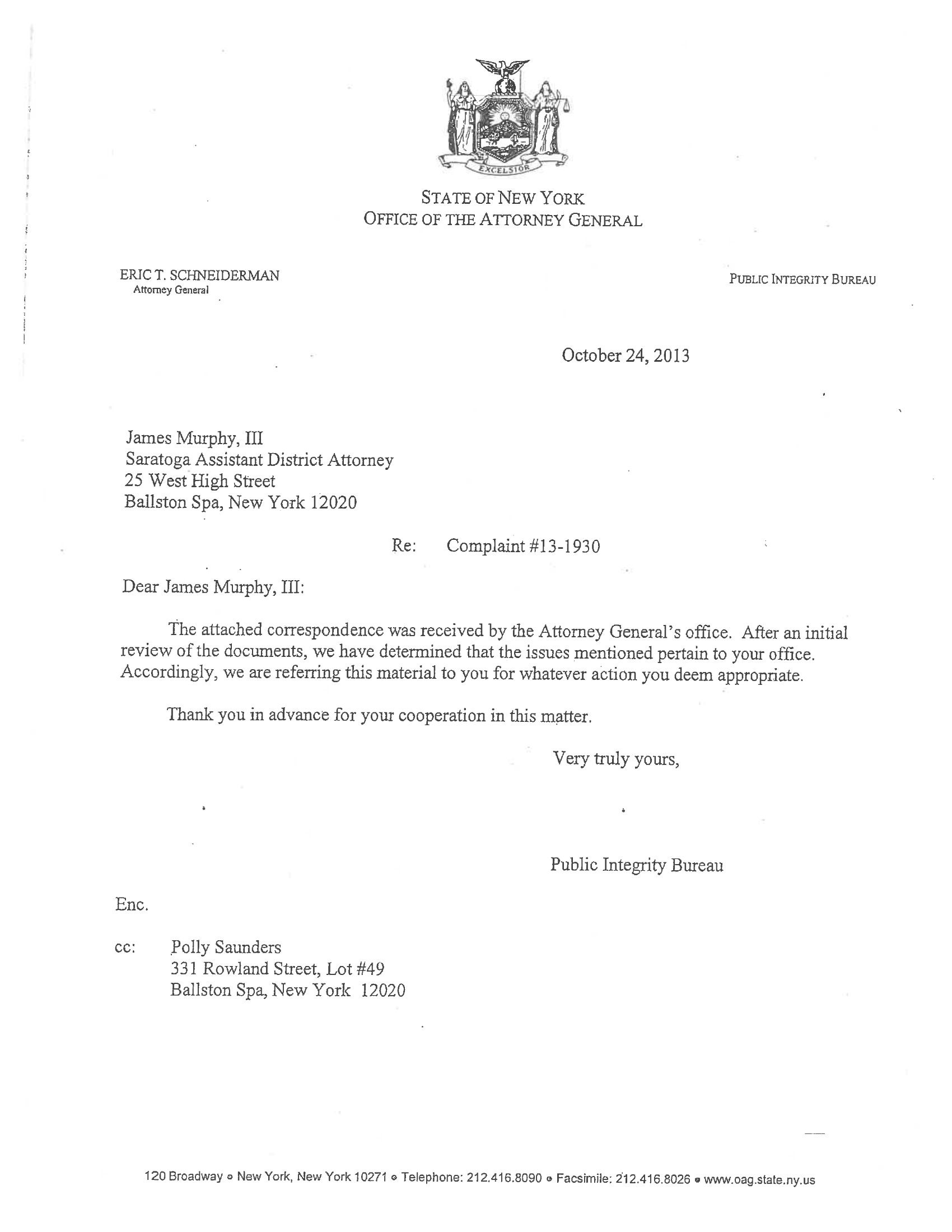
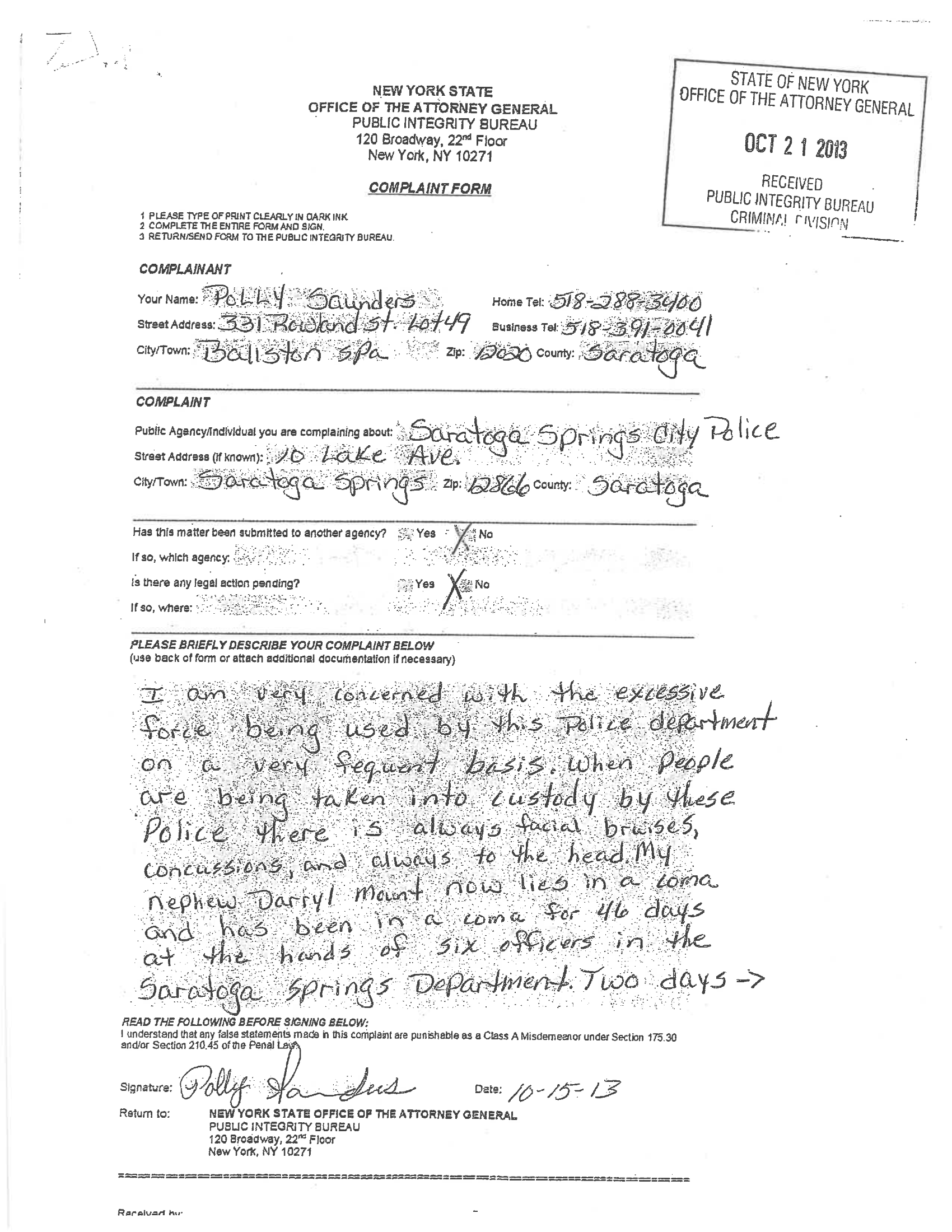
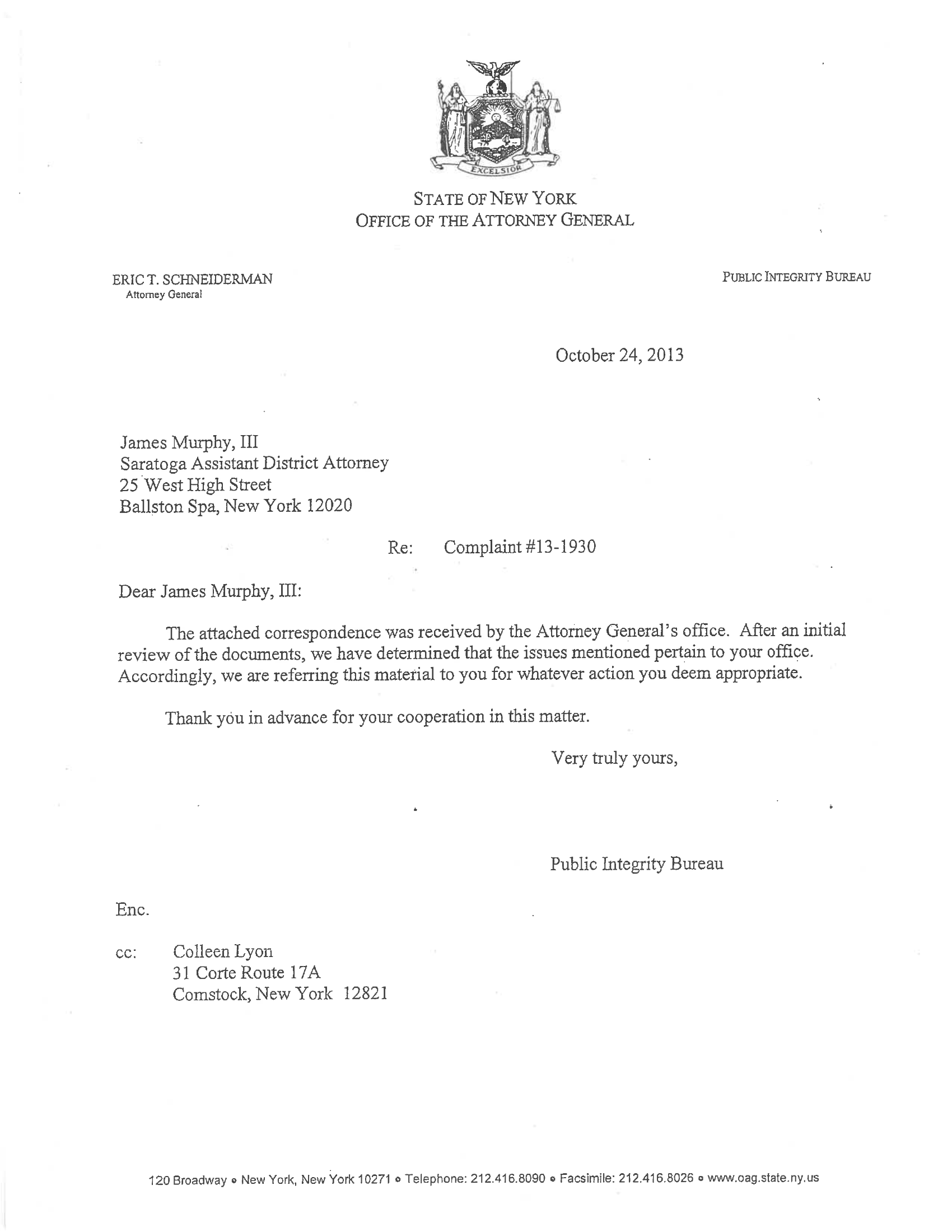
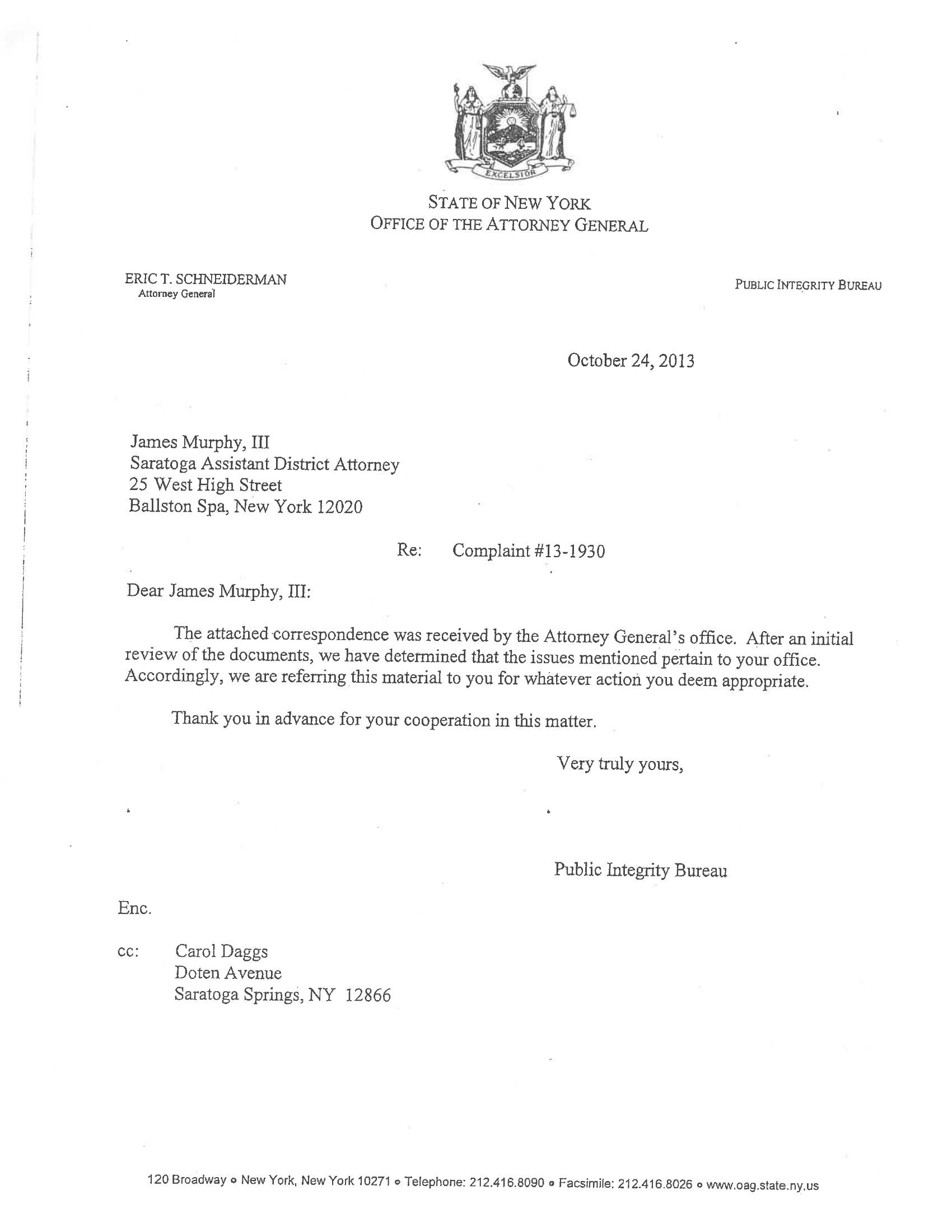
In 2019 Mr. Moran sent out a flyer as part of his campaign to be the Commissioner of Public Works. The flyer included a letter purportedly from the New York State Department of Health. The letter was not from the NYSDH. He had doctored (forged?) it. I wrote about this in a post.
Regarding the copy of the letter in his flyer I wrote:
“In fact this is a fake document created by Mr. Moran’s campaign. The city was not cited with a violation and this document did not originate with the New York State Health Department.”
In 2020 Mr. Moran worked to pass a charter change proposal. As part of his effort, he set up several fake websites meant to confuse people who thought they were accessing the websites of those opposing charter change. Here is a link to my original post.
Standard Procedure For The White Walkers
Mr. Moran is a member of a group I refer to as the white walkers after the HBO series Game of Thrones. This moniker is meant to identify their destructive behavior.
These people often have some valid points but they lack faith in the public to understand their issues so they resort to shrill and overthetop attacks that serve to undermine the credibility of their original points.
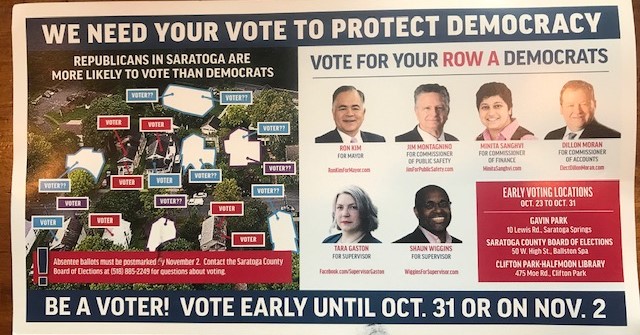
Rather than point out the problems with her petitions, Mr. Moran has chosen to try to destroy Samantha Guerra’s reputation. This is part of the narrative that consultant Libby Post has the Democratic candidates pursuing. “Republicans are evil people undermining our democracy so vote for Democrats.”
I prefer to judge my Democrats and Republicans one at a time.
Letter Sent To Saratoga County DA