Video and Low Drama From the Debate Over the Censuring of Mayor Yepsen


[JK: This is my first attempt at incorporating video in the blog and unfortunately, it is all too obvious.  The complete video of the council meeting is accessible on the city’s website.

I am republishing the Saratogian article on the meeting for context.  There are three videos.  Two are relatively brief and are the highpoints for drama at the meeting.  The other was edited with more care and represents I think the key exchanges during the evening.]


Tensions rise within City Council following ethics violation

By Travis Clark, tclark@digitalfirstmedia.com, @TravClark2 on Twitter

Posted: 07/20/16, 1:15 PM EDT | Updated: 14 hrs ago

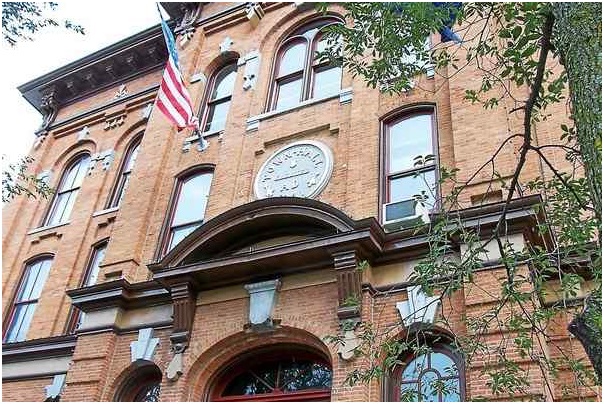
CityHall

SARATOGA SPRINGS >> Tensions were high at the Saratoga Springs City Council regular bi-weekly meeting on Tuesday night. Following the Ethics Board’s findings that Mayor Joanne Yepsen violated the city Ethics Code, Finance Commissioner Michelle Madigan motioned for the council to accept the board’s findings, while Public Works Commissioner Anthony “Skip” Scirocco proposed a resolution to censure the mayor in response to those findings.

The Council voted unanimously, minus Mayor Yepsen who abstained, to accept the Ethics Board’s findings. They also voted to pass the resolution, which both censures the mayor and calls for an investigation into the findings from the state Attorney General’s Public Integrity Bureau. Prior to the vote on the resolution, Madigan motioned for an amendment of the resolution to forward the findings to another entity to address them if the Atorney General’s office is not the right one.

“They needed more facts and I was not ready to share more facts with them at this time,” Madigan said. “So if they are not the right entity to address this issue, we may want to amend to find out who is.”

The Ethics Board’s findings follow accusations that Mayor Yepsen was seeking employment for grant writing services with the Saratoga Hospital Foundation while the City Council was actively participating in business with the hospital. The hospital was seeking approval from the Council for an expansion. After Mayor Yepsen recused herself from voting on the matter for the fourth time, according to Council members, concern was raised.

(function() { var secondaryMedia = $(“#secondary-media”).css(‘height’); var factbox = $(“#factbox”).css(‘height’); var internalContent = parseInt(secondaryMedia + factbox); if((internalContent<400) || (!internalContent)) { console.log(“Article within AD”) googletag.cmd.push(function() { googletag.display(“div_Cube_Article”); googletag.pubads().refresh(); }); }else { console.log(“No AD in article”); $(“#div_Cube_Article”).css(‘display’, ‘none’); } })(jQuery); $( document ).ready(function() { var ADbox = parseInt($(“#div_Cube_Article”).css(‘height’)); if((ADbox<200)){ $(“#div_Cube_Article”).css(‘display’, ‘none’); } })(jQuery); Advertisement

In a letter to the Ethics Board from one of Mayor Yepsen’s attorneys, Robert Ryan, Mayor Yepsen contacted the Ethics Board in January 2016 requesting an advisory opinion as to whether she would have to recuse herself from voting. The expansion had been actively discussed since August 2015. In March 2016, the Ethics Board responded to a letter of inquiry submitted by Madigan as to whether the mayor had violated the Ethics Code. Madigan stated that this letter was discussed and approved by not only her, but Scirocco and Public Safety Commissioner Christian Mathiesen.

Ryan’s letter states that the Ethics Board’s interpretation of the Ethics Code is misplaced.

“Without the ability to cure an actual or perceived conflict of interest through disclosure, recusal and abstention, it would effectively make all but a handful of citizens ineligible to sit on boards of the city,” the letter reads.

It also defends Mayor Yepsen by asserting that the Hospital Foundation was not the applicant for the expansion, and even if this were so, the board’s determination that the Foundation submitting a zoning application is “doing business” is misplaced. Madigan disagrees with this statement and believes the council was in fact doing business with the Hospital Foundation.

During the public comment period of the Council meeting, several community members accused the council of trying to run a smear campaign against the mayor for political gain. These individuals accused members of the Council of being under investigation themselves, which, during the response period, prompted Madigan to defend herself.

Public commenter Phil Diamond accused Madigan and Scirocco of being under investigation by the New York state comptroller in regard to water connection. According to Madigan, there was a 4-1 vote to waive water connection fees, and this was not just a Department of Finance or Department of Public Works vote. Madigan said that her department has been working very closely with the comptroller throughout these investigations and they are not directly focused on Scirocco, but look at water fees over the past 40 years.

Madigan had criticized the mayor for her handling of this investigation, saying she went to the press before bringing it to the Council’s attention. Mayor Yepsen defended herself by stating that the comptroller had reached out to her first.

Madigan then turned her comments toward public commenter Mark Lawton, denying that there is any smear campaign being conducted.

“Things happen, we need to take a look at them and we need to take them seriously,” Madigan stated.

Lawton was offended that Madigan used his name directly. An argument unfolded in which Madigan had Lawton escorted out by a police officer. Lawton left the room stating “so much for freedom of speech.”

Madigan said the reason she asked for Lawton’s removal is because he was shouting at her after public comment period had ended. She said it was time for the council to respond and public comment was closed. According to her, this is not the first time that Lawton has done something like this.

“The Mayor is the presiding officer. She is in charge of running the meeting and keeping order. We have had many meetings where there is no order,” said Madigan. “That’s upsetting to us. We want to feel safe and secure.”

After the exchange, a verbal back-and-forth occurred between Mayor Yepsen and Madigan. Madigan accused one of the public commenters to be the mayor’s “boyfriend” and Mayor Yepsen gaveled Madigan to end the discussion.

Mayor Yepsen said that the Ethics Board needs to stop being used as a political tool and that the Code of Ethics needs to be revisited to improve its language.


Clip Of Scrum During Public Comment Period

Clip Of Exchange Between Mayor Yepsen and Commissioner Scirocco


Edited Fuller Video Of Variety Of Exchanges Over Censure


Mayor Yepsen’s Statement On Ethics Board’s Report


[JK:I received this document from Mayor Yepsen. This was the statement she made at the beginning of her agenda on the Ethics Report at the Tuesday, July 19 meeting]


Comments by Mayor Joanne D. Yepsen

July 19, 2016


We received an advisory opinion from the Ethics Board last Friday. It was in response to a full review requested by me to the Ethics Board, which I made as soon as a potential conflict of interest was identified by me and the Hospital Foundation simultaneously. This advisory opinion recommends no disciplinary action.


I sincerely thank the Ethics Board for their efforts.


However, my attorneys and I respectfully disagree with this advisory opinion regarding section 13.3 of the Ethics Code. But I do accept it. We have many lessons learned and can benefit from their work.


Certainly I will guide my future actions accordingly, as I’m sure will my colleagues on this city council.


The mayor’s position is a part-time position paying $14,500 per year. It is, therefore, not unexpected that a person in this position will seek other outside employment.


I had a few brief and preliminary communications with the Saratoga Hospital Foundation It was at this very preliminary stage, with no specific work, no agreements or contract — verbal or in writing, and with no funds even close to changing hands, we both realized the potential for a conflict of interest.


I, therefore, went to the ethics board to ask for their opinion. Nearly simultaneously, there was a parallel and completely unrelated zoning application from the hospital in front of the city.


The Ethics Board suggested I recuse myself from an upcoming vote on the hospital’s proposal. I asked for their opinion and respected it. I recused myself from the related vote. (At the time, there was no definition for what constituted “doing business with the city” and no general assumption that this term included having a zoning application before the city. This came out of their advisory opinion, which I asked them to provide.)


It was never my intention to connect in any way any potential work with the Hospital Foundation and any proposals in front of the city.


The buck stops with me. However, I was going by the legal advice from the city attorney until such time I needed outside counsel.


As set forth in the June 10, 2016 submission by my attorneys – which I have copies of here this evening for council members and the public – we disagree with the Board’s interpretation of §13-3(I) of the Code as it relates to whether my discussions with the Hospital Foundation while Saratoga Hospital had a zoning amendment pending resulted in Code violation.  The Board’s interpretation of §13-3 (I) is misplaced under the circumstances and is not aligned with the general ethical standards established under the General Municipal Law.  In particular, the Board’s determination that submitting a zoning application is “doing business” with the City is misplaced.  A reasonable interpretation of §13-3(I) clearly establishes you did not violate the City’s Code of Ethics solely by engaging in a dialogue with the Foundation over potential work unrelated to the Hospital’s application for zoning, especially given the fact you recused yourself from taking any action on the Hospital’s application to avoid even the appearance of a conflict.  Also, it appears to us from the Board’s July 14, 2016 opinion that it did not even consider the arguments and analysis in our  submission.  The Board’s recent opinion does not refer to the submission or cite to the body of authoritative guidance cited. 


Also, This advisory opinion by the Ethics Board is not just going to affect me. Their interpretation of “doing business with the city” will unfortunately make it difficult or nearly impossible for part-time employees and volunteers to serve the city, as it applied to them as well as full-time employees. Prior to this review and opinion issued no definition of doing business with the city existed.


Let’s focus on our lessons learned and the steps we need to take moving forward.


First: There have been more inquiries to the ethics board this year than ever before. That’s because our Ethics Board has been used as a political tool. This has to stop! They are a volunteer board which has put countless hours into reviewing multiple inquiries. They continue to do the best they can with a Code of Ethics that has much room for improvement, as we’ve come to learn.


Second: We need to make improvements to the city’s ethics code language, to clarify it, so there is little room for interpretation.


Three:

I will call for an independent exploration into what standard practice is on the state level. Modeling it, or improving it, makes sense to me. The policies we will then all need to respect and adhere to, will make it clear exactly what is acceptable. There are other members of this city council, and their spouses, who have been or potentially will be in similar situations regarding conflicts and potential conflicts of interest. Every part-time and full-time employee and city volunteer will clearly understand what is expected of them.

There will be No Room for political positioning!


I have appropriately not interacted with the Ethics Board during this important practice out of respect for their role.


Now, we must all move forward and be productive with the business of the City of Saratoga and our constituents.


And I will guide my future actions accordingly, as I’m sure will my colleagues on this city council.


Mayor Appoints New Deputy

Lost in all the other events at last night’s City Council meeting was the Mayor’s announcement of the hiring of a new deputy to replace former deputy Joe Ogden who left to take a job as budget director at SUNY. His replacement will be Megan Kelly (or maybe Kelley?) No, not that Megan Kelly, but no further information is available at this time. I’ve asked the Mayor to email me a profile of her new assistant and will publish this information when I receive it.

Mayor to Media: “I’ve Done Nothing Wrong!”

The Mayor has appeared on local TV Channels 6 and 10 vigorously challenging the decision reached by the Ethics Board that she  violated the city’s ethics code.

She argues that the standard used by the Ethics Board that it was improper to enter into talks with the hospital while the hospital was seeking the Council’s approval for a zoning change was so restrictive that it will make it problematic for people to serve on our city’s boards.  I would note that last year she commended this same board, whose members she appointed, for the revised ethics codes they had submitted to the city.

She also asserts that the fact that she later recused herself from considering the hospital’s application made her earlier meetings with the hospital over contracting for work moot.

Here is the link to channel 6: http://cbs6albany.com/news/local/saratoga-springs-mayor-censured

Here is the link to channel 10: http://news10.com/2016/07/20/saratoga-mayor-fires-back-after-board-determines-she-violated-citys-code-of-ethics/


Harris Beach Law Firm Defense of Mayor Yepsen to Ethics Board

Mayor Yepsen has forwarded to me a copy of the letter her attorneys from the Harris Beach Law Firm submitted to the Ethics Board in her defense.  Apparently she chose to have her attorneys submit this document rather than meet with the Ethics Board.  Harris Beach Law Firm has represented the city in the past.


At Tuesday night’s council meeting, Mayor Yepsen told the Council that she planned to submit the invoice from Harris  Beach for the city to pay.   Commissioner Madigan responded by asserting that bills of this nature must be approved prior to the provision of service.


The Ethics Board members are appointed by the Mayor.  In their opinion they noted that prior to  making their decision they had reviewed this document.


June 10, 2016

HAND DELIVERY


Board of Ethics

City of Saratoga Springs

Board of Ethics

474 Broadway – Room 9

Saratoga Springs, NY 12866-2296

Attention: Chairman Justin Hogan


Re:         Joanne Yepsen – Reconsideration of Board’s March 24, 2016 Findings Contained in Inquiry Opinion #6-2016


PERSONAL AND CONFIDENTIAL


Dear Chairman Hogan:


Thank you for your correspondence dated May 26, 2016 allowing us the opportunity to provide a written submission in-lieu of a hearing by the close of business on June 10, 2016.


BACKGROUND


As the Board of Ethics (“Board”) is aware, Ms. Yepsen contacted the Board on January 14, 2016 requesting an advisory opinion as to whether she, as part-time Mayor of the City of Saratoga Springs (“City”), would have to recuse herself from voting on an application for a zoning change submitted to the City Council by Saratoga Hospital (“Hospital”) dated August 20, 2015.  Ms. Yepsen sought the advisory opinion due to the fact that she had been communicating with an entity related to the Hospital regarding a potential engagement for grant writing services with her consulting firm, Critical Needs Now.  Specifically, on October 14, 2015 Ms. Yepsen had a conversation over lunch with Amy Raimo, the Executive Director of the Saratoga Hospital Foundation (“Foundation”), followed by email correspondence with Ms. Raimo through January 16, 2016.


On January 19, 2016 the Board issued Ms. Yepsen Advisory Opinion 2-2016 determining that (i) the Foundation was an inseparable part of the Hospital, (ii) the Hospital was “doing business with the City” by submitting a zoning amendment to various boards and officials of the City, including the City Council and (iii) voting on the zoning amendment at a City Council meeting would be contrary to Section 13-3 (I) of the City’s Code of Ethics (“Code”).


At the January 19, 2016 City Council meeting, Ms. Yepsen, following the advice of the Board, announced she was recusing herself from the items on the agenda relating to the Hospital’s zoning amendment and stated her reasons for doing so.


On March 24, 2016 the Board issued Inquiry Opinion #6-2016 to Ms. Yepsen responding to a letter of inquiry dated February 1, 2016 submitted by Michele Madigan, Commissioner of Finance.  Commissioner Madigan’s inquiry requested an opinion as to whether Ms. Yepsen’s discussions with the Foundation, in and of themselves, constituted a violation of the City’s Code of Ethics. The Board determined that any efforts to solicit or negotiate for outside employment with one who does business with the City (within the meaning of §13-3 (I) of the Code of Ethics) constitutes a violation of such section, including Ms. Yepsen’s discussions with the Foundation.  The Board reasoned that §13-3 (I) of the Code does not allow either for the consideration of intent or for any quantitative analysis, that there is neither a threshold for the amount of the contract or the extent to which the negotiations have progressed. The Board further stated that this section becomes relevant even upon minimal efforts to solicit or negotiate for work under the stated circumstances. Lastly, the Board reiterated its determinations from Advisory Opinion 2-2016 that (i) a zoning amendment application to various boards and officials, including the City Council was “doing business with the City” and (ii) that the Foundation would be considered the Saratoga Hospital because the Foundation was an inseparable part of the Hospital.


CODE §13-3(I)      


Section 13-3(I) provides that:


No officer or employee shall:


  • engage in work for an outside employer or business who does business with the City;
  • solicit work for an outside employer or business who does business with the City;
  • negotiate for work for an outside employer or business who does business with the City;
  • promise to accept work for an outside employer or business who does business with the City.

which,


  • creates an implied conflict; or
  • impairs the proper discharge of his official duties; or
  • results in personal gain.


ADVISORY OPINION #2-2016


With respect to the Board’s determination in Advisory Opinion 2-2016, we agree that  voting on the Hospital’s August 20, 2015 application for a zoning amendment could reasonably give rise to the perception that Ms. Yepsen confronted some form of divided loyalty given (i) the close relationship between the Hospital and the Foundation and (ii) her discussions with the Foundation regarding the possible engagement of Critical Needs Now.  We also agree that it is the intent of §13-3(I) of the Code to prevent conflicts of interest whether actual or perceived.  Therefore, we recognize that an official act by Ms. Yepsen on the amendment would be contrary to §13-3(I) of the Code in that it would create an appearance of a conflict. Thus, we do not disagree with the Board’s determination that Ms. Yepsen should recuse herself, which she did, from voting on the Hospital’s zoning amendment.  It is a well settled ethical principal that disclosure, recusal and abstention is the appropriate course of action to cure any actual or perceived conflicts of interest because it removes the governmental employee from the official action, which may have been influenced by personal interests[1].


INQUIRY OPINION #6-2016


  • The Board’s Interpretation of Code §13-3(I) is Misplaced as a Matter of Law and Equity


With respect to Inquiry Opinion #6-2016, we disagree with the Board’s interpretation of §13-3(I) of the Code as it relates to whether Ms. Yepsen’s discussions with the Foundation while the Hospital had a zoning amendment pending resulted in a per se Code violation.  We believe the Board’s interpretation of §13-3 (I) is misplaced under these circumstances and is not aligned with the general ethical standards established under Article 18 of the General Municipal Law (“GML”).


As set forth in its Inquiry Opinion #6-2016, in contrast to the treatment afforded under the GML as well as the Public Officers Law (“POL”), the Board took a very literal reading of this section thereby establishing a strict liability standard with no minimum thresholds.  Such an interpretation creates an absolute prohibition that results in a per se violation of the Code as opposed to creation of an ethical standard that would trigger disclosure, recusal and abstention.  Given the Code’s definition of “officers and employee”[2] and the provision of §13-3 (I) as interpreted by the Board, any part-time employee or volunteer board member would either have to resign or incur a Code violation if their outside employer or client sought a permit, variance, zoning amendment or other item from the board or body on which such officer or employee serves.  For example, a volunteer planning board member that is engaged in work for XYZ Corporation as either an employee of XYZ Corporation or has XYZ Corporation as a client would automatically be in violation of the Code upon XYZ Corporation’s submission for a subdivision, special use permit, or other action by the planning board.  In order for such planning board member not to incur a Code violation, the member would be forced to resign prior to XYZ Corporation’s submission of its application or XYZ Corporation would have to forego seeking a subdivision, special use permit or other action by the planning board. This result is unreasonable and certainly cannot be the intent of §13-3 (I) given the City’s need for civic minded individuals to volunteer or work part-time on numerous boards and commissions of the City.  Without the ability to cure an actual or perceived conflict of interest through disclosure, recusal and abstention, it would effectively make all but a handful of citizens ineligible to sit on boards of the City.


Applying the Board’s same standard of interpretation to Section 13-3(P)(1) of the Code would make the City’s Code more stringent than Article 18 of the GML by prohibiting “any financial interest in a business relationship, financial instrument, contract with the City, or an interest in a bank or trust company, that is prohibited by §801 of the General Municipal Law of the State of New York,” without providing for the exceptions allowed in GML §802.  Regarding this prohibited interest, the Code does not state that the City officers and employees must adhere to the provisions of Article 18 of the GML, rather a literal reading of paragraph (P)(1) creates an absolute prohibition to any financial interest in a business relationship prohibited by §801 as opposed to a disclosable interest defined in (P)(2).  This creates a very strict standard without any exceptions.  Again, this result is unreasonable and cannot be the intent of the City.  Such an interpretation by the Board of these paragraphs (I) and (P)(1) would lead to many unintended violations of the Code that could not be cured, which would make any action in which there was a violation null and void, and subject the City officer or employee to penalties pursuant to (P)(3) that incorporates by reference §805 of the GML.


The New York State Legislature recognized that conflicts of interest of municipal officers and employees are not uncommon due to the multitude of interactions between governmental entities and the private sector.  A goal of the enactment of Article 18 of the GML was to establish “a formula of conduct which is not only clear but reasonable, one which will permit governmental employees to share the normal benefits of the democratic society and economy they serve.  If government is to attract and hold competent administrators, public service must not require a complete divesting of all proprietary interest.  Real conflict must be rooted out, without condemning the inconsequential.”[3]  Article 18 prohibits a municipal officer or employee from having a direct or indirect financial interest in a contract with a municipality where such municipal officer or employee has the power to negotiate, prepare, authorize or approve such contract.[4]  A “Contract” is defined as any claim, account or demand against or agreement with a municipality, express or implied.[5]  Thus, almost any business relationship with a municipality will result in a contract.[6]  However, by recognizing that conflicts of interest of municipal officers and employees are not uncommon due to the multitude of interactions between governmental entities and the private sector, the Legislature provided exceptions to the prohibition.[7] Conflicts that fall within an exception are still conflicts of interest, but they are not prohibited conflicts and they can be cured by disclosure[8].  Therefore, just because you have an interest in a municipal contract does not necessarily mean that your interest is prohibited.


In the instant case, applications for and the granting of building permits, licenses, zoning changes, variances or site plan approvals have consistently been determined to not constitute a “contract” with the municipality[9].  Therefore, it is clear that Ms. Yepsen does not have a conflict of interest under Article 18 since the Hospital’s zoning application is not even considered a contract (i.e., business relationship with the City).  Secondly, even if such zoning application were to be considered a contract with the City, Ms. Yepsen would still not have the required direct or indirect financial interest in the amendment.  Additionally, even assuming for argument sake that Ms. Yepsen had a financial interest in the zoning amendment before the City due to being a direct employee of the Hospital, provided (i) Ms. Yepsen’s remuneration for such employment with the Hospital was not directly affected as a result of the zoning amendment and (ii) her duties at the Hospital did not directly involve the preparation or performance of the zoning amendment, Ms. Yepsen would still not have a conflict of interest that is prohibited under Article 18.   Under those circumstances, Ms. Yepsen would have a conflict of interest that could be cured by disclosure pursuant to GML §803. Common law requires recusal in addition to the statutorily mandated disclosure under §803 of the GML.[10]


A similar statutory provision involving the POL is interpreted and treated in a similar fashion as the provisions under Article 18 of the GML.  Section 74 of the POL establishes a rule with respect to conflicts in subdivision (2) and then sets forth eight standards of conduct in subdivision (3).  The rule in subdivision (2) states “[N]o officer or employee should have any interest, financial or otherwise, direct or indirect, or engage in any business or transaction or professional activity or incur any obligation of any nature, which is in substantial conflict with the proper discharge of his duties in the public interest”  Paragraph (f) of subdivision (3) established a standard of conduct that states “[n]o officer or employee of a state agency….should not by his conduct give reasonable basis for the impression that any person can improperly influence him or unduly enjoy his favor in the performance of his official duties, or that he is affected by kinship, rank, position or influence of any party or person.”  State personnel who had been faced with substantial conflicts between their personal interests and their public duties were not deemed to be in violation of §74 of the POL where disclosure, recusal and abstentions were made. Similarly, in instances where State personnel were involved in personal matters that could reasonably be perceived as creating an undue influence on their official duties contrary to the standard of conduct contained in POL §74(3)(f), disclosure, recusal and abstention was the cure.  The occurrence of the circumstances that gave rise to the perception of an undue influence on the individual’s official duties did not, in of itself, result in a violation of the State’s Code of Ethics.[11]


Applying the Board’s literal interpretation to §13-3(I) as well as §13-3(P)(1) creates unreasonably strict prohibitions that fail to recognize the goal and intent of Article 18 of the GML; the enabling legislation by which the City’s Code was enacted, which requires such Code be consistent with its provisions[12].  The Board, when revising the Code, recognized that its provisions must be implemented in accordance with the “NYS General Municipal Law”[13] and within the context of the “NYS Public Officers Law and the NYS Ethics legislation”[14]. The Code explicitly provides in §13-1 that the Code was enacted pursuant to §806 of the GML and that the “rules shall serve as a guide for official conduct of officers and employees of the City of Saratoga Springs”. Moreover, the Code explicitly states that it “…shall not conflict with [ ] any prohibition of Article 18 of the General Municipal Law.”[15] The Board’s strict interpretation of §13-3(I) as an absolute prohibition opposed to a standard of conduct conflicts with the standard ethical principles established under Article 18 of the GML as well as §74 of the POL. Conflicts under analogous provisions of the POL have not been interpreted by the courts or the New York State Joint Commission on Public Ethics (“JCOPE”) as per se violations of the State’s Code of Ethics where the individuals disclosed, recused and abstained.[16]  Lastly, the wording of the Code, taken in its entirety, establishes that §13-3(I) is a standard of conduct that can be cured rather than a strict prohibition.  To illustrate, §13-3 is entitled Standards of Conduct, which contains sixteen standards of conduct enumerated in paragraphs (A) through (P) of which paragraph (P)(1) explicitly addresses prohibited interests.  Under the same §13-3 entitled Standards of Conduct, paragraph Q explicitly provides for recusal.  Therefore, it is reasonable to conclude the Code requires recusal whenever a City officer or employee runs afoul to the Standards of Conduct, which is consistent with the GML, POL and common law.


Based upon the foregoing, we are seeking the Board’s reconsideration of its interpretation of §13-3(I) of the Code in light of the provisions of Article 18 of the GML and the interpretations of such as provided by the courts, Attorney General and the Comptroller, as well as the interpretations of §74 of the POL by the courts and JCOPE.  An interpretation of §13-3(I) by the Board consistent with the interpretations given under Article 18 of the GML and §74 of the POL will help eliminate unintended consequences and protect innocent public officers from unwarranted assaults on their integrity, while still protecting the public from municipal contracts influenced by avaricious officers.[17]


  • No Violation of §13-3(I) By Ms. Yepsen as a Matter of Law  


In the event the Board maintains its current interpretation of §13-3(I) of the Code as a strict liability provision, Ms. Yepsen did not violate such section by engaging in discussions with the Foundation.  In order for such discussions to result in a violation of §13-3(I), the Foundation would have to be “doing business” with the City.  Although we do not disagree with the Board’s determination that the Foundation was doing business with the City for purposes of its opinion with respect to the need to recuse, we do, however, disagree with the Board’s determination when it comes to determining a violation under a strict liability provision such as the way the Board interprets §13-3(I).  First, the Foundation, as a separate legal entity, was not the applicant for the zoning amendment.  Secondly, even if the Foundation was the applicant, the Board’s determination that submitting a zoning application is “doing business” with the City is misplaced given common law, which provides that approvals of zoning, licenses, permits etc. are not contracts (i.e. business relationships) as opposed to the purchase and sales of goods, services and real estate, leases, construction contracts, vouchers as well as designations of bank accounts and official newspapers for publication[18].  Lastly, in order for there to be a violation of §13-3(I), assuming the Foundation was determined to be “doing business” with the City, such discussions would have to either (i) create an implied conflict, (ii) impair the proper discharge of Ms. Yepsen’s duties as Mayor, or (iii) result in personal gain.  First, since the engagement between the Foundation and Critical Needs Now was never consummated, there was never any personal gain realized by Ms. Yepsen.  Secondly, as addressed above, common law clearly regards disclosure and recusal as a cure to any appearance of or actual conflict of interest[19], which Ms. Yepsen did do in this case.  Any potential for a conflict was eliminated when Ms. Yepsen recused herself from taking official action on the zoning application.  Third, Ms. Yepsen’s official duties as Mayor of the City were not impaired solely by recusing herself from taking action on the Hospital’s zoning application.[20]  It would be unreasonable to interpret this clause as applying to a single duty on a single matter given that recusal is the appropriate course of action for all public officials when faced with a potential for conflicting interest.  The Mayor has numerous public duties and matters she is charged with undertaking as a public official, all of which have not been impaired by recusing herself in this instance.  Furthermore, it was not Ms. Yepsen’s recusal from voting on the Saratoga Hospital expansion that caused the inability of the City Council to vote.  The City Council could not vote to approve the necessary zoning amendment because neighbors near Morgan Street sent a petition asking the Hospital not to build on the parcel at issue.  This petition resulted in the Council needing a supermajority to vote, which it lacked due to the recusals of Ms. Yepsen and John Franck, Commissioner of Accounts.


Lastly, the Board’s interpretation of §13-3(I) assumes Ms. Yepsen “solicited work” or “negotiated for” work from the Foundation.  The terms “solicit” and “negotiate” are not defined in the Code, the City Code, GML §800 or the General Construction Law.  Based upon a reasonable interpretation of these terms, however, Ms. Yepsen’s single lunch meeting with Ms. Raimo and her few, sporadic, subsequent e-mail correspondence do not amount to “soliciting for” or “negotiating for” work from the Foundation[21], especially when interpreting such terms within the context of a strict liability provision as created by the Board in its interpretation of Section 13-3(I).  Although the email correspondence indicates an exploration of the services provided by Critical Needs Now and the potential needs of the Foundation, such correspondence clearly demonstrates that there was never a negotiation over any terms or conditions for employment nor did Ms. Yepsen ask the Foundation for work.


CONCLUSION


Based upon the foregoing, we are hereby requesting that the Board reconsider its interpretation of §13-3 (I) of the Code to be consistent with the GML, POL and common law in that such section does not create a strict liability prohibition without exceptions. In the alternative, if the Board determines that the correct and appropriate interpretation of §13-3(I) is a strict prohibition without any exceptions as a matter of law, then the Board’s  determinations thereunder should be applied in the same strict technical fashion.  For example, as a matter of law, the Foundation was not technically the applicant of the zoning amendment.  Therefore, the Foundation cannot be determined as doing business with the City with respect to such zoning amendment by the Hospital.  Secondly, as a matter of law the zoning application by the Hospital is not considered a contract with the City.  Therefore, since the application is not a contract as defined by GML §800, the Hospital cannot have a business relationship with the City as a result of such application. Without a business relationship, it is unreasonable for the Board to determine that the application for zoning is “doing business” with the City, especially since the Code does not define “doing business”.


A reasonable interpretation of §13-3(I) in light of the body of authoritative guidance cited herein, clearly establishes Ms. Yepsen did not violate the City’s Code of Ethics solely by engaging in a dialogue with the Foundation over potential work unrelated to the Hospital’s application for zoning, especially given the fact she recused herself from taking any action on the Hospital’s application to avoid even the appearance of a conflict.


I also respectfully request the opportunity to meet with the Board’s counsel to discuss this submission prior to the next scheduled Board meeting.  Thank you for your time and attention to this matter.  If you have any questions or would like to discuss further, please contact me.


Sincerely,


Robert J. Ryan


RJR:hr

cc:        Ms. Joanne Yepsen (via E-mail)

Tony Izzo, Assistant City Attorney (via hand delivery)


[1] Lexjac, LLC v. Beckerman (2d Dept. 2010) 72 AD3d 748.

[2] Section 13-2 of the City’s Code of Ethics defines “Officer” or “Employee” of the City as “[A]n officer or employee…..whether paid or unpaid, including without limitation,…..volunteers, interns and members of any advisory and/or decision-making board, body, council, commission, agency, departments, districts, administration, bureau or committee of the City of Saratoga Springs.”


[3]  L.1964, C.946 §1.

[4] GML §800 and 801

[5] GML §800

[6] 1996 Ops St Comp No. 96-14; 1984 Ops St Comp No. 84-12: 1989 Ops St. Comp No. 89-32; 1988 Ops St. Comp No. 88-23; 1988 Ops St. Comp No. 88-44; 1998 Ops St. Comp No. 98-5

[7] GML §802

[8] GML§§801, 802 and 803.

[9] Friedhaber v Town Bd. Of Town of Sheldon, 851 NYS 2d 58 (citing NY Op. Attorney General No. 74-106, NYS Comptroller Opinion No. 83-114); NYS Comptroller Opinion Nos. 91-48, 97-12, 88-68, 85-60 and 01-14.

[10] Zagoreos v. Conklin, 109 AD2d 281. Tuxedo V. Town Bd. Of Town of Tuxedo, 69 AD2d 320. NYS Comptroller Opinion Nos. 97-9; 82-200 and 92-31.

[11] NYS Ethics Commission Op. 95-29 (1995).

[12] GML §806. NYS Comptroller Opinion Nos. 82-189 and 80-234.

[13] Board of Ethics Minutes May 5, 2014

[14] Board of Ethics Minutes July 10, 2014

[15] City of Saratoga Springs Code § 13-1 [setting forth the purpose of the Code of Ethics]

[16] NYS Ethics Commission Op. 95-29 (1995).

[17] L.1964 C.946 – the trinity of purposes.

[18] 1996 Ops St Comp No. 96-14; 1984 Ops St Comp No. 84-12: 1989 Ops St. Comp No. 89-32; 1988 Ops St. Comp No. 88-23; 1988 Ops St. Comp No. 88-44; 1998 Ops St. Comp No. 98-5. Friedhaber v Town Bd. Of Town of Sheldon, 851 NYS 2d 58 (citing NY Op. Attorney General No. 74-106, NYS Comptroller Opinion No. 83-114); NYS Comptroller Opinion Nos. 91-48, 97-12, 88-68, 85-60 and 01-14.

[19] Stettine v Suffolk County, 105 AD2d 109 [2nd Dep’t 1984]

[20] NYS Ethics Commission Op. 95-29 (1995).

[21] Black’s Law Dictionary (10th ed. 2014) [Solicitation is defined as the “act or an instance of requesting or seeking to obtain something”.  The term “negotiate” is described as “to bring about by discussion or bargaining.”]
Council Votes to Censure Mayor

At tonight’s City Council meeting four City Council members, with the Mayor abstaining, voted to accept the city’s Ethics Board findings that Mayor Yepsen had violated the city’s ethics code when she solicited business from Saratoga Hospital while they had business pending before the Council. In a second 3-2 vote Commissioners Madigan, Mathiesen, and Scirocco voted to approve a resolution brought forward by Commissioner Scirocco to censure the Mayor and ask the New York State Attorney General and the Joint Commission on Public Ethics to review the actions of the Mayor.

I will be posting more details tomorrow.

A New Look For The Blog

As you all can see, this blog has a new look. I was helped by Kate Austin-Avon of Advokate, LLC

She was great to work with and we have some plans to further strengthen the site.

I welcome any suggestions and feedback the readers of this blog might have.

Notice of Interesting Conference From Michele Madigan

City of Saratoga Springs, NYSTEC, IgniteU NY MEDIA ANNOUNCEMENT: July 12, 2016 Contact: Commissioner of Finance, Michele Madigan: michele.madigan@saratoga_springs.org : (518) 526-9377 NYSTEC, contact Jana Behe: behe@nystec.com

IgniteU NY, contact Evan DeGennaro:edegennaro@nystec.com

Announcing the Smart City Forum and Showcase at Saratoga Springs City Center IgniteU NY, established last year by technology consulting firm NYSTEC to help foster entrepreneurship and innovation in Upstate New York, will host the Smart City Forum and Showcase at the Saratoga City Center on Thursday, July 14, 2016, from 11:30 am to 7:00 pm. The event will bring together entrepreneurs and leaders in business, education, and government to discuss the changing landscape of information connectivity and data gathering, as well as highlight innovative approaches for cities to operate more efficiently, attract and support businesses, and improve overall quality of life.  Speakers will discuss how smart solutions can make cities more entrepreneurial, vibrant, and sustainable. Enterprise presenters include Cisco Systems, EMC, and Pitney Bowes. A scheduled broadband panel will include Calix, eX2, Hudson Valley Wireless, FirstLight Fiber, and PrimeLink. The evening startup showcase will feature presentations from ParqMi and Apcera. The Smart City Forum and Showcase is part of the Saratoga Smart City Project, spearheaded by City of Saratoga Springs Commissioner of Finance Michele Madigan. The goal of the project is to help leverage existing broadband infrastructure and funding streams to foster sustainable economic growth and enhance the quality of life for all Saratogians. Together with NYSTEC, the project is led by the Smart City Commission, made up of representatives from the Saratoga region. “This is important not only to our economic viability, but also to the health, safety, and welfare of our citizens and visitors,” Madigan said. The Smart City Forum and Showcase is free and open to the public. For registration information, including a luncheon and evening cocktail reception, visit www.igniteuny.com/smartcity/

About NYSTEC With offices in Rome, Albany, and New York City, NYSTEC is a not-for-profit company offering specialized information technology consulting services. Acting as a trusted and unbiased technology advisor to government agencies and other institutions, NYSTEC helps organizations with their IT strategies, solutions, acquisitions, and security across numerous industries, including government and public safety, healthcare and human services, and education.

For more information about NYSTEC, contact Jana Behe: behe@nystec.com For more information about IgniteU NY, contact Evan DeGennaro:edegennaro@nystec.com


Michele Madigan

Commissioner of Finance

City of Saratoga Springs

474 Broadway

Saratoga Springs, NY 12866

518-587-3550 ext. 2557

Will Nine Downton Walk Changes Be Significant Enough to Sway ZBA?

[This is a post written by Sandra Cohen on behalf of Saratoga Neighbors For Zoning Enforcement.  It is a report on what happened at the last meeting of the ZBA regarding “Downton Walk.”  It is important for background to note that in order for the ZBA to reverse their original approval for this project, it must be shown that the project or its environment has changed.  The members of the group did an excellent job systematically documenting the changes and Ms. Cohen has done an excellent job reporting on this.  The project comes up for what is expected to be a final decision on Monday night]

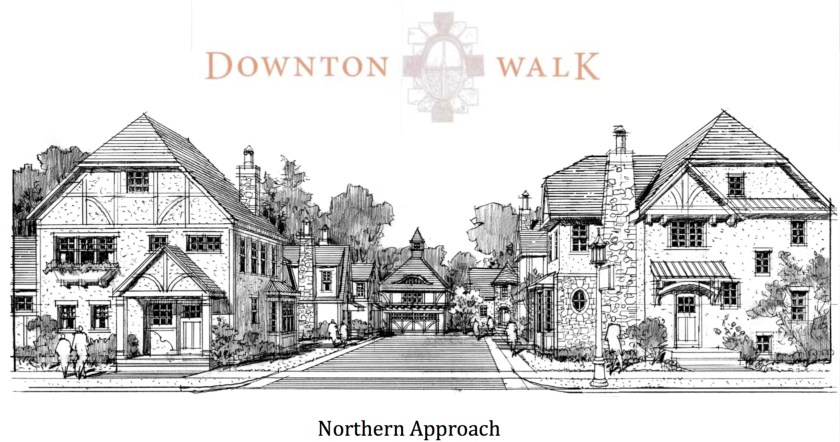
2013 drawing
This is the drawing of the project from 2013.


DW Drawing 2016
This is the current graphic of the project

Just as the May 23rd session was, the June 20 meeting of the Zoning Board of Appeals became a marathon. With ten items on the agenda, several of which included their own hiccups, the agenda item saved for last was the one I’ve been following: Builder John Witt’s Downton Walk Proposal for 27 Jumel Place.


With Vice Chairman Keith Kaplan, sitting in for Chairman Bill Moore, the Board worked on comparing this year’s Application with the previous version(s) that had been approved in 2013/14. It was stressed in the last meeting that Significant Changes from the previous application are the only things that could allow the Board not to approve this project, so this was the focus of questioning throughout the evening.


It is important that it be clear that there are significant differences between the two applications submitted.


The ensuing financial discussion brought strong objections from Witt’s attorney Elizabeth Coreno, insisting the approval did not hinge on financials in 2013. But Board Member Susan Steer countered that the first point on the earlier decision — whether or not the benefits can be achieved by any other means feasible – was financially-based, to which Coreno acquiesced. Steer concluded that the difference between the financial information in 2013 and 2016, in and of itself, represented a significant change between the two applications.


In 2013, the applicant reported that his 7 homes would sell at an average price of $640,000, bringing the total of all of them to $4,480,000. After land acquisition and development costs of $905,640, $3,574,360 remained.


In 2016, the applicant states the average price of the 7 units will be $930,000.  Building and selling only 5 units at that average price, after subtracting the $1,303,380 land acquisition and development costs, the remaining $3,346,620 is feasible, because it is nearly the same amount as in 2013 with 7 units.


Additionally, selling the 7 units using today’s average price of $930,000, in essence will reward the applicant with $1.6 million more than in 2013 – to make up for the difference of only $397,740 in land and development costs.


Furthermore, the prices now being used by Mr. Witt and his attorney do not take into consideration the even higher prices that he supplied to the Board in February 2016 – prices between $700,000 to $1,500,000, instead of the $587,000 to $1,255,000 being used now. The prices Mr. Witt provided to the Board in February 2016 were reduced by 16% after Mr. Witt acquired an attorney in May 2016, even though Mr. Witt continues to allow the higher numbers of $700,000 to $1,500,000 to be used in newspaper articles promoting his Downton Walk development. There has been a constant calibration in price ranges, which represents an additional significant change.


Feasibility has significantly changed and must be considered now in evaluating “Whether the benefit sought by the applicant can be achieved by some method feasible for the applicant to pursue other than an [these] area variance[s].”


Yes, the numbers supplied by Mr. Witt prove he can feasibly build five homes now, not seven, which would thereby significantly reduce the substantial nature of the variances that he is requesting.


When discussion turned to drawings, which have been part of the Applications, Board Member Cherie Grey questioned the size and proportions of the structures – saying she felt that the 2016 Downton Walk homes look much larger than those drawn for Magnolia Lane in 2013. Although Witt protested that the size hasn’t changed, Grey persisted, citing that original application drawings show fewer second stories on garages and were not as tall as those in 2016, which present as three stories with their 30’+ heights.


Coreno continued to insist their square footage has remained static, which was met with dubious responses from more than one Board member, relative to footprints versus number of stories, which absolutely affects overall size and how much more crowded it makes the lot appear. Only the footprint (first floor) measurement is “set in stone,” because that is what is used to calculate lot coverage and permeability. Hence, those are the only numbers the Board and public see prior to approval. So, in essence, both parties are correct: the footprint sizes have not changed; but the overall massing (interior square footage), more stories, and higher rooflines clearly indicate a significant change — when one compares the drawings from 2016 with those from 2013/14.


The Board’s final area of concern was an intensive discussion of the swimming pools, which illustrate another difference between the applications of 2013/14 and 2016. Board Secretary Adam McNeill supported 2016 as, in his words, a mirror image of 2013/14, saying, “I’ve never seen or heard of before a more precedential picture,” alluding to the Doctrine of Precedence (the legal ruling which requires a Board to approve an unchanged re-application of one that had previously been approved and then allowed by its applicant to expire.)


However, Board Member James Helicke pointed out that the drawings in the 2014 Variance Application indicated only three pools, versus four in the 2016 drawings – thus spoiling its status as a mirror image and representing another significant change in the application. There was a retort from Coreno that the drawings had not changed. But, Witt clarified for her that he did remove one pool for the 2014 submission.


Coreno also contended that the lot coverage measurement had not changed – although no pool measurements were included in those figures in any of the applications. In our view, this means that all the applications – 2013, 2014, and 2015 – were incomplete and misstated as far as lot coverage is concerned. We also do not know if the optional porches shown in the presentation were included in the original footprint measurements in any of the applications, which would add to the pools as two more significant changes.


And one must note that, since the pool measurements clearly were not included in lot coverage, and possibly the optional porches were not included either, these things also will mark a change in the permeability of the land that is part of the approval process is another significant change.


We realize the Board is anxious to close this matter, but ignoring such issues and significant changes will not be doing the City any favors. So, although they plan to present a resolution at the next meeting, on July 11, it is clear that they will be voting on something about which they do not even have all the facts.


During the Public Hearing, Kira Cohen reiterated the City Attorney’s explanation about significant changes in circumstances, which needed to be presented for a basis to deny the application. She directed the Board’s attention to ANW’s response to the May 23rd question of why they had not subdivided the land to which Coreno replied that one of the two purposes of building seven condos had been because of the desire for shared maintenance, which would not be available with a subdivided parcel. Cohen countered that State Law not only allows shared maintenance in subdivisions, but also the Attorney General’s office had simplified the procedure for applying for it in January 2014, another significant change in the application.


Sam Brewton presented the changes in the neighborhood the project would cause on the small, settled, more than 100-year-old community, many of the inhabitants of which have lived there for a very long time. His comments centered on things that neighbors wrote when signing the neighborhood petition – at least 14 of them reversing their original signatures from the developer’s petition they signed in the early days of the process. These individuals voluntarily added their names to what is a list of 47 neighbors, and some signed the change.org petition of more than 500, mostly Saratogians or individuals who have lived here – some who have grown up here and moved on but return to visit family and lifelong friends.


Although Kaplan stopped this presentation saying it was irrelevant, the Board’s 2013 resolution cited “The Applicant has demonstrated, and several neighbors have testified in support, that this development will have a very beneficial impact on the neighborhood,” which refutes Kaplan’s determination that it is irrelevant to the 2016 Application. So our showing the valid diminishment of that support does represent a significant change.


Question number 1 in the evaluation criteria that the ZBA must consider is, “Whether an undesirable change will be produced in the character of the neighborhood or a detriment to nearby properties will be created by the granting of the area variance.”


Members of neighborhood do increasingly feel that this development, as currently designed, will be overwhelming in both size and price. The structure sizes will dwarf the homes surrounding it, and it will bring a superfluity of populace, traffic, and noise to this single lot.


Gerald Mattison addressed the financials — how much they have changed since 2013/14, reiterating such things as how home prices have risen and the lower cost of constructing fewer homes would provide the builder the ability to make the project feasible with only five homes on a subdivided lot, at today’s selling prices.


Jane Valetta persisted that the neighborhood has changed since the ballet and karate schools have gone. Now it’s quiet with little traffic. She also noted that none of the homes currently there rise to the $500,000 range, so even the ones at the lowest end of Witt’s spectrum will change the nature of neighborhood. She cited that the drawings have changed. The 2013 drawings made the homes look smaller and cottage-like – which is how the developer described them when he came to get signatures on his petition. But the new drawings depict three-story homes much larger in volume. That is another significant change.


Debra Mattison spoke of the dangers presented by the dead-end lane into the community and the issue of not having accounted for the swimming pools in the original measurements. She pointed out that pools also need their own separate fences, which must follow code. She explained that the pools will cause increase in land coverage, and would lower permeability, none of which had been taken into consideration in the original numbers. And the absence of pool fences in the drawings is another significant change.


At the finish of comments, the Board approved a motion to hold open the public comment period until the next meeting when they would vote.


These NINE changes — financial information and feasibility, overall home sizes, differences in number of pools and complete lack of pool fencing, price fluctuations, possible lot coverage increase, possible permeability decrease as a result of these other issues, new knowledge of HOA law and its more recent changes, and the increased undesirable change in the character of the neighborhood — are each significant and substantial changes that could and should allow that vote to change without violating the Doctrine of Precedence.


At the ZBA’s meeting on July 11, 7 p.m. at City Hall, private citizens will have their last chance to speak to the Board before they vote on this project. Currently, Downton Walk is first on the agenda. We hope many of you will take advantage of this opportunity.


Walkway: Small Victory

I visited the walkway today (July 6).  I was pleased to see that the broken step had been repaired and the barrier removed.  I have no idea what precipitated this repair but am glad to see it done.  There continues to be litter along the walkway.  I do not know how frequently the area is swept but the debris from my last visit was gone and new detritus has taken its place.  Still, this represents some progress.

DSCN4785
White area is where repair was made

DSCN4786

DSCN4784