[A Press Release From The Saratoga Springs Republican Committee]
Immediate Release:
SSGOP Chairman Mike Brandi announces that he is stepping down in advance of move to the Town of Wilton. Local Attorney and political veteran Gerard Parisi to assume role of Chairman with unanimous support of Republican Committee.
Chairman Brandi: “As I prepare to move to the Town of Wilton later this year, I have submitted my resignation as Chairman of the Saratoga Springs Republican Committee, effective March 13. I will serve as Vice Chair for the time being to ensure a smooth transition.
Serving as Chairman has been an honor and a privilege. Together, we strengthened the committee, supported capable candidates, and worked to ensure that voters had principled, responsible choices. Our work promoted transparency, accountability, and professionalism—principles that I hope will continue to guide the committee for years to come. We also went on offense, taking direct action to protect the taxpayers and ensure that our city functioned with integrity and according to the law.
Although I am stepping down from this position, I am not stepping away from the work. I will continue to stay engaged in the issues facing Saratoga Springs and will never hesitate to speak out and take action when transparency, accountability, and responsible government are lacking.
Politics is not for the faint of heart. It is the work of those willing to step into the arena, take risks, and stand for what they believe in, even in the face of criticism and against immense odds. I am grateful to have stood in that arena alongside so many dedicated volunteers, committee members, and candidates.
I leave knowing that the credit belongs to those who show up, who strive, and who fight for their community, as Teddy Roosevelt described them – “those who dare greatly” and take action rather than simply watch from the sidelines.”
Under Brandi’s tenure as Chairman, the SSGOP committee enjoyed significant electoral success despite a substantial enrollment disadvantage. Candidates endorsed by City Republicans in contested elections won six of nine city races: Safford ’23 (win), Coll ’23 (win), Scirocco (loss – special election), Marshall (win – special election), Troisi ’25 (win), Kiernan ’25 (win), Safford ’25 (win), Marshall ’25 (loss), and Ehinger ’25 (loss).
Beyond the ballot box, Brandi also delivered victories in the courtroom, fighting for government transparency and against the misuse of taxpayer funds. His legal efforts saved taxpayers more than $100,000 that would otherwise have been spent unlawfully but for his intervention. Brandi also took efforts in the Courtroom to protect local elections, compelling the County Board of Elections to hold a special election when Democrats on the City Council attempted to cancel it after failing to nominate a candidate.
Brandi was also instrumental in uncovering misconduct by former Commissioner Dillon Moran, ultimately leading to Moran’s conviction for deliberately concealing public records on personal devices and issuing false certifications in violation of New York’s Freedom of Information Law (FOIL). The case marked a historic conviction under the state’s transparency laws.
In recognition of his work advancing open government, Brandi was honored by the New York State Coalition for Open Government with inclusion on its 2025 “Nice List.”
Local attorney and political veteran Gerard Parisi will assume the role of Chairman with the unanimous support of the Republican Committee. Brandi will remain on as Vice Chair to support Parisi in the transition. The committee is fully behind incoming chairman Parisi and looks forward to continued victories for the people of Saratoga Springs under his stewardship.
As a personal note from Mike Brandi to the recipients of this message, it has been a pleasure to work with our local press over the last few years. Despite the headwinds facing local media, we are blessed in this area to have a number of news sources who bring attention to issues in local government which might otherwise go unnoticed. Thank you, and please do not hesitate to reach out to me at any time.
Following the stunning defeat of the majority of the Saratoga Springs Democratic Committee’s nominees for City Council last November, the then chair, Otis Maxwell, announced he would be stepping down.
Committee member Toula Ousoujoglou volunteered to craft a survey to help determine why the election went so badly for the committee. The survey results indicated, not surprisingly, that participants found the poor quality of the endorsed candidates to be a major reason for the loss.
The new chair is Ron Kim. Kim was defeated by Republican John Safford following Kim’s disastrous first and only term as Mayor.
Kim’s performance as Mayor was so toxic and irrational that he managed to overshadow former Accounts Commissioner Dillon Moran, which was quite an achievement.
I contacted Gordon Boyd, who is on the committee, who informed me via email that Kim was elected unanimously. In fact, consistent with the chaos and indifference to process that have been the hallmark of the committee, there was no actual vote.
Kim’s time as Mayor was marked by marathon City Council meetings that often ran past 11:00 PM, during which Kim would throw tantrums, pounding the table and yelling. The litany of his mismanagement and abuse, often documented in epithet-laced emails, is extensive. Below are just a few highlights.
This video appeared on area television stations. As background, Kim received an email from a citizen that read, “Ron, just resign. It will be better for you in the end.” Kim contacted the Public Safety Commissioner, James Montagnino, insisting that he address what Kim interpreted as a threat. It would have been inappropriate for Montagnino to direct the police to take action against an individual, and Montagnino informed Kim that he should contact the officer at the desk regarding the matter. What followed is documented in this video. Readers should be advised that Kim laced his explosive behavior with epithets.
Kim Firing Of City Attorneys
One of Kim’s first actions as Mayor was to fire city attorneys Vince DeLeonardis and Tony Izzo. Izzo had been the assistant city attorney for over 30 years and has been an invaluable resource regarding the history of city government. DeLeonardis is a highly respected attorney who has served multiple city administrations.
Kim, touting his own skills as an attorney and those of his deputy, Angela Rella, asserted that the city had no need for DeLeonardis and Izzo. Kim, who had been a bankruptcy attorney, knew nothing about municipal law. He ignored that it would be inappropriate for him to serve both as Mayor and as the city’s legal representative. After a series of legal fiascos, he rehired Izzo and, eventually, another full-time lawyer.
Briefly, the city has a liability insurance policy to cover this kind of litigation. The policy authorizes Travelers Insurance to handle these lawsuits. Travelers selects the attorney who is to handle the lawsuits, and Travelers is responsible for paying the costs of both the litigation and, after a deductible to be paid by the city, for absorbing the costs of any settlements or awards.
Kim, who failed to grasp this agreement, was outraged that the Travelers’ attorney settled the case without consulting him or obtaining his approval. He refused to pay the city’s deductible to Travelers.
He attempted to inject himself into the final meeting between the judge in the matter, Judge Mae D’Agostino, and the attorneys representing the plaintiff and the Travelers attorney. It was entirely inappropriate for Kim to inject himself, and the judge generously allowed him to address her. Her contempt for his behavior is quite amusing, and the entire story here is worth reading. This craziness is pure Ron Kim.
Hold On To Your Hat
Over the history of this blog, Ron Kim’s behavior has been a constant source of material. Using the blog’s search function with the name “Kim” will yield a bounty of stories, ranging from the comic to the truly ugly. It is simply beyond belief that the Democratic Committee has allowed him to become their chair.
In the 1980s, Leona Helmsley became infamous for her extreme narcissism and sense of entitlement. The fabulously wealthy widow of real-estate magnate Harry Helmsley, she was notorious for her abusive treatment of staff, earning the sobriquet “the Queen of Mean.”
For years, Helmsley failed to pay her taxes, memorably declaring that “taxes are for little people.” She ultimately learned otherwise. Convicted of tax evasion, she was sentenced to 16 years in prison (later reduced), served 19 months in federal custody, and paid millions of dollars in fines.
A troubling parallel emerges in Minita Sanghvi’s conduct during her tenure as Saratoga Springs Commissioner of Finance. It has become apparent that Sanghvi treated the position as a vanity title rather than a full-time responsibility. I have documented that her automatic city email reply explicitly stated that she regarded the role as part-time and directed inquiries instead to her Deputy.
Although Sanghvi earned an accounting degree in India, she appears to have had little interest in applying those skills to the actual management of the city’s finances. Instead, she seemed far more engaged in partisan-war issues and running for other offices. According to the city auditor’s findings, the city’s finances were allowed to deteriorate under her watch, with little meaningful oversight.
Sources report that Sanghvi treated employees with condescension and indifference. This management style helps explain not only the disastrous state of the city’s financial records but also the sudden departure of Christine Gillmette-Brown, who had competently managed those records for nearly three decades.
In short, Sanghvi’s gross negligence and arrogant management have left the city’s financial records in disarray. Yet in comments recently made to the Times Union, she appears largely unaware of her own failures.
Minita Sanghvi Claims Everything Was Fine
Former Commissioner of Finance Minita Sanghvi has stated that she does not understand how the department fell into disarray, asserting that when she left office at the end of December, everything was orderly.
“We submitted all reports as required by city and state laws last year,” Sanghvi wrote in an email to the Times Union on Friday. “I provided quarterly reports to council. The only issues the auditors found last year were stemming from other departments handling state and federal grants paperwork and handling of fixed assets—not from finance.”
Times Union, February 7, 2026
The auditor’s comments directly contradict this claim. According to the auditor, the city’s books are in serious disorder. The Finance Director selected by Sanghvi after Gillmette-Brown’s retirement proved incapable of performing even the most basic functions, including reconciling accounts. The extensive list of failures identified by the auditor and reported to Commissioner Kiernan—detailed in a prior post—is deeply disturbing.
It borders on the bizarre for Sanghvi to assert that “everything was orderly” when she left office. Does she truly fail to understand that the mismanagement documented by the auditor extends back at least a full year?
Equally troubling is Sanghvi’s attempt to shift blame to other departments for the handling of state and federal grants. Sources report that Sanghvi limited her staff’s interactions with other departments. This claim reflects either remarkable cynicism or a profound misunderstanding of her own responsibilities. Fiscal accountability for these grants resided squarely within her Finance Department.
Finally, the abrupt resignation—without notice—of the Finance Director hired by Sanghvi to replace Gillmette-Brown, just prior to Commissioner Kiernan assuming oversight of the department speaks volumes about morale, discipline, and leadership within the department.
BK Keramati Rejects Temporary Freeze
Commissioner Kiernan told her colleagues at the Council table that any consideration of creating new positions must be put off until the city can get its finances in order to determine its true state.
Public Works Commissioner BK Keramati responded to the Times Union as follows:
“A lot of these hiring decisions, programs and so forth have come into being for a good reason,” Keramati said. “The reason is to serve the city and if we start delaying these actions, I’m afraid that may wind up costing the city even more.”
BK Keramati ot the Times Union February 7, 2026
Keramati’s concern appears to stem from his desire to create a new managerial position in his department, which is anticipated to cost the city $100,000.
The city has been running a deficit for three years, which is unsustainable. It seems prudent to straighten out our finances to accurately assess where we are before encumbering more obligations. It’s time, after four years of indiscriminate spending, to exercise some discipline.
At the February 3, 2026, Saratoga Springs City Council meeting, Finance Commissioner JoAnne Kiernan reported that the city’s recordkeeping in 2025 had been so chaotic and incomplete (bank reconciliations, for instance, had not been done since February, 2025, when Christine Gillmett-Brown resigned as Finance Director) that the auditor, after identifying numerous failures, informed her that the city’s finances, in their current condition, cannot be audited.
The following is the statement issued by Commissioner Kiernan, along with the related video of her presentation.
To her credit, Commissioner Kiernan never mentioned former Finance Commissioner Minita Sanghvi’s name, even though Sanghvi was wholly responsible for this debacle. This is in sharp contrast to how previous Council members often behaved. There is little doubt that had Sanghvi and former Accounts Commissioner Dillon Moran been at the table, and had Commissioner Kiernan been responsible for the 2025 finances, such a report would have brought about a barrage of shrill attacks and accusations.
In contrast, the members of the current Council focused on understanding and solving these problems rather than creating drama and making toxic attacks.
Sanghvi On The Run
As the city’s representative on the Saratoga County Board of Supervisors, Sanghvi is required to attend all City Council meetings.
At the pre-agenda meeting on the Monday prior to the Council’s regular meeting, Kiernan announced she would be addressing the financial problems she was finding in her office.
Sanghvi arrived late for the regular meeting on Tuesday night, rushing to her seat. She blamed her tardiness on, among other things, her son’s basketball game going into overtime. Immediately following her brief supervisor’s report to the Council, she left the meeting without explanation, thus avoiding the embarrassment of sitting through Kiernan’s report.
Thank You, Christine Gillmett-Brown
Last year, I reported on Christine Gillmett-Brown’s sudden resignation as the city’s Director of Finance, which became effective at the end of February 2025. Gillmett-Brown had served the city for twenty-nine years. At the time, I commented on the suddenness of her departure and the fact that she had given just two weeks’ notice. This was inconsistent with her history of complete dedication to the city. I suspected that her precipitous exit may have been due to the burden of working under Sanghvi.
With the sudden departure on January 3,2026, of the Finance Director Sanghvi, hired last April, the city was in real trouble. In effect, the Finance Director is the city’s chief fiscal officer (CFO). In a testament to her dedication to the city, Gillmett-Brown agreed to return temporarily to help resolve the problems left behind by Sanghvi, while Commissioner Kiernan seeks to fill the position with a permanent appointment.
The Repair
I cannot emphasize enough how fortuitous it is that Joanne Kiernan, an accountant, is now Finance Commissioner, given the mess the city faces.
My understanding is that the city can reconstruct records so that eventually the auditor can begin his work. We should all be grateful to both Gillmette-Brown and Commissioner Kiernan, who must now carry on the regular and demanding duties of their jobs while reconstructing the city’s books.
I emailed approximately 40 people who have held or currently hold high-profile positions in Saratoga Springs and Saratoga County seeking their thoughts on the recent events in Minneapolis. I thought of it as a kind of community forum.
I asked those I contacted to address two questions:
What is the appropriate role of our government to determine culpability regarding the use of deadly force by its agents?
What actions could be taken to ease the anger and divisions that challenge the basis of trust that is at the core of maintaining civil society?
I wish to express my deep appreciation to everyone who was kind and generous enough to respond.
Some who work in the private sector declined.
It was disappointing that several significant public figures declined to respond.
BK Keramati (Saratoga Springs Commissioner of Public Works)
Otis Maxwell (Chair of the Saratoga Springs Democratic Committee)
Mike Brandi (Chair of the Saratoga Springs Republican Party)
Casandra Bagramian (Democratic Commissioner of Saratoga Board of Elections)
On a personal note, I consider Mike Brandi a friend, but given his appropriately aggressive pursuit of accountability of members of the City Council in the past, it was disappointing to me that he was unwilling to respond to this post.
Since preparing this post, it has been reported that the law enforcement officers involved in the Alex Pretti shooting have been placed on administrative leave, and there has been some discussion by President Trump that there may be an investigation that will involve local law enforcement, along with the Department of Homeland Security and the FBI.
The following are the responses I received.
Tim Coll
[Mr. Coll is in his second terms as Saratoga Springs Commissioner of Public Safety. He was the endorsed candidate of the city Democratic and Republican Committees, as well as One Saratoga. He is retired from a career with the FBI.]
A federal independent investigation must be conducted. This investigation should be led by a task force composed of local, state, and federal authorities, as each brings distinct and essential expertise. Given that these matters have resulted in the loss of life, the task force must be overseen by a federal Special Prosecutor with full authority and independence.
The Special Prosecutor must be truly independent, with a demonstrated record of integrity and impartial decision-making. Qualified candidates would include a former federal judge, United States Attorney, or a career prosecutor from the DOJ Civil Rights Division or DOJ Public Integrity Unit.
The public deserves absolute assurance that this investigation will be thorough, unbiased, and free from political influence. Conducting a fully independent investigation is the necessary first step in restoring credibility, accountability, and public trust.
Daniel (Dan) De Federicis
[ Mr. De Federicis is the publisher of Saratoga-Report. He is an attorney and a retired New York State trooper.]
As a retired NY State Trooper, and one who was president of the Troopers PBA Union for nearly 9 years, and an attorney, I have been involved in a number of cases involving the use of force and the use of deadly physical force. In those rare instances when officers have no choice but to use deadly physical force, a cascade of actions must immediately follow. Most notably and enshrined in all law enforcement standard operating procedures is a fair, impartial, and complete investigation.
The right to use deadly physical force by a law enforcement officer comes with tremendous responsibility. The United States remains the beacon of freedom and fairness throughout the world because of the U.S. Constitution as well as state constitutions, laws, policies, and procedures which have arisen these past 250 years. For our democracy to survive, we must always adhere to and remain a country of laws, regardless of how inconvenient that may be in the moment.
To answer John Kaufmann’s question, these actions absolutely should be thoroughly investigated. There is no question to that, but there are two sides to this coin. Just as federal authorities are wrong when they hastily declare there was nothing wrong with the officers’ actions, other public officials go the complete opposite way and essentially prosecute the officers in the press. Indeed, a fair investigation is one that has no preconceived conclusions. The facts, not emotions or politics, need to lead to the conclusion. Anything else may well lead to more violence and further inflame a beleaguered city, and yes, perhaps even a country, already stressed by political differences.
A thorough and timely investigation protects the citizenry, but it also protects the officers involved. Witnesses are located and interviewed, and their statements are captured in writing contemporaneously with the event. The deceased’s survivors will almost certainly sue in a civil case and likewisedemand authorities take criminal action. Who is being served if, say, three years later, on the eve of a trial, there is no documentation of what occurred? No investigation report, no written statements from witnesses, no preservation of mounds of other evidence. That is not how a civilized society, one with a tremendous history of enacting and following its own laws, should proceed.
It is important to note here that since John Kaufmann asked me and others to respond to the killing of Renée Good, another protester, Alex Pretti, was also shot and killed by federal agents in Minnesota. President Trump, in an apparent departure from his stance after Good’s death, announced that he wanted an “honorable and honest investigation” into Pretti’s death. Let’s hope such an investigation is completed and stays true to the President’s directive of being “honorable and honest”. If we are to have a civilized society that follows its own laws, we should expect nothing less.
Gordon Boyd
[Mr. Boyd is a member of the Saratoga Springs Democratic Committee and serves on the New York State Democratic Committee representing the 113 Assembly District, Saratoga County]
John,
Responses to your questions, barring a further incident to add to the context:
First of all, thank you for opening up this conversation about the Trump Administration’s frontal attack on the Constitution and civil rights. The appropriate role of government should be to establish both culpability and accountability in both killings. 1) The Federal authorities should follow their own existing rules and conduct an investigation into the use of lethal force. It is wrong and prejudicial for Homeland Security and higher officials like the President to make conclusive statements about the deaths of Renée Good and Alex Pretti before a thorough investigation is completed. The masking of Federal agents is both a symbolic and an actual barrier to accountability; masks must be eliminated. 2) The Federal authorities must also allow State investigators access to all evidence so it can be determined if any State laws were violated by the Federal agents. The 10th Amendment of the U.S. Constitution assures the States such a role. Once investigations are conducted, officials can be held accountable and culpable, and changes can be made in training, mission, and agency structure to prevent such incidents in the future. Of course, given President Trump’s evident concern about this November’s elections, we might reasonably wonder if all this chaos is really about immigration or about suppressing the democratic process.
The first step toward restoring trust today should be for Democrats in Congress to block any funding for Homeland Security and ICE absent new leadership and a complete restructuring of the agency, even if doing so means a government shutdown. In New York, the State Legislature and Governor Hochul should prohibit local law enforcement statewide from becoming collaborators in this violent attack on democracy and accountability. Locally, Saratoga Springs and Saratoga County law enforcement should maintain their existing non-collaboration policies regarding ICE/CBP. In America, trust is based on our belief and assumption that the government itself will follow the rule of law, especially when Constitutional rights are threatened. Sending a proto militia into cities, detaining children, and shooting protesters will destroy any trust the people have in immigration control and even in law enforcement itself. Members of my generation vividly remember when, during the Vietnam War, the government 1) violated laws and Constitutional provisions in pursuing an undeclared war, and 2) made gross and systematic misrepresentations of its actions and intentions (as established in the Pentagon Papers). Both conditions, the government violating laws and lying about it, are echoed today. Minneapolis this week recalls the killings at Kent State and how they enflamed antiwar sentiment. Going forward, federal, state, and local authorities must adhere to the law and be seen to do so for trust to be restored. This year, we must vote as if it were a life-or-death matter, because it is.
Gordon Boyd
Brett Eby
[Mr. Eby is the recently elected Saratoga County District Attorney. He is a graduate of St. Bonaventure University and volunteered in the Big Brother program. He earned his law degree from Western Michigan Law School and later obtained a Public Sector Leadership Certificate from Cornell University.
Mr. Eby began his legal career as a prosecutor in Warren County before being appointed Assistant Attorney General and later serving as Special Victims’ Counsel at Justice. He also served as Principal Court Attorney to two New York State Supreme Court Justices, as Special District Attorney in Warren County, and as a Special Prosecutor throughout upstate New York. In addition, he has taught as an adjunct professor at Sage College and lectured at Albany Law School.]
Maintaining civil society depends on trust, trust in one another and in the institutions charged with upholding the law. Easing the anger and divisions we face begins with listening and transparency. People must feel heard, respected, and confident that the justice system operates fairly and without bias.
Concrete actions include open communication with the community, explaining how decisions are made, and acknowledging concerns when they arise. Consistent accountability, equal application of the law, and a willingness to examine and improve our own practices are essential. Building partnerships with community leaders, educators, law enforcement, and service organizations can help address the root causes of conflict before they escalate.
Finally, fostering civic education and respectful dialogue—especially during times of disagreement—helps reinforce the shared values that bind us together. While we may not always agree, recommitting to fairness, empathy, and the rule of law is how we strengthen trust and preserve the foundations of civil society.
Jeff Brown
[Mr. Brown had been with the Sheriff’s department since 1998. He started as a deputy sheriff and was recently elected Saratoga County Sheriff.]
The Saratoga County Sheriff’s Office investigates all our own officer-involved shooting incidents. Two separate and parallel investigations occur. A criminal investigation into the incident, as well as an administrative investigation into the incident. The criminal investigation is conducted by our Criminal Investigation Unit, and the administrative investigation is conducted by the Office of Professional Standards. The criminal investigation determines whether criminal conduct occurred, and the administrative investigation determines whether the members involved in the incident violated policy. Under NYS law, any deaths caused by police officers or peace officers, including corrections officers, must be reported to the NYS Attorney General’s Office, Office of Special Investigation, which conducts its own investigation.
Joe Suhrada
[Joe Suhrada is the chair of the Saratoga County Republican Committee. He is also the Republican Commissioner of the Saratoga County Board of Elections.]
Although I am very focused on local issues and have paid cursory attention to this matter, my first answer to a question regarding oversight or investigatory powers is a question: who is unbiased, neutral, or doesn’t have a point of view BEFORE things went down?
I also know that this federal agency which is charged with enforcing the laws that Congress passed employs agents that are similar to FBI, BATF, IRS and others which have official powers.
But all answers should be sought and state and local authorities should also weigh in, and assist Federal agents when they are interdicting crime and criminals. If they wish to be in on an investigation then they should also come when called when mobs are forming.
Contrary to rhetoric from one side or another- citizens don’t have the right to fight, interfere, or intervene in enforcement efforts. You can’t do that to sheriffs or troopers, either. Whether lethal force by these agents is used or not would be answered by legal experts in a given circumstance. Find one that doesn’t have an angle or a set view on that matter and I would be surprised.
So investigations would cause me to question “who is watching the watchers?”
Suhrada
Almeda (AC) Riley
[AC Riley served three terms as Mayor of Saratoga Springs and four terms as Saratoga County Supervisor representing Saratoga Springs. She was the first woman in the city to hold those positions.]
It is my understanding that in cases like this, the organization whose personnel are involved needs to hire an outside independent investigator to review the facts and determine the action to be taken, so that it is not tainted by politics.
A.C.
JoAnne Kiernan
[Ms. Kiernan is the current Saratoga Springs Commissioner of Finance. She previously served as the Deputy Mayor under John Safford. In addition, she served on the Saratoga Springs School Board for 9 years, 2.5 as president.]
The government’s role is to ensure that any use of deadly force by its agents is independently, thoroughly, and transparently investigated. This does not presume wrongdoing; it upholds the rule of law, protects civil rights, and maintains public trust.
Such investigations establish facts, ensure accountability, identify systemic issues, and protect both the public and government agents, confirming whether force was lawful and justified.
Easing anger and division requires leaders to acknowledge harm, commit to transparency, and ensure fair and credible processes. Creating space for respectful dialogue, listening to affected communities, and clearly communicating facts and decisions can help rebuild trust. Over time, consistent accountability, empathy, and shared focus on common values, safety, dignity, and fairness are essential to maintaining a healthy civil society.
Jessica Troisi
[Ms. Troisi is the Saratoga Springs Commissioner of Accounts]
We should be investigating every incident. We do that for something as simple as a slip-and-fall. Why wouldn’t we do the same for something this serious?
Linda LeTendre
[Linda LeTendre has worked non-violently for decades in the struggle for social justice.]
John,
Thank you for this opportunity, I am honored to have been asked.
What is the appropriate role of our government to determine culpability regarding the use of deadly force by its agents?
For ANY use of deadly force by ANY level of government, an independent entity that includes the citizenry should be established to investigate said force. This projects the governmental agency and agent involved and protects the citizenry.
What actions could be taken to ease the anger and divisions that challenge the basis of trust that is at the core of maintaining civil society?
We are not as divided as the media would have us believe. The number of MAGAs are estimated to be 20% or less, and there is a recent revelation that a significant number of Russian Bots feed the narrative. That being said, we need a revolution of “fixes” for the breakdown of the government no longer functioning as “by the people and for the people”. Repeal Citizens United, corporations are not people and should not have the free speech of unlimited money to buy elections. The same should go for wealthy individuals, like Musk who spend millions to buy elections for their benefit, not for the people’s benefit. Limit what ANYONE can give in campaign contributions. Ensure that elections are fair and free so that no political party can rig elections in their favor through gerrymandering and/or voter suppression. Make paid lobbying illegal – in Europe, they look at this practice and call it a bribe, and they are right. Enact term limits for elected officials, and ALL judges, including the Supreme Court. And hold all government officials accountable to the letter of the law and if they are convicted of breaking the law, they can go to jail, just like regular citizens (which is what they actually are). Reform the right Presidential pardon so that pardons cannot be sold and can only be used in specific circumstances, not as a get out of jail free for your buddies. And finally go back to the Senate and House rules for their governance that were in place before Gringrich and McConnell dismantled them.
Mayor John Safford
[John Safford is in his second term as Mayor of Saratoga Springs.]
The well-known aphorism that “one death is a tragedy, but a thousand deaths is a statistic” highlights a troubling human tendency to emotionally prioritize isolated incidents over broader systemic violence. In Minneapolis today, events that are undeniably tragic—a rise in fatal federal law-enforcement shootings during immigration enforcement operations—are perceived very differently from distant atrocities such as those in Iran. This difference in perception is not evidence that the United States has become a totalitarian state imposing its will on the populace, but rather reflects how context and trust shape public reactions to use of force.
As a former Army Infantry Officer and temporary Military Police commander, I am acutely aware of how the principles governing the use of force differ between war-fighting troops and civilian police. In theory, there is a clear distinction: combat troops are trained for lethal engagement in hostile environments, while police are trained to de-escalate and protect civilian life. In Minneapolis, the line between these roles has blurred under the weight of federal immigration enforcement operations, though, in my estimation, not beyond repair.
In democratic societies like ours, questionable uses of force by police are subject to investigation and accountability. With respect to federal immigration agents—ICE and Border Patrol—their lawful actions include executing warrants and making arrests. As of now, there is no credible evidence that routine warrant execution by these agents has been unlawful. What has been contested is their response to civilians who have interfered with or protested these actions, raising complex questions about appropriate training and authority.
The fact that multiple individuals have been killed in recent Minneapolis incidents—such as the fatal shootings by federal agents of a protester and other individuals—necessitates thorough investigation and accountability. Yet these cases should not be simplistically interpreted as a slide into authoritarianism. Rather, they call for deeper examination of how federal law-enforcement roles intersect with civilian law, public protest, and community safety. Rushing to either blanket condemnation of all federal enforcement or passive acceptance of every use of force undermines the legitimacy of both policing and civil liberties. The appropriate response is a balanced commitment to justice, transparency, and institutional reform that preserves the fundamental rule of law.
Charles (Chuck) Marshall
[Mr. Marshall served on the Saratoga Springs Planning Board for for over three years and as its chair for over a year. He also served as the Saratoga Springs Commissioner of Public Works.]
What is the appropriate role of our government to determine culpability regarding the use of deadly force by its agents?
Chuck’s response: my job does not require me to carry a firearm and I’m appreciative of those who do, placing themselves in harms way repeatedly. That said, deadly force is the most extreme case of citizens holding government accountable but it should occur at all levels and instances. At any time deadly force is used there should be a third party (or independent agency) review of the incident. While not perfect, New York’s Attorney General review seems to work well for police involved shootings. The biggest issue or concern is the pre-disposition created by the media and the independent narratives that are spun without a clear and unbiased presentation of the facts.
What actions could be taken to ease the anger and divisions that challenge the basis of trust that is at the core of maintaining civil society?
Chuck’s response: We all know what the uniforms of our police look like. The major difference between local police and ICE is the lack of uniform and need for face shielding, often to protect the officer/agent. While Saratoga doesn’t have the size population to warrant mass force, uniform ICE agents with marked vehicles would go a long way.
Secondly, I think we all need to take a deep breath. We live in a polarized and rapidly changing world, understanding what we can/can’t control and that influence occurs at the margins will go a long way.
Bob Turner
[Dr. Turner is an associate professor of political science and environmental studies at Skidmore College. He chaired the city’s charter commission from 2016-2017]
Department of Homeland Security not to investigate the shooting death of Renée Good by one of its on-duty officers raises a number of questions that most Americans might feel demand credible answers from agencies speaking for the Federal government.
What is the appropriate role of our government to determine culpability regarding the use of deadly force by its agents?
I think it is delusional to expect or hope that Kristi Noem, the Secretary of Homeland Security, or Tom Homan, Trump’s Border Czar, will conduct meaningful investigations into the shootings of Renee Good or Alex Pretti, or the 32 people died in Immigration and Customs Enforcement (ICE) custody in 2025. The Trump Administration has eroded the internal watchdog function within DHW, the Inspector General office. It is spending $100 million on social media and created an ICE social media agency to distribute social media videos of raids and arrests. Focusing on the actions of an individual ICE agent overlooks how institutionalized cruelty is part of the GOP’s longstanding “attrition through enforcement” strategy” aimed at creating a climate of fear among the immigrant community and part of a larger war on immigration.
However, we should not give up hope. In Federalist 10, James Madison reminds us that “Men are not angels”. He understood that “Enlightened statesmen will not always be at the helm,” and thus created the constitutional system of checks and balances and federalism to provide alternative venues for accountability.
The House and Senate can hold hearings or create their own independent commission, such as the 9/11 Commission (2002-04) to study the failure of intelligence, the Katrina Commission (2005) to study the FEMA and DHS failures, or the Commission on Wartime Contracting in Iraq and Afghanistan (2008-2011). It seems unlikely that a GOP-controlled House or Senate would pursue these, meaning that legislative accountability would require flipping one or both chambers in the midterm election.
State and local elected officials in Minnesota or Minneapolis can conduct investigations.
Legacy media and social media also have an important role to play in informing and educating citizens about the actions and consequences of ICE for our communities and polities.
Finally, the ultimate source of accountability is voters, who elect the federal, state and local officials who will implement the ICE enforcement actions.
What actions could be taken to ease the anger and divisions that challenge the basis of trust that is at the core of maintaining civil society?
Once again, I turn to James Madison who reminds us that “The latent causes of faction are thus sown in the nature of man” and that “Liberty is to faction what air is to fire.” Anger, distrust, and division is inevitable in a diverse, multicultural, and pluralist society where its members hold a diversity of values, opinions, and lived experiences. We will, and should, have different opinions, ideas, and interpretations. I personally think certain elected officials, interest groups, and the media overstate the extent of partisan divisions and rancor in society. Social media algorithms reward and prioritize conflict. Activists on both sides are unwilling to make tough compromises.
Longtime Speaker of the House Sam Rayburn (D-TX) often said, “Any jackass can kick down a barn, but it takes a good carpenter to build one”. It is easy and requires little skill to divide us. What we need our leaders who can do the hard work of finding areas for unity and compromise.
Lew Benton
[Mr. Benton served as the Saratoga Springs Commissioner of Public Safety from 1988 through 1995. He is a Vietnam veteran having served as a medic from 1970 to 1971.]
We have all seen the shooting and killing of Renee Good by an ICE agent and the more recent deadly shooting of Alex Pretti by US Customs and Border Patrol agents.
ICE and Border Patrol fall under the jurisdiction of the Department of Homeland Security, which is headed by Kristi Noem. She is a former governor of South Dakota and a former member of the US House of Representatives, and is infamous for shooting to death household pets and farm animals that somehow offend her.
As Secretary of the Department of Homeland Security, Noem seems to revel in the agency’s roles of providing border protection and immigration and customs enforcement; she is frequently seen similarly dressed as a Border Patrol or ICE agent. Noem is under great pressure to meet the immigration enforcement and deportation goals of the Trump administration.
Within mere hours of the shootings, the secretary has been quick to absolve those agents who were responsible for the killing of Good and Pretti, both without the benefit of video recordings, and in violation of Homeland Security’s adopted review of deadly force incident regulations.
To meet Trump’s immigration goals, Homeland Security has recruited thousands of new ICE agents. It is largely alleged that the vetting, training, and discipline of ICE agents have been set back in the rush to increase the force. ICE agent training is reported to only be 6 or 7 weeks now, even far less than basic US Army infantry training.
The current Homeland Security culture, leadership style, and reduced agent training and the inadequate/flawed vetting of new recruits via AI may be a good place to start in responding to John Kaufmann’s first question: What is the appropriate role of our government in determining culpability regarding the use of deadly force by its agents?
The clearly unjustified, deadly shootings of Good and Pretti call into question not only the actions of the agents directly involved, but also the integrity of the leadership of Homeland Security. If these agents were inadequately trained and led, exposed to a culture that encouraged and condoned excessive use of force, and viewed even protestors as ‘f…ing bitches’ or ‘terrorists’ or ‘assassins,’ it is not difficult to understand how and why these killings happened.
ICE and Border Patrol agents with minimal training are now sent into urban areas armed with high-velocity semi-automatic military rifles and semi-automatic handguns. They are billed as ‘law enforcement’ officers, but are dressed and armed as combat troops, not police. Then they are allowed to function anonymously behind face masks, further reducing self-restraint and avoiding scrutiny.
This is the antithesis of policing. Robert Peel, the British Prime Minister who established the modern London Metropolitan Police, identified nine principles of “ethical” policing, including these five:
The basic mission for which the police exist is to prevent crime and disorder.
The ability of the police to perform their duties depends on the public approval of police actions.
Police must secure the willing cooperation of the public in a voluntary observance of the law to be able to secure and maintain the public.
The degree of cooperation of the public that can be secured diminishes proportionately to the necessity to use physical force.
To maintain at all times a relationship with the public that gives reality to the historic tradition that the police are the public, and that the public are the police, the police being only members of the public who are paid to give full-time attention to duties which are incumbent on every citizen in the interests of community welfare and existence.
Now, having lost the “approval” and “cooperation” of much of the public and many public officials, Homeland Security’s ICE and Border Patrol have lost all credibility among Homeland Security’s written policies is this: Uphold Privacy, Transparency, Civil Rights, and Civil Liberties DHS will continue to implement safeguards for privacy, transparency, civil rights, and civil liberties when developing and adopting policies and throughout the performance of its mission to ensure that homeland security programs uphold privacy, civil rights, and civil liberties.
Moreover, ICE and Immigration and Customs have already adopted regulations on the use of deadly force, as well as a written policy and mandated procedures for investigating deadly force cases. Yet, the administration has announced that there will be no investigation and thus is in violation of its own rules. The regulations become meaningless.
Here are the ICE Regulations on use of deadly force: ICE regulations (8 CFR § 287.8) permit the use of deadly force only when an officer has a reasonable belief that the subject poses an imminent danger of death or serious physical injury to the officer or others. It is considered a last resort, strictly prohibited to prevent escape alone or to shoot at moving vehicles unless an occupant poses a direct threat. Key aspects of ICE deadly force regulations, updated by following a 2023 Executive Order, include: Definition: Force likely to cause death or serious physical injury. Imminent Threat Requirement: Must be based on a reasonable belief that the subject poses an immediate threat of death or serious bodily injury to the officer or others. Vehicles: Firearms may not be discharged at or from a moving vehicle unless it is necessary to prevent imminent death or serious injury, and no other reasonable means of defense exists. Prohibitions: Chokeholds and carotid restraints are prohibited unless deadly force is authorized. De-escalation: Policies require mandatory annual training on de-escalation techniques. Documentation: While policy requires it, specific, detailed guidelines on the use of force are not fully public. But again, established policies and procedures are meaningless if ignored or not followed.
On May 25, 2022, President Biden issued an Executive Order on Advancing Effective, Accountable Policing and Criminal Justice Practices to Enhance Public Trust and Public Safety (E.O. 14074). Then the Department of Homeland Security (DHS) supported the E.O.’s objectives to promote accountability, increase transparency, and ensure equal treatment and respect for the dignity of all persons with respect to federal law enforcement. Since that time HS said it was working across the Homeland Security Enterprise to swiftly and effectively implement the E.O.’s cross-cutting mandates.
I do not know if Trump rescinded that order but Homeland Security; under Noem, it clearly holds such policies in contempt.
To remedy what has happened would require some Congressional intervention, a purge of the current Homeland Security ‘leadership’, a critical review of all ICE and Border Patrol policies and procedures, the demilitarization of operations and total reform. Local and state governments may be able to hasten such a change by condemning recent actions and petitioning for change.
Second question: What actions could be taken to ease the anger and divisions that challenge the basis of trust that is at the core of maintaining civil society? The answer to this is beyond the scope of this piece. Suffice it to say, unless and until the current administration stops demonizing immigrants and other marginalgroups, I think we’re out of luck. lib 01/28/2026
Martha Devaney
[Ms. Devaney is the Chair of the Saratoga County Democratic Committee]
Hi John,
Thank you for contacting me with your questions. Channeling my energy to thought provoking questions and providing input helps ease my emotional unrest.
In response:
What is the appropriate role of our government to determine culpability regarding the use of deadly force by its agents?
Determining the culpability regarding the use of deadly force by government agents is fundamental to the role of government. Elected officials in the U.S. take a pledge to protect its citizens by taking an oath to support and defend the Constitution against all enemies, foreign and domestic. This solemn promise is intended to ensure officials faithfully discharge their duties and uphold the rule of law. Under the current Administration, we are painfully realizing this oath is disregarded and seriously failing the American and global communities.
We are witnessing the collapse of democracy and the system designed 250 years ago, which (theoretically) established guardrails for the “appropriate role of our government to determine the culpability regarding the use of deadly force by its agents.” This premise is a false narrative and our elected officials must rise together to uphold their oaths of office.Since there is no adherence to the rule of law under the current administration, we must rise up together to take back democracy!
What actions could be taken to ease the anger and divisions that challenge the basis of trust that is at the core of maintaining civil society?We, as a society, must implore our elected officials and fellow citizens to DO SOMETHING. The urgency confrontiong our democracy cannot be overstated. We must band together, act in peaceful ways, be engaged and think outside of the box.President Obama stated, “When you’re feeling helpless, get up and do something!” I urge the following:
Block the DHS funding Bill, close the government. Stand Strong Together!
Pass Senators Duckworth’s Bill to investigate every ICE shooting and withhold payment to DHS Investigator General if implementation is ignored- Be Bold!
Support the 10 Republican electeds who are supporting independent investigations of ICE shootings- Seek Bipartisan Solutions!
Band together, make calls daily, demonstrate peacefully, use tools (50501), join organizations (local political committees, Indivisible): Be Engaged!
Mayors and Governors should organize a movement in defense of democracy– In Solidarity!
Exert collective economic power and schedule organized economic blackouts every Saturday until ICE leaves states’ cities: Leverage Economic Power!
Appoint a group of electeds to appeal to the president’s narcissistic ego and point out the benefits of removing ICE from US cities- Appeal to Ego!
Enlist & leverage Trump loyalists, electeds and influencers (Sean Hannity, Joe Grogan, Ted Cruz, NY Post) to make the appeal to reverse deportation and ICE policies- Be Smart!
Implement a Shadow Cabinet: Be Part of the Solution; Think out of the Box!
Respectfully,
Martha, chair Saratoga County Democratic Committee
Terence Diggory
[Mr. Diggory is the coordinator for the Saratoga Immigration Coalition. He had been a professor of English at Skidmore College and retired in 2010. He served on the former Saratoga Springs Police Reform Task Force]
What is the appropriate role of our government to determine culpability regarding the use of deadly force by its agents?
The use of deadly force is the ultimate use of government power. Effective, trustworthy government must implement checks and balances against its use of force at every level. Not only must the use of deadly force be investigated, but it must be investigated by an agency that is independent of the agency that used deadly force. This is the principle of the separation of powers that is central to our constitutional system. Unfortunately, that principle has been sadly eroded by the Trump administration. This means not only that we cannot trust a DHS investigation of actions by its own officers, but we also cannot trust an investigation by another federal agency such as the FBI. An independent investigation by the state of Minnesota into the recent DHS shootings in Minneapolis would be most appropriate, but has unfortunately been blocked.
Neglect of the separation of powers, by the way, is prevalent in our immigration system. While Americans pride ourselves on an “independent judiciary,” immigration courts are administered by the same agency, the Department of Justice, that has charge of the prosecution of immigration cases. Most immigrants are not “criminals,” but they are treated worse than criminals in our legal system.
What actions could be taken to ease the anger and divisions that challenge the basis of trust that is at the core of maintaining civil society?
The erosion of trust in authority has been going on for centuries in western culture and there are no quick fixes. Sadly, it now seems that not only do we distrust authority but we also distrust each other as ordinary citizens. There are no quick fixes in this case, either, but there are small fixes in our daily interactions and communications. We need to approach each other simply as people and not as partisans attached to one or another political position.
Terry Diggory, Co-Coordinator
Saratoga Immigration Coalition
Chris Mathiesen
[Dr. Mathieson served on the Saratoga Springs Zoning Board of Appeals from 2000 through 2006 (chaired 2005-2006). He served as Saratoga Springs Commissioner of Public Safety from 2012 to 2017 (three terms).]
Ordinarily, an incident involving law enforcement agents discharging their weapons which then caused injury or death of a person or persons would result in a thorough investigation. The law enforcement agents involved would be temporarily suspended with pay pending completion of at least the preliminary aspects of the investigation.
Renee Good was shot and killed by a federal Immigration and Customs Enforcement agent while Alex Pretti was killed by ginfire from at least two U.S. Customs and Border Protection agents. Since the incidents involved two different federal agencies, neither of which seems to have protocol in place to adequately deal with such situations, and since there are concerns that the independence of the Department of Justice under the Trump Administration may have been undermined, the best solution would seem to be the creation of an independent commission to look into these two incidents. Members of the commission would be appointed by members of Congress from both major parties.
Chris Mathiesen
Jay Ekman
[Reverend Ekman served as the minister of the Presbyterian New England Congregational Church in Saratoga Springs from 1973 to 2013.]
In the ideal world a fully un -gerrymandered democracy belonging to the people would be more inclined to care for all its people. I have to say that in our present USA the Republicans have done the better job of betraying the Founding Fathers’ healthy ideals; but the Democrats run a VERY close second. Both parties pay lip service to the noble ideals of “liberty and justice for all.” Talk is cheap and political leaders have come to believe that “doing the walk” to benefit all Americans might cost BIG donations and risk losing the next expensive election.
2. We know that in too many cases those on the favorable side of power and wealth enjoy a “beneficial justice” that is not readily available to far too many of us.
With ICE extravagantly funded by the “Big Beautiful Bill” and (now) running like free masked and armed gestapo on our streets, abuse and possible murder needs to be investigated by legitimate officials and honestly adjudicated. Side bar: I’d like to know: (a) how many ICE employees took part in the Jan 6th uprising and (b) how many could pass the employment test to be prison guards in NYS?
3. I confess to being an OPTIMISTIC CYNIC! I fear that at best we might be able to create pockets of civil society. Once chaos is released, it tends, like a cancer, to metastasize. { The Twin-cities have done a good job tamping that prospect down!} Civil society anywhere struggles against “normal” life realities that include:
A changing climate forces the struggling masses of the southern hemisphere, who have the energy not to die, to migrate north to find food, water and employment.
In our “ Monroe Doctrine sphere of influence”, we forget that for far too many years the US has undermined and over thrown democratically elected governments that promise change that would benefit a poor nation’s people. Our fear was that such democratic reform would threaten the American corporations’ ability to extract natural resources from these nations and undermine profits. The wretched conditions created by US have no doubt intensified the desperate flight to our boarders.
Add to that a shrinking human employment base as old job forms: from family farms to traditional Detroit assembly lines simply disappear to be replaced by ????
The above issues are compounded by the HAVES clinging to their wealth— unwilling & unable to see that basic need disparity is fertile ground for legitimate unhappiness and violent uprisings.
Too often I regret the world Judy and I are leaving to our grandkids. A sad commentary -indeed!
Alice Smith
[Ms. Smith serves on the executive committee of the Saratoga Springs Democratic Committee.]
I think your questions are rather broad because it’s such a complicated issue.
Regarding the first question, the role of the government (State or Federal) is to investigate the facts objectively. There certainly appears to be a degree of culpability.
Then -I think your next question should be: What will be done about it? The response to that might answer your second question.
Barbara Lombardo
[Ms. Lombardo left the Saratogian in 2015 after thirty-eight years, during much of that period as its editor. She currently teaches reporting and news writing in the Journalism Program at the State University at Albany.]
Q. What is the appropriate role of our government to determine culpability regarding the use of deadly force by its agents?
A. Appropriate steps for determining culpability in federal cases should be like those spelled out in Policy No. 305 — Officer-Involved Shootings and Deaths — in the Saratoga Springs Police Department Policy Manual, which can easily be found online.
Q. What actions could be taken to ease the anger and divisions that challenge the basis of trust that is at the core of maintaining civil society?
A. Government and non-governmental leaders should be setting a tone of civility and condemning the hate and divisiveness coming from the top, and demanding adherence to the U.S. Constitution, existing laws, and basic human decency. That requires leaders willing to challenge both the policies and how they are executed. The rest of us ordinary people should be doing the same, speaking up and protesting non-violently in public, in direct communications with people in power, and in the voting booth. It’s up to us, folks.
I submitted a FOIL request of the New York State Police for the investigation they performed into the Saratoga Springs’ On-Call scandal. After many months, I finally received the investigation report. For readers unfamiliar with the scandal that precipitated the investigation, here is the link from an earlier post. There are actually multiple posts on this fiasco. Using the search function in the blog, search for “on-call” for more stories.
The investigator from the State Police was Andrew Werner, who has since retired. Werner did an excellent job of determining what happened and who might be culpable.
The investigation confirmed that someone altered the resolution authorizing on-call pay for deputies, but Werner was unable to determine who changed the resolution, so no one was charged.
Nevertheless, the investigation did include some interesting revelations.
City Attorney David Harper Confirmed that The Council Resolution Posted As The Official Record Of The Meeting Was Inconsistent From The Video Record Of The Meeting
Classic Lying By Accounts Commissioner Dillon Moran
Those of us who have dealt with former Accounts Commissioner Dillon Moran are acquainted with his bizarre pattern of lying about things when the embarrassing truth exposing his lying is readily available.
In this case, Moran contacted Werner, telling him that he had a report documenting who had doctored the resolution. He claimed that it was done by an employee in his department whom he had fired.
Before her hearing could be convened and after months being suspended with pay, Ms. Ribis was diagnosed with cancer. Having served the city for decades, she was able to retire, and the charges against her were dropped. Lisa Ribis was never fired.
According to the police report, Moran told the investigator in a telephone call that an outside computer company had investigated the matter and issued a report documenting that Ribis was the perpetrator.
When the report was not forthcoming, the investigator contacted Moran’s attorney to ask when Moran would be turning it over.
Attorney Dan Alonzo returned my call. Writer[Werner] inquired when Commissioner Moran would turn over the internal report from the Accounts Department on the employee who had been editing the City records without their permission. Attorney Alonzo advised that there was no report generated and it is his belief that internal investigation was a separate investigation that had nothing to do with the current state police investigation. I advised Attorney Alonzo that his client, Commissioner Moran, was the one who brought the report to my attention and the commissioner told me that he was going to turn that information over to the State Police. Attorney Alonzo advised that he needed to speak to his client again and would get back to me.
State Police Report
Moran never produced the report because it never existed and he made the whole thing up.
The Improper Payments And Missing Restitution
While the investigation was unable to determine who doctored the minutes, it did reveal that two deputies had been improperly paid. The redacted names of these deputies were Stacy Connors, Moran’s deputy, and Angela Rella, Mayor Ron Kim’s deputy. The resolution language authorized that the benefit would become effective in mid-February. These two women submitted requests for payment for the prior six weeks and were paid by the Finance Department, despite the resolution not authorizing it.
The attorneys representing Rella and Connors acknowledged the improper payments, and the city subsequently received checks representing restitution.
Then Finance Commissioner Minita Sanghvi acknowledged to Werner that the two women were improperly paid. These checks were never deposited in the city’s accounts. Readers who follow this blog will remember that this blogger made numerous attempts to find out from Sanghvi why she never deposited them. To this date, Sanghvi has never been willing to explain to the public why she allowed these women to keep their ill-gotten gains.
Moving On
As Moran and Sanghvi are no longer on the Council, all of this ends up being moot, except hopefully, their careers as elected officials on the City Council are over.
The death of Renee Good in Minneapolis was shocking. I will not offer my own opinion on the specific facts of the incident. Debating competing interpretations drawn from a maze of videos risks obscuring the larger and more consequential issues.
Flawed as our judicial process may be at times, it remains the bulwark between some measure of justice and the chaos and violence that arise in its absence. Public faith in the fairness and integrity of this system is essential to the maintenance of civil society. Once people lose faith in the judicial process, the trust that binds us together as a nation erodes, with all the dangers that entails.
What is most disturbing to me in this case is the apparent collapse of the safeguards that have traditionally governed the use of governmental force. The authority granted to law enforcement to use deadly force has always carried with it a corresponding responsibility on the part of the state to ensure that such power is exercised lawfully and is not abused.
Historically, incidents involving deadly force have been followed by procedures designed to protect the rights of all involved. Standard practice has typically included removing the officer from public-facing duties and initiating a rigorous, independent investigation. Every effort should be made to assemble an investigative team whose credentials maximize objectivity, to ensure the fairest possible outcome and to build public confidence in the process, regardless of the result. Under the best circumstances, such investigations also seek to identify lessons that can reduce the likelihood of future deaths.
For better or worse, citizens have long been required to place their faith in prosecutors and the courts to ensure accountability and justice. In fairness to both the victim and the officer, public officials have generally refrained from making definitive statements about culpability to avoid compromising ongoing investigations.
Readers may recall the shooting that occurred in downtown Saratoga Springs in November 2022. At that time, a public dispute arose between then-Mayor Ron Kim and then-Public Safety Commissioner James Montagnino on one side, and then–County District Attorney Karen Heggen on the other, concerning what—if anything—public officials should say following the discharge of weapons and the resulting injuries.
A Profoundly Frightening Situation
To date, these longstanding safeguards appear to have been disregarded in Ms. Good’s death.
The officer who killed Ms. Good was employed by Immigration and Customs Enforcement (ICE), an agency within the Department of Homeland Security. Within hours of her death, Secretary of Homeland Security Kristi Noem publicly condemned Ms. Good as a “domestic terrorist” and exonerated the officer who shot her. President Trump issued a similar statement.
Most troubling was Vice President JD Vance’s assertion that the officer involved enjoyed “total immunity.” Significant jurisdictional questions remain about which authorities are responsible for investigating this case. It is possible that the Vice President intended to make a narrower statement about immunity from state or local investigation rather than federal review. However, he has offered no clarification. In the absence of such clarification, one is left to conclude that he believes the decision to use lethal force rests solely within the discretion of ICE officers.
Such a pronouncement is deeply troubling. No one—regardless of rank, agency, or position—has the right to take a life with impunity. Ultimately, determinations of culpability must rest with an independent and impartial authority.
Equally disturbing is the fact that, six days later, there has been no public indication that an independent investigation has been initiated. As far as can be determined, the officer involved has continued in regular duties.
I recognize that some may dismiss these concerns as hysterical. I would instead pose a simple question: who now decides when the government may lawfully take a life? Under what circumstances can the public expect the use of deadly force by law enforcement to be meaningfully scrutinized?
Some Thoughts on ICE
Becoming a police officer in our city requires extensive training and oversight. Officers must complete six months of instruction at the state police academy, followed by an additional two months of field training under the supervision of a senior officer.
Equally important is departmental culture. “Protect and Serve” is not merely a slogan. Local police officers perform many roles beyond arresting criminals. They assist injured residents before emergency medical personnel arrive, manage public events to ensure safety, and build relationships with schools and downtown businesses. While many officers cannot afford to live in the city, departmental leadership works to integrate them into the community.
Our police department has an outstanding record of service. Despite frequent criticism, a sober review reveals few substantiated claims of abuse by individual officers over many years. I am particularly struck by the fact that during the extensive demonstrations following the death of George Floyd, there were no reported injuries—despite highly provocative verbal abuse directed at officers. That outcome reflects effective training and strong leadership.
ICE, by contrast, operates under a very different model. Its primary responsibility is the arrest of individuals. This is inherently difficult work. Many people arrested for being in the country illegally have lived here for decades and are respected members of their communities. The New York Times once reported on a waitress in a small Midwestern farming town who had lived there for seventeen years. When she was detained, the community reacted with outrage.
The purpose of this observation is not to debate immigration policy. Rather, it is to acknowledge that making arrests is stressful under any circumstances—and especially so when those being arrested are well known and valued in their communities.
That stress is compounded by extended travel away from home and by the routine use of masks, which can foster fear and isolation from the public. Being an ICE officer is neither glamorous nor easy.
Given these realities, proper training is essential—not only to perform the job effectively, but also to prepare agents emotionally for the pressures they face. ICE training was once comparable in length to that of local police, lasting six to seven months. However, in the rush to deploy personnel, it has reportedly been reduced to just forty-seven days.
There appears to have been no compelling justification for this haste. Local police departments generally do an effective job maintaining public safety. Given the millions of undocumented individuals in the United States—many of whom have lived here peacefully for years—there is no rational basis for curtailing the training and support that ICE agents both need and deserve to carry out their duties responsibly.
Disregarding the Law
The country now finds itself in a precarious position. If Vice President Vance’s remarks are not publicly rebuked or clarified, where does that leave us? If the Department of Homeland Security can appear to disregard established norms of justice and fairness, where else might the government abuse its considerable power?
Anecdotally, I have friends who support the MAGA movement who believe the ICE officer acted appropriately in shooting Ms. Good. At the same time, many of them acknowledge that a rigorous and impartial investigation should have taken place. When righteousness and anger overwhelm fairness and accountability, the foundations of democracy itself is put at risk.
The city of Saratoga Springs has been in negotiations with the New York State Attorney General’s Office (OAG) for eighteen months over an agreement called an Assurance of Discontinuance or an AOD.
The AOD’s purpose was to address how the city should deal with the criticisms of how the police handled BLM demonstrations in 2021. The OAG’s report on the handing of these demonstrations, “A Report on the Saratoga Springs Police Department Response to Protests in 2021”, included extreme and sometimes false allegations based on several instances of intemperate remarks by two city officials that were exploited to describe Saratoga Springs as a city so marked by racism and violence that it sounded like Selma, Alabama, in 1965. The many problems with this report were explored in a previous post in February 26, 2024
Both the city and the OAG were trying to reach an agreement on which actions the city would be required to take to to avoid litigation.
The original draft of an AOD agreement to address the report’s allegations contained a litany of reforms that sparked considerable disagreement between the city and the OAG. The problems with the original draft were explored in detail in a previous post from June 26, 2024.
Fortunately, cooler heads prevailed. Public Safety Commissioner Tim Coll, his deputy Dan Charleson, Police Chief Tyler MacIntosh, Assistant Chief Frederick Warfield, and James Potter of Hinman Straub (hired as counsel by the city) all worked with the OAG staff in the negotiations. Over time, the two groups established trust in each other, and both worked hard to craft a revised document that would yield policies that would enhance both the department and the community in maintaining the city’s law enforcement capabilities while protecting the constitutional rights of all.
The final agreement, which the City Council approved unanimously at its January 6, 2026, meeting, is radically different from the original OAG proposals.
Highlights Of The Revised Agreement
The original AOD stated that police on bikes could not be used for crowd control. That language was later removed.
The original draft specified that the throwing of water bottles did not justify an arrest. That provision was removed.
The Original draft prevented the SSPD from charging demonstrators with low-level offenses after the conclusion of the demonstration. The final agreement now allows the SSPD to bring low-level charges after a demonstration has been concluded. An Independent Oversight Official approved by the OAG will review these charges should they occur.
The original draft contained overly broad language that would have precluded the Public Safety Commissioner from influencing the department’s actions. The language was tweaked to say that the Public Safety Commissioner would not “improperly” influence the department.
The original draft banned the use of mounted police. In the final version, horse-mounted police are permitted at First Amendment assemblies only in positions at the back ranks of the police presence and shall not be used for crowd control, except in an emergency when necessary to ensure the safety of police officers and demonstrators.
The original language precluded any surveillance of protesters. Paragraph 57 now states that the city is prohibited from conducting surveillance based solely on engagement in First Amendment activity. This is consistent with federal Attorney General Guidelines.
The draft required that public comment shall be moved to the end of City Council meetings. When it was pointed out that the public would be frustrated by not being allowed to comment on resolutions prior to their adoption at Council meetings, it was agreed that the language would be changed from “shall” to “may.”
The AOD affirms that the City may enforce the demonstration declaration and has agreed to remove any potential jail sentence. As such, enforcement will be based on fines. Spontaneous demonstrations are permitted and have been upheld in federal cases. The AOD clearly defines a spontaneous demonstration as one that occurs in response to news or events that come into public knowledge less than 48 hours prior to the demonstration.
SSPD should advance to Tier 4 (arrest) only when demonstrators have refused to comply with dispersal orders issued at Tier 3. Dispersal orders must be read three times, with five-minute intervals, between each warning. If an emergency exists, SSPD may instruct demonstrators to disperse immediately.
The new language requires the city to establish a senior officer to be responsible for internal affairs. They would be trained to effectively monitor and manage disciplinary actions against officers charged with violations. Paragraph 73 indicates that we need a Captain or higher designated as an Internal Affairs Officer, which will require a new hire for the SSPD.
A Win For All
Given the highly charged nature of the issues, it is a testament to both the city and the OAG that patience and commitments to both the Constitution and the need for effective law enforcement led to an agreement that benefits the city and all its residents.
[Lew Benton (the picture is not of Lew) has done a tremendous service to our community in analyzing Saratoga Springs Finance Commissioner Minita Sanghvi’s budgets during her tenure in office. Lew documents how Sanghvi’s arbitrary numbers have “baked in” deficits into the city’s finances and have left the city in a deep financial hole for others to try to dig out of. His assessment? She has routinely violated her fiduciary obligations.]
From Lew Benton
The “Participatory Budgeting” process was ill-conceived from the start, but in the final analysis, its impact on the city’s fiscal health was insignificant when compared to the structural deficits built into the spending plans of the last few years.
With the advent of the Sanghvi administration four years ago, the city began preparing and adopting operating budgets with baked-in deficits. This was not unique, but each successive budgeting cycle since 2023 has consistently and increasingly underestimated expenditures and overestimated revenues.
The 2023 and 2024 budgets even included a non-existent $250,000 cannabis tax revenue. But finance’s biggest budgeting sin has been underestimating major operating costs. Initially, in the preparation of the 2023 budget, a council majority made up of new members, including the budget officer, could be given some empathy. But in preparing the 2024 budget, the finance commissioner failed to reverse course.
No doubt, the lack of institutional knowledge and limited understanding of how this government functions among a council composed of first-term members could temper the inadequacies in the 2023 budget. But failure to recognize and correct them going forward was unacceptable and violatedher fiduciary responsibility.
And that failure was aggravated by her inexplicable decision to present the then-proposed 2024 budget in a form wholly inconsistent with the requirements of the City Charter.
Rather than, as outlined in the Charter, follow a standardized budget format that employs “ … the most feasible combination of expenditure classifications by funds, organization unit, program, purpose, or activity and object,” all proposed expenditure lines were lumped together, not disaggregated by function.
Attempting to understand and compare the commissioner’s proposed amended 2024 budget with previous spending plans was as perplexing as Alan Turing’s early efforts to crack the Enigma Code.
The Charter requires a budget presentation that is transparent, relatively simple, and allows and encourages understanding. The commissioner’s amended budget format was opaque.
For example, several “department” expenditure lines under the auspices of the mayor were simply thrown together, co-mingled. The reviewer was left to divine which line items are part of which of the mayor’s several department budgets: i.e., City Attorney, Planning, Building, Human Resources, etc.
The same was true for Finance, Accounts, Public Safety, and Public Works. In the latter two, Public Safety and Public Works, the task of meaningful, comprehensive review of the budgets of discrete functions: i.e., fire services, policing, EMS, etc., required substantial investment in time and enough working knowledge to assign each line item to its respective agency.
In the mayor’s proposed budget, there were at least seven expenditure lines labeled “Professional Services,” but the only way to determine which department each line applied to required a time-consuming, tedious matching of account numbers.
Why finance elected to abandon a budget format that had always been relatively easy to read and understand, in favor of one significantly more difficult to puzzle out, is itself a conundrum.
The 2024 City Comprehensive Budget would eventually require significant amendments to avoid operating deficits, at the expense of the City’s fund balance.
First and foremost, it included unfavorable budget variances in both major revenue and expenditure accounts.
That all came on the heels of a 2023 budget that preordained the 2024 proposal’s many overstated anticipated revenues and, in some cases, grossly underfunded expenditure lines.
Attempting to transfer blame to those who had no hand in the adoption of the 2023 budget or the preparation of the 2024 plan, citing recent high inflation and the dearth of new revenue streams for the city’s fiscal difficulties, rang hollow.
All local governments are faced with the same headwinds. It might be more honest to acknowledge that hiring additional non-essential employees was not prudent, that budgeting non-existent revenues and deliberately low-balling major expenditures invites deficit spending.
The following are examples of the unfavorable variances in the 2024 operating budget.
Revenues
In Finance, $850,000 in Hotel Occupancy Tax revenue was proposed for 2024. This is over $100,000 more than was actually realized in FY 2022 and over $600,000 more than has been received to date in 2023.
The 2023 budget included a non-existent ‘Cannabis Tax’ revenue of $250,000. The proposed 2024 budget carries that same amount forward. Potential first-time revenues, such as this one, do not usually meet expectations. And prematurely including the revenue in the 2023 budget only added to a negative revenue variance
The proposed Mortgage Tax revenue for 2024 was $1.5 million compared to the $933,400 collected to date in 2023. The $933,400 was far below the $2.05 million budgeted.
The mayor’s budget was ripe with unfavorable 2024 revenue variances. The Building Permit account carried a proposed $700,000 revenue even in the face of a major decline in permit revenues in 2023.
Likewise, Planning Board fees were unrealistically overstated. Actual 2022 Planning Board revenue was $122,820. Still, this revenue line was increased to $200,000 in the adopted 2023 budget, but Finance projected it would fall $35,000 short.
The Public Safety revenue budget included a $300,000 increase in Ambulance Transportation charges over the $2 million projected to be realized by the end of FY-23, and is over $500,000 more than actually collected in 2022.
Parking Enforcement revenue was anticipated to be $462,0000 this in 2023, down almost $80,000 from the $540,000 budgeted and $38,000 less than the $500,000 in the 2024 proposal.
Operating Expenditures
The operating budget also includes many likely unfavorable variances. Just as overestimating revenues in the actual 2023 and 2024 budgets contributed to the city’s present fiscal dilemma, so have what appear to be unfavorable variances in the operating budgets.
In the 2023 Public Safety operating budget, the City Council included $190,000 for Fire Fighter Overtime, but finance projected that by the end of the fiscal year, $533,500 would be spent, which was an astronomical increase of $343,500 over the amount budgeted.
Similarly, the Firefighter Compensation Time budget was anticipated to be overspent. Only $190,000 was earmarked for this line in the 2023 budget but $563,000 was anticipated to be spent by year’s end, a $373.000 overage.
So too is the proposed 2024 Police Overtime and Compensation Time lines grossly underfunded. Finance proposed to appropriate the rather odd amount of $263,637 for Compensation Time vis-à-vis the $483,570 spent in 2022 and the projected $450,000 in 2023. The 2024 OT line is set at $325,000, compared with the $507,505 expended in 2022 and the then-estimated $450,000 in 2024.
In the aggregate, Finance is proposing 2024 Police and Fire Fighter OT and Comp Time expenditures totaling $1,338,637, although corresponding 2022 costs were $1,498,271, and projected 2023 expenditures were $1,981,000.
This pattern has only continued in the course of preparing and adopting the 2025 and now the 2026 budgets. I do not envy the challenges faced by the 2026 council.
I have catalogued Saratoga Springs Finance Commissioner Minita Sanghvi’s record of arrogance, mismanagement, and recklessness extensively during her four years in office. Yet even I was not prepared for her performance at the December 29, 2025, special end-of-year City Council meeting, her last.
Interestingly, according to the evaluations by her Skidmore students included in the second part of this post, her behavior in the classroom is no better.
Blogger’s Bizarre Exchange With Sanghvi
I attended the December 29, 2025, City Council meeting and spoke during the public comment period. My remarks were in response to comments Commissioner Sanghvi had made to the press regarding her colleagues, Mayor John Safford and Public Safety Commissioner Tim Coll.
Just as a reminder, here is what Sanghvi said to the Daily Gazette about Mayor Safford in the December 17 edition:
“It was a transparent process. [Safford] voted for it,” Sanghvi said. “And I don’t know what to think about, except that, you know, I have sympathies for cognitive declines with age.”
As for Coll, she told Wendy Liberatore at the Times Union (12/27/25) that his department had excessive overtime expenses, which he needs to get under control, but that “he doesn’t seem to care.” Sanghvi fails to identify which overtime costs she considers excessive and unwarranted.
Here are my remarks and her response.
Sanghvi’s bizarre response.
How can her performance be explained?
One possibility is that her mind automatically shifts into denial when confronted by unflattering revelations. Readers may recall that she recently denied having told Commissioner Coll that “absolutely” the 2026 budget would not include her participatory budgeting program, even though her comment, recorded on video, promised it would be removed.
The other, and more likely, explanation is that she was unwilling to apologize for her indefensible attack on Mayor Safford, so she pretended she had not followed the blogger’s three-minute remarks.
To fully appreciate her behavior at the December 29 meeting, these close-up clips are more revealing.
Overwhelmingly Devastating Evaluations of Minita Sanghvi As Skidmore Professor
I have screenshot the beginning of the evaluations and am including a smattering of other comments from her evaluations.
These are more from the site.
Lacks basic human decency (or empathy for others)
She’s extremely mean and offers zero support.
Extremely pretentious + rude.
It’s very odd to me that she’s still employed. Her utter disregard for the boundaries and feelings of others is truly appalling.
Take this class and you’ll be met with belittling comments, resistance, unnecessary stress, and a negative demeanor that isn’t conducive to learning.
She has a God complex and truly thinks she is better than everyone else. Very strange.
Possibly the most disliked professor at Skidmore and for good reason. She has zero intention of helping others & certainly does not want to see them go onto to be more successful than she is
From the way she treated me, you’d think she was being forced to teach the course for free.
She was extremely rude to our class,
A narcissist who seems to think that only herself (and the people she likes or agrees with) deserve to thrive or even exist in this world.
She really does not like people and shouldn’t be working with them.
She truly takes joy in putting other people down.
She wants more opportunities to put people beneath her so she can feel superior.
There are several attendance policy posts which is funny because she has a horrible attendance record for City Council meetings. For instance:
Her obsession with attendance and not being even a minute late is odd and speak to her controlling personality.
These are only back to March 2025. I skipped some negative ones.
She holds very clear hostility towards women who don’t agree with her viewpoints
Her unkind demeanor and lack of basic social skills was off-putting
She isn’t very kind
Minita Sanghvi acted extremely smug throughout the entire course
So terrible it’s almost funny. It’s abundantly obvious at this point that Skidmore keeps her around for reasons other than teaching abilities or people skills.
I haven’t met even one person who felt comfortable around her.
Minita is an unethical personal all-around.
she struck me as quite the terrible human being
Has an inflated sense of ego
she’s blatantly rude
basic interactions with this teacher will quickly reveal her inflated sense of self-importance
Minita is horrible. She is super liberal and tries to make people fail
Given the abundance of these very telling reviews for Prof. Sanghvi, it is clear that staff disciplinary action should have been taken against her within Skidmore long ago
Incredibly insensitive, controlling, and judgmental.
Professor Sanghvi was overtly condescending and dismissive
When 18-year old students are acting with more compassion and maturity than the professor, you know there’s a problem.
Poor communicator and very intense which can make a lot of people feel uncomfortable. She’s narcissistic with a God Complex



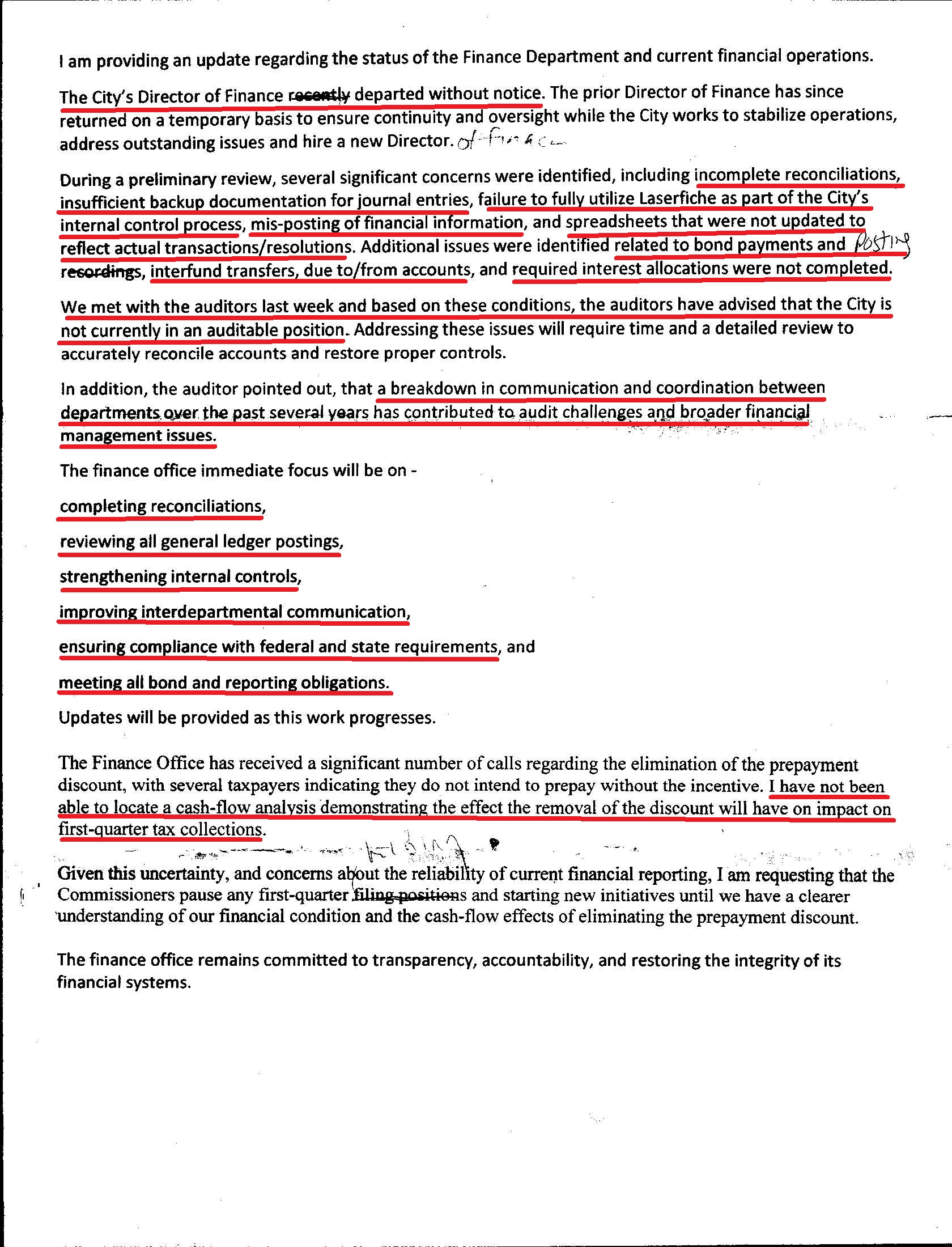


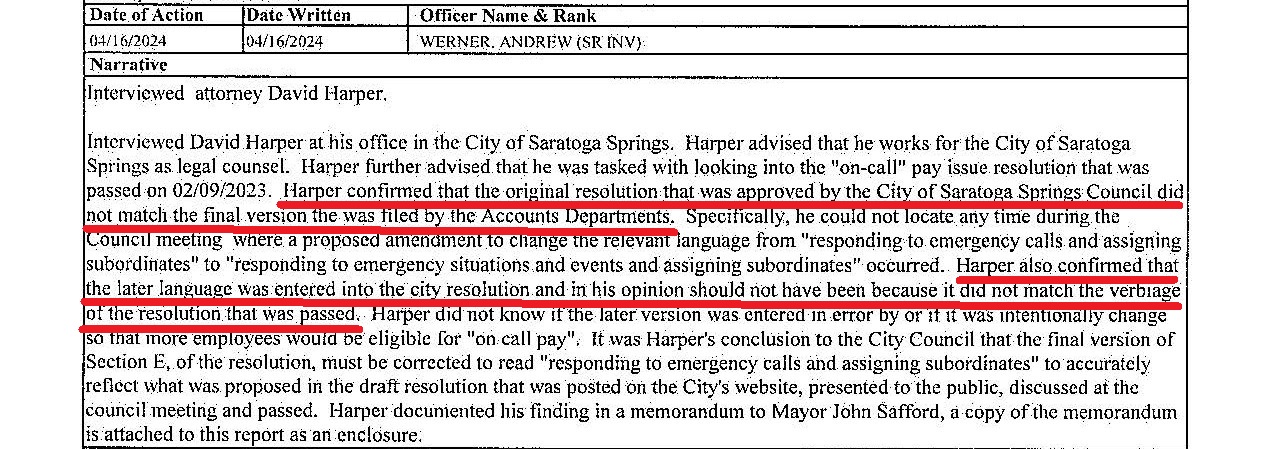

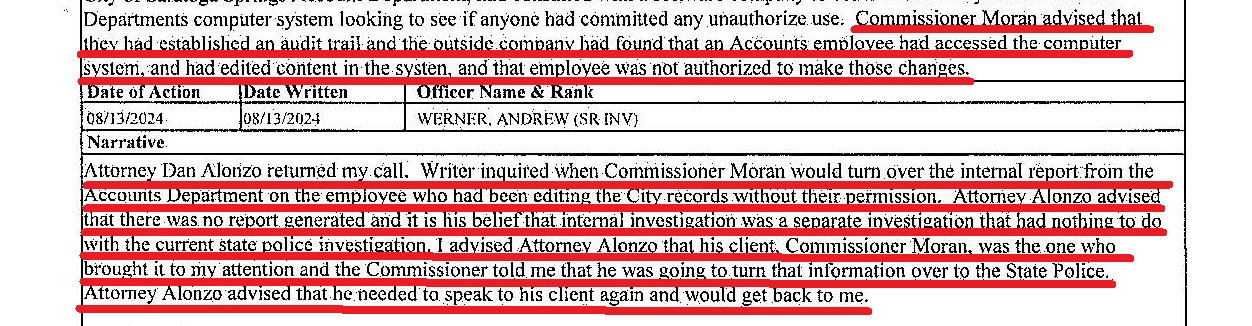
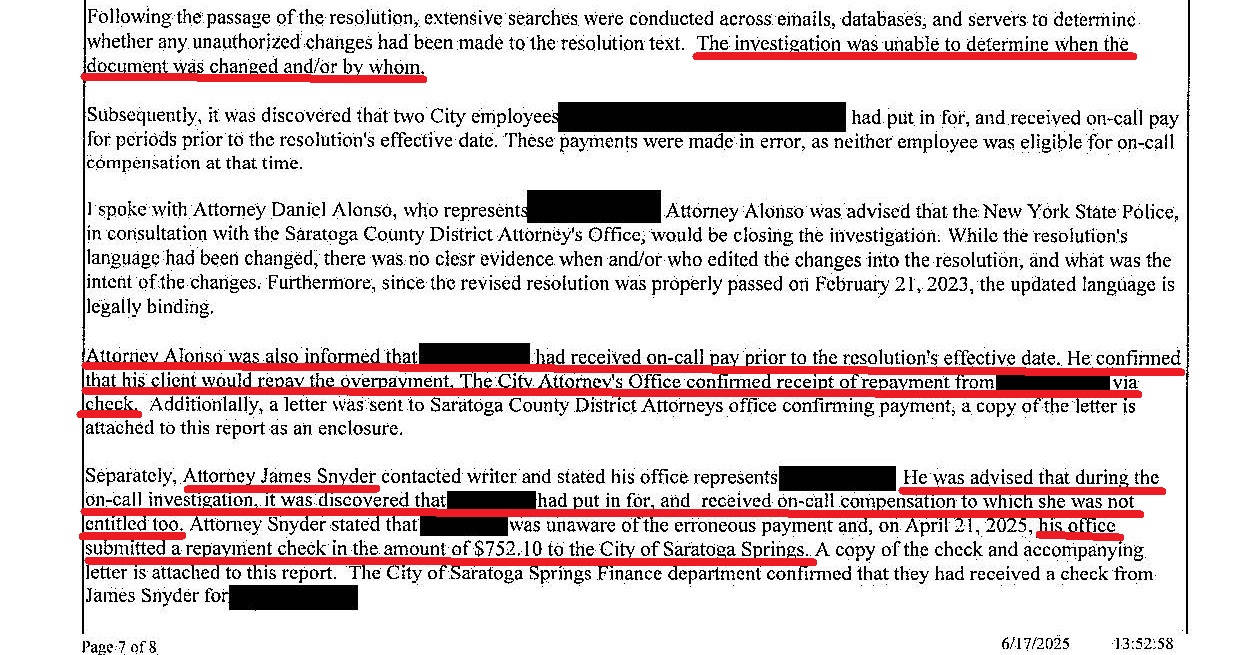
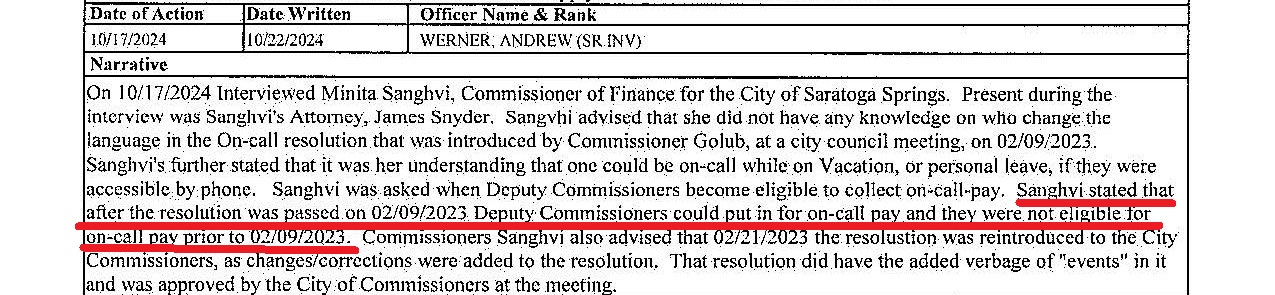
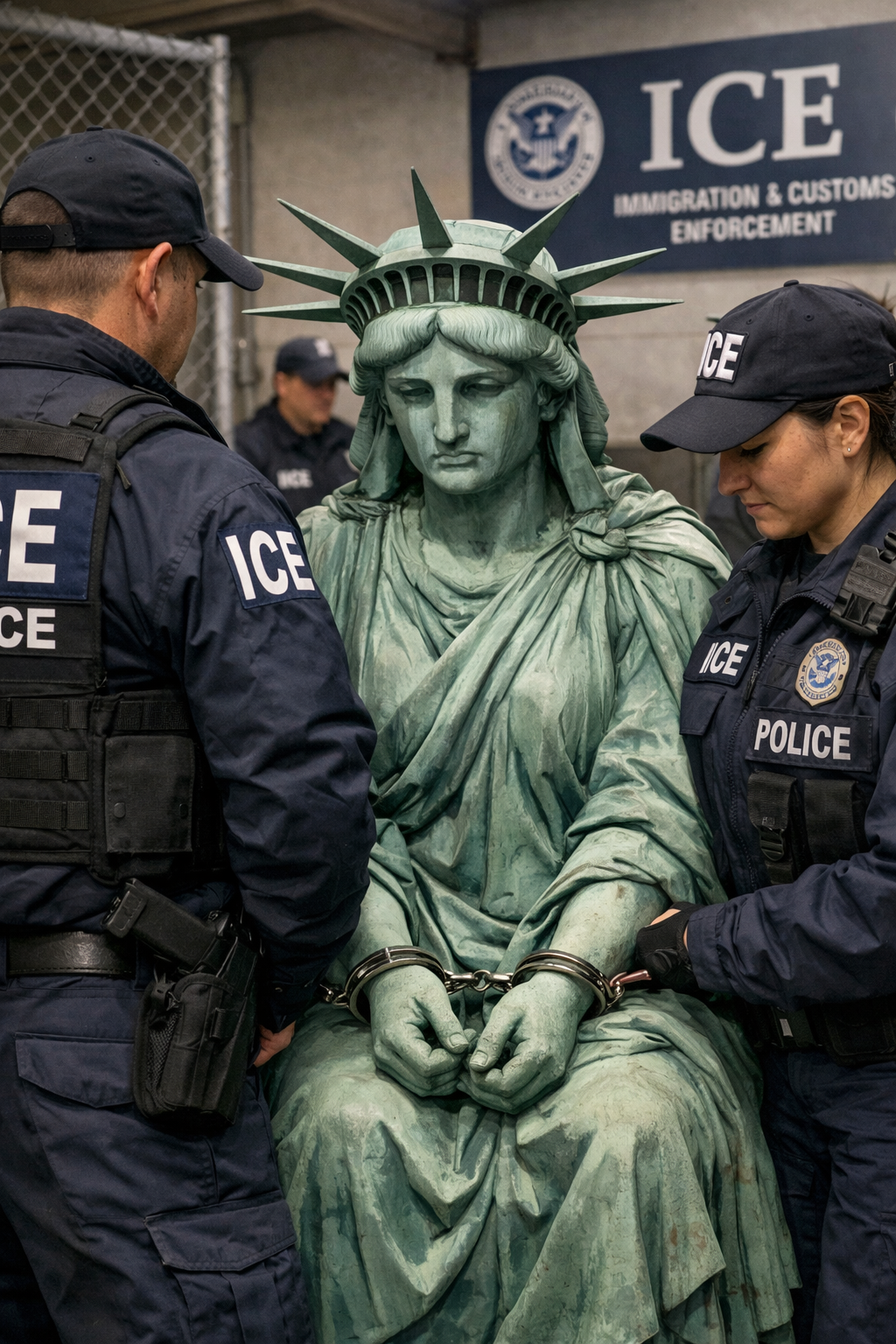





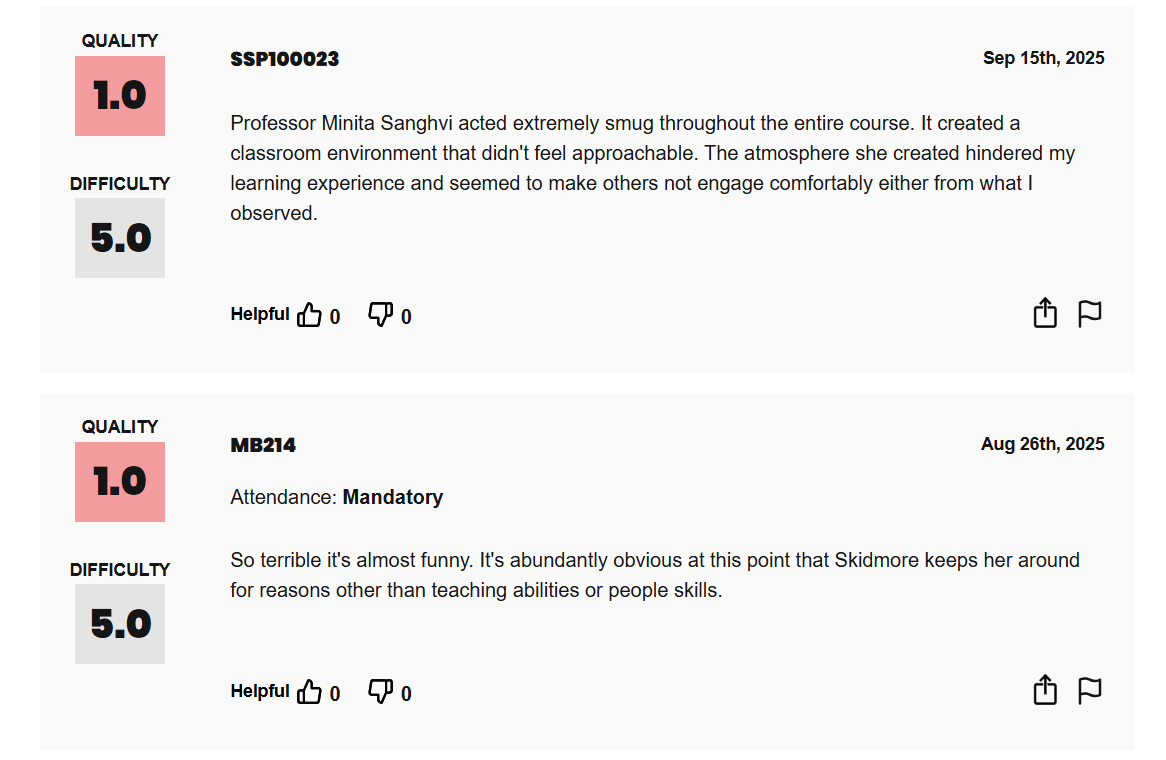
 Saratoga Springs Politics