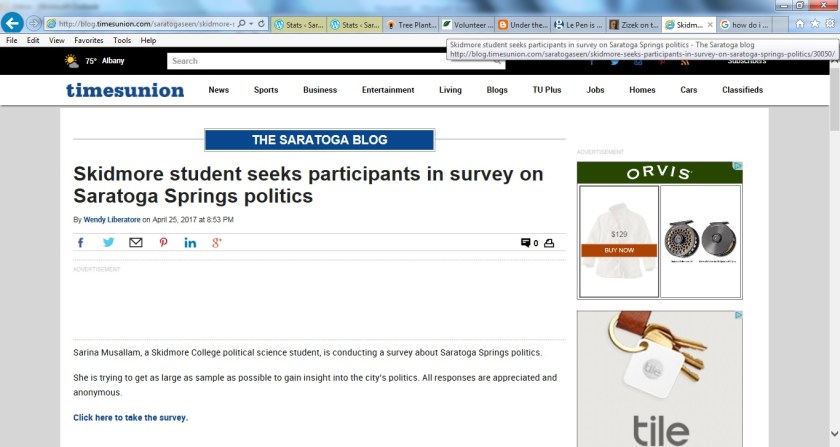
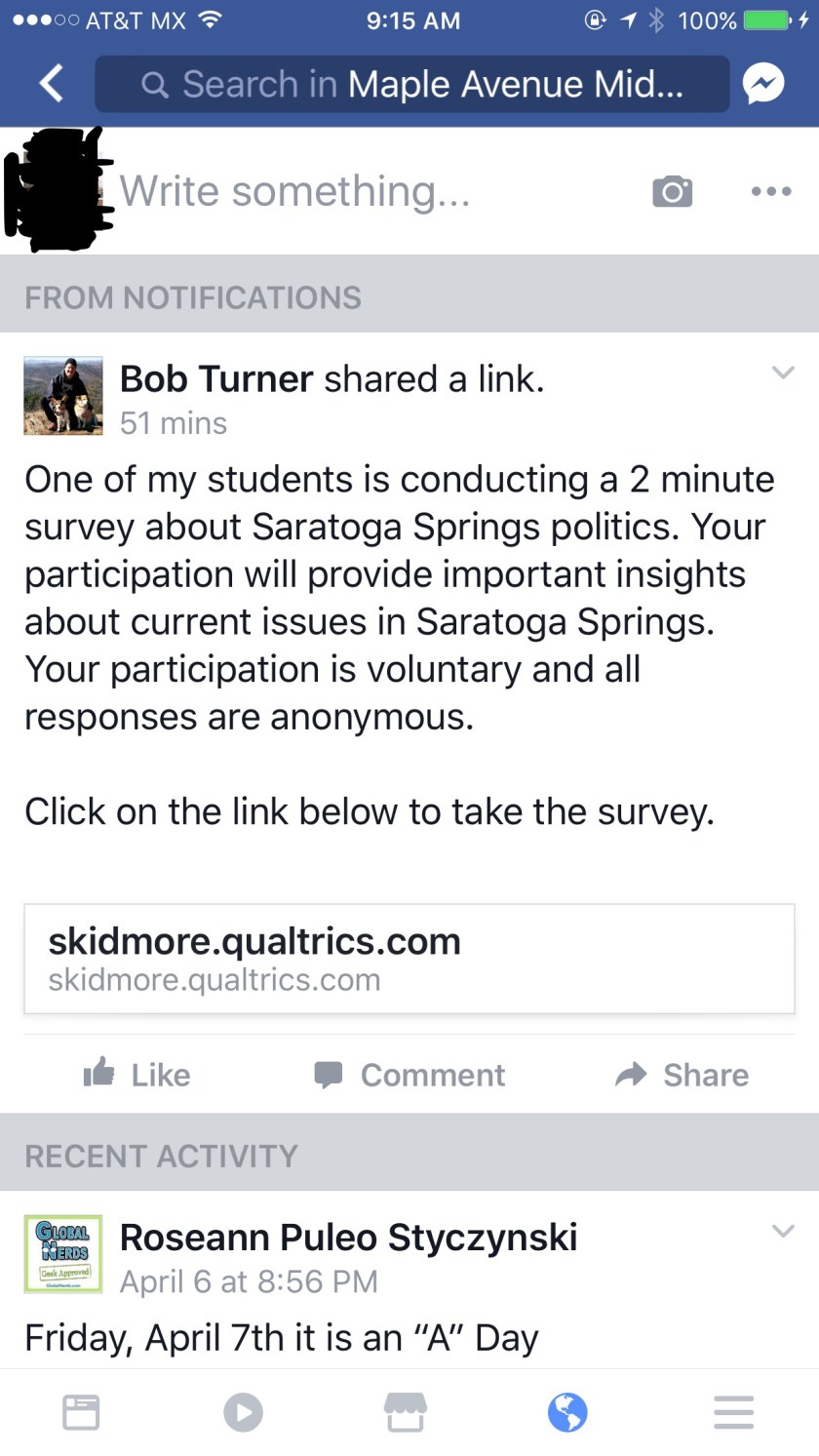
The Charter Draft: An Assessment

On March 29 the Charter Review Commission held a forum to present a draft of their proposed new charter and ask the public for comment. The document is still a work in progress although we are now two months beyond their original target date of February 15. I have a number of concerns about both what is in and what is not in the document.

Let me start with 2 particular problems I have with what they are proposing in the document they presented.

Extending the Length of Office for City Council members.

Their proposal calls for a seven member council which would include a full-time mayor. All seven plus our two county supervisors would serve for four years rather than the current two year terms.

Charter commission representatives have made a couple of arguments in support of this change.

First they feel four year terms would provide greater stability and continuity by avoiding the possibility of a turnover in government every two years. This would also allow officeholders a longer time to complete projects they may have started.

This seems to me a solution in search of a problem. I have lived in Saratoga Springs since the 1970’s and in my experience  and from what I understand of the history of the city before my arrival the situation we have now with the current council where all members have served multiple terms is the norm. My friend Tom McTygue served for decades as Public Works Commissioner.  Our previous mayor, Scott Johnson served for 3 consecutive terms before deciding not to run again, and so on.

In addition major projects would be the responsibility of the city manager, not the council so I don’t understand this argument of the need for more time.

I would also note that the entire NY State Legislature and the US House of Representatives all serve two year terms. At the risk of snarkiness I do not hold these institutions up as models of good government but I have not heard any cogent argument that their problems are caused by two year terms.

The charter committee’s second argument for longer terms has to do with what Chairman Bob Turner calls the “silly season”. He was referring to that annual fall event commonly known as elections. As near as I can tell, the charter committee wants to protect elected officials from enduring going before the voters every two years. I believe that implicit in the concept of referring to elections as the “silly season” is the belief that policy decisions are simply a question of good management and that by insulating elected officials from the “mob” they will be better able to exercise their “good judgment.”

The committee seems excessively fixated on seeing good government as merely a management issue. While proper management is of course an important feature of government, seeing this as the only or at least the overriding goal ignores the fact that factions exist in every community and in a democracy government plays an essential role in how these factions resolve their conflicts.

We saw this play out in our community quite clearly in the last local election cycle. Those who wanted to see increased development in the greenbelt put together a PAC to back candidates who they felt would change zoning restrictions in the outer district to accommodate such projects as the resort planned by Saratoga National Golf Course. Other candidates such as Chris Mathiesen ran on a clear platform opposing such development. There was nothing “silly” about this election. Two very different visions of how the city should grow were offered, debated, and left up to the voters to decide.

This is not to dismiss the reality that campaigns can involve pettiness and ego. It is, however, a reminder that in Saratoga Springs as in other communities there are substantive issues that citizens must decide, and they make these decisions by voting for the person who best reflects their views. The public should not be burdened by waiting four years before they can remove someone who they believe is acting against their interests.

I don’t usually agree with Democratic Chair Charlie Brown but I shared the concerns he voiced at the meeting. He spoke about his concerns that since it would be easier to run for just a council position, less qualified candidates who ran good campaigns but may not turn out to be capable council members could be elected and he was not happy about the prospect of being stuck with them for four years. Chairman Turner reassured him that there will be a “robust pool of candidates” so presumably having inept office holders will not be a problem in his opinion.

For me the ability of voters to choose their council representatives every two years is so important that if four year terms  are included in the proposed charter I will be a “no” vote.

A Full Time Mayor

The Charter Committee is proposing that the mayor’s position be made full time. The salary for this position will not be included in the charter which makes sense, but estimates made by Bob Turner and Pat Kane at the meeting were for something between $40,000 to $70,000 not including benefits. No mention was made of whether this full time mayor would require a staff as well. Would he/she need a secretary, a deputy, an administrative assistant?

The committee made two arguments for making the mayor’s position full time.

The first is that all the past city mayors they interviewed felt the demands of the job made it full time. I would agree that this is an accurate description of what the current job involves. The new charter, however, assigns many of the duties that are currently the responsibility of the mayor to the proposed city manager so with all due respect I don’t find this argument credible.

At the public meeting a gentleman from Alexandria, Virginia, told the audience his city is many times larger than Saratoga and they had functioned quite well with a city manager and only a part time mayor.

The Committee’s second argument is that they envision the future mayor as being kind of a community organizer who would work to mobilize community resources. They don’t want him/her to be just a figurehead.

I see a real potential for conflict between the city manager and a full time mayor. In his presentation Chairman Turner stated that he expected a new city manager to meet with the businesses in town to better coordinate city government efforts with the needs of the private sector. I would expect the city manager to find him/herself having many of the same kind of meetings the current mayor has. This seems like fertile ground for turf conflicts. Given the possibility that strong competitive egos could be involved there seems a real possibility of conflicting visions  leading to conflicting agreements being made as the two network through the city. The possibility that the manager will be from outside the city while the mayor will be a local could add to the intrigue.

A part time mayor who chairs council meetings, nominates board members, and represents the city at public events, while more modest ,is less fraught with problems and would save a considerable amount of money.

Dialing Back Expectations

It may amuse the readers of this blog to learn that I am a bit of a conservative when it comes to management issues. Having run a modestly large organization for a decade I learned many lessons, some the hard way. The old clichés about “if something can go wrong…”, “everything takes longer…”etc. are all true as far as I am concerned.

As a review of past blogs will confirm when the charter committee announced they expected to have a completed charter ready for a vote on May 30, I expressed great skepticism. My cautionary warnings were dismissed by my friends on the committee. It is now mid April, two months after their original target date to have a document ready for a May 30 vote and in my opinion they still have much to do before they have a competed document ready for a public vote.

So now for what’s not discussed in this proposed charter.

The proposed charter does not describe any departments or duties aside from the city attorney, the city clerk, and the city assessor. This makes sense if you are going to empower a new city manager to create a new integrated management structure for the city which will require the elimination of some positions and the creation of others.

It does, however, highlight the enormous challenge facing a new city manager who will be expected to restructure the entire city government. The degree to which this restructuring not only improves on the current government but makes the transition as seamlessly as possible depends of course on the knowledge and skills of who is hired as city manager.  I find the hyper optimism of the charter committee regarding the ease with which the transition will occur as troublesome as I found their confidence that the document would be ready by the middle of February.

This brings us to the issue of the challenge of finding the right person for the city manager job. The committee is insisting that the city manager be an “at will employee”. Section 3.01 reads that “The City Manager shall serve an indefinite term at the pleasure of the City Council.”  The proposed charter stipulates that this person shall have a master’s degree and five years experience. This person will also have to be proficient in budgeting and fiscal policy, have strong management skills, not to mention strong social skills to work with a seven member council that will no doubt have its own set of internal conflicts in spite of the committee’s constant reassurances that their charter will “take the politics out of government.”  I think finding such a person who will probably need to relocate their family here without some kind of job security will be much more challenging than the committee is anticipating.

Since the council will set the city manager’s salary and benefits, which I presume will include a severance package, this is not addressed in the proposed charter. The committee offers only average ranges of what this position may cost. We also have no firm numbers for salaries and benefits for the council and mayor. While it makes sense not to include these numbers in the charter it makes it challenging to get a handle on what this change in government will cost.

State municipal law requires that charter proposals be accompanied by a financial analysis. I wrote to Bob Turner to inquire about the proposed charter’s financials.

He responded that “Once Jeff [Altamari] come[s] back he is going to be doing a full financial analysis and presentation. However trading 5 deputies and benefits for 1 city manager will be a significant savings.”

I found this response troubling. As in the past with charter review committees, I think this committee too may not appreciate the amount of work done not only by the deputies but by the commissioners themselves. How this work will be reassigned and to whom will be an enormous challenge to an incoming city manager.  I find the hyper optimism of the charter committee regarding the ease with which this transition will occur worrisome . It also adds to my belief that any financial analysis will necessarily be speculative.

The proposed charter also references a transition team (8.07) but leaves many questions unanswered. What would be their responsibilities? How would it be formed? Who would make the appointments? When would they begin work? Would they need a budget and staffing? None of this has been dealt with.

While the committee has worked hard I have felt from the beginning that the members of the charter committee were both underestimating the scale of the task they were taking on and overestimating the impact of what a city manger would achieve. This charter proposal is still a work in progress. I would feel better if in doing their work the committee were more realistic in their consideration of how truly difficult a transition will be and if they recognized that they can give no assurances about the cost of this change.


An Inspiring Victory In Clifton Park

In a stunning victory for a community group trying to protect public land, the citizens of Clifton Park defeated a proposed land sale 5,542 to 2,323 in a turn out characterized by the Times Union as “heavy”.  The group calling itself Friends of Clifton Park Open Space defeated BBL Construction Services which the Albany Business Journal described as “one of the largest construction/development firms in the region.”

BBL had offered to buy 34 undeveloped acres owned by the Shenendehowa Central School District for $2.05 million.  They planned to build a Shoprite and had included the promise that they would set aside some land for a public park.

The controversy was quite spirited.  A paid advertisement appeared in the Gazette newspaper from a group identified as “Vote Yes For A Park LLC.”  The add supported the sale to BBL.

In a terrific story in the Gazette reporter Kassie Parisi raised serious doubts regarding a number of statements made in the ad  such as the claim about the taxes the project would generate.  In fact she characterized as a falsehood the claim by this group about the park the community would get.

She also reported on robocalls that voters in Clifton Park were subject to that were really “push polls.”  According to Parisi, “An internet search suggests the call came from a landline operated by Global Crossing, a telecommunications company headquartered in Bermuda, and that it originated in Jonesville. It was unclear who commissioned the calls.”

I think there is a cautionary tale here for the next election in Saratoga Springs.  People in this area put a high value on quality of life issues like parks and open space and will mobilize around these issues.

Ethics Board: Attempt To Cover Up Or Case of Miscommunication?

Following the March 9, 2017 meeting of the Ethics Board, I decided that I needed to go back to check the minutes of the previous meeting.  There had been no meeting in February but consistent with the history of this board, they had not posted their minutes for January.  This prompted me to see how long it had been since they had posted their minutes.  November of 2016 was the last time.  The New York State Open Meetings Law requires that minutes of public meetings be posted within two weeks.  By my calculation, they were three months and two months late respectively.

For several weeks I had been trying to arrange a meeting with the mayor that would include Commissioner Mathiesen, city attorney Vince DeLeonardis, assistant city attorney Tony Izzo, and Jerry Luhn.  Among the items to be discussed were the continuing problems with the management of the Ethics Board and the proposed revisions to the city’s ethics code.  It took a while to find a date that we would all be available and March 23 was finally decided on.

The night before the meeting I emailed the mayor apprising her of the fact that the minutes for the December, January, and March meetings were missing from the city website and therefore late and in violation of the Open Meetings Law.

I received an email back on the day of the meeting from the mayor in which she forwarded Trish Bush’s response regarding the missing minutes.  Ms. Bush is the assistant to the city attorney.  In that capacity she attends the Ethics Board’s meetings in order to record the minutes of their meetings.  She is also responsible for posting their minutes on the city website.  Ms. Bush stated that all the minutes were up on the city’s website.  She offered that:

“Perhaps Mr. Kaufmann doesn’t know how to access them, but they are on the same page as City Council meetings if you continue to scroll down under Ethics Board.”

I immediately went to the city site and found that indeed the minutes were now there.

It is important for the readers to understand that there is nothing on the city website that indicates when an item like the minutes of the Ethics Board was posted so there was no longer a public record documenting the violation.

Later that day I attended the meeting.  Right at the beginning I raised the issue of the minutes.  I noted that I was quite familiar with the city’s web site and that as recently as the previous week those minutes had not been there which put the Ethics Board in violation.  No one argued with me that I was wrong but no one admitted that they had only recently put the minutes up and that the Ethics Board had been in violation.  I had brought with me a Freedom of Information request for the dates when the minutes were posted and who it was that posted them. I would need this information to validate that there had been a violation.  I handed the FOIL to either Mr. Deleonardis or Mr. Izzo.

The meeting went well.  In fairness to the participants I am not posting the details.  I will say that the mayor and the city attorney were quite attentive and forthcoming on the issues.  I would say that there was general agreement that there were problems with the way the Ethics Board transacts its business.  The mayor appeared to be supportive of the revisions of the city’s ethics code as put forth by Commissioner Mathiesen, Jerry Luhn, Geoff Bornemann, and myself.

To Ms. Bush’s credit, the response to my FOIL was extraordinarily prompt. I received it on the following day which I have to say is some kind of record.

Her request to the IT department on my behalf was rather informal.  She told them, “I am looking for the Ethics Board minutes of December 2016, January and March of 2017.  If you can also tell who posted them that would be great [JK:My emphasis added].”

Less than ten minutes later she had a response.  They advised her that It was she who had posted them.  She had posted the December minutes on March 17, 2017 and the other two on March 21.

I then wrote to the mayor and the city attorney offering that it appeared to me that Ms. Bush had attempted to hide the fact that the minutes had been months late and in violation of the Open Meetings Law.  I noted the importance of the Open Meetings Law and asked that they acknowledge this and take such actions to avoid this reoccurring.

City Attorney Vince DeLeonardis responded that there had been no attempt to misrepresent the postings and that Ms. Bush had been correct when she asserted that the minutes were on the city’s website.

I may be accused of being uncharitable but I find it odd that Ms. Bush asks the IT people if they could tell her who posted the minutes.  I have sufficient respect for Ms. Bush that it is hard to believe that she did not recall that as recently as two days before she had posted minutes on the city’s website.  It is possible that Ms. Bush did not realize that the software the city uses records all this information.

As always, I leave it to the readers to decide what happened.

The documents:


From: “Trish Bush” <trish.bush@saratoga-springs.org>

To: “James Baker” <james.baker@saratoga-springs.org>

Sent: Friday, March 24, 2017 8:58:47 AM

Subject: Re: Website Minutes Timestamp

Hi Jim,

I’m looking for the Ethics Board minutes of December 2016, January and March of 2017. If you can also tell who posted them, that would be great. This is for a FOIL request.

Thanks!

Trish

Trish Bush, Executive Assistant, City Attorney’s Office, City of Saratoga Spring


From : James Baker <james.baker@saratoga-springs.org>

Subject : Re: Website Minutes Timestamp

To : Trish Bush <trish.bush@saratoga-springs.org>

Zimbra trish.bush@saratoga-springs.org

Re: Website Minutes Timestamp

Fri, March 24, 2017 9:05 AM

According to the websites history log:

December 2016 Minute – BOE Minutes 12-8-16.pdf 3/17/2017 1:36:48 PM Bush, Trish

January 2017 Minute – BOE Minutes 1.12.17.pdf 3/21/2017 8:43:07 AM Bush, Trish

March 2017 Minute – BOE Minutes 3.9.17.pdf 3/21/2017 8:42:21 AM Bush, Trish

Thank You,

Jim Baker, Help Desk Technician, City of Saratoga Springs New York


From: “John Kaufmann” <>
Date: March 22, 2017 at 12:48:33 PM EDT
To: “‘Joanne Yepsen'” <joanne.yepsen@saratoga-springs.org>,
“Christian Mathiesen” <Christian.Mathiesen@saratoga-
springs.org>, “‘Vincent DeLeonardis'”
<vincent.deleonardis@saratoga-springs.org>, “‘Tony Izzo'”
<tony.izzo@saratoga-springs.org>, “‘jerry luhn’,
“Jane Weihe”
Subject: Missing Minutes

In reviewing the city’s website regarding the Ethics Board, they have
not posted the minutes of their meetings going back to December of
last year.  I am not sure whether this violates the Open Meetings Law,
but the failure to post records of their meetings is simply another
example of their apparent indifference for the need for transparency.


From: Joanne Yepsen [joanne.yepsen@saratoga-springs.org]
Sent: Thursday, March 23, 2017 9:14 AM
To: john.kaufmann
Cc: Vince DeLeonardis; Tony Izzo; Christian Mathiesen; Eileen Finneran; Meg
Kelly
Subject: Fwd: Missing Minutes

John, I checked into your concern. Please see below and let Trish know if you’re still having trouble.
Thank you.
Joanne

From: Trish Bush <trish.bush@saratoga-springs.org>
Date: March 22, 2017 at 1:54:19 PM EDT
To: Joanne Yepsen <joanne.yepsen@saratoga-springs.org>
Cc: Meg Kelly <meg.kelly@saratoga-springs.org>,  Lisa Shields <lisa.shields@saratoga-
springs.org>
Subject: Re: Missing Minutes
Mayor,

The minutes of all meetings from 2012 through and including the March 2017
meeting are on the City’s website.  I have posted many of them myself.  Perhaps
Mr. Kaufmann doesn’t know how to access them, but they are on the same page
as City Council meetings if you continue to scroll down under Ethics Board.  The
Ethics Board does not meet every month, only when there is business before
them, therefore some years have less than 12 minutes posted.

Please let me know if I can be of further help or if you would like me to contact
Mr. Kaufmann directly.

Thanks,
Trish

Trish Bush
Executive Assistant
City Attorney’s Office
City of Saratoga Springs
(518) 587-3550 x2516


From: “John Kaufmann”
To: “Joanne Yepsen” <joanne.yepsen@saratoga-springs.org>, “Vincent DeLeonardis”
<vincent.deleonardis@saratoga-springs.org>
Cc: “trish bush” <trish.bush@saratoga-springs.org>, “Tony Izzo” <tony.izzo@saratoga-
springs.org>, “Jane Weihe” >, “jerry luhn”
Sent: Monday, March 27, 2017 10:49:22 PM
Subject: Troublesome Misrepresentation

On March 22nd I emailed Mayor Yepsen advising her that the Ethics Board had failed to post their minutes for their meetings in December and January on the city website as required by the Open Meetings Law.

In response the Mayor forwarded to me a copy of an email from Trish Bush, the executive assistant to  the City Attorney, in which Ms. Bush states that the minutes were on the site and  stated “Perhaps Mr. Kaufmann doesn’t know how to access them.”
I then went back to the city’s website and found that they had indeed now been posted.   I had been closely monitoring the website and as recently as the  week previous to my email to the Mayor they had not been on the site.

I then FOILed to find out when the missing minutes had been posted and who had posted them.  The records showed that it had been Ms. Bush herself  who had posted the missing minutes  only days before my email to the Mayor.  The postings were months beyond what the Open Meetings Law required.

What I find disturbing is that any reasonable person would have taken from Ms. Bush’s email that the minutes had been there all along and just overlooked.  Ms. Bush has worked closely with the Ethics Board for a number of years. I think it is not unreasonable to speculate that this was an attempt on Ms. Bush’s part to hide the fact that the Ethics Board was in violation of the Open Meetings Law.

I have no desire to see anything punitively done to Ms. Bush.  What I am seeking is an
acknowledgement of the seriousness of this incident and an affirmation that every attempt will be made to insure that this does not happen again.


From: Vincent DeLeonardis [vincent.deleonardis@saratoga-springs.org]
Sent: Monday, April 03, 2017 3:55 PM
To: John Kaufmann
Cc: joanne yepsen; tony izzo; trish bush;
jluhn@me.com; Meg Kelly
Subject: Re: Troublesome Misrepresentation

John,

I respectfully, but strongly, disagree with your suggestion or “speculat[ion]” that my assistant, Trish Bush, was somehow attempting to “hide” what you believe was a violation of the Open Meetings Law by the Ethics Board.

As you know from the FOIL response, the Ethics Board minutes for December and January were posted on March 17th and March 21st respectively.  Thus, when you e-mailed the Mayor on March 22nd indicating that the minutes had not been posted to the City’s website, Trish suggested that, perhaps, you were unable to access them and described where on the website they could be found.  There was no ill intent in her suggestion.

For some reason, you found her response “disturbing” and suggested that “any reasonable person would have taken from M. Bush’s e-mail that the minutes had been there all along and just overlooked” and suggested, unfairly and inappropriately, that “this was an attempt on Ms. Bush’s part to hide the fact that the Ethics Board was in violation of the Open Meetings Law”.  However, I would respectfully suggest that the only thing a reasonable person would have taken from her e-mail was that on March 22nd the minutes were available on the website — as, indeed, they were.

Trish assumed, quite reasonably, that when you e-mailed the Mayor on March 22nd contending that the minutes had not been posted, you had actually checked the website on that date, so as to support your contention.  She could not have reasonably known that “closely monitoring the website” actually meant that you had not checked it “as recently as the week previous”.

None of this is to say that the criticisms you have raised regarding the timely posting of meeting minutes from the Ethics Board are not valid.  Indeed, your concerns were duly acknowledged during our recent meeting and it was indicated that improvements would be made to ensure that the minutes will be posted on the website more expeditiously.  However, misplacing your frustrations with the Ethics Board on Trish is unwarranted.

Thus, while I appreciate that you “have no desire to see anything punitively done to Ms. Bush”, please be advised that there is no basis for that in any case.

Thank you for your time and attention to this matter.  Should you have any questions or
concerns, or should you wish to discuss this further, please do not hesitate to contact me.

Best regards,

Vince


From: John Kaufmann [john.kaufmann21@gmail.com]
Sent: Tuesday, April 04, 2017 2:36 PM
To: ‘Vincent DeLeonardis’
Cc: ‘joanne yepsen’; ‘tony izzo’; ‘trish bush’; ‘jane.weihe@gmail.com’;
‘jluhn@me.com’; ‘Meg Kelly’
Subject: RE: Troublesome Misrepresentation

Vince:
Thank you for your April 3 response to my email.

As I hope you know, I have only the highest respect for your work on behalf of the City.   While I can appreciate your understandable desire to protect your employee, the world is full of carefully parsed statements that while technically accurate are, at the same time, meant to shield or distract attention from a point.  I am afraid that for me, Ms. Bush’s email falls into that world.

You and I also apparently have different recollections of one element of the meeting.  At the beginning of the meeting I expressed my concern that Ms. Bush’s email asserting that the minutes were on the site left unresolved whether they had been posted in time to meet the Open Meeting Law.  I stated that to resolve this issue I was FOILing for the dates when they were posted and by whom. I handed the FOIL to either you or Tony.  The need to FOIL would have been made moot had someone at the meeting admitted that the city had only recently posted the minutes and accepted responsibility for the violation.  I do not recall such an admission.

I thought that you and the mayor were very attentive and serious in entertaining my concerns over the Ethics Board for which I am extremely appreciative.
JK


Following the March ??, 2017 meeting of the Ethics Board, I decided that I needed to go back to check the minutes of the previous meeting.  There had been no meeting in February but consistent with the history of this board, they had not posted their minutes for January.  This prompted me to see how long it had been since they had posted their minutes.  November of 2016 was the last time.  The New York State Open Meetings Law requires that minutes of public meetings be posted within two weeks.  By my calculation, they were three months and two months late respectively.


For several weeks I had been trying to arrange a meeting with the mayor that would include Commissioner Mathiesen, city attorney Vince DeLeonardis, assistant city attorney Tony Izzo, and Jerry Luhn.  Among the items to be discussed were the continuing problems with the management of the Ethics Board and the proposed revisions to the city’s ethics code.  It took a while to find a date that we would all be available and March 23 was finally decided on.


The night before the meeting I emailed the mayor apprising her of the fact that the minutes for the December, January, and March meetings were missing and therefore late and in violation of the Open Meetings Law.


I received an email back on the day of the meeting from the mayor in which she forwarded Trish Bush’s response regarding the missing minutes.  Ms. Bush is the assistant to the city attorney.  In that capacity she attends the Ethics Board’s meetings in order to take notes of their meetings.  She is also responsible for posting their minutes.  Ms. Bush stated that all the minutes were up on the city’s website.  She offered that:


“Perhaps Mr. Kaufmann doesn’t know how to access them, but they are on the same page

as City Council meetings if you continue to scroll down under Ethics Board.”


I immediately went to the city site and found that indeed the minutes were now there.


It is important for the readers to understand that there is nothing on the city website that indicates when an item like the minutes of the Ethics Board was posted so there was no longer a public record documenting the violation.


Later that day I attended the meeting.  Right at the beginning I raised the issue of the minutes.  I noted that I was quite familiar with the city’s web site and that as recently as the previous week those minutes had not been there which put the Ethics Board in violation.  No one argued with me that I was wrong but no one admitted that they had only recently put the minutes up and that the Ethics Board had been in violation.  I had brought with me a Freedom of Information request for the dates when the minutes were posted and who it was that posted them. I would need this information to validate that there had been a violation.  I handed the FOIL to either Mr. Deleonardis or Mr. Izzo.


The meeting went well.  In fairness to the participants I am not posting the details.  I will say that the mayor and the city attorney were quite attentive and forthcoming on the issues.  I would say that there was general agreement that there were problems with the way the Ethics Board transacts its business.  The mayor appeared to be supportive of the revisions of the city’s ethics code as put forth by Commissioner Mathiesen, Jerry Luhn, Geoff Bornemann, and myself.


To Ms. Bush’s credit, the response to my FOIL was extraordinarily prompt. I received it on the following day which I have to say is some kind of record.


Her request to the IT department on my behalf was rather informal.  She told them, “I am looking for the Ethics Board minutes of December 2016, January and March of 2017.  If you can also tell who posted them that would be great [JK:My emphasis added].”


Less than ten minutes later she had a response.  They advised her that It was she who had posted them.  She had posted the December minutes on March 17, 2017 and the other two on March 21.


I then wrote to the mayor and the city attorney offering that it appeared to me that Ms. Bush had attempted to hide the fact that the minutes had been months late and in violation of the Open Meetings Law.  I noted the importance of the Open Meetings Law and asked that they acknowledge this and take such actions to avoid this reoccurring.


City Attorney Vince DeLeonardis responded that there had been no attempt to misrepresent the postings and that Ms. Bush had been correct when she asserted that the minutes were on the city’s website.


I may be accused of being uncharitable but I find it odd that Ms. Bush asks the IT people if they could tell her who posted the minutes.  I have sufficient respect for Ms. Bush that it is hard to believe that she did not recall that as recently as two days before she had posted minutes on the city’s website.  It is possible that Ms. Bush did not realize that the software the city uses records all this information.


As always, I leave it to the readers to decide what happened.


The documents


From: “Trish Bush” <trish.bush@saratoga-springs.org>

To: “James Baker” <james.baker@saratoga-springs.org>

Sent: Friday, March 24, 2017 8:58:47 AM

Subject: Re: Website Minutes Timestamp

Hi Jim,

I’m looking for the Ethics Board minutes of December 2016, January and March of 2017. If you

can also tell who posted them, that would be great. This is for a FOIL request.

Thanks!

Trish

Trish Bush

Executive Assistant

City Attorney’s Office

City of Saratoga Springs

(518) 587-3550 x2516


From : James Baker <james.baker@saratoga-springs.org>

Subject : Re: Website Minutes Timestamp

To : Trish Bush <trish.bush@saratoga-springs.org>

Zimbra trish.bush@saratoga-springs.org

Re: Website Minutes Timestamp

Fri, March 24, 2017 9:05 AM


According to the websites history log:

December 2016

Minute – BOE Minutes 12-8-16.pdf 3/17/2017 1:36:48 PM Bush, Trish

January 2017

Minute – BOE Minutes 1.12.17.pdf 3/21/2017 8:43:07 AM Bush, Trish

March 2017

Minute – BOE Minutes 3.9.17.pdf 3/21/2017 8:42:21 AM Bush, Trish

Thank You,

Jim Baker

Help Desk Technician

City of Saratoga Springs New York

EXT 2566

I LOVE THIS! Everything You Ever Wanted To Know About Developers, But Secretly Wanted To Remain Ignorant Of

By Faroll Hamer From The Washington Post

April 8, 2016

Faroll Hamer retired in 2014 as director of planning for the city of Alexandria.

I spent 30 years as a city planner in the D.C. area, and a big part of my job was meeting with developers. Over time, I created what I called the Developer Profile to entertain my staff. If you want to understand Donald Trump, start here. Of course, I would never say all developers are like this. (But they are.)

They have short attention spans. They’re terrible listeners. They come to meetings to negotiate the fate of a project and can’t sit still — they rock and jiggle while you talk to them, waiting for you to finish, then say their piece and leave. There’s no dialogue.

They don’t read. Sending a letter or an email is useless. You have to pick up the phone and talk to them.

They view themselves as victims. They see regulations as getting in the way of what’s good for economic development and society as a whole, and believe governments exist to pick on them. Everything they do is for us, because they are building places for us to live, shop or work. And it’s true developers play an important role in the growth and revitalization of cities. So they’re not just victims, in their minds, but heroes, too.

Risk just doesn’t bother them the way it does other people. You can really lose your shirt as a developer. The good side of this risk tolerance is that developers are decisive and can take bold action. The scary side is that they sometimes brush aside legal obstacles to what they see as a worthy goal. They know the difference between right and wrong, but often they aren’t particularly worried about the letter of the law.

While tactically inventive, they are strategically unimaginative. They’re not people who enjoy creative thinking or the big picture; they’ll build the same building over and over, but they are endlessly flexible about achieving each project. It’s all about the next step. In negotiations they’re willing to get only part of what they want because they know they’re going to come back and get another part and another, until before you know it, they have it all. They’re into getting their nose under the tent.

Because they concentrate on immediate tactical goals, you can’t expect consistency of argument from them. They’re extremely pragmatic. They have no interest in ideology. They value loyalty over principle — you’re either in the circle or not — and they’re usually generous to loyal friends of every race and gender. The ones at the top are driven, expansive people. And since they identify their projects with the general social welfare, they tend to be a little megalomaniacal. Almost any attention you give them is good. They don’t mind being teased, but pointed criticism is unacceptable. That might sound contradictory, but it’s the way they are.

What does this tell us about what Trump would be like as president? The Developer’s Profile can give us a pretty good idea.

On those few issues he identifies closely with, such as trade and restricting immigration, he would be unrelenting and inventive. He really would build a wall. He can’t keep Muslims out of the United States or return lost jobs to the country, but he would do what he can and call it a success.

On many of the other issues that a president deals with, Trump is perfectly unqualified now and would stay that way. He is a quick study, but only about things that interest him. He would rely on staff, which is probably good, depending on who’s around him. In foreign policy, he would have little strategy. He would play the victim, be reactive and un­or­tho­dox. Being risk-tolerant, he may do things that are truly dangerous. Being willing to cut losses, he would be more likely than other presidents to leave allies in the lurch.

The positive side of having no strategy is that he’s not an ideologue. On many issues Trump would govern as a pragmatist. I doubt he’s a racist — developers don’t care if you’re black or white. But he has become the candidate of racists, which presents him with a problem: How does he satisfy this constituency without turning the rest of the country against him? This is the sort of difficulty you get into if you act for short-term tactical gain without principles and without knowing where you’re going. Multiply this problem by a thousand if you’re president.

And it’s when a developer encounters political resistance that his sense of victimhood really kicks in. Trump has called himself a “counter-puncher”; once offended, he reacts with little restraint. But Twitter insults are pretty trivial. The presidency is not.


Saratoga Springs Charter Review Commission Releases Draft Charter

[I received this email from Bob Turner]

After 10 months of interviews, hearings, surveys, data gathering, research, and a town meeting, the Saratoga Springs Charter Review Commission has released a draft of their proposed charter for Saratoga Springs.  The draft represents the current thinking of the Saratoga Springs Charter Review Commission.  The Charter Review Commission is interested in getting feedback from the community to assist it in its deliberations. 

The Commission will hold a public forum on Wednesday, March 29 at the Saratoga Springs Public Library Community Room from 7-8:30.  The Commission will be making a short presentation on the proposed charter and then open the meeting to feedback from the public on the proposed charter.  Commission Chair Bob Turner said, “We want to hear what the public has to say.”  Citizens who cannot attend the meeting can send their suggestions to the Charter Review Commission via email at saratogaspringscharter@gmail.com.

 A copy of the draft charter, minutes, and documents are available on the its website https://saratogacharter.com/.  Copies of the minutes and agenda are also available on the Saratoga Springs city website http://www.saratoga-springs.org/2144/Charter-Commission

Bob Turner


Peter Martin: “A Lesson In How Not To Answer A Question” Or “Would You Trust This Man To Protect The Greenbelt?”

In announcing his bid to replace Chris Mathiesen as Commissioner of Public Safety Peter Martin asserted his commitment to the “City in the Country.”

Being for the “city in the country” is a lot like being for “job creation.”  Everyone is for it until it requires actually doing something.

With that in mind, I emailed Mr. Martin asking him whether opposing Saratoga National Golf Course’s plan to build a resort with a one hundred room hotel, condos, and retail facilities conflicted with his commitment to protect the “country.”  I noted in my email to him that Saratoga National Golf Course had withdrawn their proposal when they could not find a way of getting around the zoning for the greenbelt and its conflict with the city’s Comprehensive Plan.

Mr. Martin responded first that he was not familiar enough with what SNGC had been planning to offer an opinion.  I wrote back that this seemed odd since, aside from the fact that it was a major controversy, as a county supervisor he had sat through the city council meetings when this was discussed .

He then wrote back with an obtuse and lawyerly paragraph that seemed to avoid directly addressing the question.  This prompted me to craft what I immodestly describe as a set of questions that would make it very hard to answer without telling what he actually believed.  I based it on the statements made by Chris Mathiesen whom he hopes to replace.

After a week without receiving an answer, I wrote to him again requesting that he advise me as to whether or not he planned to answer my questions.  To his credit he did respond and to his discredit he chose to pretend that he had answered.

My  main problem with Mr. Martin is not so much that he does not support Chris Mathiesen’s position (which I obviously do).  I know that there are people out there who sincerely believe that the “resort” would be a great asset to the city and who vigorously disagree with Commissioner Mathiesen.  My problem is his unwillingness to be straight with people about where he stands.  He could simply indicate that he does not share Commissioner Mathiesen’s position and explain what his problems with it are or he could say he is on board with Commissioner Mathiesen.

I would refer readers back to earlier stories on this blog of how, as county supervisor,  Mr. Martin “responded” to the scandal of the multi-million dollar county power plant that perpetually lost money, the hiring of the county mental health director who had a documented history of sexual harassment, and the hiring of one time Clifton Park supervisor Anita Dayly who participated in creating a job at that mental health department including its salary and then took the job.

So here are the emails.  The first two are the most interesting but I include them all.  In the end I invite the readers of this blog to make their own conclusions.


From: John Kaufmann [john.kaufmann21@gmail.com]
Sent: Sunday, March 19, 2017 10:22 PM
To: ‘Peter Martin’
Subject: To Clarify

Peter:
Thank you for responding to my emails.

I found reading your response challenging.  I think that the public in general feels considerable frustration at politicians who respond to public inquiries in ways that appear to answer their questions but that are parsed so carefully that they really don’t.  Often this criticism is unfair because the questions lack clarity or because they are sufficiently broad as to necessitate complex answers.

With this in mind, I thought I would make sure my questions were simple enough to prompt the kind of clarity that is not only important to me but important to the people who read my blog.  So here goes.

Question #1: Would you agree that Commissioner Mathiesen unequivocally stated that Saratoga National Golf Course’s proposals to build a resort would violate the zoning for the greenbelt and were inconsistent with the comp plan?

Question #2: Would you agree that Commissioner Mathiesen stated his opposition to the SNGC plans by citing their negative impact on the rural character of the area AND on the City in the Country concept which necessitates the concentration of commercial uses in the urban core.

Question #3: Do you agree with Commissioner Mathiesen’s assessment as described in #1?

Question #4: Do you agree with Commissioner Mathiesen’s assessment as described in #2?

Given the following, I think it would be reasonable to expect answers to these questions.

1.      Given your history as an attorney to Ayco Corporation one would assume that you are a good listener, a person with a keen sense of language, and an astute observer.
2.      Having served several terms as the city’s Supervisor you have extensive experience both in your work at the county and from sitting through the city council meetings of the
workings of our political institutions.
3.      It would be foolish to describe you as naïve regarding the sub agendas that surround
controversial issues.
4.      You were present during the council meetings where these matters were discussed and given the controversial nature of the issues one would assume you were attentive to what was discussed.

I compliment you on the final sentence in your email to me for taking me to task for my assertion that SNGC withdrew their application because it would have violated the greenbelt zoning.  You wrote:

“I am not aware that SNGC ever explained its reasons for withdrawal, but as you seem to have knowledge of this, I request that you share it with me.”

SNGC never issued any memorandum to me as to why, after repeated proposals, they withdrew their application.  It is indeed speculation on my part that they did not think they could secure support for such things as describing a one hundred room hotel as a clubhouse in order to meet the zoning requirements.  I would just add the following speculation.  I think the Saratoga National Golf Course is hoping for a change in the makeup of the City Council that will make it more amenable to their plans.

I look forward to hearing from you.


From: John Kaufmann [john.kaufmann21@gmail.com]
Sent: Thursday, March 23, 2017 10:19 PM
To: ‘Peter Martin’; Peter Martin
Subject: Follow-up

Peter:
I sent you follow-up emails regarding Saratoga National Golf Course and Ethics Reform.  To date I have not received a response.  Can I anticipate hearing something from you by Saturday?
JK


From: Peter Martin [peter.martin@saratogadems.org]
Sent: Friday, March 24, 2017 3:41 PM
To: John Kaufmann
Subject: Re: Follow-up

John,
I received your email entitled To Clarify. I previously provided you with my thoughts about the plans that Saratoga National Golf Course had proposed and withdrawn from consideration by the city council. I continue to support the City in the Country as described in the Saratoga Springs Comprehensive Plan.  If I develop further positions on this issue, I will make them public and share them with you.  Thank you for your inquiry.
Peter


These are the earlier emails:

On Thu, Mar 16, 2017 at 1:42 PM, John Kaufmann <john.kaufmann21@gmail.com> wrote:
Does that mean that you would oppose Saratoga National Golf Course’s effort to expand to a resort?


From: Peter Martin [mailto:peter.martin@saratogadems.org]
Sent: Thursday, March 16, 2017 1:53 PM
To: John Kaufmann
Subject: Re: Press Release – Martin to Run for Commissioner of Public Safety

John,
I would need to review the plan to determine whether it is consistent with the City’s
Comprehensive Plan.  My recollection is that Saratoga National withdrew its request from the City and has not submitted a current proposal.
Best regards,
Peter


From: John Kaufmann [john.kaufmann21@gmail.com]
Sent: Thursday, March 16, 2017 2:40 PM
To: ‘Peter Martin’
Subject: RE: Press Release – Martin to Run for Commissioner of Public Safety

Peter:
It was withdrawn because it was inconsistent with the comp plan and existing zoning.  When do you think you can review the issue and get back to me?
JK


On Thu, Mar 16, 2017 at 4:44 PM,

John Kaufmann <john.kaufmann21@gmail.com> wrote:
Peter:
I was rather surprised by your response regarding Saratoga National Golf Course.  As the city supervisor you attended the meetings at which the issue of allowing Saratoga National Golf Course to build a one hundred room hotel along with other retail in the city’s green belt was addressed.  You attended meetings at which Public Safety Commissioner Chris Mathiesen and Public Works Commissioner Skip Scirocco made clear and unequivocal statements that they would oppose any changes in the zoning for the greenbelt that would allow for an expansion such as the one advocated by SNGC.

So let me rephrase my question, would you continue the effort to oppose any weakening in the greenbelt as articulated by Commissioner Mathiesen whose position you hope to be elected to?

Thank you for your prompt response.
JK


From: Peter Martin [peter.martin@saratogadems.org]
Sent: Friday, March 17, 2017 11:37 AM
To: John Kaufmann
Subject: Re: Follow Up

John,
I remain committed to promoting the City in the Country by promoting dense downtown
development and limiting development in the Greenbelt as is consistent with the City’s
Comprehensive Plan.  You asked me whether I would oppose Saratoga National’s efforts to
expand to a resort.  In 2015, Saratoga National presented four separate and distinct proposals.

The proposal from March 2015 was withdrawn before much discussion.  The proposal from April of that year was made while the Comprehensive Plan was being considered.  It would have required the creation of a resort overlay district (or zone) in the C.D.D.  Saratoga National also withdrew this proposal and the Resort Overlay amendment was not adopted.

In May, the council considered SNGC’s application to add a definition of Club House to the zoning code.  The Council voted to send this application to the City and County Planning Boards for their review and advice.  Before the Council received this advice, SNGC again amended their application to provide for a zoning text definition of a Golf Resort. I believe this was also withdrawn.

I cannot say whether I would support or oppose the efforts of Saratoga National until I know what those efforts are.  If those efforts are inconsistent with our City’s Comprehensive Plan, I would oppose them.  If they are consistent with the Comp Plan, I could support them.  I don’t know what SNGC’s current plans are.

In your e-mail to me you indicated that SNGC withdrew its plans because it was inconsistent with the Comp plan and existing zoning.  I am not aware that SNGC ever explained its reasons for withdrawal, but as you seem to have knowledge of this, I request that you share it with me.
Thank you,
Peter

The Albany Business Review reported on another proposed project for Saratoga Springs this week.


Bill Barber has announced plans to build a mixed use building just north of the building that houses the Fortunate Cup on West Avenue.  The project is planned to have 4,000 feet of retail space and between 32 and 34 condominiums on the three floors above the retail.  He indicated that no final decision had been made as to the price of the condos but he is looking at $350,000.00.  The current estimate for the project is between $7 million and $9 million.

He plans to be at Uncommon Grounds today (Thursday March 16) between 6 and 8 pm to answer people’s questions.

Major Commercial Project For Saratoga Lake

Marinas At Fish Creek

Frank Parillo, who is a major developer in town, has plans for Saratoga Lake.  Among the many properties owned by Mr. Parillo are the Hampton Inn Hotel and High Rock Condominiums on Lake Avenue.  Mr. Parillo currently owns two marinas on Lake George as well.

He is planning to build a restaurant, clubhouse, and locker rooms on a marina he owns at the northern edge of Saratoga Lake.  Last fall he purchased the Saratoga Boatworks for $2.28 million dollars.  It is located on your left just before you get to the bridge over Fish Creek.  There are currently 130 slips at the marina.

Another group is planning another large project for what is now a 3.2 acre marina across the street from where Parillo plans to build.  John Boyle from Ballston Spa is leading this other project working with real estate broker Dan Collins and architect Mike Phinney.  They are working on a plan involving a 15,000 square foot restaurant.  Their goal, in addition to the restaurant, is to build a 10 room bed and breakfast and a 25 room inn.

A Sad Story About A Very Good Man

It’s complicated…  Such are the twists and turns one experiences in life.

In my previous life when I ran the anti-poverty agency EOC I had the good fortune of occasionally intersecting with Father Peter Young.   At the time (a long time ago) Father Young, who is now 86, had a ministry working with primarily alcoholics in the South End of Albany.   I always thought of Father Young as the kind archetypal, good priest.  His energy and compassion were boundless.  Working with the pernicious disease of alcoholism is no easy endeavor.

In 1990 I left EOC and have been out of touch with that world.

A friend sent me a link to an article by Brendan Lyons of the Times Union on what appears to be New York State’s effort to shut down Father Young’s network of facilities that reach from the Bronx to Syracuse. 

I find this all stunning because Father Young was able to create a network of many powerful people in the private sector as well as in politics.

The story includes a chronology of embezzlement at a number of facilities that resulted in convictions.  According to the story, Father Young reported to the state that he uncovered criminal activities that led to the indictments and convictions.

Given what is in this article and drawing from my experience in running a non-profit social service agency I will risk a little speculation.  In expanding his organization from Albany to one that stretched from the Bronx to Syracuse the operational challenges probably grew exponentially. 

Having worked now in the private sector, I can assure the readers of this blog that the stress and complexity of a non-profit are much greater.    Cash flow is always a struggle.  The state notoriously pays late and erratically.  In addition, the salaries one can afford to pay staff are problematic.  I cannot imagine myself administering something like Father Young’s operation at 86.

So reading the article it does not surprise me that he got into difficulty with his main funding source which would be the Office of Alcohol and Substance Abuse Services.  If the story published in the TU is accurate, what is disturbing is the way that OASAS dealt with Father Young.  The story portrays an attorney for the state agency behaving appallingly at a meeting with Father Young and representatives from the business community who are supportive of Father Young.

Unfortunately, I find this credible as well.  While I dealt with some very fine and dedicated people who worked for our state, I also dealt with some careerists who neither understood nor cared about the problems of actually running these programs.  More central to this story is that of all agencies, OASAS should be the most respectful of Father Young’s fifty years serving alcohol and drug abusers.  I am not questioning one way or the other about the substance of the decision as I am utterly ignorant of the details, but I am questioning the manner by which it was apparently carried out.

Here is a link to the story:

One of the aspects of this story that I think is important is that Tom Newkirk (one of the principals of Saratoga National Golf Course) has been a major supporter both financially and organizationally of Father Young for some three decades.  Whatever my differences with Mr. Newkirk over his proposed expansion of his golf course, I think that his efforts to support Peter Young are something that all of us should respect enormously.

A further aspect to this story has to do with John Sweeney.  Mr. Sweeney represented Saratoga Springs in Congress until his problems with alcoholism involved the police and his defeat.

Apparently, Father Young not only aided him in dealing with this alcoholism but gave him a job (Link).  In a wonderful twist, he hired him as the compliance officer.  Some of you may remember that Sweeney built a national reputation as the most pugnacious player on behalf of the National Republican Party in the famous chad war in Florida in Bush versus Gore.

Now Sweeney is described in a recent Times Union article as a major player in President Donald Trump’s transition team.  He ran Trump’s New York State presidential campaign.

The readers of this blog may not be aware of the important role that the Affordable Care Act has played in supporting alcohol and drug abuse programs.  Not only does the ACA fund services for these programs but it provides critical health insurance to its clients through the expanded Medicaid option.  The proposed Trump replacement for the ACA will cut Medicaid by $880 billion dollars in the next ten years (Link To Story). 

One has to wonder how someone like John Sweeney, who has seen the ravages of alcoholism and also how important the work of organizations like Father Young’s are, must feel championing a man whose policies will devastate the communities attempting to serve alcoholics and drug addicts.


Blogger Follows Ethics Board Through The Looking Glass

Every once in a while I have an experience with a public institution that is so bizarre that it challenges the sensibilities.  This usually involves an institution that is so sufficiently insulated that it feels no need for even the veneer of concern for public input.  It usually involves a display of arrogance that for some people who serve on these boards provides a perverse sense of power no matter how tiny the stage they may be playing on.

Such was my experience with the “ethics board.”  I put its name in quotes because it should not be confused with any sense of actual ethics.

I was drawn to the meeting by its published agenda.

ethics agenda
Ethics Board Agenda

As the readers of this blog know,  Jerry Luhn, Geoff Bornemann and myself working with Commissioner of Public Safety Chris Mathiesen developed an extensive set of revisions to the existing city ethics code.  The revisions were sent to the city’s Ethics Board for their comments. At a previous meeting, the board took up the document.  As is all too typical of their behavior, they did not even acknowledge that members of the public were present let alone engage the authors of the revisions who were in the audience then.  Instead they amused each other by poking fun at the document in a way that sadly exposed their resentment that anyone should have the temerity to usurp their authority.

It is worth noting that after months of failing to adhere to the Open Meetings Law’s requirements to properly notice their meetings on the city’s website, they now have not bothered to post the minutes of their meetings since December.

I arrived a few minutes late for this recent meeting. Since they were discussing what ex parte meant, an issue we dealt with in our document, I assumed they were continuing to discuss the proposed revisions we had submitted.  After all, the agenda item posted stated “Continue discussion of proposed Code of Ethics revisions regarding Land Use Boards and review legal research.”  Eventually it became clear that they were not discussing what we had submitted but instead were talking about revisions to the code offered by Assistant City Attorney Tony Izzo.

This seemed very strange since at the previous meeting there was no public discussion of anything but our proposal. The next February meeting was canceled.  So where did the request for Tony Izzo’s draft come from? (a rhetorical question).

Ex Parte is a legal term for inappropriate discussions between parties.   Tony offered them basically the same language that he had used during an earlier controversy over ZBA board member Kieth Kaplan’s apparent violation of ex parte.  Mr. Izzo used an obscure definition from the Federal Security and Exchange Commission.  The definition he used was severely limited in that improper conversations were limited to discussions “material” to an application that is, related to the specifics of that specific application.

But there are other definitions of ex parte. The New York State Department of State is charged with training land use boards about ethics in general and ex parte in particular.  It makes it very clear that members of land use boards should stop any discussion regarding an application outside of public meetings.   Why, one might ask, would attorney Izzo not use these materials in crafting his revision?

Here is a link to their pamphlet on the issue titled “Ethical Standards for Planning and Zoning Boards:  Link To Department Of State Pamphlet On Land Use Ethics

The city actually paid attorney Mark Schachner to do a workshop for land use boards last year on ethics.  Schachner could not have been clearer on the importance of board members avoiding improper discussions.  At that meeting I asked a simple question.  If an applicant to a land use board called a board member up to check whether they would be attending a meeting, would that be considered ex parte.  Schachner unequivocally stated that it would.  Such a conversation would not fall under a “material” discussion of the application but would still be considered unethical.   Attorney Izzo was at that meeting and was videotaping it.  The city has a copy of the video.  Strangely, Izzo conceded that he remembered Schachner on this but his acknowledgement bizarrely had no impact on the deliberations.

I courteously asked chair Justin Hogan if I could get clarification about “material” and was told that I would have to wait until the end of the meeting.

I then sat through the most absurd discussion of ex parte.  One board member wondered whether they should be considering what kind of penalty there should be for breaching the code.  The readers of this blog should understand that the Ethics Board has no disciplinary authority.  They simply issue opinions.  One would have thought that either Justin Hogan, who makes his living as a lobbyist specializing in government, or Tony Izzo who has thirty years experience in this would have advised her that the question was not germane.  Instead, the conversation about penalties meandered for quite some time.

Another member who is a lawyer, worried at length about the vulnerable position ex parte put board members in.  How were they to protect themselves from people coming up to them in a restaurant and launching into their opinion on an application?  Again this line of thought went on interminably while attorney Izzo failed to share with them Schachner’s explanation about how to handle situations like this.

Finally, the members of this board finished, and Justin Hogan offered to let me speak.  First I expressed concern about the vagueness of the agenda.  I told them I had come because I thought they might be continuing their discussion of Commissioner Mathiesen’s proposal.    Mr. Hogan oddly told me that the proposal had not come from Commissioner Mathiesen.  Technically he is probably correct although the document referenced Mathiesen as one of its four authors. I then tried to point out that at the last meeting they had discussed a proposal to extensively revise the existing ethics code and that the item on the agenda was written so vaguely that it was impossible to know whether they were continuing the discussion of it as the description suggested.  Mr. Hogan found this concern amusing and rejected the idea that there was any problem.

I regret that I got a little snarky and I responded that I thought that the average citizen reading this agenda would have sympathy for my confusion and I found it odd that a professional who made his living working with local governments as a consultant should find it hard to understand that there was a problem.

I then pointed out that it was troubling that the revisions that the board would be considering as drafted by attorney Izzo were not posted on the site as a supporting document.  This would have not only avoided any confusion but it would be consistent with the other boards who regularly post documents on the city website related to their agenda.  Mr. Izzo then offered that he was not sure about whether they were required to post such a document.  I asked why, if they were considering these changes, there was any compelling reason that the public should not have access to them in order to decide both whether to attend  and whether they had any thoughts they might want to share with the ethics board.

Mr. Hogan found this suggestion amusing.  No one felt the need to address the concern.

I then asked Attorney Izzo whether in crafting the language on ex parte he had reviewed the New York State Department of State’s training materials for land use boards on this issue.  He said he had not.  I pointed out to him that months ago, at his request, I had sent him a link to these materials.

I asked him also why he did not draw from the training by Mark Schachner in preparing his draft since he had attended the workshop.  I pointed out to him that Schachner had explicitly addressed the fact that the “material” argument was too restrictive.  At that point Justin Hogan intervened and told me that the Department of State materials and the Schachner training were not germane to their deliberations.  He praised attorney Izzo as doing a superb job and asked if I had anything else I wanted to address.

I must confess dear readers that I rather lost it.  I told the ethics board that their self enforced ignorance was simply appalling.

I am very sorry that unlike most of the other city’s boards, there is not a video of the meeting because I do not do it justice in this post.