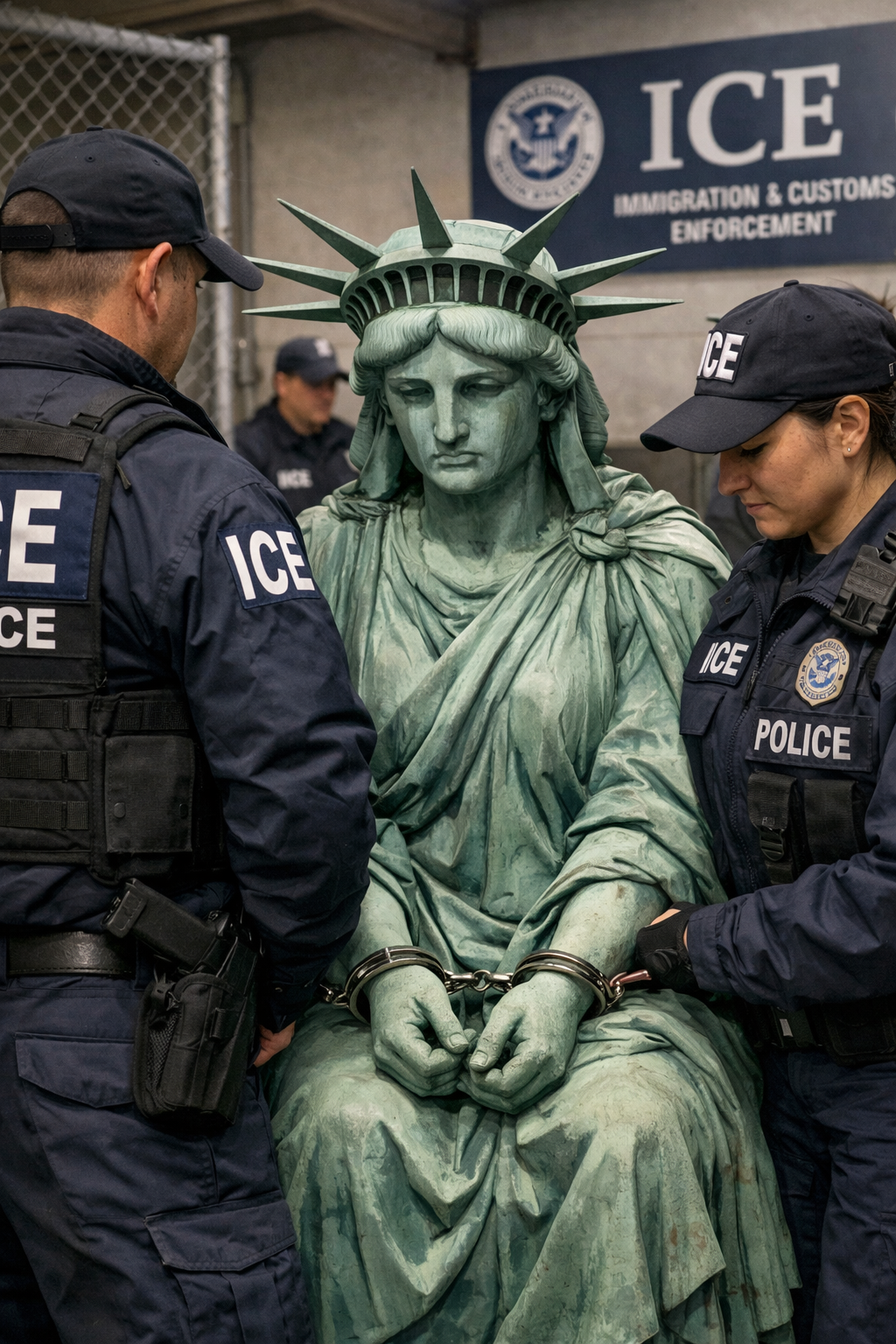
The death of Renee Good in Minneapolis was shocking. I will not offer my own opinion on the specific facts of the incident. Debating competing interpretations drawn from a maze of videos risks obscuring the larger and more consequential issues.
Flawed as our judicial process may be at times, it remains the bulwark between some measure of justice and the chaos and violence that arise in its absence. Public faith in the fairness and integrity of this system is essential to the maintenance of civil society. Once people lose faith in the judicial process, the trust that binds us together as a nation erodes, with all the dangers that entails.
What is most disturbing to me in this case is the apparent collapse of the safeguards that have traditionally governed the use of governmental force. The authority granted to law enforcement to use deadly force has always carried with it a corresponding responsibility on the part of the state to ensure that such power is exercised lawfully and is not abused.
Historically, incidents involving deadly force have been followed by procedures designed to protect the rights of all involved. Standard practice has typically included removing the officer from public-facing duties and initiating a rigorous, independent investigation. Every effort should be made to assemble an investigative team whose credentials maximize objectivity, to ensure the fairest possible outcome and to build public confidence in the process, regardless of the result. Under the best circumstances, such investigations also seek to identify lessons that can reduce the likelihood of future deaths.
For better or worse, citizens have long been required to place their faith in prosecutors and the courts to ensure accountability and justice. In fairness to both the victim and the officer, public officials have generally refrained from making definitive statements about culpability to avoid compromising ongoing investigations.
Readers may recall the shooting that occurred in downtown Saratoga Springs in November 2022. At that time, a public dispute arose between then-Mayor Ron Kim and then-Public Safety Commissioner James Montagnino on one side, and then–County District Attorney Karen Heggen on the other, concerning what—if anything—public officials should say following the discharge of weapons and the resulting injuries.
A Profoundly Frightening Situation
To date, these longstanding safeguards appear to have been disregarded in Ms. Good’s death.
The officer who killed Ms. Good was employed by Immigration and Customs Enforcement (ICE), an agency within the Department of Homeland Security. Within hours of her death, Secretary of Homeland Security Kristi Noem publicly condemned Ms. Good as a “domestic terrorist” and exonerated the officer who shot her. President Trump issued a similar statement.
Most troubling was Vice President JD Vance’s assertion that the officer involved enjoyed “total immunity.” Significant jurisdictional questions remain about which authorities are responsible for investigating this case. It is possible that the Vice President intended to make a narrower statement about immunity from state or local investigation rather than federal review. However, he has offered no clarification. In the absence of such clarification, one is left to conclude that he believes the decision to use lethal force rests solely within the discretion of ICE officers.
Such a pronouncement is deeply troubling. No one—regardless of rank, agency, or position—has the right to take a life with impunity. Ultimately, determinations of culpability must rest with an independent and impartial authority.
Equally disturbing is the fact that, six days later, there has been no public indication that an independent investigation has been initiated. As far as can be determined, the officer involved has continued in regular duties.
I recognize that some may dismiss these concerns as hysterical. I would instead pose a simple question: who now decides when the government may lawfully take a life? Under what circumstances can the public expect the use of deadly force by law enforcement to be meaningfully scrutinized?
Some Thoughts on ICE
Becoming a police officer in our city requires extensive training and oversight. Officers must complete six months of instruction at the state police academy, followed by an additional two months of field training under the supervision of a senior officer.
Equally important is departmental culture. “Protect and Serve” is not merely a slogan. Local police officers perform many roles beyond arresting criminals. They assist injured residents before emergency medical personnel arrive, manage public events to ensure safety, and build relationships with schools and downtown businesses. While many officers cannot afford to live in the city, departmental leadership works to integrate them into the community.
Our police department has an outstanding record of service. Despite frequent criticism, a sober review reveals few substantiated claims of abuse by individual officers over many years. I am particularly struck by the fact that during the extensive demonstrations following the death of George Floyd, there were no reported injuries—despite highly provocative verbal abuse directed at officers. That outcome reflects effective training and strong leadership.
ICE, by contrast, operates under a very different model. Its primary responsibility is the arrest of individuals. This is inherently difficult work. Many people arrested for being in the country illegally have lived here for decades and are respected members of their communities. The New York Times once reported on a waitress in a small Midwestern farming town who had lived there for seventeen years. When she was detained, the community reacted with outrage.
The purpose of this observation is not to debate immigration policy. Rather, it is to acknowledge that making arrests is stressful under any circumstances—and especially so when those being arrested are well known and valued in their communities.
That stress is compounded by extended travel away from home and by the routine use of masks, which can foster fear and isolation from the public. Being an ICE officer is neither glamorous nor easy.
Given these realities, proper training is essential—not only to perform the job effectively, but also to prepare agents emotionally for the pressures they face. ICE training was once comparable in length to that of local police, lasting six to seven months. However, in the rush to deploy personnel, it has reportedly been reduced to just forty-seven days.
There appears to have been no compelling justification for this haste. Local police departments generally do an effective job maintaining public safety. Given the millions of undocumented individuals in the United States—many of whom have lived here peacefully for years—there is no rational basis for curtailing the training and support that ICE agents both need and deserve to carry out their duties responsibly.
Disregarding the Law
The country now finds itself in a precarious position. If Vice President Vance’s remarks are not publicly rebuked or clarified, where does that leave us? If the Department of Homeland Security can appear to disregard established norms of justice and fairness, where else might the government abuse its considerable power?
Anecdotally, I have friends who support the MAGA movement who believe the ICE officer acted appropriately in shooting Ms. Good. At the same time, many of them acknowledge that a rigorous and impartial investigation should have taken place. When righteousness and anger overwhelm fairness and accountability, the foundations of democracy itself is put at risk.

 Saratoga Springs Politics