Four candidates have emerged in the race to fill the seat of the Saratoga Springs Commissioner of Public Works left vacant by the recent death of Commissioner Skip Scirocco. The City Council will decide who will fill the vacancy until a special election is held in the fall. Saratoga Springs Mayor Ron Kim told Foothills Daily that there were four candidates under consideration: Anthony Scirocco Jr (R), Bill McTygue (D), Jason Golub(D), and Robert Bullock(?).
Bill McTygue
Bill McTygue (D) served as Deputy and then Director of Public Works for many years under his brother, Public Works Commissioner Tom McTygue. He subsequently ran for Public Works Commissioner against Skip Scirocco and lost.
Robert Bullock
The only thing I know about Robert Bullock is that he is the husband of Ann Bullock who has been an active Democrat.
The Unseemly History of Ann Bullock’s and Bill McTygue’s Attacks on Skip Scirocco
With the cooperation of Wendy Liberatore of the Times Union, Bill McTygue and Ann Bullock made repeated attacks on Skip Scirocco and the Public Works Department over the years. In spite of the flimsiness of these attacks, Ms. Bullock and Mr. McTygue received extensive coverage in their attempts to smear Skip. None of their accusations ever produced any validation either from the city’s ethics board or from the New York State Attorney General who these two tried to use to promote their campaigns.
Mr. Golub (D) is an attorney with a law degree from Columbia University. He previously worked for General Electric and currently is Head of Strategic Partnerships and Chief Diversity Officer for Kahilla.
He co-chaired the Saratoga Springs Police Reform Task Force.
“Black residents helped to get the now all-Democratic council elected and if they chose not to appoint Golub that ‘ would be a slap in the face to the Black community.'” he told the TU.
Anthony Scirocco Jr
Mark Scirocco has told me that it was one of his father, Skip Scirocco’s last wishes that his son, Anthony Scirocco Jr,(R) replace him as the Commissioner of Public Works. Mr. Sirocco is not just the former Commissioner’s son but is well qualified in his own right.
Anthony Scirocco, Jr. has worked in the public works sector for twenty years. In 2015 he was appointed as the Saratoga County Maintenance Supervisor overseeing a crew charged with maintaining the county’s roads and handling the administrative duties for the running of the highway garage.
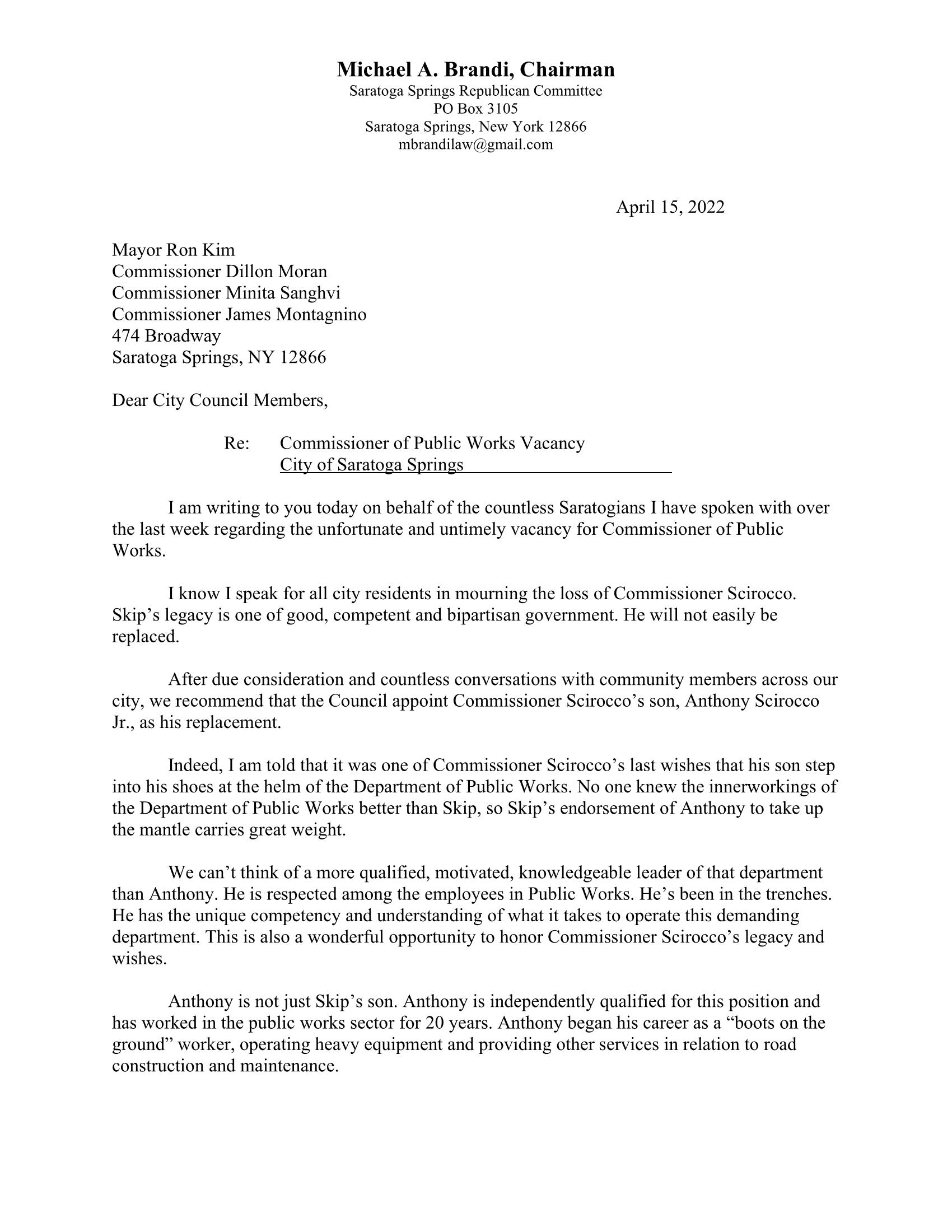
Scirocco has been endorsed to fill the position by the Saratoga Springs Republican Committee. His father was the only Republican on the Council at the time of his death. Following is the statement in support of Anthony Scirocco’s candidacy put out by Republican City Chair Mike Brandi.
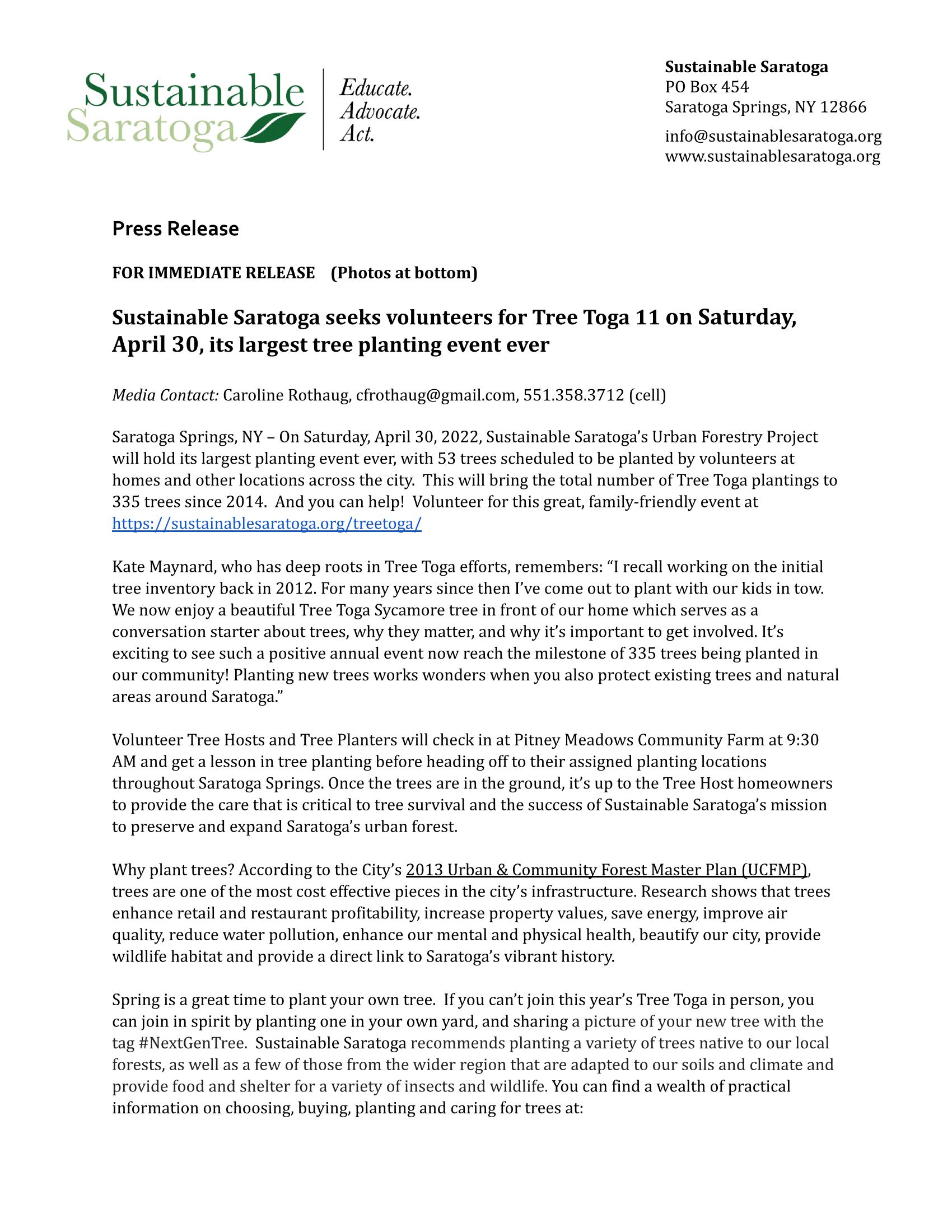
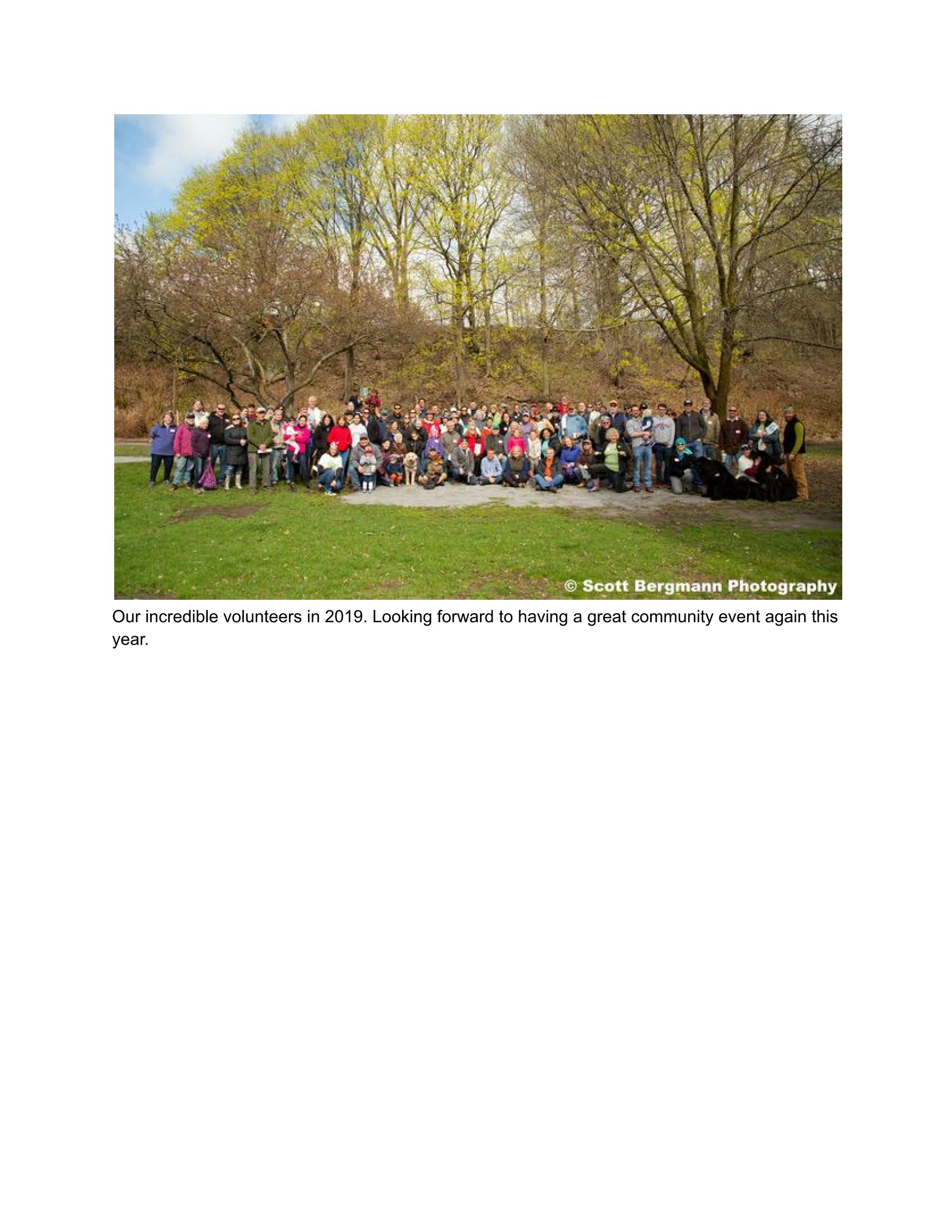
Sustainable Saratoga is seeking volunteers to help them on Saturday, April 30, with their annual tree planting. Strength is not a prerequisite–just enthusiasm!
I am an enthusiastic supporter of bicycling in our city.
In 2014 the Saratoga Springs City Council approved a feasibility study for the construction of a 24-mile shared-use path that would form a continuous loop through the city and connect with other biking and walking trails throughout Saratoga County. Since 2014 the city has constructed a number of segments of what is called the Saratoga Greenbelt Trail.
As spring has started to arrive, the city has begun to move forward with the construction of new segments that include a section of Union Avenue and High Rock giving rise to some concerns about the efficacy and safety of these lanes as they extend through the city. I have observed, for instance, that there seems to be little use of the bike lanes on Lake Avenue and North Broadway. Others have raised concerns about the safety of constructing lanes on heavily traveled avenues like Union and Lake. There is an especially high accident rate at the corner of Union and Nelson Avenue for instance. I recall that as Public Safety Commissioner, Chris Mathiesen had proposed directing bikers to less heavily trafficked parallel side streets rather than constructing bike lanes on Lake Avenue.
I sent an email raising these issues to Bikeatoga, a local group that promotes bicycling.
I received the following thoughtful statement from Ed Lindner who is with the group. I think that Ed makes a convincing case that only through the establishment of extensive bike lanes that provide continuous routes for traveling in the city, can an effective program be established.
Statement From Ed Lindner On Behalf Of Bikeatoga
With respect to bike lanes, Bikeatoga’s primary focus is to get the City to build out the complete, functional, and connected bike route network laid out in the 2016 Complete Streets plan and the 2014 Saratoga Greenbelt Trail plan.
It’s well-established that creating a fully connected network of bike routes increases ridership and safety. That’s one reason why the Federal Highway Administration’s Strategic Agenda for bike and pedestrian infrastructure identified creating connected multimodal (meaning bike/ped) networks as its number 1 goal.
This People for Bikes info sheet provides multiple real world examples of cities that saw increased ridership when they built out their connected network. And the 2016 Pucher & Buehler study, 2014 Schoner and Levinson study, and 2020 Portland State University study all reached the same conclusion – building out a connected bike route network results in increased ridership. It’s just common sense, really. When deciding whether and when to ride, cyclists are no different from motorists – we choose routes if they can safely and directly take us to where we want to go. If the car lanes on Lake Avenue ended at East Harrison Street, how many would choose that as a route to drive from the East Side Rec to the West Side?
Sadly, as you know from experience, Saratoga Springs is a long way from having a functional and connected bike route network. People for Bikes uses sophisticated data analysis using open source street mapping to create City Ratings for bicycle networks in communities around the country. Our rating is not good. Saratoga Springs ranks in the 21st percentile of small cities, largely because our network score is 7 out of 100. This is the data that cycling journalists see when they write articles suggesting the best places for cycling tourists to visit. It’s not something the Chamber of Commerce is likely touting in our own tourism promotions.
So, in answer to your questions, Bikeatoga supports bike lanes on Union, Lake and N Broadway because those routes are an important part of our overall network as laid out in the Complete Streets and Greenbelt Trail plan. And the best way to increase ridership on those routes, and throughout the entire city, is to create a safe, functional and connected network that allows riders access to every part of town. This is particularly important for those who ride out of economic necessity to get to work or bring home groceries. The FHWA publication and PSU study both suggest that connected bike networks promote economic equity. Because we live in a community where many of our workers can’t afford to live in the city, making cycling a viable transportation option for workers traveling from neighboring communities benefits our small businesses as well.
There is some reason for cautious optimism. Last summer Bikeatoga reps met with Mayor Kelly and each Commissioner seeking support for re-energizing the Complete Streets and Greenbelt Trail plans. We recognized the good work of those who came before us. And we happily acknowledged that there have been some successes – the Geyser Road trail was a significant achievement, and the Downtown Connector is finally out for construction bids this year. As you point out, there are also partial bike lanes on Lake and North Broadway (and ¼ mile of Excelsior BTW). But the bulk of the bike routes envisioned in the City’s own plans remain unbuilt. There is no network.
In September 2021, Commissioner Madigan put us on her agenda for a presentation and as a result of our advocacy, the Council passed a resolution committing to building bike lanes on priority streets identified by the Complete Streets Advisory Board in the next 3 years. FYI, Bikeatoga heard independently from nearly all the candidates running for council last November and we were pleased to hear that there was broad, bipartisan support for the resolution. We hope and expect that the support of the current council translates into additional bike lanes beyond the Downtown Connector being built this year.
With respect to Union Avenue specifically, a bit of background. Union Avenue is a marked city bike route and, besides being home to the racetrack, it’s the principal route coming back into the city for road cyclists who ride the beautiful country above Saratoga Lake. The State right of way on Union Avenue extends from points east (Route 9P) up to East Avenue and NYSDOT is responsible for paving and maintaining that stretch of road. The section of Union from East to Circular is the City’s responsibility.
In 2019, at the urging of bike advocates, Assemblymember Carrie Woerner convened a meeting between NYSDOT and city officials to address the unsafe condition of the “bike lane” on Union from Henning to East. I put “bike lane” in quotes because the paved shoulder narrows quickly past Henning and then disappears into rubble. It hasn’t changed much in the last 10 years and it’s still unrideable. This past year, the city put up a sign warning motorists that cyclists have the right to ride in the car lane, but if you’ve ever ridden Union on a race day in August you have a sense of how problematic that is for most riders.
Carrie Woerner’s involvement did lead to an ongoing dialogue between the city and state about Union Avenue. Bikeatoga was not part of those early discussions, but we’ve heard anecdotally that NYSDOT was initially amenable to creating some kind of separated bike lane on Union and that the proposal withered due to lack of interest on the part of the City. Last fall we reached out to the Assemblymember again and, following the City Council’s September ‘21 complete streets resolution, Commissioner Madigan also got involved. Bikeatoga was present at a meeting in the Commissioner’s office with NYSDOT and city officials in which the State reps indicated that they are paving Union Ave up to East this Fall (2022) and that their preliminary engineering studies showed that they could create a 5’ wide painted bike lane. While less ideal than a separated bike lane, a five-foot painted lane will permit safe cycling. As I write this, Bikeatoga is unsure of the status of this project – we’ve heard that it’s been held up because NYSDOT, DPW and NYRA cannot agree on who will be responsible for mowing the medians. We are attempting to find out if that issue has been resolved.
Commissioner Madigan also attempted to address the city portion of Union Avenue from East to Circular. During meetings in the Commissioner’s office involving Deputy Commissioner Deirdre Ladd, Bikeatoga, members of the Complete Streets Advisory Board and city departments, it was agreed that the city should put out an RFP for engineering, surveying and design of a bike lane from East to Circular, so that the city and state projects together would create a connected bike route lane from Saratoga Lake to Congress Park. Work on the RFP has continued under the current City Council and it’s our understanding that the RPF for engineering and design has either just gone out or is just about to go out.
Bikeatoga has had several discussions with Mayor Kim and individual Commissioners and we’re heartened by their expressions of support for finally building out our Complete Streets and Greenbelt Trail plans. We will see if that support leads to concrete results. We are hopeful that the current Council will fund actual construction of the East to Circular bike route on the city portion of Union Avenue after the preliminary engineering and design has been done. We have also asked the city’s Infrastructure Task Force to seek federal funding to connect Railroad Run to the Downtown connector, which would create a link between the Empire State Trail and downtown for bicycle tourists and create a safe route for locals from Exit 15 to Congress Park and to the West Side. Just today the Times Union has an article reporting that Outside Magazine has named the Empire State Trail as the top cycling rail trail in the United States.
With respect to safety, we have the bike crash data from 2014 to 2020 and we don’t see cause for concern on Union. In that seven-year period there were no bike/car accidents on Union Avenue itself (there were 2 on side roads where Union was the closest cross street). The lack of accidents on Union is particularly hopeful because, although our data on bike usage is far from perfect or complete, the data we do have confirms our anecdotal experience that Union Avenue is a well-traveled bike route for trackworkers, track-goers and road bikers.
As for your question about whether it’s better to have a bike lane on Lake Avenue or use side streets, the Complete Streets plan has already answered that. The answer is “both.” The 2016 Complete Streets plan calls for a bike lane on Lake Ave, part of which has been built, and a “bicycle boulevard” running roughly parallel on Caroline Street. Bike boulevards are routes on low-volume streets that have signage and street markings to alert motorists that bikes use the roadway. Ideally, they have traffic-calming features, but there is no separate lane for bike travel.
The Complete Streets plan wisely proposed creating both these routes because they connect different locations and different kinds of riders. If you’re riding to and from downtown to Weibel Avenue (which will eventually have its own bike lane), Lake Ave is the fastest and most direct route. Can you do it from Caroline? Sure, but the kind of rider who’s uncomfortable riding on Lake Avenue is unlikely to want to ride to the end of Caroline, make a left turn crossing a busy Henning Road and then cross Lake to ride on Weibel itself. But Caroline is a wonderful route for connecting to East Side neighborhoods, and signage and paint are relatively inexpensive. So, both routes make sense.
As for safety, I understand why people think that the side streets are safer than Lake, but the limited crash data we have and my own experience as a rider doesn’t support that. The Lake Avenue bike lane was built in 2019. In 2019 and 2020, there was one bike/car accident on Lake Avenue, near Henry Street, on the part of Lake with no bike lane. In that same period there was one accident on Caroline, near Schuyler Drive.
My own experience as a rider is that streets like Lake and Caroline present different challenges. It’s true that cars travel faster on Lake Ave and that’s definitely a concern. But it’s also true that Lake has good sight lines, and the pavement markings make it clear where cars and bikes are supposed to travel. On side streets like Caroline, cars travel more slowly (most of the time), but parked cars push cyclists into the middle of the roadway, expose riders to the risk of getting “doored,” and create poor sight lines to see cars coming out of intersections and driveways. In 2017 I was flattened by a car backing out of a driveway between two parked cars on York Avenue. The driver couldn’t see me and I was on the ground before I knew what hit me.
The bottom line is that there is seldom a perfect bike route in a built-up city. Reasonable people can disagree about the best route. But the city hired professional consultants to create the Complete Streets plan, which they did with significant input from all relevant city departments and considerable public comment. We have a Complete Streets Advisory Board that works to guide what bike/pedestrian infrastructure gets built. And any new bike lane, like the one we hope to see soon on Union Avenue, will have the benefit of professional engineering and design consultants to ensure that it is safe.
So, as I said earlier, when deciding whether and when to ride, cyclists are no different from motorists – we choose routes that safely and directly take us to where we want to go. At Bikeatoga we want to ride to every part of the city – Eastside and West, downtown, West Ave, out Grand, to the Spa Park, Skidmore College, the racetrack, and back home. The city has a plan in place to do that. We just need to commit the resources to build it.
I know that I am not alone in being greatly saddened by the death this week of Public Works Commissioner Skip Scirocco.
Skip Scirocco dedicated his life to serving the people of Saratoga Springs. A quiet spoken man, he served on some very contentious City Councils, and yet through all the years, I never heard him raise his voice. In an age of extreme partisanship, Skip, a registered Republican, enjoyed the affection and respect of his Democratic colleagues.
Skip was obviously not in politics for the money. He made a whopping $14,500.00 a year as Commissioner. He did it because he loved his city.
Skip also loved his music. His popular band Skippy and the Pistons played at many Saratoga Springs High School events back in the day as Matt Jones recalls in his piece below. In later years the band delighted Saratogians of all ages by occasionally performing at events in the summer in Congress Park.
Matt Jones
Matt Jones is an attorney with a long history in the city. His father Ellsworth Jones served as Mayor of Saratoga Springs.
Skip Scirocco was a rock star…literally, a rock star. Although he was a few years ahead of us at Saratoga High, virtually everyone in the class of ’72 knew him and the band that he founded called Skippy and the Pistons. That band performed at many, many high school events during our school years and even at a few of our class reunions. All of us will remember him for the joy he gave to us many years ago at our high school dances.
Skip was among the most affable people I have ever met. Invariably, he greeted us with a strong handshake and a big smile. He was the same unpretentious person whether you were talking to him while he was working on one of his vintage cars or addressing him as Commissioner of Public Works at a City Council meetings. He made you feel comfortable and welcome; a gift that made him beloved in the community.
We are holding our 50th high school reunion in a few weeks and during that weekend we will be raising a glass to our long-time friend who enriched our lives with the music he gave us a long time ago.
Matt Jones
Skip never indulged in keeping enemies.
He was independent of political influence from either party.
I remember him most for his leadership in opposing the establishment of casino gambling in Saratoga Springs. He was way out in front of his colleagues. The Mayor and other Council members waffled on the issue for weeks until Skip insisted on bringing a resolution to the table that was forthrightly against the expansion. This led to a Council vote that killed the plan.
He was also a fierce supporter of the city’s greenbelt. He opposed every proposal that potentially compromised the rural character of the outer district.
Skip was also passionate about preserving the city’s historic landmarks. This is a link to a very moving history of Skip Scirocco’s work with the Saratoga Springs Preservation Foundation. It highlights images of his work with the Foundation and it includes some nice videos of Skip. I highly recommend taking a few minutes to watch it.
Samantha Bosshart
Ms. Bosshart is the executive director of the Saratoga Springs Preservation Foundation.
We lost a great friend to preservation with the passing of Skip. I started at the Foundation the same year that Skip was elected to office, 2008.
During his tenure, the Saratoga Springs Preservation Foundation recognized many preservation projects that the City of Saratoga Springs completed under his leadership. Projects recognized with Preservation Recognition Awards include the restoration of the stairs and lions at City Hall; the restoration of the roof of Drink Hall; the restoration of the sidewalk, stairs, and dogs at the Canfield Casino; the restoration of the Deer Park Spring; the restoration of the Katrina Trask Gateway in Congress Park; the restoration of the ceiling of the ballroom at the Canfield Casino; and the rehabilitation of City Hall following the damage from the lightning strike. This year I was looking forward to recognizing his efforts in the restoration of the Civil War Monument in Congress Park and the parlor of the Canfield Casino. It won’t be the same without him there to accept the awards.
Of all the projects, I am most grateful that I had the opportunity to get to know Skip best by working with him on the four-year restoration project of the Spirit of Life and Spencer Trask Memorial in Congress Park, a joint project between the Saratoga Springs Preservation Foundation and the City of Saratoga Springs. We both took great pride in the success of that special project.
Skip made a lasting impact by preserving the historic architecture and landscaped heritage of Saratoga Springs for future generations. He was a wonderful friend to the Foundation and will be greatly missed.
Thank you for asking for me to provide a comment. I’m honored that you thought of me. I considered Skip a friend.
Samantha Bosshart
Executive Director
Saratoga Springs Preservation Foundation
Tom McTygue Remembers
Skip became Public Works Commissioner after defeating Tom McTygue in a contentious election in 2007. McTygue, a Democrat, had served as Public Works Commissioner for over 30 years. Last year Skip announced his plan to name the carousel in Congress Park after McTygue who had spearheaded the campaign for the city to buy the carousel and locate it in Congress Park.
I spoke to Tom about Skip’s death. Tom told me he had talked to Skip several weeks ago when he learned of his diagnosis of cancer. Tom had warm praise for him.
He worked hard at a very difficult job and he had tremendous accomplishments. God bless him and his family.
Thomas McTygue
Eddie Miller
Eddie Miller, former chair of the local Independence Party, ran against Skip twice and lost. In spite of this, Skip hired him to work for his department. Eddie had the following to say about Skip.
City Hall, The Dept. of Public Works, and the City of Saratoga Springs took a big hit today with the passing of Commissioner Anthony (Skip)Scirocco.
He possessed a certain flair for running his department with precision and a strong knack for managerial proficiency.
Commissioner Scirocco was also a knowledgeable and strong voice on the City Council for 15 years.
Besides being a devoted family man, he was a great neighbor and friend.
I’m going to miss him.
Eddie Miller
Tom Denny
Tom Denny has led the Sustainable Saratoga tree planting program for a number of years and worked closely with Commissioner Scirocco. Here he speaks on his own behalf and not as a representative of Sustainable Saratoga.
Skip was a calming presence on the City Council and an independent and influential commissioner. From my time on the Comp Plan Review Committee, I will always remember his courageous defense of the Greenbelt and sustainability, when he opposed a large golf resort expansion in the Greenbelt. His opposition to the Casino was decisive in the Council’s deliberations. I worked closely with him on urban forestry issues and he deserves great credit for professionalizing that area by establishing the position of City Arborist.
Tom Denny
Tony Izzo
Tony has been the city’s Attorney or Assistant Attorney for some thirty-five years and worked with Skip during the many positions he held with the city.
John:
I worked with Skip for many years and through all the offices he held with the city. From his earlier years as animal control officer, through his terms as a County Supervisor and finally as Commissioner, I always saw him bring the utmost dedication and commitment to the city he loved.
A good man and an invaluable colleague.
Tony Izzo
Tom Lewis
I was party chair in the last century (1990-2001) and asked Skip to become a member of Saratoga Springs Republican Committee in early 1996. In 1997 he successfully challenged long term sitting Supervisor Fred McNeary, and after an endorsement won a seat on the Saratoga County Board of Supervisors, where he served with distinction for 8 years. It was no surprise that he was then able to earn being our Public Works Commissioner.
I can enthusiastically say that Skip was one of the most modest and selfless of elected officials I ever knew. It was never “about him.” He just got the job done, efficiently without ever boasting about how good he was. He exemplifies service over self.
Tom Lewis
Commissioner Scirocco’s Colleagues in the Last Administration
Meg Kelly (Mayor)
Words will never take away the grief I feel from the loss of my dear friend and colleague DPW Commissioner Anthony “Skip” Scirocco. He was truly one of the greatest mentors, friends, leaders, and dedicated servants to the City of Saratoga Springs and its residents.
Skip was a man who truly loved Saratoga Springs and invested his time, energy, passion, and love into preserving our beautiful history and keeping Saratoga Springs as beautiful as it is. From the Casino Improvements to the Katrina Trask Staircase to the City Hall Renovations, he gave everything he had to preserve our history and keep everything so picturesque.
Through my time in City Hall, I am proud to have called him my friend. His passing is a great loss to the City and my love, support, and condolences go to his family. I will always carry with me his sense of humor and his ability to always find the positive in any situation.
Meg Kelly
John Franck (Commissioner of Accounts)
John,
I had the great honor of working with Skip on the City Council for 14 years (2008-2021). I always found Skip to be non-partisan and an advocate for the little guy. The City Council Meetings are typically contentious and chaotic, but I always found Skip to be the calmness in the Storm, which I can tell you first hand is very difficult to be. When I was young my Mom used to always instill in me that everyone is replaceable, but it’s clear to me she never met Skip.
Respectfully,
John Franck
John Franck
Robin Dalton (Public Safety)
I am heartbroken over the loss of my friend Skip. His smile, his laugh, his love for this city, I don’t think I will ever walk into City Hall and not look down the hall expecting to see him. Even when we said our goodbyes, he was still the one reassuring me with his wisdom and advice and his peace and happiness for the wonderful life he lead. Corrine, Mark and everyone in your family and the DPW family, I love you all, thank you for the gift of Skip and everything he did for our city.
Robin Dalton
Michelle Madigan (Finance)
Skip and I often worked together in a bipartisan manner and as a result accomplished much together during my 10 years on the council. He ran a big department responsible for water, sewer, streets, facilities, and the beautification of our city. He has very big shoes to fill. His crowning achievement and he had many, was the beautiful renovations completed on city hall following the lightening strike. He was also a devoted and loving family man.
Saratoga County District Attorney Karen Heggen ripped into Public Safety Commissioner James Montagnino for his interference in the investigation of a fight involving four teenagers, one of whom was a person of color. This is a link to her statement.
Commissioner Montagnino’s public insertion into an active, on-going investigation brought about a spin and dissemination of misinformation regarding the case. He chose to bring the case to the court of public opinion, not a court of law. In doing so, he exposed those involved to inappropriate scrutiny and shined a spotlight of social media commentary upon a purported victim. Those actions fly in the face of the concept that justice should be blind so that justice is delivered in a fair and unbiased manner. With the victim and their family recently informing the SSPD that they are requesting the case be closed without further law enforcement action, the sad result of the Commissioner’s public actions is that all involved have been subject to spin, speculation and ridicule.
Karen Heggen
Montagnino’s Defense
At the April 5, 2022, City Council meeting, Montagnino responded to Heggen.
Apparently, there is a New York State database where local police departments record the disposition of criminal cases. Montagnino held up a piece of paper at the meeting that he said showed that the Saratoga Springs Police Department had used this system to record that the controversial case was “closed” on March 1, 2022.
Montagnino claimed that this document established that he was not guilty of interfering with “an ongoing investigation” when he repeatedly talked about the case in TV appearances and in the newspapers because, according to the document he displayed, the case had been closed over a month ago.
By asserting his innocence based on this document, however, Montagnino simply raised more questions about his own credibility.
The illegal drinking party where one of the participants was injured took place on the weekend of Saturday, February 27. Montagnino’s document would mean that someone reported the case closed the Tuesday following the incident.
Clearly, however, the investigation of the incident continued well beyond March 1. We know that it was late March when Montagnino summoned the lieutenant in charge of the investigation and ordered her to charge one of the youths with assault, a misdemeanor rather than harassment, a violation. If the case were indeed closed as Montagnino now asserts, why was he having this conversation with the lieutenant in late March?
It is also important to note that in all his appearances in the media, Montagnino never mentioned that the case had been closed. Further, the Police Department consistently responded that they could not discuss an ongoing case when they were contacted by the media.
In fact, this is really what makes this story truly disturbing. Montagnino knew that he could cherry-pick from the events to attack his own department because they could not defend themselves if they were to maintain the very professional standards highlighted by DA Heggen. When asked about the investigation all they could say was that it was “ongoing.”
A press with more resources and time might ask about Montagnino’s apparent contradictions. For instance, if the case indeed was recorded as closed who ordered this? Was the recording of the case as closed an error? I will be foiling for this document, but it will be at least five weeks before I can get a response.
We already know that Montagnino, to say it generously, has regularly misrepresented events to the media by asserting repeatedly for instance that he intervened in this case because the police had refused to bring charges when clearly his lieutenant was recommending a charge, just one he wasn’t happy with.
It is also deeply disturbing that he has presented to the public the narrative that the youth of color was attacked by a “gang.” This was a party of very affluent youth at one of their homes. For Montagnino to gin this up as a gang assault shows just how manipulative he is with the “facts.”
I can share with the readers my experience with the Commissioner. He does not respond to any questions that raise doubts about his actions. He is the gatekeeper of his own story.
In this latest article, Montagnino not only adds more to the list of his inconsistencies, distortions, and outright incorrect information, but he also makes a truly disturbing remark about his Police Chief, Shane Crooks.
Montagnino said Heggen and Chief Shane Crooks, who told the Times Union on Monday that the investigation is ongoing, are “trying to rewrite history.”
Times Union April 5, 2022
Given that in the last month, Montagnino has demoted one lieutenant and is charging another lieutenant with offenses that could result in her termination, this all has the feel of a purge.
Commissioner of Finance Speaks Up for the Humanity of the Police
At the April 5, meeting of the City Council, one of the speakers from Black Lives Matter referred to the police as subhuman. Much to her credit, Commissioner of Finance, Minita Sanghvi, gently offered a response. Ms. Sanghvi is an openly gay woman of color. She observed that no one is subhuman and that this kind of language is problematic.
Members of the Black Lives Matter responded with a volley of shouts. Efforts by Mayor Ron Kim to quiet them so Commissioner Sanghvi could finish her remarks were unsuccessful. None of the other members of the Council offered their support to Commissioner Sanghvi, and Mayor Kim formally shut down the public comment period in order to re-establish order.
Much credit should be given to Commissioner Sanghvi. If you have experienced these meetings, it was not surprising that her remarks made her the subject of attack and she deserves credit for bravely subjecting herself to this abuse in order to call for respect and decency.
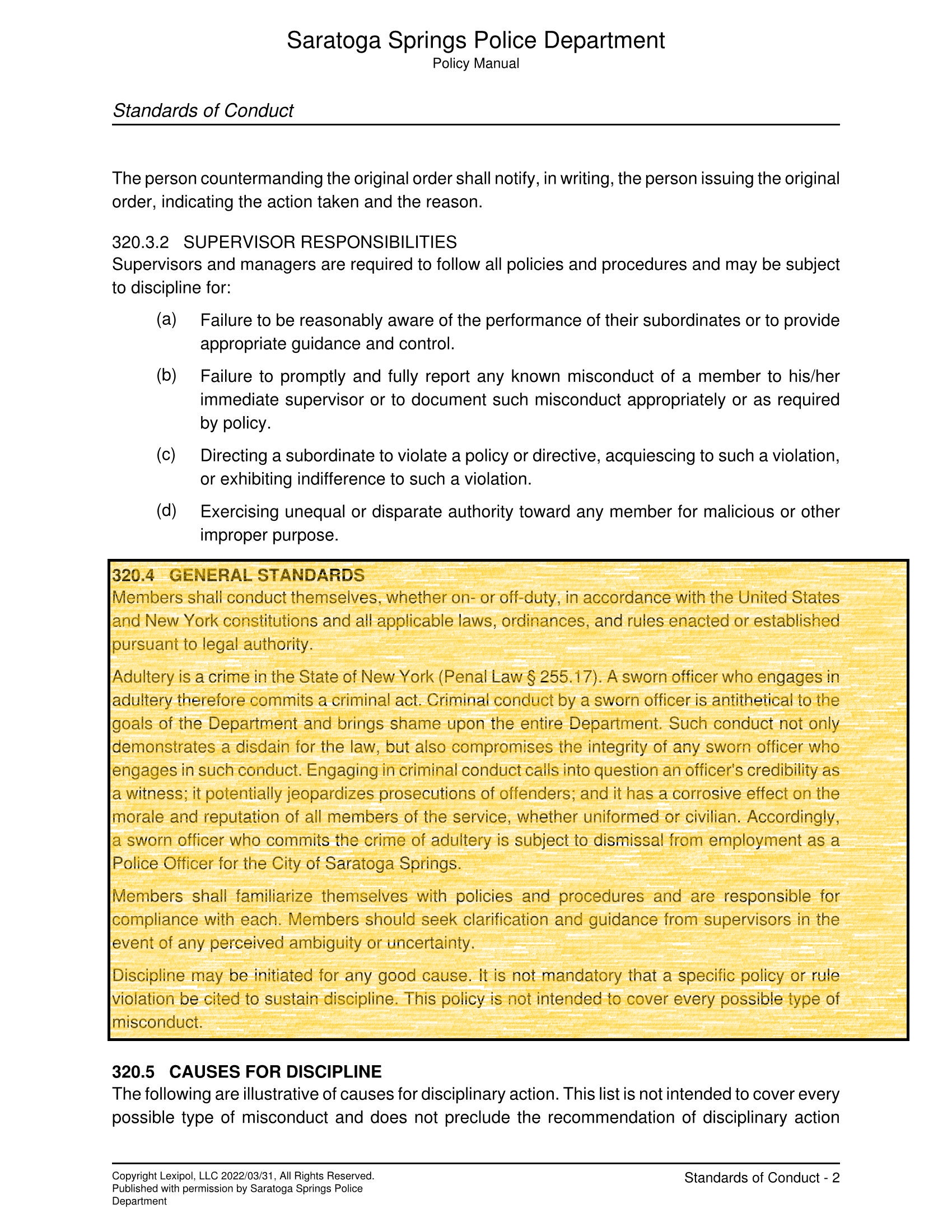
Saratoga Springs Public Safety Commissioner James Montagnino has unilaterally added a section to the “Saratoga Springs Police Standards of Conduct” that will make adultery a cause for the termination of an officer. The section that was added approximately a week ago without any notification or fanfare is highlighted below in yellow. It can be found on the city’s web page.
It is important to note that Commissioner Montagnino is not just referring to relationships that may occur at work between members of the department. His broad directive includes firing officers engaging in adulterous relationships between consenting adults occurring in officers’ private lives as well. Absent from the directive is how Montagnino will determine that an officer has committed this crime.
In operatic terms, Montagnino justifies his directive by asserting that a private act between consenting adults “…bring[s] shame upon the entire department.” Supposedly, “it jeopardizes prosecutions.” He imperiously asserts “it has a corrosive effect on the morale and reputation of all members of the service whether uniformed or civilian.”
About a dozen people have been charged with adultery since the early 1970s, most of them upstate. (Most of the charges were dismissed, or apparently were dropped after the defendants pleaded guilty to other charges.)
While no one is really at risk of being jailed for adultery, adultery still has tremendous significance in family law, said Alton L. Abramowitz, another divorce lawyer.
Adultery is one of three principal grounds for divorce in New York State…
New York Times March 21, 2008
As Commissioner Montagnino spent most of his career as a “referee” for divorces, it is not surprising that he is familiar with this law.
Federal Court Rules Firing For Adultery Is Unconstitutional
Commissioner Montagnino’s rash decision to introduce this addition to the Police Standards of Conduct seems to invite costly litigation for the city.
Some History
US courts have a long and storied history of being reluctant to allow the government to intrude into the bedrooms of its citizens. We have seen this especially in recent decades in cases pertaining to gay rights. The Supreme Court in Lawrence v Texas struck down a Texas law that criminalized homosexual intimate relations. The court held that “The petitioners are entitled to respect for their private lives. The State cannot demean their existence or control their destiny by making their private sexual conduct a crime. Their right to liberty under the Due Process Clause gives them the full right to engage in their conduct without intervention of the government. It is a promise of the Constitution that there is a realm of personal liberty which the government may not enter.”
Commissioner Montagnino’s call for severe sanctions for the private, consensual off-duty sexual conduct of police officers tramples on the same Constitutional rights that the Supreme Court sought to protect in the Lawrence case.
In addition, his statement that this behavior must be punished because it brings “shame on the entire department” is particularly troubling as it brings to mind the long history of victimization and stigmatization of women who engaged in unsanctioned sexual relationships. In its most extreme form this behavior, which was considered to bring “shame” on the woman’s family, resulted in horrific deaths by stoning and honor killings. I guess just losing your job for bringing shame on your department might be considered mild in comparison.
Groups such as UN Women have asserted that “penalization of adultery … leads to discrimination and violence against women.” However, as we already know, Mr. Montagnino’s record on these issues is questionable at best.
Some Questions
I find Montagnino’s adoption of this standard more than strange. It prompts me to ask four questions:
What prompted Commissioner Montagnino to adopt this standard?
How will he determine that a member of the police force is involved in an adulterous relationship?
His deputy, Jason Tetu, was a member of the Saratoga Springs Police Department before he became Commissioner Montagnino’s deputy. He is divorced and one of the issues that prompted the divorce was adultery. Would Mr. Tetu be subject to this standard?
Does Commissioner Montagnino have an officer in mind who this amendment will be used to target?
These are really rhetorical questions as Commissioner Montagnino never responds to my queries.
Saratoga Springs Public Safety Commissioner James Montagnino has inappropriately inserted himself into a criminal case. He has compromised an ongoing investigation by going to the press. He has taken action against the senior-most female officer in the Police Department in a move that could likely result in her termination as he gets to choose the hearing officer who will decide her fate. He has struck yet another blow against the morale of his department.
Background: The Precipitating Incident
The incident that precipitated the case that has led to all these actions by the Commissioner took place on February 28, 2022. This account of the incident is based on information from multiple reliable sources. Although none of my sources were present at the event, the information they gave me was consistent.
A teenage party involving underage drinking took place at a local home. One of the participants, a white kid, had a cell phone with a blue flag sticker that is the symbol for “back the police.” Another youth of darker skin who has been described to me as possibly of Iranian or maybe Algerian descent took exception to the sticker and accused the person with the phone of being a racist. He shoved the white kid with the phone who then shoved him back causing him to fall and hit his head on the counter behind him. It was alleged to me that the kid with the phone never struck the fallen person again. Two other boys are alleged to have struck the victim on the floor.
The issue of assessing guilt in this altercation is complicated by the problem of determining which blows caused which injuries. The chaos of these kinds of fights involving kids fueled by alcohol often leads to conflicting eye-witness accounts and adds to the difficulty of determining who is culpable for what.
The patrol officer who investigated the incident recommended that a charge of harassment be brought against the youth who knocked the boy down. He consulted his sergeant who agreed with the charge and recommended it to the lieutenant in charge of the investigation. The lieutenant is the highest-ranking female in the department. She agreed with the assessment but nevertheless kept the investigation open.
At some point in early March, the parents of the youth who was injured went to the police department to complain about the incident. They then went on to meet with Commissioner Montagnino.
Commissioner Montagnino Acts
On Thursday, March 31, 2022, Commissioner Montagnino summoned the lieutenant in charge of the investigation to his office. He instructed her to raise the charge against the youth from harassment, which is a violation, to assault, which is a criminal offense and a misdemeanor. My understanding is that it was a directive and not a consultation.
I am told that the Police Department policy is that a harassment charge is used when an incident does not involve serious injury. A black eye or a split lip under this definition would not rise to assault. A more serious injury such as a broken limb or a damaged eye would constitute an assault. Who instigated the fight is also factored into the decision on what charges to bring.
Numerous sources report that the lieutenant declined Montagnino’s order to change the charge and asserted that she reports to the Chief of Police and not to the Commissioner. I am told, but cannot verify, that she told Montagnino, “James, I do not report to you, I report to the chief” and that he responded by telling her that in the future she was to refer to him as the “Commissioner” and that she “F#ing works for him” and that she was being insubordinate.
Montagnino later summoned the lieutenant again to a meeting and this time told her that he was pursuing disciplinary action against her. She could resign or she could take administrative leave pending a hearing regarding charges of gross incompetence and insubordination which, if found to be true, could result in her termination. Montagnino gets to appoint the hearing officer who would hear the case.
For as long as anyone I know can remember, no Public Safety Commissioner has interfered in a criminal case being investigated by the police. As politicians who must run for election, Commissioners are very much subject to pressure from constituents. The last thing this city needs is a Public Safety Commissioner helping out donors, party bosses, or anyone else with an interest in the outcome of a criminal matter.
I have no idea what Commissioner Montagnino’s relationship is with the parents of the youth involved in the case of a drunken altercation at a teenage party. What I do know is that he should not have met with them to begin with, and most importantly, he should not have interfered with the ongoing investigation.
Violating these norms is an invitation to cronyism and corruption.
Montagnino Makes a Disturbing Public Relations Move
In an effort to get ahead of the story, Montagnino, as is his practice, contacted WYNT television (Channel 13) about the case. Montagnino has appeared frequently on WNYT. He was able to dominate two stories over two days on his criticism of the handling of this case.
As this is an ongoing investigation (as of this writing no one has been arrested and the investigation is continuing) it was shockingly inappropriate for Montagnino to be discussing this case publicly in the media. Normally, the standard protocol is to respond to inquiries by the media in a case like this by saying, “this is an ongoing investigation, and we cannot comment on it at this time.”
In addition, though, Montagnino went on to make a particularly disingenuous, reckless, and irresponsible statement suggesting race played a role in what charges the lieutenant decided to bring in the case.
“One of the aspects of the case that I find deeply troubling is that all of the other participants were White. The victim, himself was the only African American involved in the situation. I hope, I truly hope that racial animus played no part in the decision (to) not assess this as a crime,” said Montagnino. [technically harassment is a violation and a violation is not considered to be a “crime”]
WNYT April 1, 2022
While Montagnino did not name the officer who decided the charge, the word was already out about the action he had taken against his lieutenant. Raising the specter of racism allowed him to establish a narrative that would work in his favor and against the lieutenant. He qualified his ugly accusation to WNYT with the smarmy phrase “I truly hope that racial animus played no part…”
It is important to note that the lieutenant is a twenty-one-year veteran of the police force. She rose from patrol officer to Lieutenant during those years. I spoke to Chris Mathiesen who served two terms as the Commissioner of Public Safety. He was appalled to learn of Montagnino’s actions. He told me that during his tenure he promoted her to sergeant. He described her as an outstanding police officer whose record during his term was unblemished. Others have given her similar accolades.
The District Attorney
In the system of justice in New York State, it is the county District Attorney who prosecutes criminal cases, and it is the District Attorney in the end who decides what charge to pursue.
In that context, given the disparity between Montagnino’s assessment of the case and that of his lieutenant, I am told by several attorneys, that the prudent route for Montagnino to have taken would have been to discuss the case with the District Attorney.
Montagnino’s failure to engage the DA could be considered either an unfortunate oversite or a conscious strategy to avoid a contrary opinion. Either way, it speaks badly for him that he failed to consult the DA but instead went straight to the media.
Ignoring The Chain Of Command
I have no direct knowledge as to what if any consultation Montagnino had with Police Chief Shane Crooks before taking his action in bringing serious charges against the lieutenant. What is clear is that rather than working through the existing chain of command, he circumvented his police chief and for whatever reason chose to deal with the lieutenant directly.
The city charter gives the Public Safety Commissioner extremely broad authority. Technically, it was within his authority to bypass the police chief, but the implication is that he did not have confidence in his Police Chief to carry out a proper review.
Anyone with organizational experience would understand that this sends a message to Montagnino’s officers and the entire force that the Chief has lost his confidence (if the Chief ever enjoyed that confidence).
Organizationally, this was a very damaging management decision.
An Extremely Damaging Precedent
The city charter gives the Commissioner of Public Safety extremely broad powers of civilian control over the Police Department. It states that the Commissioner shall have “jurisdiction, supervision, and control of the governance, administration, disposition, operation, and discipline of the Police Department and its officers subject to section 6.1 of this charter.” [Title 6] Section 6.1 states that “the police department of the City of Saratoga Springs shall be under the general control and management of the Commissioner of Public Safety.”
While commissioners enjoy this kind of broad authority according to the charter, previous officeholders have refrained from interfering in criminal investigations.
If this is how Commissioner Montagnino is going to operate, he is going to be very busy meeting with people seeking to affect charges involving themselves or their family members or friends.
What I want in the Commissioner of Public Safety is someone who if approached about a particular criminal investigation tells the parties, “I am sorry, but it would be inappropriate for me to intercede in an investigation. If you have important information about an ongoing case I urge you to take it up with the officer overseeing the investigation.”
A History of Alleged Misogyny Plagues Montagnino
Montagnino’s interference in a case led by the highest-ranking female in the Saratoga Springs Police Department and the charges he has brought against her that could lead to her dismissal has reminded those who know his history of some unfortunate incidents in his past.
For a number of years, Montagnino served as a “special referee” in Westchester, New York overseeing divorce proceedings. He was the subject of a number of complaints by women over what they characterized as his bias against them.
A story that appeared in the New York Post (not my favorite newspaper), seemed to add credence to their claim. Referring to women seeking divorce settlements he gave students the following advice.
At a 2004 Pace Law School lecture, Montagnino warned lawyers to “beware of the 10583 Syndrome,” a reference to posh Scarsdale’s ZIP code.
“The 10583 mentality . . . says that ‘I’m entitled and I ought to be able to get the house, I ought to be able to get support . . . I ought to be able to live with my son’s drum instructor happily ever after and it all should be on his dime,’ ” he (Montagnino) said.
Saratoga Springs Public Safety Commissioner James Montagnino has been hit with a one-two punch that appears to have crushed his proposal to establish a security cordon around the Caroline Street bar district.
In mid-March Montagnino went to the media to tout what he called an “out-of-the-box idea to keep the city’s entertainment district safer.” His idea was to block off Caroline Street and institute security checks similar to those used at SPAC. This would involve using metal detectors and having private security guards waning and checking IDs of anyone wishing to enter the street. He told WRGB “This could turn the entire area into a major event every week end” and make Caroline Street a “mini-SPAC”. He was not specific as to where exactly these checkpoints would be set up given the many access points to Caroline Street.
Montagnino credited Mayor Ron Kim with originating the idea. Kim told Gazette reporter Brian Lee (3/20/22) that he was aware that some thought the security checks on a public street would be a violation of the Constitution’s 4th amendment which protects citizens from unreasonable search and seizure. “It’s not because, basically, if you don’t want to be searched, you don’t want to be ID’d, you just don’t come to that area of the town during a certain time period,” he said. Not great advice to give to those who live in apartments on this part of Caroline Street. Needless to say, not everyone agrees with Mayor Kim’s legal theory either. According to the Gazette editorial cited below, the American Civil Liberties Union, for instance, has successfully gone to court to protect access to public streets.
1.The Daily Gazette Editorial
In a scathing editorial, the Daily Gazette sliced and diced Montagnino and Mayor Ron Kim for the security proposal.
If treating customers and residents like potential airline hijackers, terrorists and bank robbers is the best plan Saratoga Springs officials can come up with for dealing with Caroline Street’s party scene, then the city either needs a better plan or it needs public officials with better ideas.
Gazette March 27, 2022
2.Commissioner Montagnino’s Head-on Collision with Caroline Street Bar Owners
Promoting his proposal, Montagnino told Channel 6 News on March 14 that his idea had the support of the Caroline Street bar owners.
At a meeting on March 22, 2022, Montagnino got a different message from the bar owners, however. They told him they unanimously opposed his plan.
The meeting, requested by the owners of nine of the twelve Caroline Street bars, was attended by Public Safety Commissioner James Montagnino, his deputy Jason Tetu, Accounts Department Deputy Stacey Collins, and Deputy Mayor Angela Rella. Conspicuously absent from the meeting was the city’s Chief of Police. This is unfortunately consistent with Commissioner Montagnino’s pattern of marginalizing not only the head of the Police Department but pretty much all his “sworn” officers.
I spoke at length with one of the bar owners who attended the meeting about what had transpired. According to my source, Montagnino had little to say at the meeting. Responding to questions from the bar owners, he said he was there to listen.
In the face of the bar owners’ opposition to his Caroline Street proposal, Montagnino, in an embarrassing moment playing the victim, backed off from his proposal and blamed the media for hyping the idea as if he had had no role in promoting the publicity.
Is Gaffney’s the Main Problem on Caroline Street?
The person I spoke with said that he had operated his bar on Caroline Street for some ten years. He told me that the culture had changed and that there had been more violence on the street during the last three years than in all the previous seven.
According to my source, while there are from time to time incidents in other establishments, the bar owners unanimously saw Gaffney’s as the major and most frequent source of violence.
He told me about a meeting held in August of last year that brought together a representative from the New York State Liquor Authority with the bar owners, the Sheriff’s Department, the Saratoga Springs Police Department, and the State Police along with representatives from the City Council. Conspicuously absent from the meeting were any representatives from Gaffney’s.
Gaffney’s is owned by Justin Manfro whose primary residence is in Westchester.
Manfro is not only one of the owners of Gaffneys but of Max London’s Restaurant, and Mrs. London’s Bakery.
Interestingly, WRGB (Channel 6) news in a story on the meeting, reported that for three weeks they have been trying to reach Manfro including visiting his attorney’s office without success.
The bar owner with whom I spoke argued that Gaffney’s fails to act pro-actively to minimize the potential for conflict. He listed for me a variety of techniques that bars use to control the “temperature” in their venues. He asserted that Gaffney’s does none of this.
According to him, Gaffney’s has been the subject of an investigation by the New York State Liquor Authority regarding nine violations during the last year. I have been told that six confirmed violations in a year can result in a revoked liquor license.
My source said that none of the participants wants to see the shutdown of any business.
It would be very helpful to have a conversation with Commissioner Montagnino about all of this but as he does not respond to my emails seeking the most basic information, it seems out of the question that he would be willing to meet with me.
[JK: This post has been corrected on March 25, 2022. The lieutenant that was demoted to sergeant was not a woman]
At the March 15, 2022, City Council meeting, Saratoga Springs Public Safety Commissioner James Montagnino announced, without prior notice to the public or the Police Department, that he was eliminating the Assistant Police Chief position, setting off a string of demotions within the department.
Montagnino successfully sold his narrative to the media that these moves were designed to put more police on patrol to address recent violent episodes on Caroline Street and to eliminate excessive bureaucracy and duplication of duties. A closer look at the Commissioner’s recent moves, however, reveals a very different story.
A Little History
Last December, then Public Safety Commissioner Robin Dalton promoted Lieutenant Robert Jillson to Assistant Chief of Police. Montagnino went to the media to accuse Dalton of illegally pre-empting his authority to fill the position. The story had an unusually long life as the two exchanged arguments through the media over the promotion. Eventually, Montagnino was forced to concede that it had been legally done, and he would have to accept it.
Well, he might have accepted it then, but as we now know, he was not done with Lieutenant Jillson.
Montagnino’s Cynical Revenge
While Montagnino likes to continually tout his commitment to transparency, his manipulative and dishonest use of his authority was on display at the March 15, 2022, Council meeting.
Montagnino had put the following item on his agenda for the Council meeting: “Discussion and Vote: Patrol Division Increase Initiative – Phase 1.” Conspicuously absent from this bland-sounding agenda item was a link to the actual resolution which would abolish Jillson’s position and lead to the demotion of other officers.
This was a flagrant violation of the New York State Open Meetings Law. Governor Hochul signed two pieces of legislation last October requiring that any resolution to be considered by a public body must be posted at least twenty-four hours prior to the meeting. Commissioner Montagnino, who is an attorney and who is never shy about reminding the public of his status and of his expertise in all things legal, would do well to remind himself of his need to adhere to the Open Meetings Law.
Montagnino’s failure to post on the city’s website the resolution he was bringing forward for a vote was no inadvertent error. Given Commissioner Montagnino’s continual self-promotion in the media, especially in the Times Union, his newfound shyness was out of character. Montagnino knew exactly what he was doing. He was hiding his plan. He had been on the job for only two and a half months, but according to multiple sources, he went ahead with this plan to reorganize the Police Department without first consulting the Chief of Police or any other members of the city’s sworn officers regarding his planned demotions. A manager acting professionally would have first asked for feedback from his staff as to any problems such a major initiative might precipitate that they had not anticipated. Why would Montagnino take such an impactful action after less than three months on the job without consulting at least his Chief of Police?
There is also the essential and fundamental element of trust. Even in the case of an unpopular initiative, basic respect and courtesy would require a manager to communicate directly with those their decision will affect. Failure to do so creates an atmosphere of fear and undermines morale. Employees will continue to worry over what “the boss” will do next.
It tells you a great deal about Montagnino’s character that aside from being a very bad manager, he had neither the courage nor the integrity to face Jillson and the other officers. Jillson and the others who were demoted would have to learn their fate from a City Council meeting.
All of this reminds me of the television comedy, “The Office” about an office managed by a clueless executive played by Steve Carroll. The only difference is that while the character played by Carroll was inept, he was not vindictive.
If nothing else, Montagnino is a savvy media player. Montagnino wanted to make sure that he would have the stage all to himself. With Commissioner Scirocco’s absence, he knew he could rely on his compliant fellow Council members not to raise questions. He did not want anyone, though, to refute any of the dubious arguments he was making so the media would provide him with the publicity he was seeking to promote his narrative unchallenged. All of this, according to Montagnino was supposedly about putting more police on patrol and the last thing he wanted was an aroused public challenging his assertions at the meeting.
Lieutenant Jillson is popular with the men and women in his department. Jillson’s demotion will have a cascade effect. He will go back to his position as Lieutenant. A lieutenant will be demoted back to sergeant. A sergeant will go back to patrolman. Montagnino knew the effect eliminating the position would have on morale in the Police Department, but he clearly did not care.
These demotions were tough enough, but the underhanded way it was done only further poisoned the atmosphere in the department. If Montagnino wanted the people he is supposed to lead to distrust and fear him rather than admire and respect him, he was successful.
Exposing Montagnino’s Misrepresentations: Duplication? Shame On You, Commissioner
In explaining his reorganization plan, Montagnino claimed that he was eliminating duplication in the Police Department. He specifically referred to the positions of Chief and Assistant Chief as duplicative and wasteful. I was struck by the fact that he didn’t even attempt to create the façade of seeking out all of the facts. By all reports, he never spoke to either Chief Crooks or Lieutenant Jillson about what they did each day. It is important to remember that Montagnino has been in office less than three months and by all accounts has spent little if any time actually talking with staff and learning how the department works. According to his own public statements, he based his decision entirely on a reading (misreading?) of the two positions’ job descriptions.
The management structure of the police is extremely lean. In 2014 under Public Safety Commissioner Chris Mathiesen, the management team was reorganized. The position of captain was eliminated. The command structure became simply the Chief of Police and the Assistant Chief of Police. There was no administrative staff. No secretary. No clerk. The Chief and his Assistant, beyond their roles of running the department, were responsible for taking calls, typing reports, filing documents, etc.
It is absolutely true that the job descriptions of the two men include many of the same duties. As noted, the Chief of Police has no administrative support other than the Assistant Chief. Of course, they share many tasks. They run the department together. What makes all this so ugly is that James Montagnino knows this. To use the duplication argument exposes his cynicism and his contempt for the public and the Police Department
So now Chief Crooks must manage the entire department with no support staff and no assistant.
Montagnino has made it very clear that he wants to draw leadership staff from outside the department. I do not think that it is at all far-fetched to speculate that he knows what an impossible position he has put Chief Crooks in and that part of his agenda is getting rid of the chief.
Montagnino also asserted that forty percent of the force “never leaves the office.” I have spoken to numerous people at the department and they are at a loss as to how he arrived at this number. I wrote to Montagnino asking how he arrived at that number but, not surprisingly, he has not responded. I submit that he grossly overstated this and being unable to defend his claim, silence is his strategy.
How About Taking on the Real Issue?
The department currently has eight vacancies in its patrol staff. Another seven are at the training academy and will not be able to operate fully as officers until November. If history is a guide, there is a good possibility that once they learn what life is like as a police officer, particularly these days in Saratoga Springs, some of them will resign and seek other employment.
If Montagnino wants to get more boots on the ground, what he really needs to do is to come up with a plan to attract and retain well-qualified staff.
It is important to remember that this string of demotions has come on the heels of Montagnino’s attempt to break the police contract by getting rid of the 12-hour shifts the PBA had spent months negotiating for. What he has managed to do during his less than three months in office is discourage people from joining our police department by getting the word out that it is a hostile environment to work in.
How To Insult Your Staff
At the same March 15, 2022, City Council meeting, Commissioner Montagnino managed to further insult his staff.
Included in his agenda was the purchase of three police vehicles.
In this video clip, Montagnino explains why he had put off the awarding bids on the cars explaining:
“I wanted to investigate to confirm in fact these purchases were properly bid out and I can state for the record there is a statewide program…” he goes on to describe how he confirmed it was done properly.
Now, I guess there is something to be said for a commissioner who is so rigorous that he personally reviews all the purchases made by his department. The problem is that if you worked for him handling the bid, he has announced to the public that he did not have confidence that you had done it properly. It was entirely unnecessary and gratuitous of him to present himself as the rigorous manager at the expense of his staff. He could have simply just asked for approval of the bid.
His alleged thoroughness was particularly pretentious because the entire bidding process was done through the state which clearly he didn’t know.
The fact is, the reason he did this was to create the appearance that he is a hands-on manager steeped in the ongoing operation of his department. Again, this shameless pretense is belied by the fact that he comes into the Public Safety office infrequently, and when he does, he hardly ever talks to any of his staff.
Montagnino: Out Of Touch With The People He Is Supposed To Lead
What is important to understand about Public Safety Commissioner James Montagnino is that he is out of touch with the men and women he is supposed to lead. He is rarely at thedepartment and when he is, he has almost no contact with the staff and that includes his top officers. His staff is the last to learn about his heavy-handed initiatives.
Commissioner Montagnino is an example of what I call the “Smartest Person in the Room Syndrome.” This is a person so taken with their own brilliance and with their own voice that they have little room for anyone else’s insights. In the case of Montagnino, he is legitimately smart, poised, and articulate enough that he can burn brightly with success for a while. Still, that kind of narcissistic deafness will eventually require that he pay a price for his failure to listen. Unfortunately, the cost of his arrogance will be shared by the police department, the fire department, and the people of Saratoga Springs.






 Saratoga Springs Politics