[JK: I received this email from Ed Lindner regarding Bikeatoga festivities this month. Sounds like fun!]
Bikeatoga is thrilled to be partnering with the Saratoga Regional YMCA on the first annual Saratoga FoliageRide this October 7th and 8th! Check out the video!!
Want to help? You can share our FB post! Want to volunteer? You can sign up here.
Want to ride! Please sign up!. And invite those out of town friends you like to cycle with (if you don’t want them staying in your house, check out our partner hotels!).
It’s going to be a great cycling weekend! This is a ride, not a race and foliage should be at or near peak.
Start your morning with a hearty and healthy buffet breakfast catered by 9 Miles East. Here’s the menu! Ride at your own pace on one of three routes each day – 30, 50, and 75 miles – with full SAG support.
Saturday’s rides will celebrate the 246thanniversary of the Battle of Saratoga. Ride the back roads through the fields where American forces first defeated the British army. And don’t be surprised if you hear muskets and cannon fire. Re-enactors portraying Continental soldiers and British Redcoats will be in the Saratoga National Historical Park that day!
Sunday’s rides will follow beautiful routes through fields, farmlands and gorgeous Fall foliage.
After the ride, relax, shop and dine in downtownSaratoga Springs. All participants will get a commemorative t-shirt and a day pass to the Saratoga YMCA facility – unwind with a swim, sauna, HydroMassage (addt’l fee) or afternoon yoga class after the ride!
Saratoga Springs Mayor Ron Kim routinely acts impulsively, often not checking the facts before speaking. This post gives examples of two recent incidents of Ron Kim’s continuing intemperate behavior.
Mayor Kim’s Abusive Telephone Call
Following Mayor Kim’s notorious, well-publicized, epithet-laden rant at Public Safety Commissioner James Montagnino in May in city hall, the Mayor followed up with a phone call to Montagnino and continued his abusive language. Montagnino recorded the conversation. Mike Brandi, city Republican chair, successfully FOILed for it. Here is the recording of the conversation.
Warning to readers: this audio contains foul language.
Kim told the media that Montagnino violated city regulations by recording their conversation.
Neither Kim nor the media cited what regulation may have been violated. I searched the city’s website and could find no such regulation.
Recently, a citizen named Sam Brewer wrote to Mayor Kim asserting that it had been illegal for the city to have released the applications from people seeking the job that were posted on this blog.
Kim responded to Brewer by falsely declaring that the city never released this information in response to a FOIL request and that he had initiated an investigation as to “how and why these were released to a party outside of city hall.”
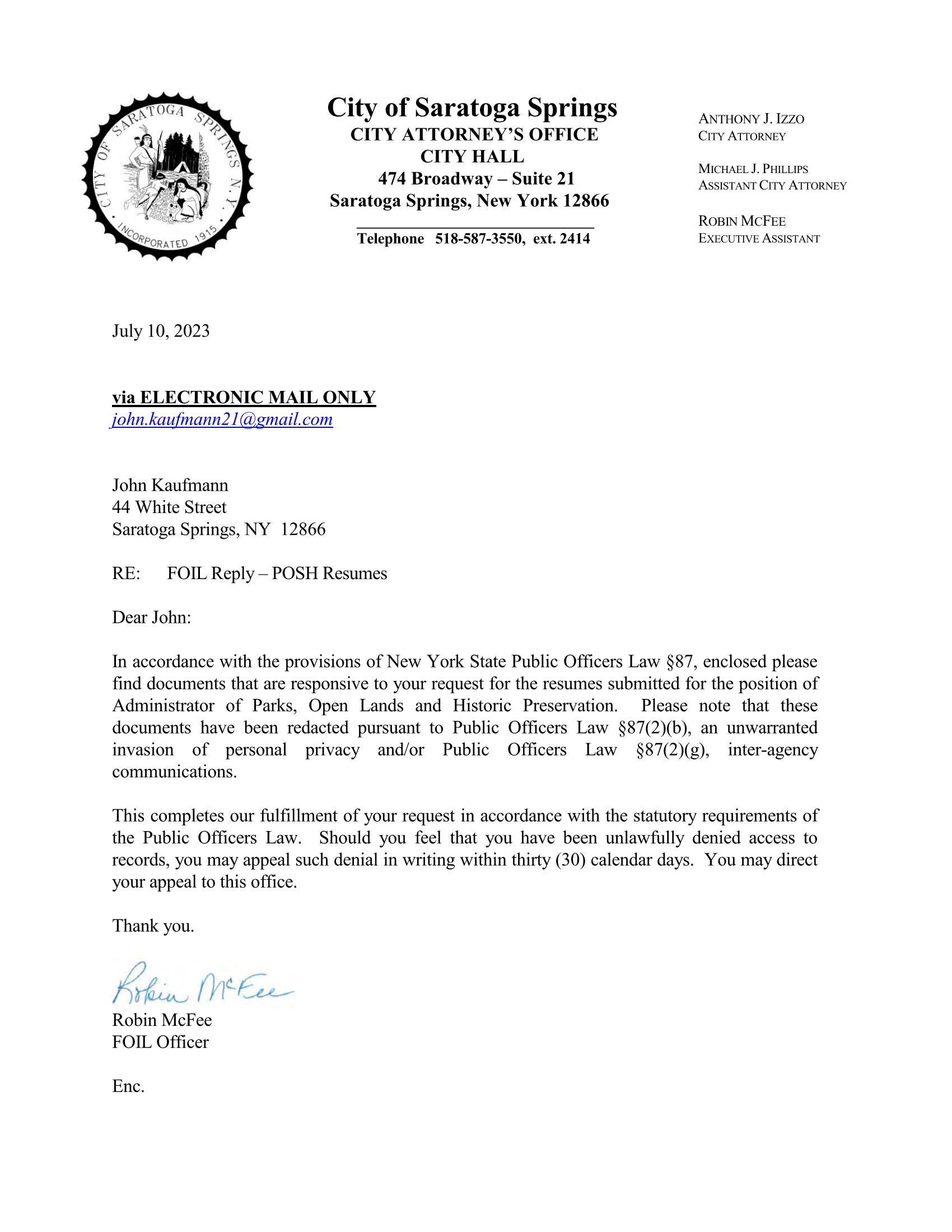
The problem is that it is a simple, easily verifiable fact that he is wrong when he claims the city did not release the documents to me through a FOIL request.
The following is the cover letter releasing the documents to me per FOIL.
One would think that the appropriate thing to have done in response to Mr. Brewer’s letter would have been for Kim to first determine if the city had indeed provided the documents under FOIL. The office that handles FOIL requests reports to Kim. He could easily have called the office to check before he replied to Brewer. He also could have checked my post because the post contained a link to the entire FOIL correspondence.
Regrettably, his assertion is part of an established pattern. Mayor Kim routinely acts impulsively rather than taking the time to check the public record. This reckless behavior is deeply worrisome. One has to wonder what ill advised actions with serious consequences he has carried out without the benefit of the facts.
The City did not release these resumes pursuant to a FOIL request and is currently reviewing how and why they were released to a party outside City Hall.
Ron Kim, Mayor
City Hall, 474 Broadway, Saratoga Springs, NY 12866
On Sep 10, 2023, at 9:47 AM, Sam Brewer <*****@outlook.com> wrote:
CAUTION: This email originated outside of the City network. Please contact IT Support if you need assistance determining if it’s a threat before opening attachments or clicking any links.
Council,
I hope you have enjoyed the summer. I monitor the local news and I noticed a post on the blog of John Kaufman whereby he specifically criticized an applicant and posted the resumes of applicants to a civil service position within the City.
I was shocked to see that the city released individual resumes with its response to a FOIL request.
Specifically, personnel files are normally excluded from FOIL requests as the public does not have the right to know certain information. A resume becomes part of an HR file once someone is hired; I think this would be covered under any FOIL exclusions. It is certainly covered by the Privacy Act of 1974, which should be applied via an interpretation of the Supremacy Clause of the Constitution even if not explicit in NYS Municipal or other law.
In any case, no one has the right to interfere with a hiring process for a specific position or person in this way and I hope the city takes action to revise its policy associated with data release in relation to FOIL. While he may publicly criticize the Mayor, having the public evaluate resumes is a gross intrusion on personal privacy and the actual hiring process.
In addition, publishing information about Ms. Munger and her past career experiences may put her at risk. She may not be required or allowed to list details of certain career experiences, and people like Mr. Kaufman may actually target individuals like her because she is on a list maintained by a group that likes to keep people like her out of government and out of work.
[JK: Full disclosure: my wife, Jane Weihe, is Tim Coll’s campaign manager]
The Fiasco
In a grim reminder of the general degradation of politics and of civility, a group from Albany, Project Salam, held an event on September 20 at Caffe Lena as part of Peace Week in which they ignored the principles of basic fairness to try to trash Tim Coll’s campaign for Saratoga Springs Public Safety Commissioner. Their focus was on his involvement in the prosecution of two men in Albany some twenty years ago in relation to a terrorism case. At a press conference the previous week announcing the endorsement by Ron Kim and three current City Council members for her campaign for Public Safety Commissioner, Kristen Dart promoted this same narrative.
Peace Week
Saratoga Springs Peace Week is a laudable project meant to encourage a world free of violence and mayhem. The group has been steadfastly organizing its events for a number of years now. They sponsor different events in a variety of venues around the city.
This year, a group of activists cynically hijacked the project.
Their event was advertised as a showing of an hour and a half long film titled “Witness,” along with a panel.
“Witness” is a documentary that alleges that two innocent men were entrapped by the FBI and sentenced to fifteen years each related to a plot to buy a stinger missile to be used in an attack in New York City. The panel was comprised of five people, all of whom supported the narrative of the film.
The law enforcement team that carried out the investigation was led by Tim Coll. Mr. Coll is now retired from the FBI and is currently running for Commissioner of Public Safety. The film presents Mr. Coll and his fellow agents, the US Attorney’s office, and federal District and Appellate judges as villains who cruelly targeted two ordinary citizens simply living their lives in Albany twenty years ago. According to the film, the FBI manipulated Yassin Aref and Mohammed Hossain, using an informant, into committing criminal acts.
In the September 19, 2023, edition of the Times Union, one of the attorneys who participated in the men’s legal defense, told the paper,
“For people in Saratoga, we thought it would be good for them to know more about (Coll),” Aref attorney Kathy Manley said. “He was the main player for the FBI in this case. He was the handler of Shahed Hussain. He testified three times at trial. He was the main witness for the prosecution. … Tim Coll was very instrumental in this case.”
In spite of Mr. Coll being the focus of this program, he was never notified about the proposed event.
Coll Asks For Fairness
Mr. Coll called Ms. Manley and asked that he be allowed to present his side of the story. Ms. Manley at first refused and then subsequently told Coll that he would be allowed “three to five minutes.”
The terms of Mr. Coll’s appearance changed repeatedly. The right to “three to five minutes” became no longer a right as he was told that he would have to line up in the public comment period after the film and the five people on the panel had spoken. He could speak only if there were time.
A Regrettable Display of Abuse
The program took place at Caffé Lena.
Sarah Craig has been the manager of Caffé Lena for many years. Sarah has done a wonderful job carrying on Lena’s legacy, and the city is much indebted to Ms. Craig for her dedicated service to this important venue.
In a clear attempt to address the problems of fairness in the event, Craig made some introductory remarks. She told the audience that anyone who would like to respond to the film would be provided with time to do so.
I assume that Ms. Craig established this principle with the Salam Project sometime prior to the event. Such promises were clearly disregarded by the panel.
It did not portend well when, during his introductory remarks about the film, Masood Haque, the filmmaker, told the audience that the purpose of the evening’s event was not “for someone to come here and repair his reputation,” a not too subtle reference to Tim Coll.
It was all the more disheartening when someone from the panel then announced that there would be no comments allowed from the audience, only questions.
It Got Uglier
Following the film and a half hour of comments from the panel, the floor was opened up to the audience. Coll was the first member of the audience to be at the public microphone. He was almost immediately interrupted by Mr. Haque, the filmmaker, who instructed him to dispense with his remarks and “ask the question.” Coll tried to continue, but Mr. Haque in particular, and others on both the panel and in the audience aggressively interrupted him. Someone on the panel scolded him, telling Coll that other people wanted to speak. At some point a voice (I think it may have been Ms. Manley) told him he would be allowed two more minutes. Through the noise and chaos, Coll noted that the judge had instructed the jury that the FBI had a valid reason to target Yassin Aref. He asked Ms. Manley, “Didn’t the defense agree to the judge’s statement?” She responded that “we had no choice.” Coll attempted to answer back but was shouted down. He told me that he was going to point out to her that the defense did not have to agree to this, but if they did not, then the court would have brought in witnesses from Iraq with documents showing the interaction between Aref and terrorists in Iraq. Coll noted to me that the defense agreed to the stipulation because it would have been worse if the jurors had heard the soldiers testify about the damaging documents.
Coll was never able to say all this because, at that point, members of the panel and audience began shouting at him. They yelled that he was hijacking the event, etc. Coll was unable to continue and sat down. In a shameless demonstration regarding the bias and animus of the panel, subsequent speakers (all of whom were supportive of the perspective of the film and the panelists)were allowed to address the panel and make comments or ask questions without interruption or time limits.
According to Kathy Manley, Coll spoke for a total of three minutes and 8 seconds while being frequently interrupted.
Here’ s a recording of his attempt to speak.
Craig Offers an Apology
To her credit, following the meeting, Sarah Craig, the manager of Caffé Lena, sought out Tim and apologized for what happened.
In Defense of the Sponsors
Both Caffé Lena and the leadership of Saratoga Peace Week are really victims of this disgraceful business. Their good hearts and naiveté assumed that people interested in pursuing peace would behave with civility and fairness. Unfortunately, they were wrong.
For Better or Worse
Readers may not know that I see myself as a person of the left. The left, like the right and like other social movements, is not homogenous. I am not the arbiter of who can claim to be of the left. I can only express my own personal views.
I believe that our methods shape our outcomes. A better future requires us to act with fairness, compassion, and integrity. If our arguments are strong, we should have no fear in debating those who disagree with us. In fact, none of us are infallible, and healthy engagement keeps us from adopting self-serving blinders.
I fully support the goals of Peace Week, but I hope this debacle will result in a reassessment to avoid another incident like this in the future. There should be standards of fairness established and required by all. People interested in organizing events should be required to submit applications describing what the event will address and affirming a commitment to fairness and civility.
At a press conference at which four members of the current City Council endorsed Kristen Dart in the race for Saratoga Springs Public Safety Commissioner, Ms. Dart attacked one of her opponents, Tim Coll. In her most unfortunate accusation, she quoted a judge regarding the prosecution of four men convicted of terrorism. The judge slammed the investigators and prosecutors for entrapping the men.
Regrettably, Ms. Dart failed to mention that Mr. Coll had no role in that case. He did head a different investigation of two men in Albany who were convicted of terrorism, and that conviction was unanimously reaffirmed in an appeal to the Federal Second Circuit Court of Appeals.
I received the following press release from Mary Beth Delarm. I previously covered her appearance before the Saratoga Springs City Council when she thoughtfully expressed her disappointment with the way Council meetings were being conducted.
Ms. Delarm was a Red Cross volunteer on 9/11 at the Twin Towers following the collapse of the buildings.
As she explains below, she served on the committee organizing this year’s 9/11 memorial event in the city assisting in planning the program which is set for tomorrow (this is being written on September 10, 2023). Apparently, Mayor Kim did not forget her remarks to the Council, however. The Mayor participated in a live meeting via zoom of the 9/11 committee and stripped her of her role on the committee and from participating in the program where she was scheduled to speak.
“Cruel politics overshadows 9/11responders
After misleading Red Cross volunteer Mary Beth Delarm who donated countless weeks tending to other responders following the World Trade Center 9/11 attacks at Ground Zero, Saratoga Mayor Kim kicks her from the 911 commemorative ceremony, dissing her 911 response role as mediocre.
Kim’s latest power move came after requesting Delarm donate two weeks to helping Saratoga plan the remembrance program, gather speakers and to speak about her own 911 experience. Delarm said “ The mayor blindsided me at a final 9/1 recorded 911 committee zoom meeting saying “no one wants to hear another responder’s story as Red Cross volunteers weren’t really official /important responders”. Delarm said “He didn’t just stun me. His words shocked everyone, particularly the core of every volunteer responder on earth.” “You couldn’t hear a pin drop, except for my sobbing hearing such hurtful remarks.” She tried to reply, but Kim firmly said “his decision is final!”
Evidently Kim was retaliating, Delarm said. The mayor pointed to an August 15 City Council meeting public comment where she requested “ during the city’s 9/11ceremony, the city should focus on responders and respect for those who are lost, not politicians”. Mary Beth also requested “the city get back to business and focus on respect for fellow citizens concerns, rather than free-for-all disruptions that have been occupying government efficiency for almost a year.“ (reflecting similar concerns June 20).
Delarm and other community responders reeling from the mayor’s comments, encouraged her to respond to Kim at the last City Council meeting September 7. But during open public comment, as Delarm walked to the mic, Kim prevented her from speaking, yet allowed another uncontrollable outburst from BLM activists.
Delarm’s response she planned on submitting to Mayor Kim follows:
“Mayor Kim, please tell the Public and myself,
1) What has my past public comments on decorum in City events and meetings to do with me as a World Trade Center responder sharing my personal Ground Zero experience on a day to honor responders and remember those who have died?
2) “Why did you invite me to help organize and speak at a 911 event you don’t believe respects and honors ALL in our all inclusive city?
“That I’m ‘just another responder’s story and some responders are not as important as others’ is heartless and immoral. Your disrespectful behavior is precisely what our City Hall leaders should not be displaying.”
“You’re implying ‘Red Cross as UN-important responders with the same old story’ is just wrong. Red Cross continues disaster response in unsafe areas across half the nation right now as the main organized charitable volunteer group without pay. All responders reach into our hearts because we want to help others. Our common bond is kindness qualified with heartfelt support to others from around the world. No matter belief, gender or faith, we insure respect for all!”
“No responder is mediocre. We all bring a willingness to serve. Red Cross and thousands of other responders sacrificed time away from family on 911. No matter our title or capacity: WE all shared different emotional experiences which got us through to the next dawn. We all breathed the same toxic air, suffered massive health repercussions and we all have the 911 cough if even blessed to still be alive. Whether they wore a helmet or not, one could not sustain work without Red Cross volunteers day and night caring for everyone as they left cindered piles covered in debris.”
“On 911, the most important thing is to commemorate each and every responder who proudly served in NYC, and keep your petty politics out of it. And especially not forget the courageous who rushed to help in an unsafe environment where people jumped from skyscrapers, because that was their best out.”
“It is attitudes like yours that fail to recognize and appreciate all responders and veterans, forgotten except one day a year, that causes many to commit suicide. 9/11 Responders and those who helped unofficially as volunteers are still dying every day as a result of their fearlessness. Forgetting us and those aging out of the 911 era cheats people and their families who may not be here next year to memorialize the experience. It turns an emotional event many are proud to have served to betrayal and disrespect. The exact things which caused 911.”
“You may try to rob or censor my freedom of speech (as you indicated in your follow-up email), but you will not steal my memories. DESPITE your dishonor and hurt to all who risked their lives, my mission to represent the many people and their families who struggled alongside me in the ashes of 911 will never wane.
“I encourage you & your Commissioners to put aside your negative politics and biases and demonstrate a new generation of kindness, respect & humility to everyone, as all responders did during 911.”
Mary Beth Delarm
Sept 7, 2023 (City Council Planned speech)
Since 911 Mary Beth continues to represent the Red Cross in volunteer response to disasters locally and nationally with mass relief efforts feeding, sheltering, mobil ERV emergency needs, disaster assessment, pet sheltering and services to Armed Forces. She is currently on call down for hurricane Lee as it barrels up the coast if the response need arises.
Mary Beth also volunteers in many other capacities donating her time and resources to charities such as veterans organizations, pet shelters, Saratoga friends bookshop and as a health patient advocate for seniors and vulnerable. While wearing any hat serving another, Mary Beth says the most important thing is respect.
On August 13, 2023, people gathered in front of the Saratoga Springs downtown Post Office with, as reported by the Times Union, “messages of tolerance and vociferous support for people of color, the LGBTQ community as well as Muslims, Jews, and other targets of the extreme right.” The rally was prompted by a brief appearance downtown on August 5 by a group who identified themselves as the Proud Boys.
One might ask, who would condemn a peaceful and earnest crowd calling for tolerance?
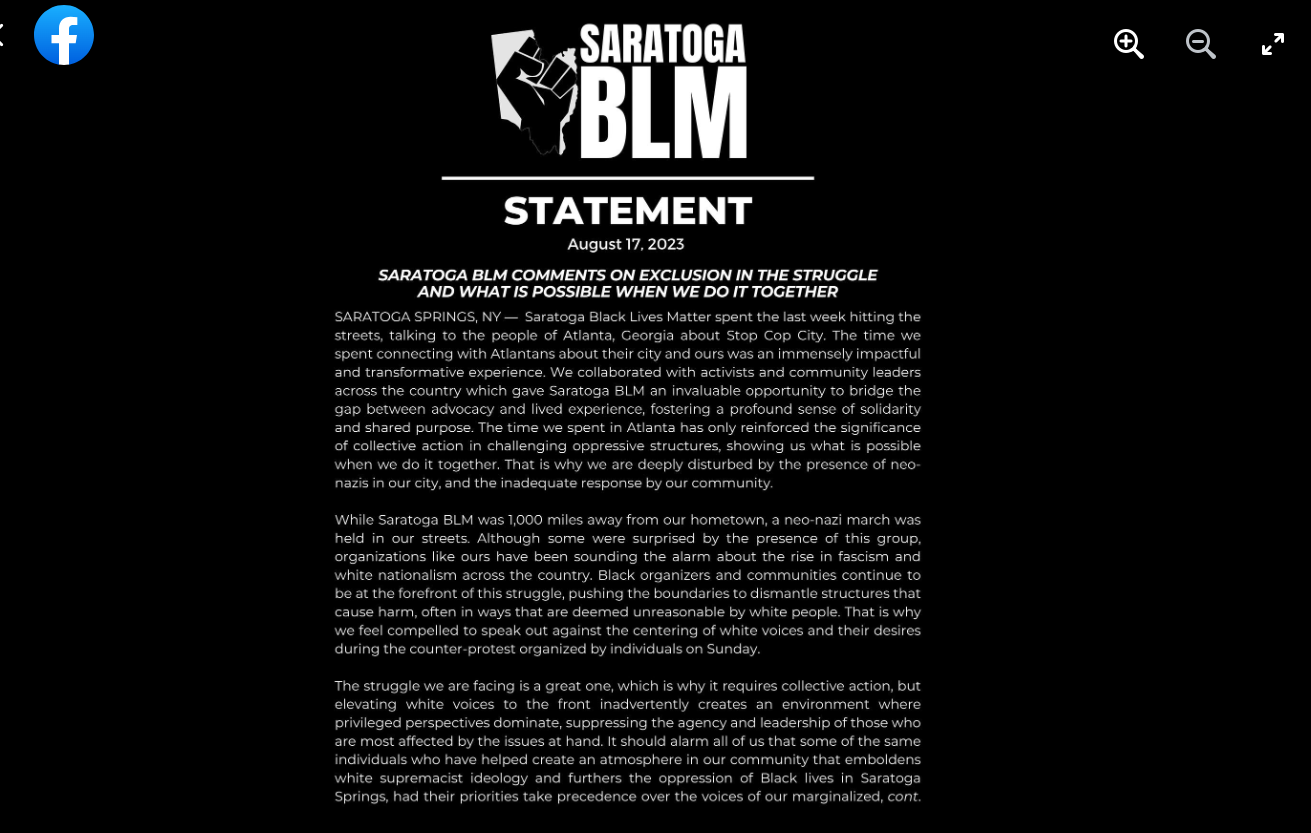
Oddly, the answer is the local group that identifies itself as Saratoga Black Lives Matter. In a lengthy and densely worded manifesto posted on their facebook page the group states:
“…we feel compelled to speak out against the….counter protest organized by individuals on Sunday.”
[The entire BLM statement appears at the end of this post.]
BLM Objects to Organizer’s Call for Civility
Apparently one of the major objections BLM had to the rally organized by Linda LeTendre, a white woman, was the list of ground rules she announced for the event.
According to the Times Union
“The group Sunday was peaceful and the proceedings began with a list of ground rules read aloud by the organizer, Linda LeTendre. Attendees were not to vandalize, use profanity, make threats of or engage in any physical violence.”
Times Union August 13, 2023
In response, BLM’s Statement called these ground rules “counterproductive andunjust“. They wrote on their facebook page:
“Setting rules for participants to be ‘respectful’ and ‘friendly’ to law enforcement during a protest…is deeply problematic.”
According to BLM Ms. LeTendre’s ground rules constituted “tone policing”. By tone policing they apparently mean, requiring participants to speak civilly to each other and the community and eschewing intemperate foul language and making threats. They wrote:
“Saratoga BLM understands that there is a clear divide between the strategies and goals of Black Liberation organizations versus many white social justice groups, however the language used when organizing this counter-rally was both counterproductive and unjust. Tone policing Black activists dismisses the deeply rooted emotions and righteous anger that arise from generations of systemic racism and oppression. Suppressing the raw and unfiltered expression of these feelings undermines the authenticity of our demands and detracts from the urgency of addressing the very issues we are protesting against.
-BLM Statement, August 17,2023
BLM Objects to Leadership Role of White People in Organizing the Rally
In their statement BLM also objects to the “…centering of white voices and their desires during the counter-protest.” According to the manifesto, attempts by white people to organize against intolerance somehow suppresses those discriminated against in our society.
The BLM post asserts that “…elevating white voices to the front inadvertently creates an environment where privileged perspectives dominate, suppressing the agency and leadership of those who are most effected by the issues at hand.“
And
“It is vital to understand that centering white individuals in social justice movements does not merely reflect an innocent desire for inclusivity, it can result in profound consequences that hinder progress. Instead, the path forward involves actively listening to marginalized voices, amplifying their stories, and supporting their leadership.”
BLM Statement August 17, 2023
While at one point their statement acknowledges that “The struggle we are facing is a great one, which…requires collective action…” they seem to be saying here that actions should only take place under their leadership, that white leadership of any movement or organization for social justice can “hinder progress”. Would this then in their view eliminate a white trans person, a white disabled person, a white Muslim, etc. from leadership positions or does this only apply to white women?
BLM Blames Past Council Members and One Current City Official for Presence of Proud Boys
Without being specific BLM blames former Mayor Meg Kelly, former Public Safety Commissioner Robin Dalton, and current Public Safety Commissioner James Montagnino for the Proud Boys “feeling…..welcome” in Saratoga Springs.
They wrote:
The actions taken by individuals such as Robin Dalton, Meg Kelly, and Jim Montagnino throughout their time in office are in direct connection to neo-nazi organizations feeling as though they are welcome to come into our communities to spread (sic) biggoted messaging.
BLM Statement August 17, 2023
BLM does not describe what specifically these three city officials have done to make the Proud Boys feel welcome nor do they explore why the Proud Boys also “felt welcome” in Waterford and Ballston Spa where they also marched on the same day. According to the press this particular group of Proud Boy belong to a Troy chapter which would seem to make Troy even more welcoming than Saratoga Springs. No sign of BLM calling out any of those city officials, though.
Jane Weihe, my wife and editor, and I want to thank the many readers of this blog for their interest and input.
We started this blog in the summer of 2015. The decline and indeed disappearance of local newspapers lead us to want to create a forum for information about and the discussion of issues in our city, Saratoga Springs. We also were hoping to provide a forum where people of good will could disagree without being subjected to the vitriol that was becoming so common on social media sites.
Traffic was rather slow that first year, and we worried about the relevance and interest in what we were publishing.
Over the years, though, the blog has built up an extensive readership. Our reach was extended when Saratoga Today began hosting our posts on their website as well.
Today, I can report that over the eight years since we first published started to our posts we have enjoyed over 1,000,000 views on our site which does not include all the views on the Saratoga Today site. In fact, most individual posts now generate over 1,500 views between our blog site and Saratoga Today.
Jane and I love Saratoga Springs and have the greatest respect for the men and women who work for our city. We hope to continue to explore and write about our city and engage our readers in thoughtful discussions about local issues.
Thank you all!
Screen Shot From My Blog Site
Pleases note that the views for the “latest” post (931) and the views for the “Most popular post in the past year” (1,900) do not include the views on Saratoga Today. In the case of the “latest” add 606 views from Saratoga Today for a total of 1,537.
When Tina Carton left her position as the Saratoga Springs Administrator of Parks, Open lands, and Historic Preservation, she left a large hole in the city as she did an outstanding job securing and managing grants and shepherding through to completion many programs meant to enhance the quality of life in the city such as the Downtown Connector project.
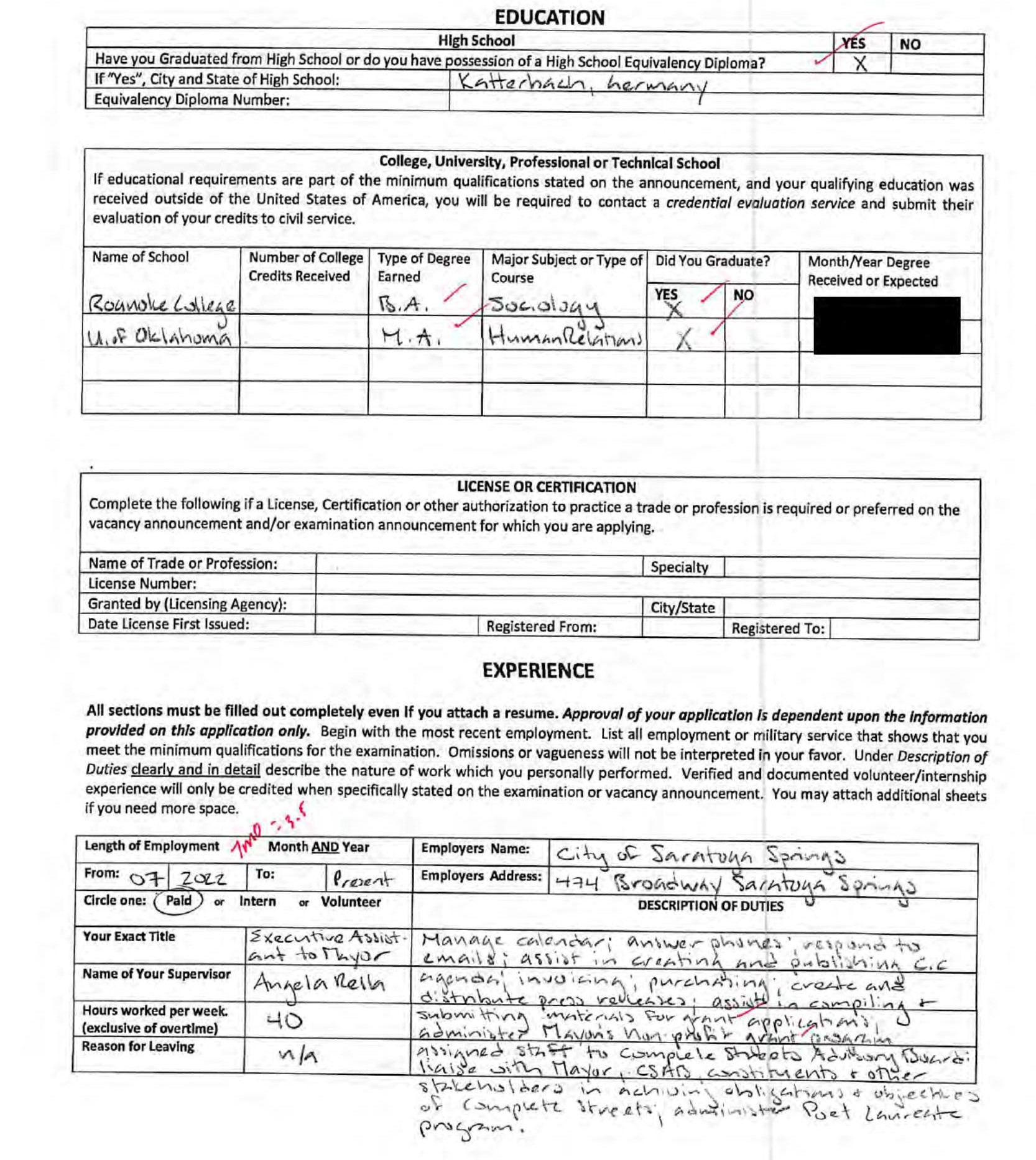
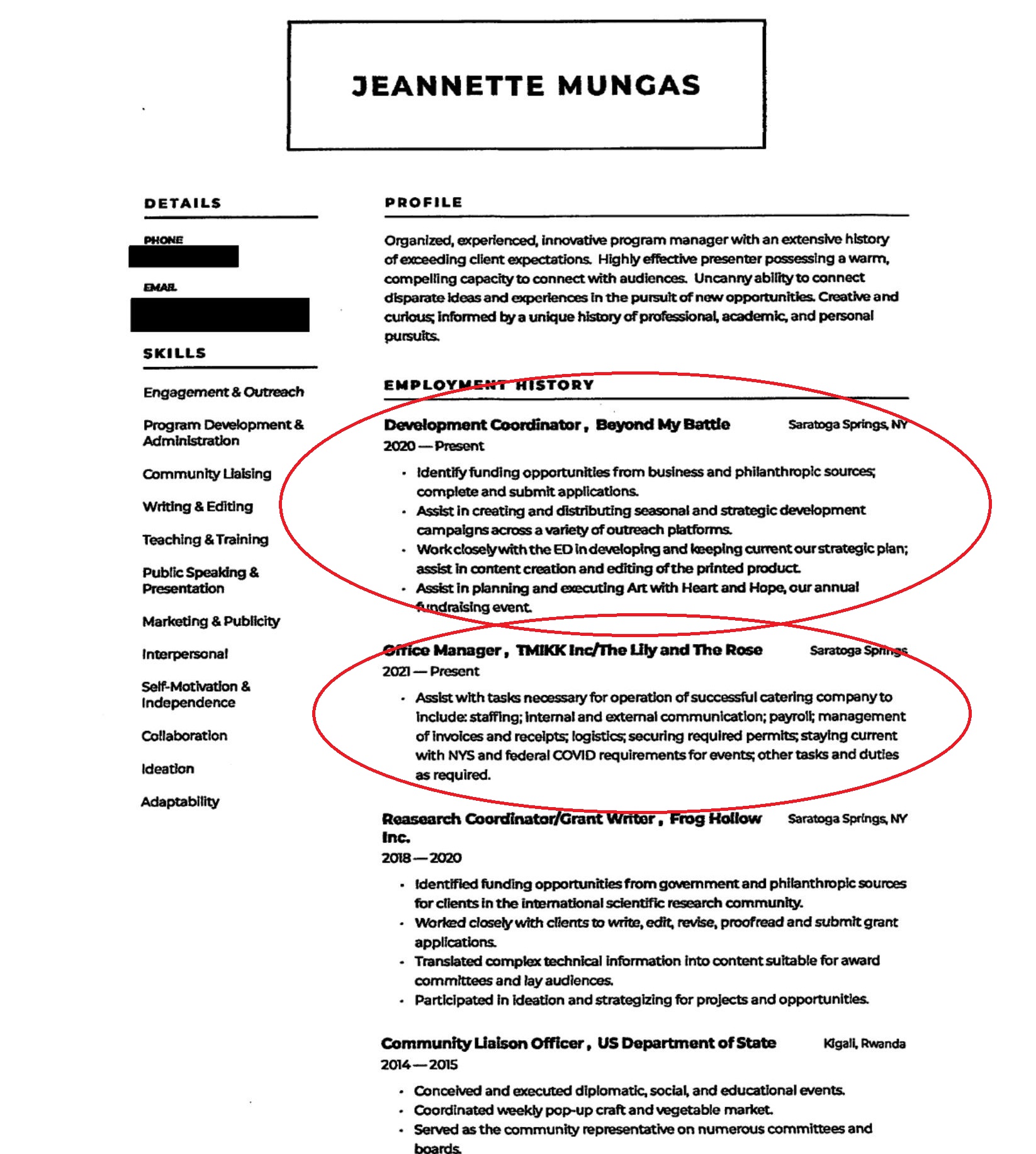
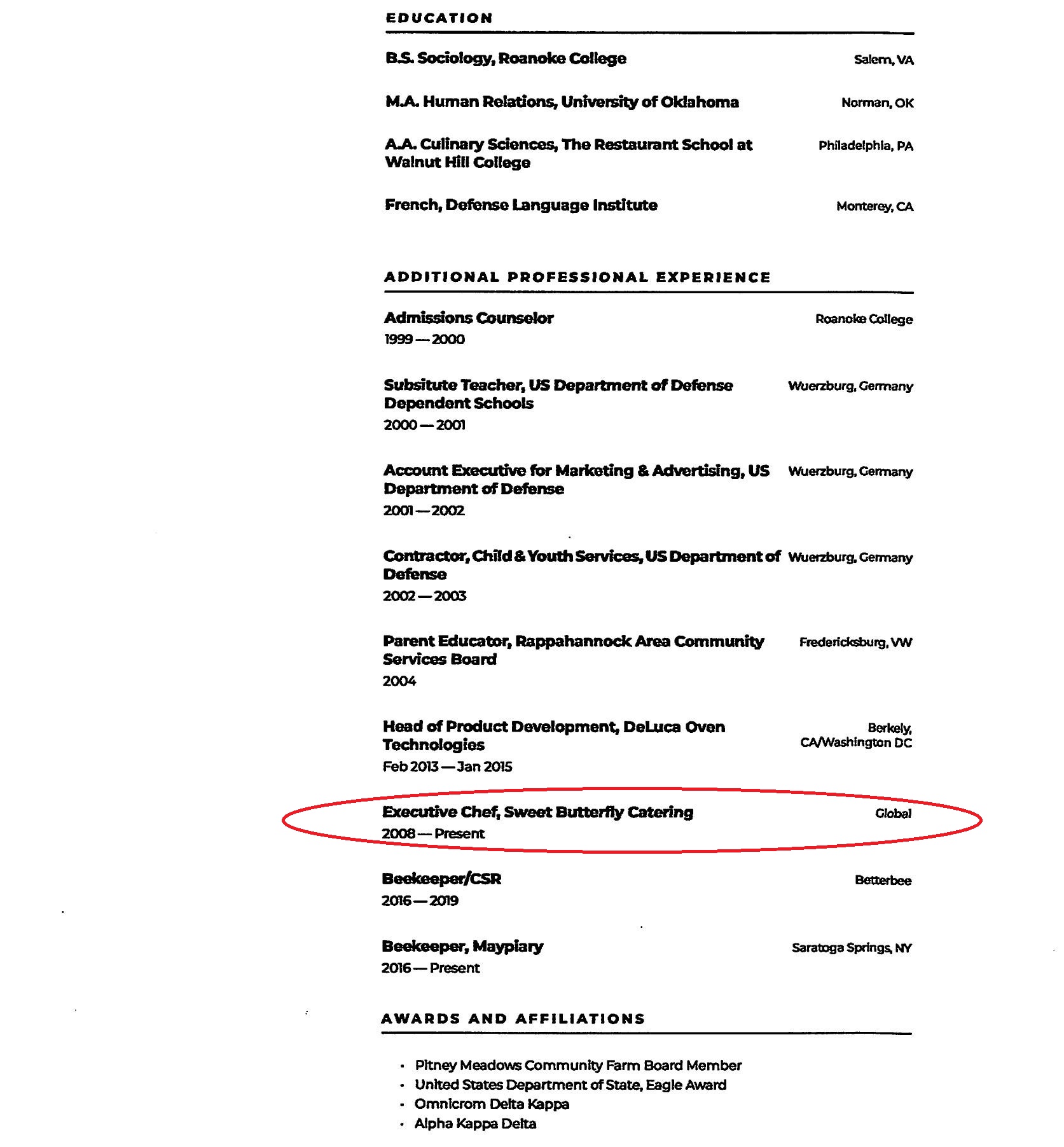
Regrettably, Saratoga Springs Mayor Ron Kim, to whom this position reports, has cynically abused the Civil Service process to promote his executive assistant, Jeannette Dunn to fill Tina Carton’s position. As far as I can tell from reading her resume, Dunn has minimal qualifications for this position. The only full-time employment Jeannette Dunn has had for more than two years since 2000 was as a self-employed beekeeper.
Worse, Ms. Dunn’s application for the position was a shocking mess. Poorly hand written, her application is peppered with contradictory entries. It was obviously simply thrown together with little concern for accuracy.
The position is one of the most important in the city. Carton secured grants meant to enhance the city’s recreation resources and sustainability.
The grants the city seeks are highly competitive. They require rigorous research and scrupulous crafting. Any errors in grant applications jeopardize their award. The slipshod application submitted by Dunn was so bad it should have eliminated her from consideration. Kim’s selection of Ms. Dunn is an example of cronyism overriding the good of the city.
An Attempt To Dumb Down the Requirements of the Position Right Out of the Gate
The city’s Civil Service position of Administrator of Parks, Open Lands, and Historic Preservation was posted on January 6, 2023. The first meeting of the Civil Service Commission following this announcement was on January 25, 2023, a mere 19 days later. Mayor Kim sent his deputy, Angella Rella, to request that the job requirements be amended.
She requested that the Civil Service Commission amend the work experience requirement from its current master’s degree with four years of full-time employment. Instead, Rella asked that the length of employment be dropped from four years of full employment to just one. She also asked that the language be changed so that the applicant would be eligible if they had acquired enough part time employment over an undetermined amount of time to equal the “equivalency” of the one year of full time employment.
Civil Service Commission Balks At Request
At their January meeting, the Civil Service Commission members pushed back. Rella had argued that the reductions in qualifications she was asking for were necessary because they were not getting responses from qualified applicants to their position posting. Commission members observed that little time had elapsed since the announcement of the vacancy. They were also concerned about the lack of promotion for the position. They observed that in the age of the web, there were many opportunities to reach a larger pool of candidates, and just posting it as a civil service notice was short-sighted.
The Commission did agree to change the requirement from just full-time to full-time equivalency but for four years, not one.
Mayor Kim Personally Pushes the Commission to Reduce Job Requirements
At the following meeting of the Civil Service Commission in February Mayor Kim along with Rella appeared asking again that the four year or now its part time equivalent be reduced to one year or that part time equivalent.
Unfortunately, the audio record of the meeting was so poor that both the reasoning offered by Kim and the response by the members of the Commission can not be heard.
As I understand it, Kim argued that the city was suffering due to the position’s vacancy and asserted the Commission needed to grant the proposed drop in the employment requirements immediately so the position could be filled
Regrettably, this time the Commission agreed to his request.
The Fix Was In
It is disturbingly obvious that Kim wanted to promote his executive assistant to this position. The changes were designed to make Jeanette Dunn eligible.
A Review of Dunn’s Application
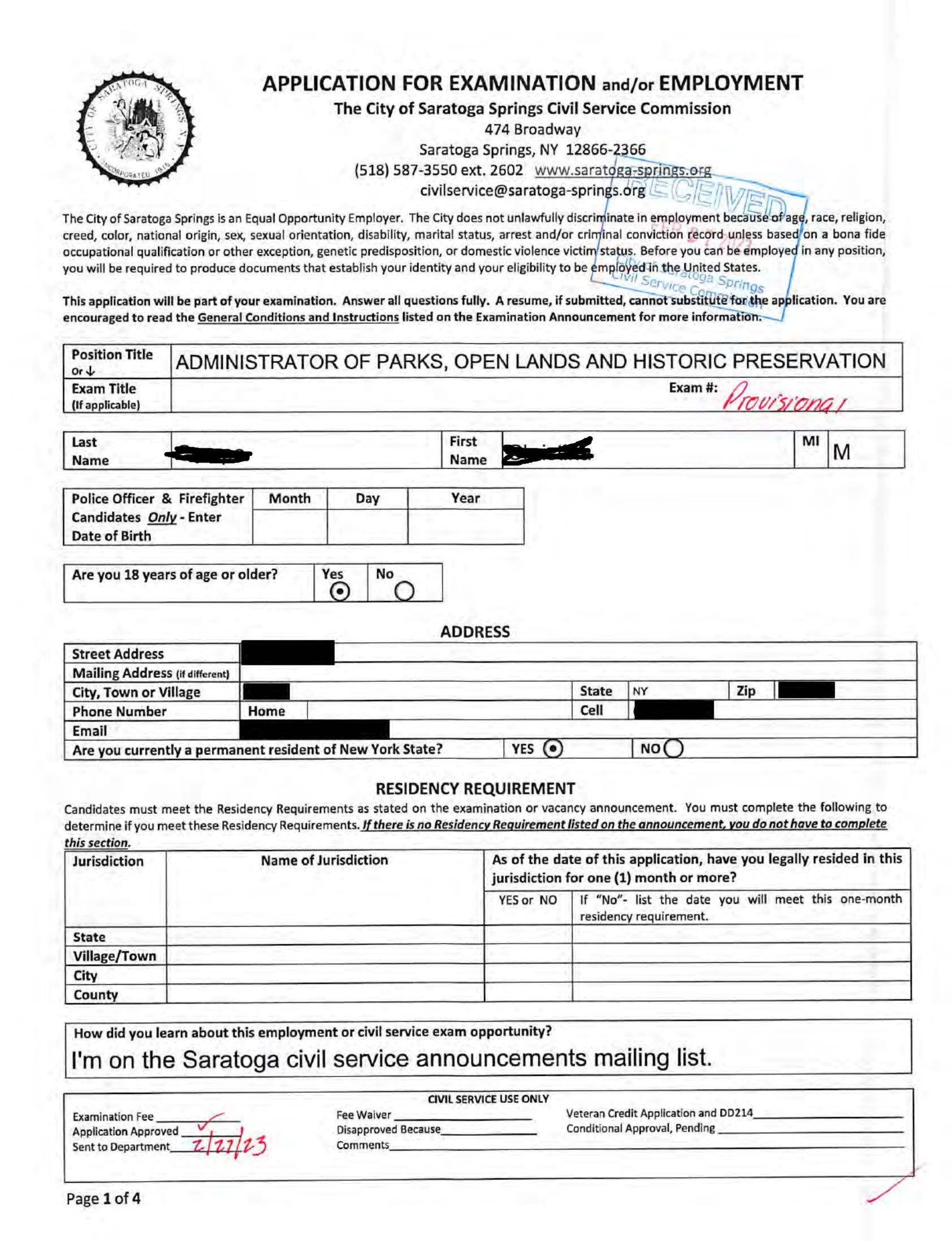
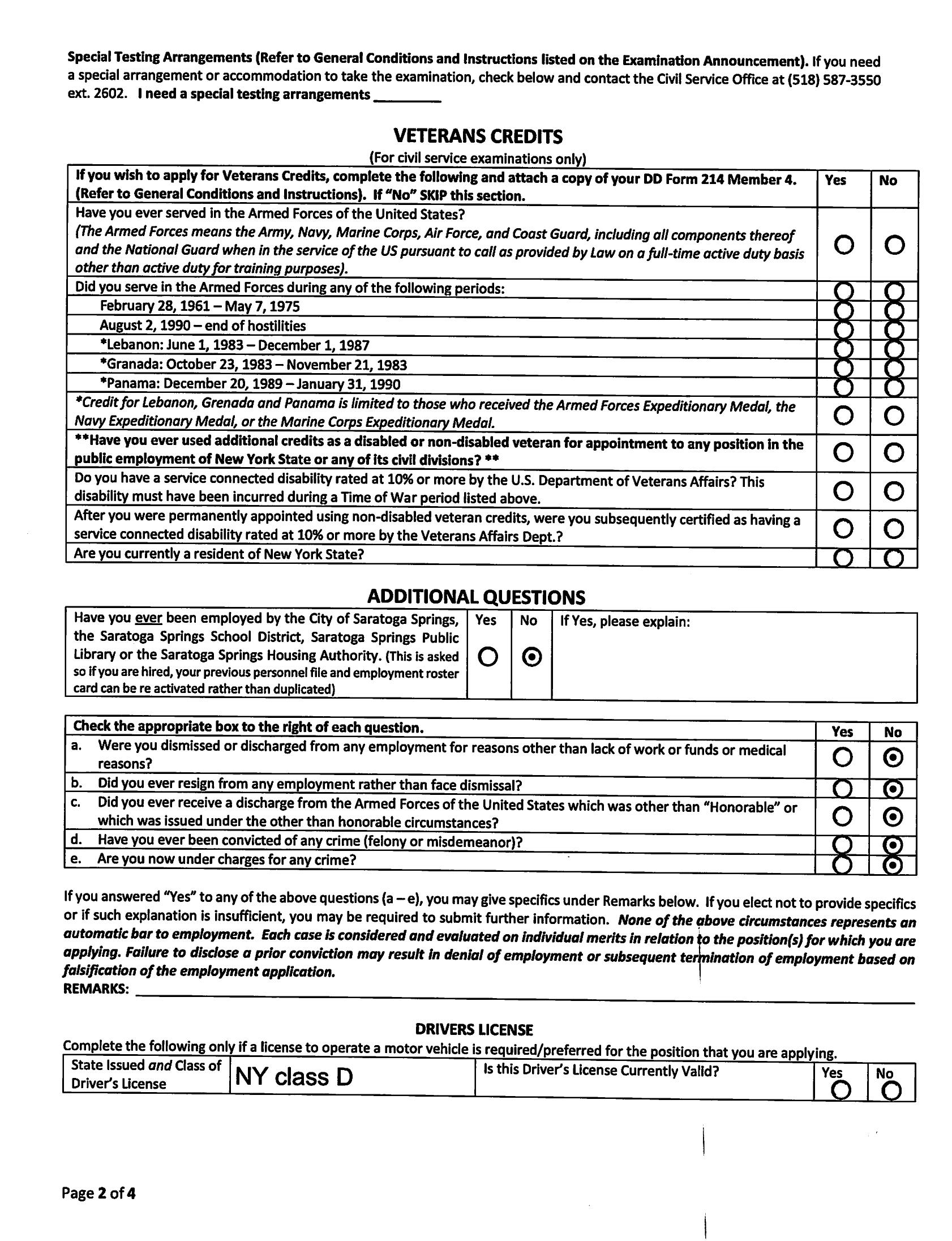
There are a number of irregularities in Ms. Dunn’s application for the position of Administrator of Parks, Open lands, and Historic Preservation.
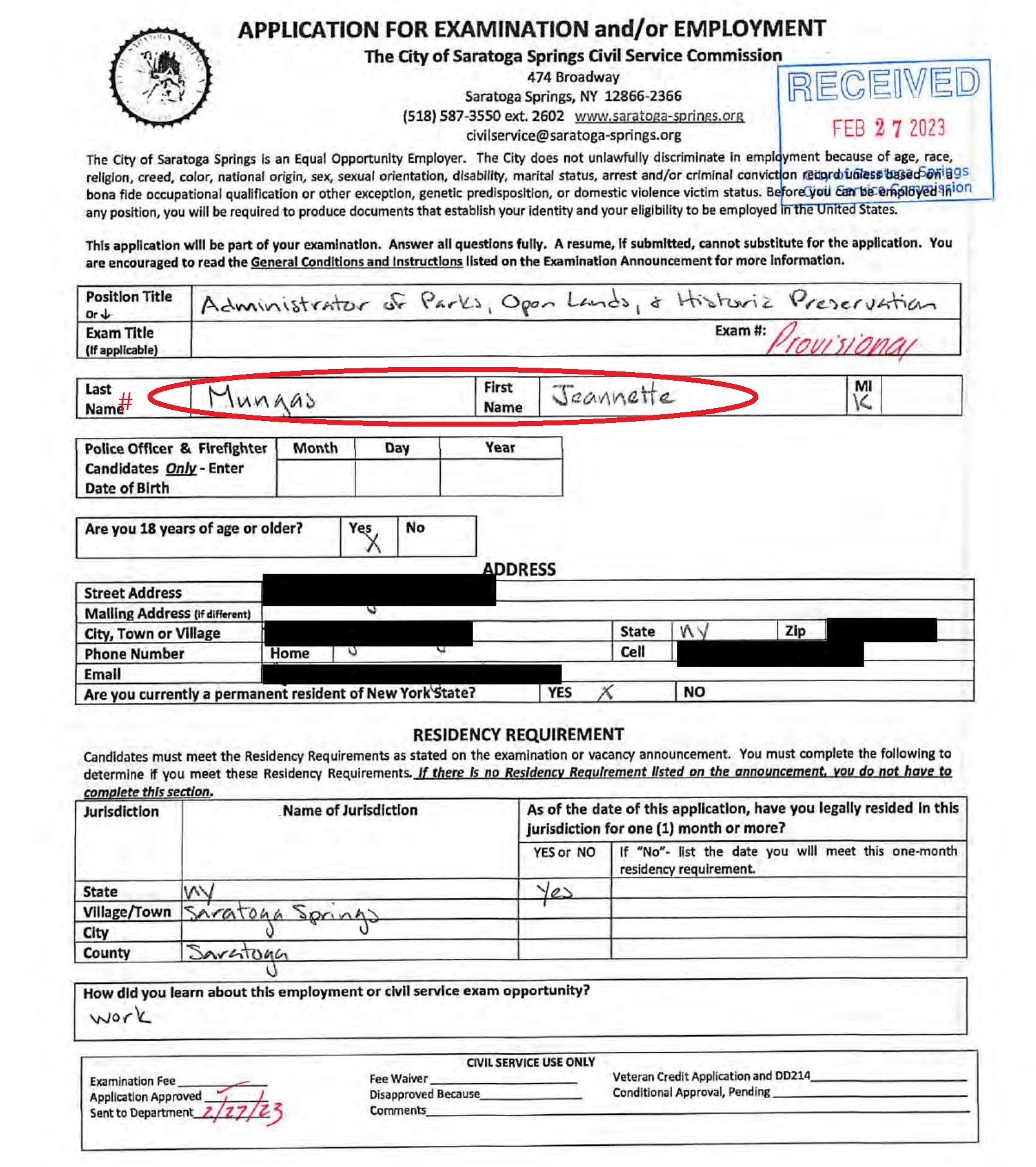
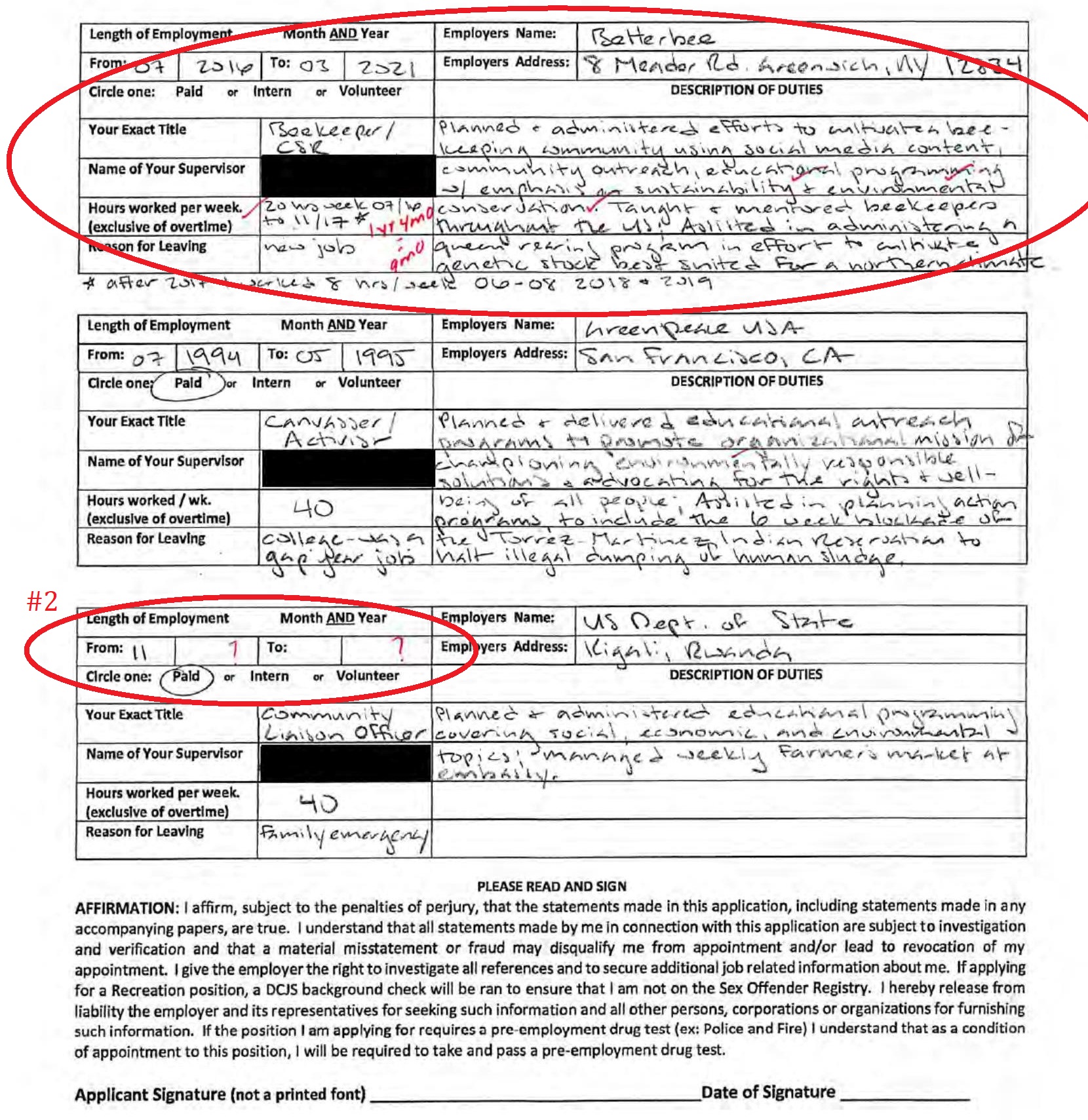
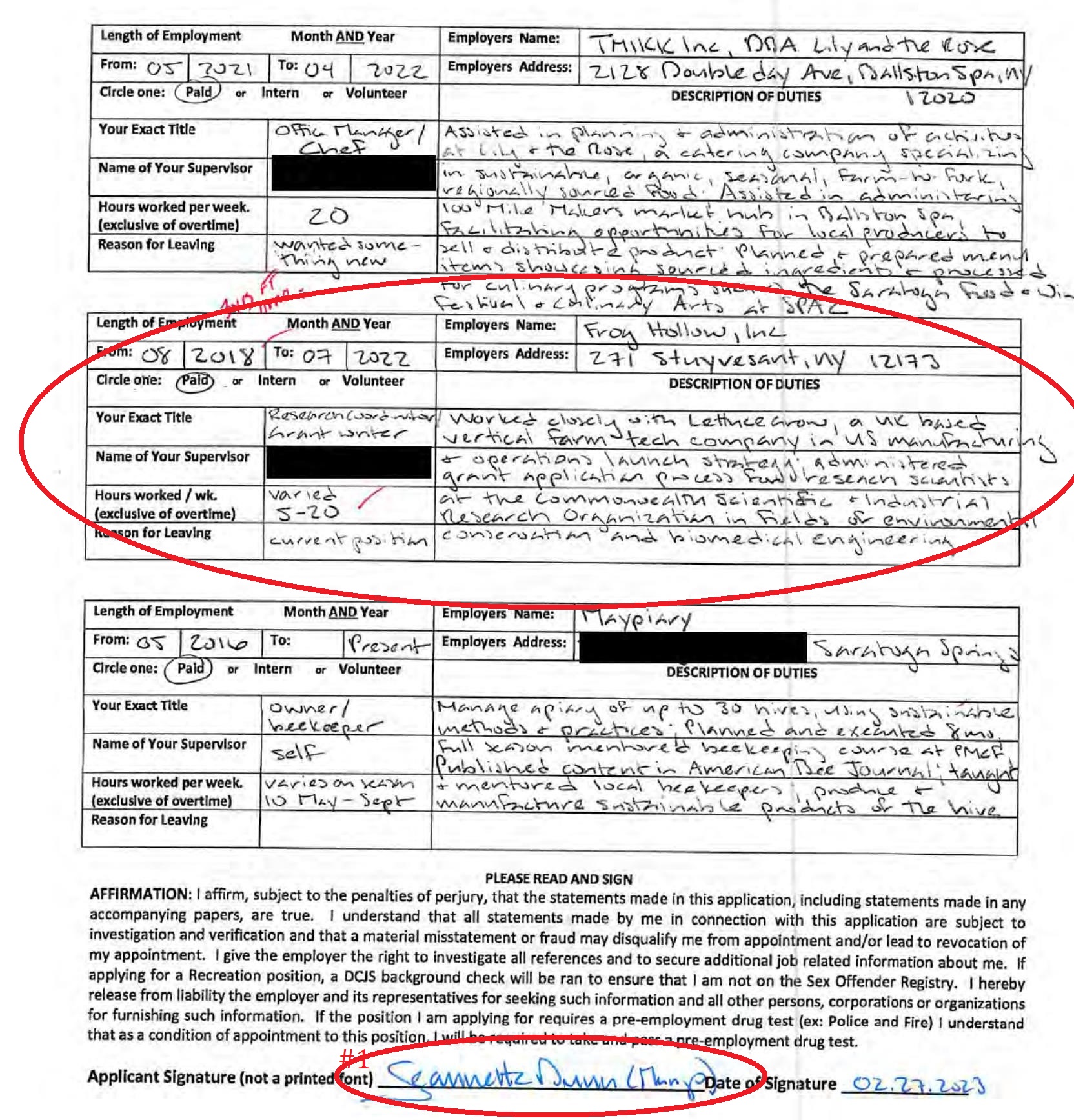
For whatever reason, Dunn uses two different names in the application. In the box where the applicant enters their name, she has put “Jeannette Mungas.” On the other hand, she has signed the application as “Jeannette Dunn (Mungas).”
A little background. Past Mayor Meg Kelly appointed Dunn to the Civil Service Commission a few years ago. She interviewed Dunn, assuming that was her name. Persons appointed to the Civil Service Commission are required to sign an oath. When the document came across Kelly’s desk, it was signed “Jeannette Mungas.” The Mayor asked Dunn to come to her office and asked her what her legal name was. She was told, “Dunn.” The Mayor explained to her that you must use your legal name when you sign an oath. In light of the events, Kelly asked her to resign, which she did. One would have thought that this incident would have sensitized Dunn on the perils of using multiple names. Judging by the application, it didn’t.
In the boxes in which Dunn said she worked for the U.S. State Department, Dunn failed to enter the dates of that employment.
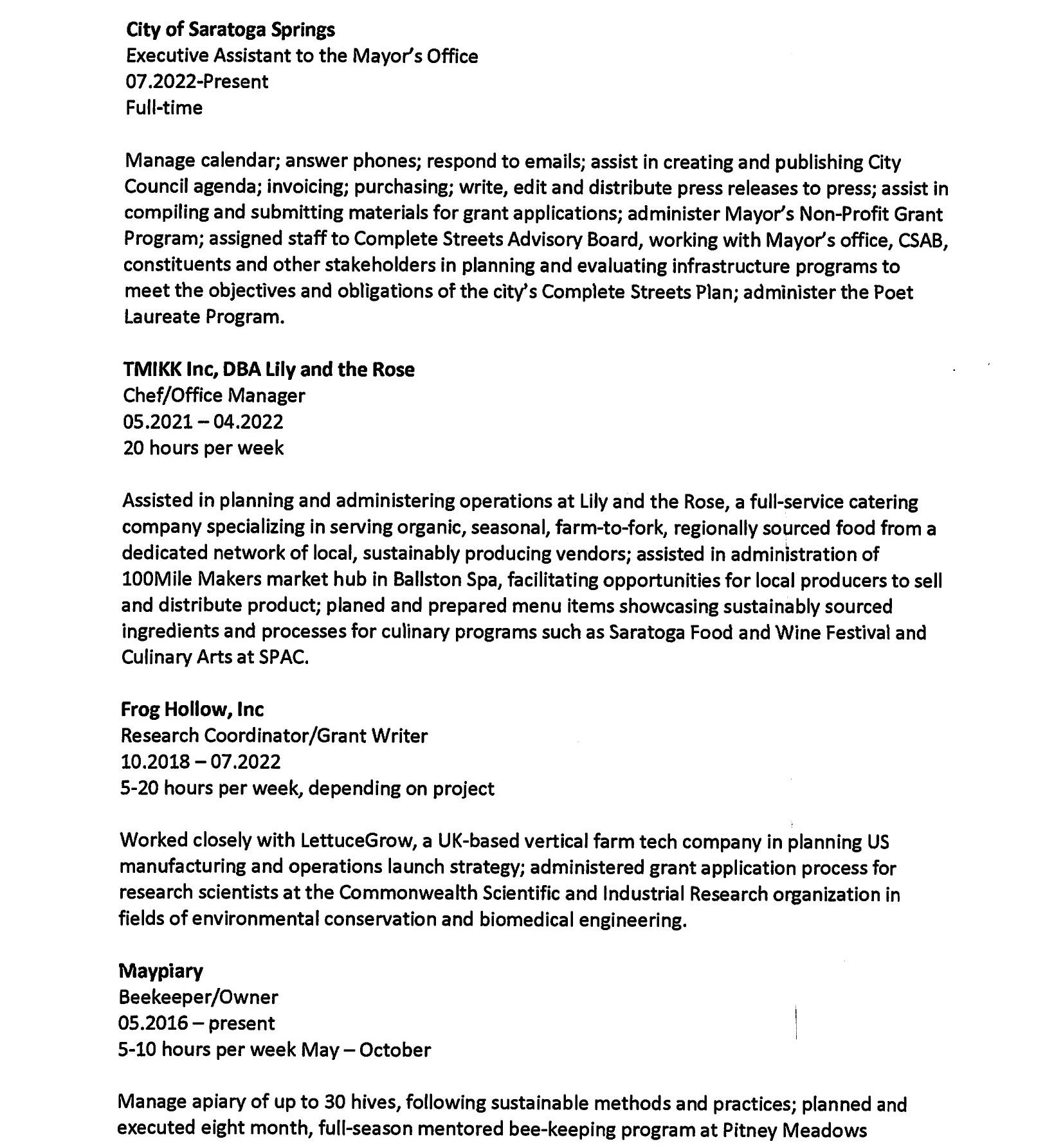
Dunn attached not just one additional resume to the application but two. The application and the two resumes contain numerous examples of conflicting information.
According to the application, she worked part-time for Frog Hollow from August 2018 to July 2022. On the other hand, according to one of the attached resumes she worked from October 2018 to July 2022. On another printed resume, she wrote that she was employed there from 2018 to 2020. So she ascribed three different dates of employment for the same position. This is particularly important because the dates she ascribed in the written application were used to calculate her “equivalent” employment requirement.
In one of her printed resumes, she reported she was employed by Beyond My Battle from 2020 to the present. The hand written application does not include this, and during that time she was employed, among other jobs, as the full time executive assistant to Kim.
In the application, she recorded that she was employed as both the part time office manager and part time chef for The Lilly and The Rose from May 2018 to April 2022. On the other hand, in one of her printed resumes, she states she was employed there as just the office manager from 2021 to the present.
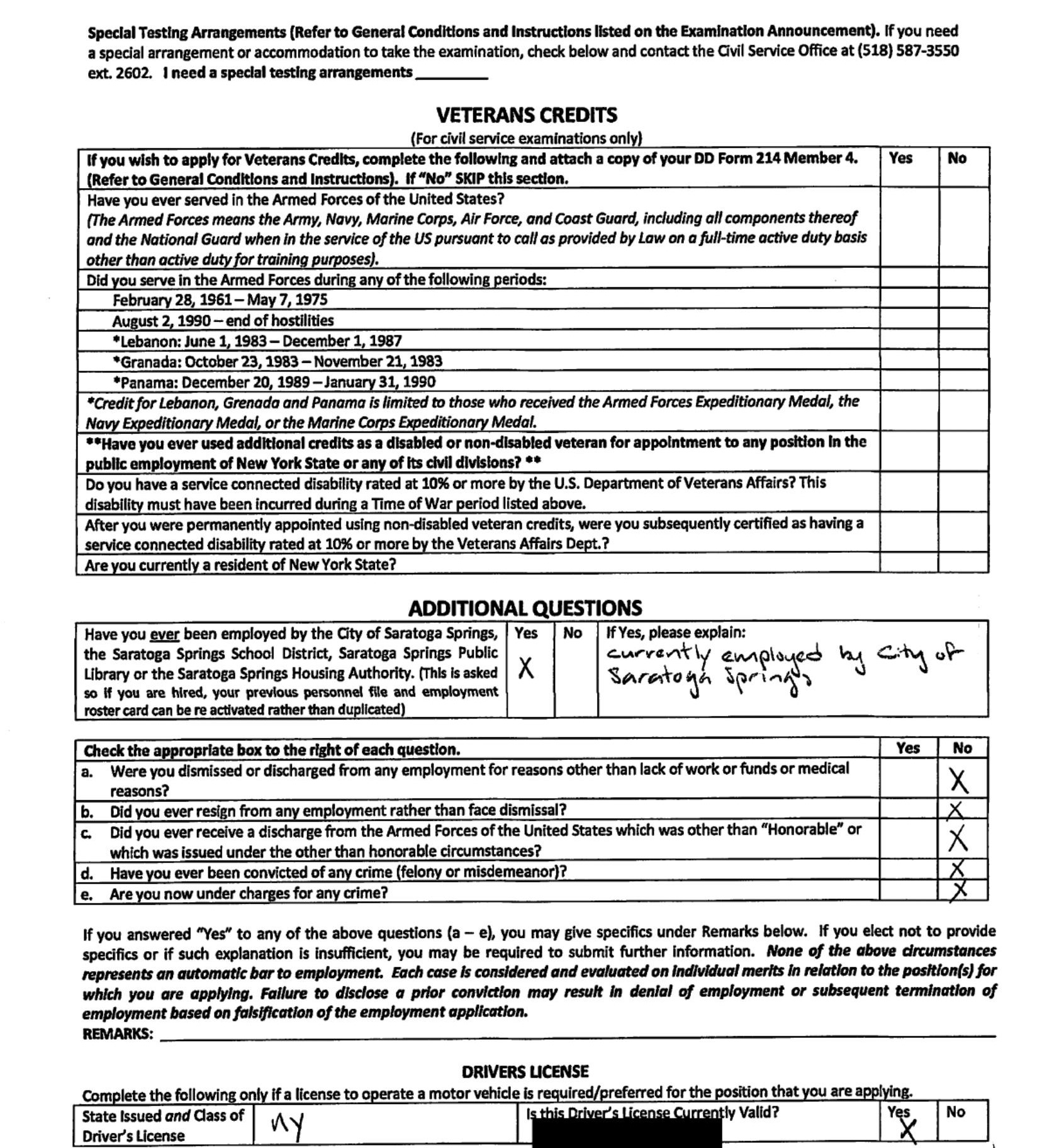
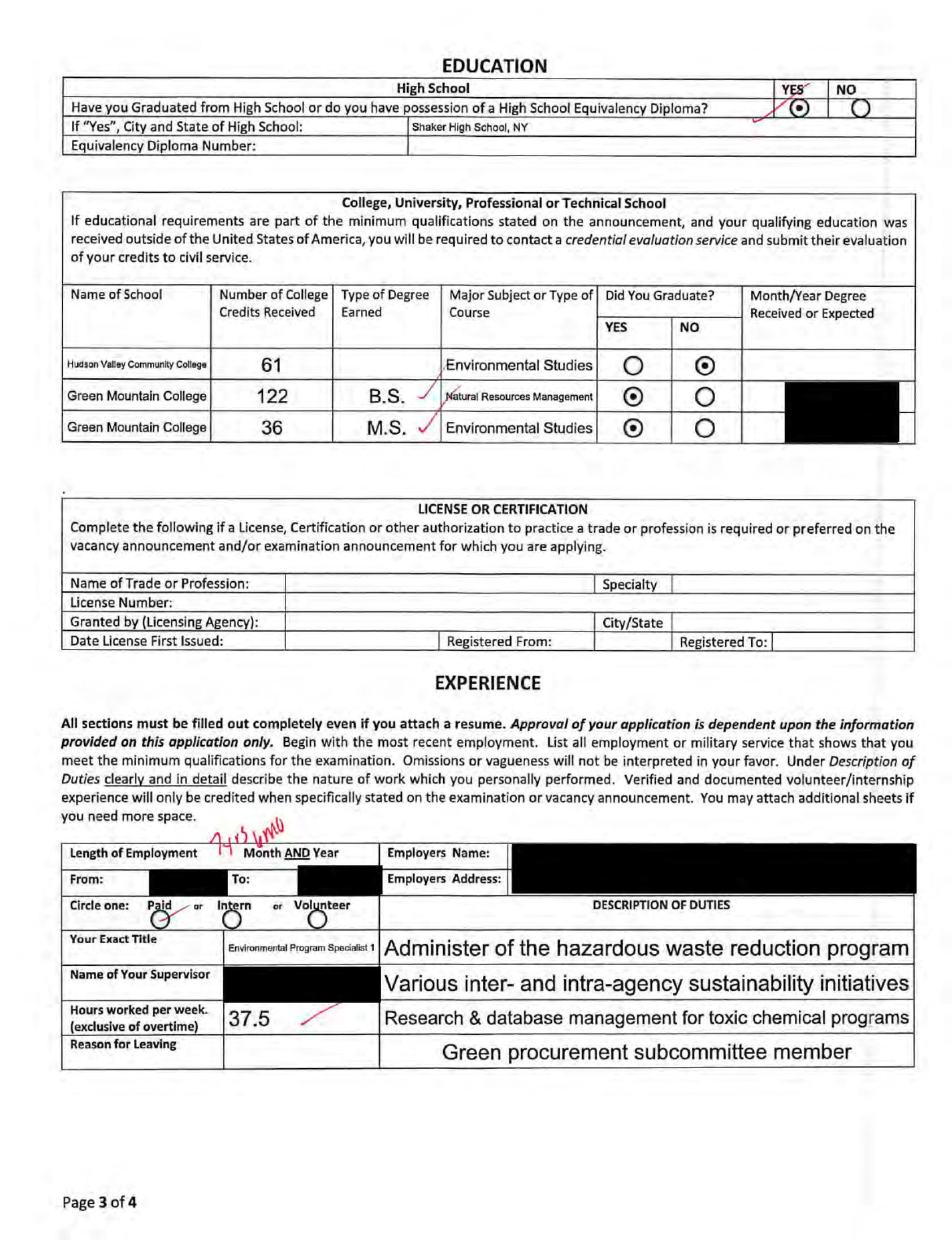
Mungas’/Dunn’s application is included at the end of this post.
Did Dunn Meet The Employment Requirements?
Once the Civil Service Commission determines the requirements for a job it is up to the Civil Service Department to determine if applicants meet these requirements.
The job requirement for this position in part reads: “Graduation from a regionally accredited college or university…and one year of full time paid experience (or its part time paid equivalence) in planning and administrating parks, open lands, or historic preservation programs or environmental conservation or sustainability programs.”
In this case the Civil Service Department determined that Dunn met the work experience requirement for the job based on her self employed work as a bee keeper and on her employment with Frog Hollow.
“Financial advisory & entrepreneurial strategy consulting firm dedicated to helping clients create growth strategies that lead to capital acquisition.”
Frog Hollow home page
There is nothing on their site to suggest anything about the environment or sustainability. Their pitch is that they can help startup and regular companies make money.
Dunn entered the following description of her duties at Frog Hollow:
Worked closely with Lettucegrow, a UK based vertical farm tech company in U.S. manufacturing & operations launch strategy; administered grant applications process for research scientists at the Commonwealth Scientific & industrial research organization in Fields of environmental conservation and biomedical engineering.
Dunn describing her work for Frog Hollow
In the box titled “Hours worked /wk. [week]” she wrote “varied 5-20.”
It appears, according to notes beside this employment entry that Civil Service granted her three years and eleven months of equivalency toward the work experience requirement based on her dates of employment (as stated on her hand written application and in conflict with the two resumes she attached) from August of 2018 to July of 2022. As the company does not routinely work on environmental-related projects, it is hard to ascertain how many equivalent hours she worked on such projects during the almost four years there.
Don’t Blame Civil Service
Corissa Salvo is an outstanding Civil Service Coordinator. She has a wealth of knowledge, she is a good listener, and she is conscientious in her work. Unfortunately, the Civil Service Commission staff is made up of only her and a part-time employee. Ms. Salvo is responsible for, at a minimum, the city, the school system, and the city center.
While I might disagree with her about the relevance of Ms. Dunn’s employment history, the requirements are sufficiently vague such that people of good will can disagree.
The three Commissioners are all dedicated volunteers. Again, while I disagree with the wisdom of reducing the required employment time of four years full time relevant work, it is again an issue in which people of good will can disagree.
In the end once the standards were set and a list of the applicants who were determined to have met those standards compiled it was up to Mayor Kim to determine who was the best candidate to hire from the list.
Ms. Dunn may or may not have technically met the work experience requirements for the job even once Kim was successful in lowering them. What is clear is that her failure alone to craft a proper application for the job should have disqualified her. There were fifteen applications [see an example at the end of this blog]. All, with the exception of Dunn and one other were clearly more qualified than Dunn, but Kim chose Dunn.
A Need For Reform
People may find this shocking but the city’s hiring procedures do not require that the education and employment history of the selected candidate for a job be verified. Civil Service does not have the staff resources to do this. The city relies on an affidavit signed by the applicant affirming the truthfulness of the information they provide.
There are also no requirements that the city do any promotion for the position beyond posting it. The city should require that the process include a written plan as to how best to publicize the job using the web or reaching out to professional associations where appropriate.
The Civil Service Commission lacks the resources to implement these kinds of reforms. Structurally, it should probably be handled by the Human Resources Department. To carry this out, though, would probably require the city to expend additional money for new positions. The cost of this would be offset by the value of finding the right applicant to fill important positions. This City Council has been very liberal in approving new administrative positions in Accounts and Finance and the Mayor’s office of dubious value to the city. This Council would do better to determine where additional employees would make the city function more efficiently and effectively rather than just allocating funds to dubious positions in their fellow Commissioners’ offices.
Damage
The Civil Service system was created over 100 years ago to try to ensure that public employees were hired based on their qualifications for the job, not on their political connections. Mayor Kim in this case has maneuvered the system to allow him to put cronyism over professionalism and choosing the best person to serve the city.
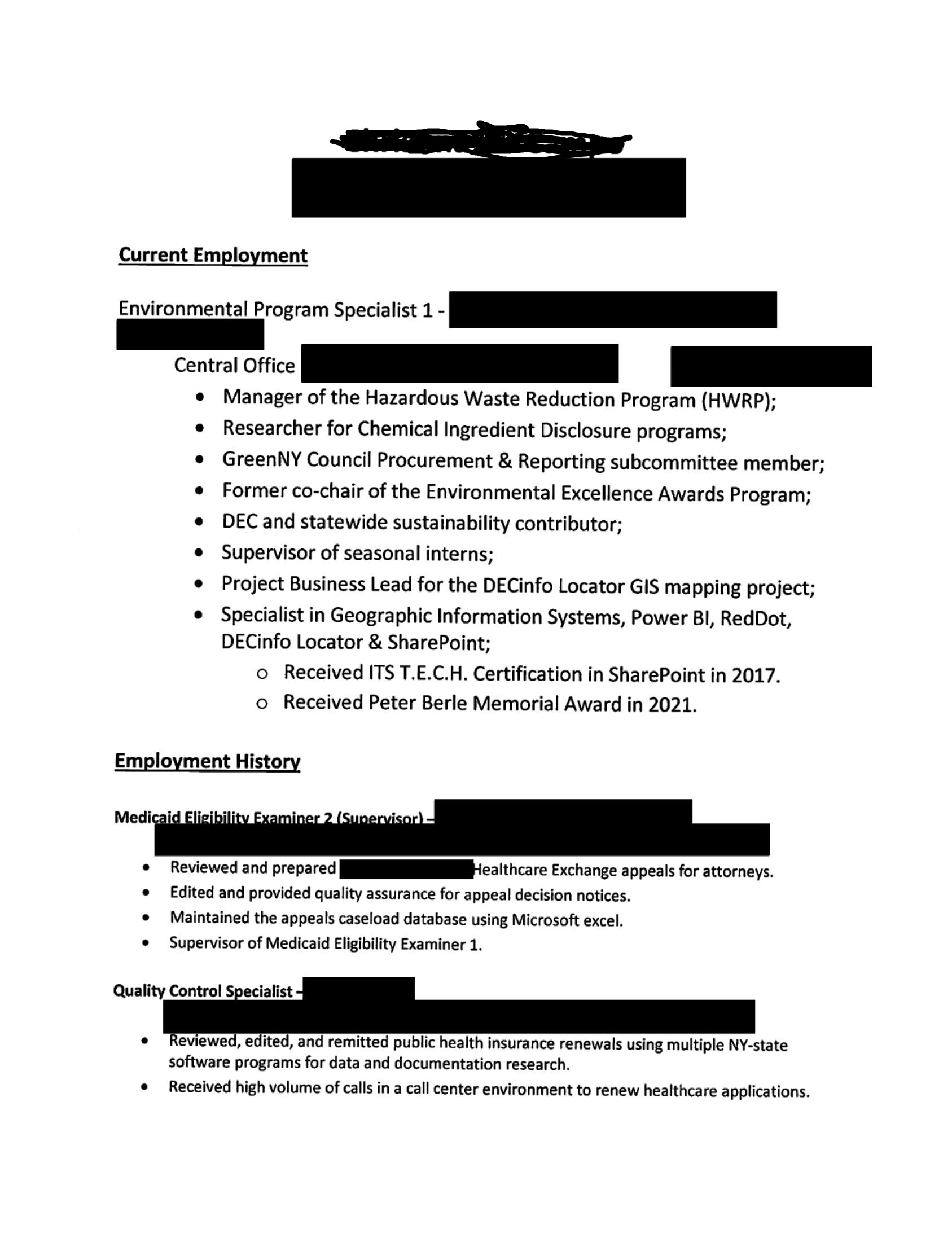
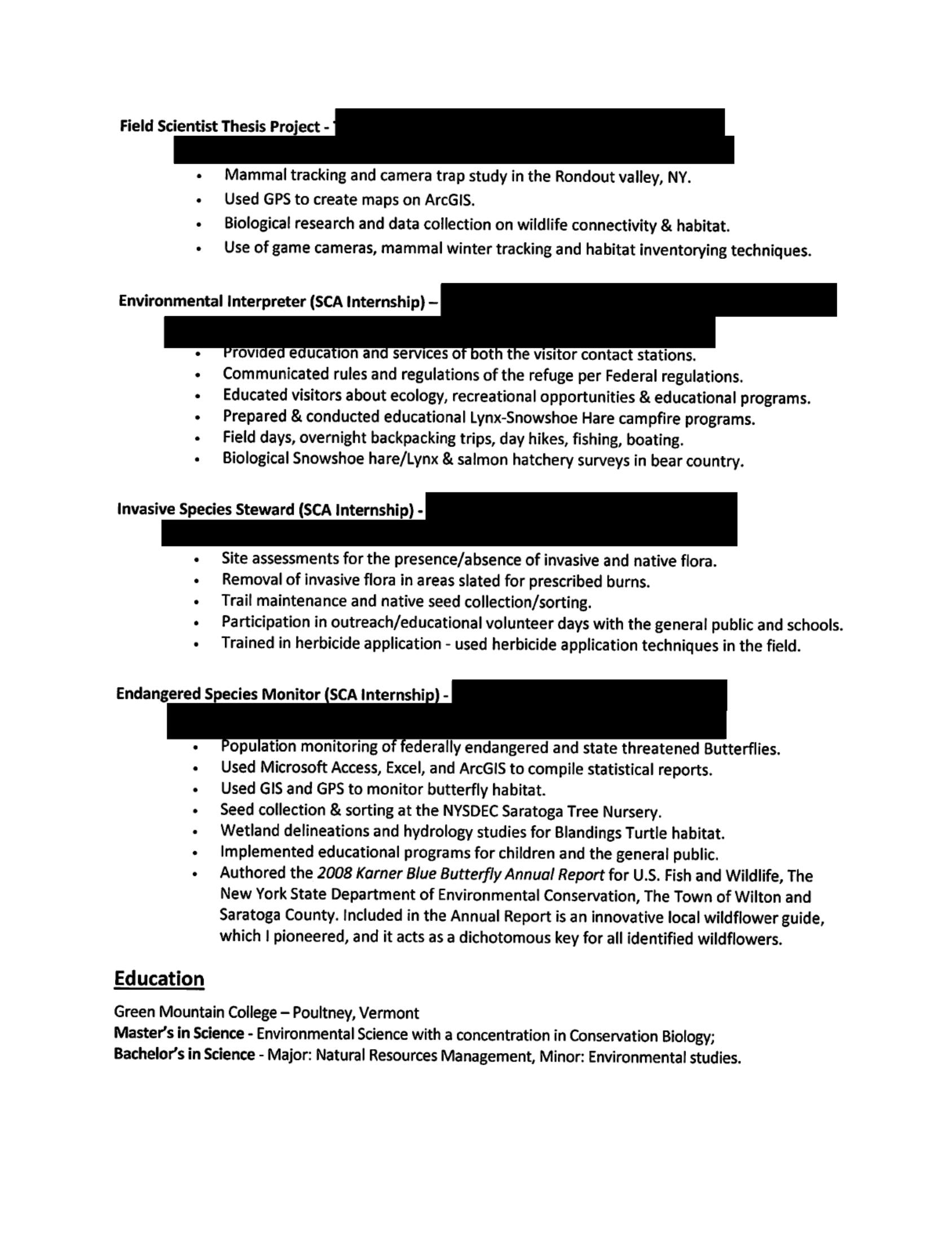
Jeannette Mungas/Dunn’s Application
The following page was attached to the application.
I assume that this was an old resume which for whatever reason, the applicant included without noticing that it conflicted with the application.
The Saratoga Springs City Council proposed an amendment to the city’s Unified Development Ordinance (UDO) that would set a 1000-foot buffer between a “homeless shelter” and any “Educational Facility – Primary or Secondary.”
The UDO is a comprehensive document setting out policies and procedures for land-use issues. The city’s zoning is codified in the UDO.
The City Council is required to seek an advisory opinion from the Planning Board on any changes to the UDO. In this case, the Planning Board voted four to one to issue an “unfavorable advisory opinion.” In an unusual move, the Council voted to ignore the Planning Board’s advice and adopt the amendment anyway.
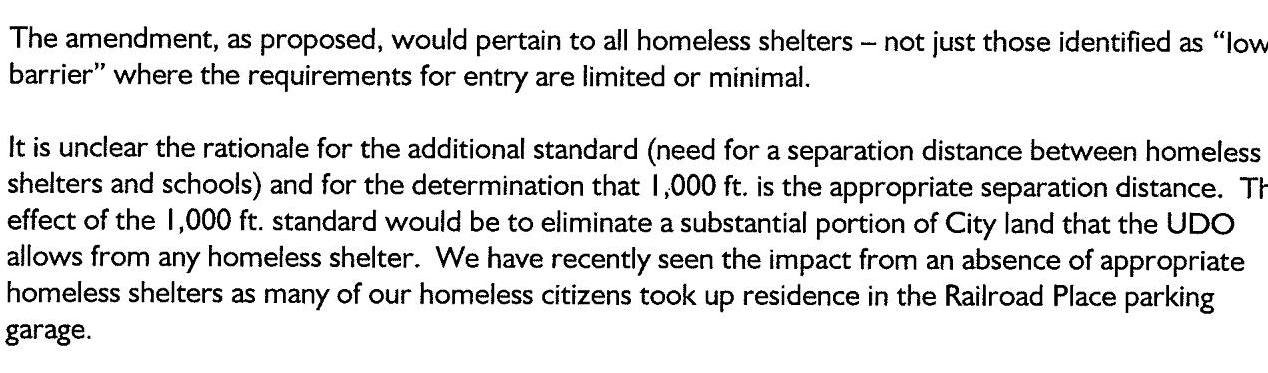
The following Are Excerpts From The Planning Board’s Opinion
The Planning Board’s opinion lays out issues that make the current language in the Council’s amendment potentially problematic both in terms of lack of clarity of the language used, potential future conflicts that would create non-conforming parcels of land, and unnecessary rigidity in the language that could make future placement of shelters an issue.
Here is the Planning Board’s advisory decision:
The Pitfalls Of Poorly Crafted Legislation
Converting an idea into legislation is a challenging business. Poorly crafted legislation is a magnet for litigation, especially in land-use issues and ESPECIALLY as regards the siting of a homeless facility.
The Planning Board’s unfavorable opinion was not prompted by opposition to the need for a buffer but by the lack of clarity in the language and by the potential problems with setting a rigid and arbitrary distance.
You would have thought that the Council would have engaged in some thoughtful discussion in response to the Planning Board. This was not the case.
I am told that Mayor Kim never solicited an opinion from the two city attorneys regarding the concerns raised by the Planning Board. This is yet another example of Mayor Kim assuming the role of City Attorney rather than consulting with those he has put in those positions to give him advice.
It is worth noting that Kim was a staunch advocate for locating the homeless shelter at what was the city’s Senior Center which abuts Spa Central Catholic School property. In fact he had a testy exchange with the parents of Spa Catholic students at a meeting during which he vigorously defended the proposed location.
The only acknowledgment of the Planning Board’s concerns was the rambling and incoherent musings of Mayor Kim at the Council table. At one point he actually says “I have no question that the procedures that were put in place to bring this UDO amendment forward were less than ideal for us to move this and make solid law today.”! The other Council members apparently had all tuned out at this point or didn’t care as no one, as usual, spoke up. In many ways, the remarks by Kim are a testament to the poverty of what passes for analysis and thoughtful discussion at the Council table. It is this poorly considered approach to legislation that threatens to impact our city negatively.
Saratoga Black Lives Matter has alleged that the Saratoga Springs Police Department has been responsible for frequent abuse of and violence against people of color in this city. One of their frequent chants in street demonstrations downtown has been, “How do you spell murderers? SSPD!”
According to BLM, the Darryl Mount Case is the most egregious example of misconduct by the SSPD. In this post, I offer a brief update on that case, but I have also taken a deep dive into two other cases often cited by BLM as evidence of police abuse to try to assess the validity of their claims. What follows is documentation I obtained through the Freedom of Information Law pertaining to two cases that occurred in the city in the last couple of years:
The stopping for questioning by the police of a black military personnel after a late-night break-in on Broadway.
The stopping and questioning by the police of BLM activist Alexis Brown and her boyfriend following a BLM demonstration.
The Darryl Mount Case
The Mount family has sued the city, claiming that the police killed their son, Darryl Mount. This case is finally to be tried this fall, and an independent jury will hear the evidence and decide whether the city has any culpability in the matter.
While for the last two years, the New York State Attorney General’s Office has been conducting a review of interactions between the SSPD and BLM, particularly related to a demonstration in July of 2021, none of the police officers who were involved in the Mount incident have been subpoenaed.
The local media have reported that BLM leader Lexis Figuereo has met on several occasions with the Attorney General’s office. According to Figuereo, the AG has been updating him on the progress of her investigation into the interaction of police with BLM protesters. He has never brought up, however, the failure of the AG’s office to investigate the Darryl Mount case.
Figuereo has repeated many times that the police “murdered” Darryl Mount and that he wants Justice for Darryl Mount. One would have expected Figuereo to be outraged at the apparent unwillingness of the AG to pursue an investigation into Mount’s death. It is interesting that rather than publicly criticizing the AG for her inaction or organizing protests to try to pressure her to investigate the Mount case, Figuereo is silent.
The Case of Michael Vaughn
Michael Vaughn was an active-duty army captain visiting family in Saratoga Springs when he was stopped by the police following a late-night home invasion incident on Broadway in 2022. He submitted a complaint about being stopped.
The call to 911
On May 6, 2022, just before midnight, the police received a 911 call from a woman living on Broadway that a man had attempted to enter her apartment through a window. Here is the recording of that call (it has been slightly edited to protect the identity of the victim).
According to police records, the call was received at 11:57 PM. As the shift change for the police is midnight, the four-to-twelve shift was returning to the police station when they were directed to deploy in the downtown area looking for the suspect.
As indicated in the call, the victim gave sometimes contradictory descriptions of the intruder, which is not unusual for first-hand accounts.
The police encountered Captain Vaughn on Maple Avenue just after midnight. Captain Vaughn met some of the characteristics described by the caller.
The Body Cams
The following are two body cams from the officers responding to and questioning Captain Vaughn. A plainclothes detective, who is not required to wear a body cam, had already engaged Captain Vaughn 20 seconds before the officers wearing body cam arrived. Captain Vaughn is questioned for about 5 minutes.
Captain Vaughn submitted a complaint to the police department about the incident. Lt. Laura Emanation was tasked with reviewing his complaint. Following is the audio file of her phone conversation with Captain Vaughn regarding her investigation of the incident. While it is 35 minutes long, I urge readers to listen to the entire recording where Captain Vaughn lays out his concerns, and Lt. Emanation responds by explaining the police procedures that were followed minute by minute. Among other things, she asks Captain Vaughn if he thought the police could have done anything differently that they didn’t do that night. He replies, “Catching the guy who did it before approaching me.”
Alexis Brown Stop
Following one of the BLM downtown demonstrations in 2021, the police stopped Ms. Brown and her boyfriend, who were returning home from the downtown action.
Ms. Brown’s friend had been reported to have placed a bag of some sort in their car, and the police were dispatched to check the bag.
Ms. Brown has repeatedly denounced the police for this stop. She described the experience as traumatic but did not file a complaint.
Body Cam Footage Of Brown Stop
Some Thoughts
As a person committed to social change, I believe that it is important to criticize and insist on change where government fails in its responsibilities, but it is just as important to praise and support those we see as performing in a manner we want to continue.
The central question is whether it is fair to associate the actions of our police with the excesses that we frequently see on national television occurring in other cities. Are the gratuitous acts of excessive force and belligerence against people of color graphically dramatized on the evening news regularly replicated here in Saratoga Springs?
This city is fortunate to have had many outstanding police officers who have performed in a way that we should admire and support. I would also add that some of our best people on the force have retired prematurely due to the abuse of authority by our current Public Safety Commissioner, James Montagnino. We should not confuse his unfortunate behavior with the men and women who serve under him.
In my opinion, the officers in these incidents showed professional restraint and courtesy in their interactions with the individuals they stopped. I leave it to the readers of this blog to assess for themselves whether these incidents support the BLM claims.













 Saratoga Springs Politics
